
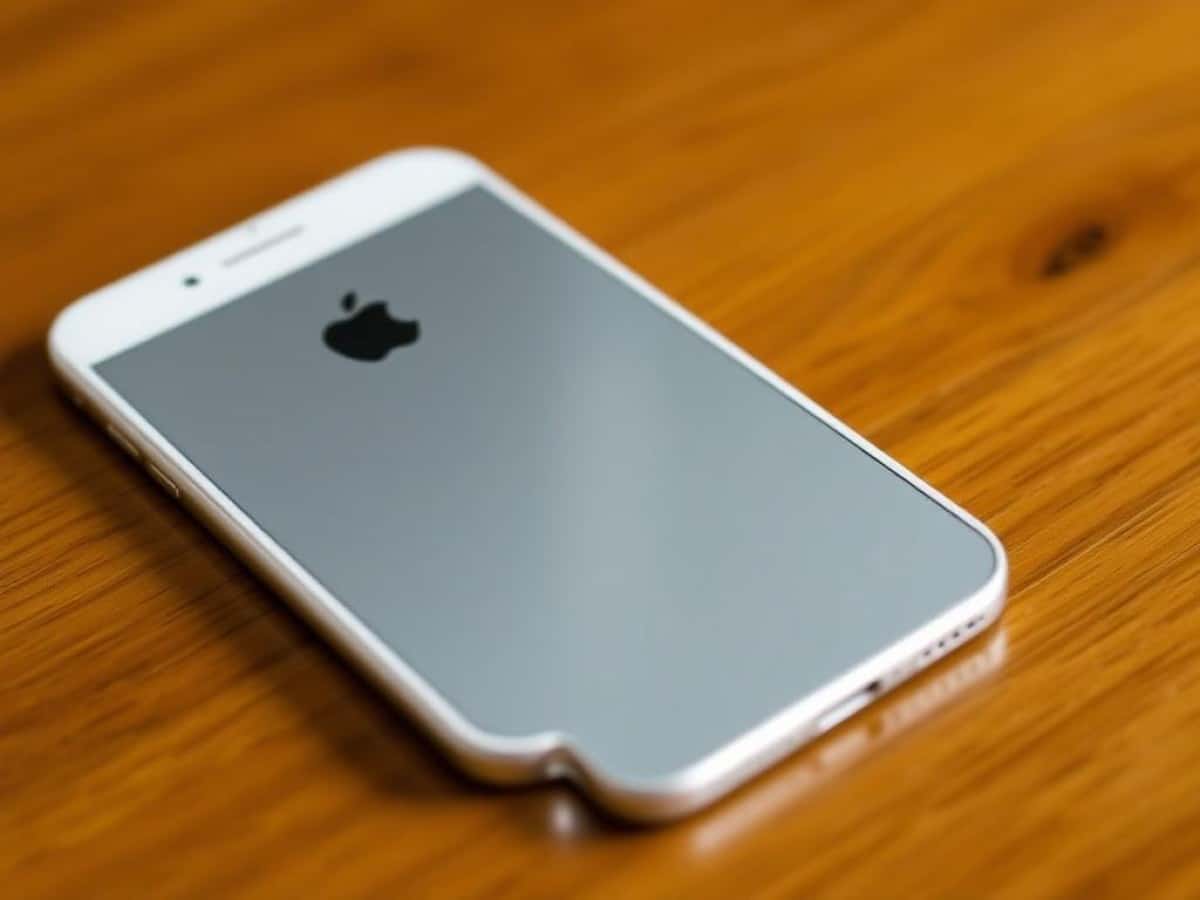
After months of speculation, the iPhone Air has become a reality. Following in the footsteps of Samsung, Apple has promised a remarkable experience with its ultra-thin smartphone. But does it truly deliver?
Scientists confirm: This is the most effective way to get your cat’s attention, according to new research
Elderly Couple Refuses Reserved Seats—Viral Train Standoff Sparks Fiery Debate on Courtesy
Creating a slim smartphone was simpler a decade or two ago when components were smaller and demands on devices were less intense. Today, however, users expect large screens, high-quality camera sensors, powerful performance, and most importantly, a robust battery to support all these features.
The formula seems somewhat flawed. Samsung, for instance, faced challenges with its S25 Edge, particularly in terms of its camera capabilities and weak battery life. It’s clear that compromises have to be made.
Apple, however, promises a different experience with the iPhone Air, notably because it’s the first iPhone to incorporate so many chips designed by Apple itself.
We’ve seen in the past that new markets often don’t take off until Apple enters the scene, though that was before the Vision Pro.
So, without overthinking it, I approached the iPhone Air with optimism. Taking a moment to reflect, I realized it could never match the completeness and performance of conventional smartphones, like the iPhone 17. However, as previously mentioned, it largely depends on what you use it for.
Technical Specifications
The iPhone Air comes with a range of impressive specifications. It measures 74.7mm x 156.2mm x 5.64mm, making it one of the thinnest in the market. It runs on iOS and features a 6.5-inch display with a resolution of 2736 x 1260 pixels and a pixel density of 460 ppi. The display technology is OLED.
Under the hood, it boasts the Apple A19 Pro SoC, accompanied by an Apple GPU. Storage options are generous, with 256GB, 512GB, and 1TB available. The rear camera is a 48Mp sensor, and the front camera comes in at 18Mp, capable of recording 4K video at 60 fps.
Connectivity options include Wi-Fi 7, Bluetooth 6.0, and 5G support. Notably, it lacks a fingerprint sensor and uses USB Type-C. The battery capacity is 3149 mAh, and it weighs 165 grams. Color options include black, white, gold, and blue.
Why You Should Never Reheat These Foods in the Microwave – The Hidden Dangers Experts Warn About
I tried the top 5 guard dogs—here’s what makes these breeds the ultimate protectors
Design
When it comes to design, the iPhone Air is more user-friendly than competitors like the Galaxy S25 Edge. The screen size reduction from 6.7 inches to 6.5 inches makes a significant difference in how the device feels in your hand—156.2 x 74.7 x 5.6 mm in dimensions. While it boasts the title of the thinnest smartphone currently, this doesn’t consider the camera bump, which brings its thickness to 11.46 mm compared to the S25 Edge’s 10.16 mm.
Apple has improved the design over Samsung by softening the sharp edges, making it more comfortable to hold. The iPhone Air is a pleasure to handle, sliding easily into the pocket, and is surprisingly lightweight at 165 grams.
The back texture is also a highlight, offering a velvety touch that does away with fingerprint smudges common with glossy surfaces. The camera module, inspired by Google’s Pixel, is a necessity rather than a design choice, aimed at accommodating all the necessary components while allowing room for the battery.
Despite its slim profile, the iPhone Air doesn’t compromise on durability. Tested for its resilience, the chassis can withstand significant pressure before the screen gives way. It’s also water and dust resistant, certified at IP68, which means it can be submerged up to 6 meters deep for 30 minutes.
A notable change in this model is the shift to eSIM, moving away from physical SIM cards, which may incur additional costs depending on the carrier.
Display
The iPhone Air’s display measures 6.5 inches, fitting between the sizes of the iPhone 17 and iPhone 17 Plus. It features OLED technology, supports Apple’s ProMotion at 1-120 Hz, HDR10+, and Dolby Vision. It also includes an anti-reflective coating, although it doesn’t perform as well as Samsung’s Galaxy S25 Ultra in this regard.
The display boasts incredibly thin black borders, enhancing the contrast, thanks to OLED’s deep blacks. Color accuracy under standard dynamic range (SDR) and high dynamic range (HDR) settings shows room for improvement, though the HDR brightness impressively reaches 3000 nits.
Overall, while the display calibration isn’t perfect, it’s sufficient for everyday users who aren’t professional photographers or videographers. Those needing more precise color accuracy might prefer the iPhone 17 Pro models.
Performance
The introduction of the A19 Pro chip in the iPhone Air marked a significant moment, yet it doesn’t quite match up to the iPhone 17 Pro’s capabilities. It lacks a GPU core and has slightly reduced neural capabilities. Additionally, without the advanced cooling system of the iPhone 17 Pro, it struggles with heat dissipation.
In performance tests, the iPhone Air shows a 6% drop in performance compared to the iPhone 17 Pro, which is acceptable. However, under continuous heavy use, it exhibits significant throttling to prevent overheating, which can reduce performance by up to 43%.
While it delivers excellent peak performance, its thermal limitations become apparent under sustained heavy loads, affecting its suitability for intensive gaming or applications.
Software
The iPhone Air ships with iOS 26, which has been the subject of much debate. The new “Liquid Glass” interface has been controversial, though it has seen improvements since its initial release. The update includes a more accessible search bar at the bottom of the screen and a streamlined Camera app interface, enhancing usability.
iOS 26 also introduces native call blocking features, although they can be overly aggressive. Advanced features in Apple Intelligence, such as text editing and custom emoji creation, still lag behind competitors like Google’s Gemini on the Pixel 10 Pro.
Siri has received updates, including integration with ChatGPT, but still fails to meet user expectations, especially compared to more capable competitors.
Camera
The camera capabilities of the iPhone Air are a mixed bag. It features a single 48 MP wide-angle lens, which limits versatility compared to devices with multiple lenses like the Samsung S25 Edge. While the primary sensor matches the iPhone 17’s and not the more advanced iPhone 17 Pro’s sensor, it offers excellent image quality in its native focal length, excelling in detail, color accuracy, and low-light performance.
Portrait mode is effective, providing high-quality cutouts and progressive bokeh effects, though low-light performance remains a weakness. The digital zoom maintains quality up to 2x, but degrades at higher magnifications.
Selfie capabilities have been enhanced with the introduction of “Center Stage,” allowing for more flexible framing without compromising quality. Video capabilities are solid, though advanced features like 4K120 and ProRes RAW are reserved for the Pro models.
Audio
Audio is another area where the iPhone Air disappoints, featuring only a single speaker that doubles as the earpiece. This setup results in subpar sound quality, particularly at higher volumes, and lacks the volume and richness of stereo speakers.
Network and Communication
The iPhone Air includes a range of proprietary chips like the A19 Pro and the new C1X modem, which offers excellent network reception. Other connectivity features include Bluetooth 6.0 and Wi-Fi 7, though it’s limited to USB 2.0 speeds for data transfer, which can be a bottleneck for transferring large files.
Battery
One of the most significant drawbacks of the iPhone Air is its battery life. Its slim design compromises battery capacity, leading to less than a day’s endurance under typical use. This makes the device hard to recommend for power users or those without regular access to a charger.
Battery performance deteriorates quickly under heavy use, and while it supports fast charging, it’s slower compared to other models that can charge 50% in just 20 minutes.
Pricing and Availability
The iPhone Air was released on September 19, 2025, available in blue, gold, white, and black. It comes in three storage options:
– 256 GB for €1229,
– 512 GB for €1479,
– 1 TB for €1729.
In comparison, the Samsung S25 Edge has already seen price reductions, now available for under €1000. Unlike Samsung, Apple is unlikely to reduce the price of the iPhone Air significantly anytime soon.
Similar Posts
- Galaxy S25 Edge Design Leaked: Specs & Details Revealed!
- Ultra-Thin Smartphone Craze Continues: Xiaomi Challenges the iPhone Air
- Clash of the titans: iPhone 17, Pixel 10, or Galaxy S25? The comparison that reveals the true winner
- Samsung Galaxy 26 Ultra Disappoints in Photography: Could Redeem Itself Here!
- Samsung Sets Launch Date for the Ultra-Thin, Lightweight Galaxy S25 Edge: Find Out When!

Maya Singh is a senior editor covering tablets and hybrid devices. Her work explores how these tools reshape digital productivity and learning. She also contributes to feature editorials on emerging tech.