

Scientists confirm: This is the most effective way to get your cat’s attention, according to new research
Elderly Couple Refuses Reserved Seats—Viral Train Standoff Sparks Fiery Debate on Courtesy
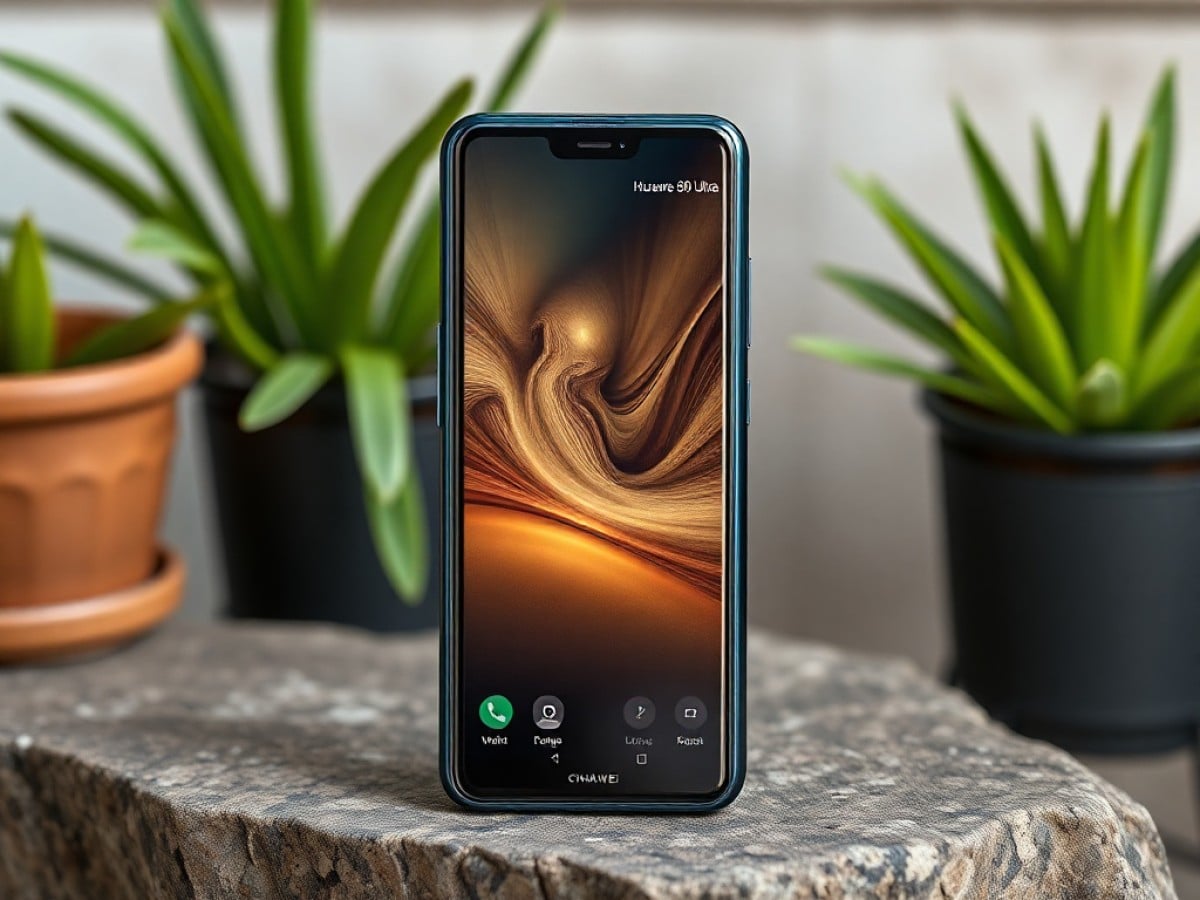
One year after the release of the Pura 70 Ultra, Huawei introduces its worthy successor, the Pura 80 Ultra. Equally comprehensive yet still lacking Google services, this new premium smartphone ticks almost all the boxes, particularly in photography. Can its qualities make us overlook the inevitable drawbacks? Find out in this detailed review.
- Price and Availability
- Design and User Interface
- Display, Processor, and Battery
- Photography, Video, and Audio
- So, Should You Buy It?
- Comments
Why You Should Never Reheat These Foods in the Microwave – The Hidden Dangers Experts Warn About
I tried the top 5 guard dogs—here’s what makes these breeds the ultimate protectors
Year after year, Huawei’s high-end smartphones continue to impress us with their quality. From the P60 Pro in 2023 to the Pura 70 Ultra in June 2024, the Chinese brand keeps innovating and distinguishing itself, especially in photography. For instance, the variable aperture of the main sensor provides control over light, depth of background, and sharpness in photos.
Also read – Review of Google Pixel 10 Pro Fold: A smartphone that won’t please everyone
While Huawei smartphones sell well in China, the scenario is quite different in Europe where the absence of Google, specifically GMS, complicates the usage of the brand’s products. Tech-savvy users might manage just fine, but others, not so much. This is a stark contrast to the ecosystems offered by Samsung, Google, and Apple, where almost everything is user-friendly. When buying a smartphone for over 800 euros, we expect a hassle-free experience.
The comparison then becomes odd. Typically, we rely on “quality to price” or “performance to price” ratios to rate a smartphone and compare it to others. With Huawei, it turns into a “quality to price AND usability” ratio: since the phone isn’t the easiest to handle, is the overall experience (excluding Google-related limitations) worth the time we must invest in overcoming these limitations? With the P60 Pro, the answer was almost yes. With the Pura 70 Ultra, it was no, due to the price. What about the Pura 80 Ultra, which arrived in France this autumn? Let’s delve into this comprehensive review.
Price and Availability
The recommended retail price for the Pura 80 Ultra is 1499 euros, the same price Huawei asked for the Pura 70 Ultra. As before, there is only one version of the smartphone, with 16 GB of RAM and 512 GB of storage. However, the Pura 80 Ultra is accompanied by a second phone, the Pura 80 Pro, priced at 1099 euros (100 euros less than its predecessor, the Pura 70 Pro).
At this price point, the Pura 80 Ultra directly competes with all other high-end smartphones in the market. Samsung’s Galaxy S25 Ultra, Apple’s iPhone 17 Pro Max, Xiaomi 15 Ultra, Google’s Pixel 10 Pro XL, Oppo’s Find X9 Pro, and of course the Honor Magic7 Pro, which will soon be replaced by its successor. We could also add a few more aggressively priced high-end models like the OnePlus 15 and the Realme GT 8 Pro (releasing next week).
The Pura 80 Ultra has been available since October 29, 2025. It comes in black and “prestige gold”. You can see this latter color in our test model. In the box, the smartphone comes with a USB-C cable and a protective case. Our test version also benefits from a 100-watt charger, offered at only 20 euros if purchased with the phone (as opposed to 50 euros usually).
Design and User Interface
Let’s start this review with a look at the phone itself. The Pura 80 Ultra is a very showy smartphone, even more so than its predecessor. While the black, matte version remains “understated”, the gold version, featuring a shiny, almost reflective finish, is flashy. And it retains fingerprints, though fewer than expected. The material covering the phone is Kunlun Glass 2 on the front and back. The chassis and edges are made of metal.
The enormous rectangular camera module, partially integrated into the casing, is immediately noticeable and attention-grabbing. It retains the triangular shape of its predecessor, but its dimensions are larger. It is very thick: not only is the entire module protruding, but each “island” of camera is as well. Each island is framed with metal and covered with mineral glass to protect the lenses.
The camera module itself is encircled with aluminum to ensure its durability in case of a fall. You can also see numerous aesthetic details in this module: lines running from the center to the outside, various markings detailing the photo setup, and “X-Mage”, a Huawei brand dedicated to photography. We’re clearly here to impress. Unfortunately, the module slightly unbalances the smartphone since it is not symmetrical.
The front features a slightly curved display, with not very thick borders. The selfie camera punch hole, positioned near the upper edge, is centered. The screen is protected by glass with an additional scratch-resistant layer applied at the factory.
While the latest iPhone generations have created a trend towards straight edges, Huawei keeps its rounded edges. It’s less modern visually but very comfortable in hand. Similarly, the faces of the Pura 80 Ultra are slightly curved, contrary to most competitors.
As a result, the smartphone is quite thick: 8.3 mm. However, it’s 0.1 mm thinner than the Pura 70 Ultra. The smartphone is also slightly taller (+0.4 mm), wider (+1 mm), and heavier (+7.5 grams). Note also that the Pura 80 Ultra is IP68 certified and, new for 2025, IP69. This latter certification asserts that the phone is protected against jets of water under pressure.
On the software side, the Pura 80 Ultra runs on the latest version of EMUI. It’s numbered 15.0 and is based on an Android 15 kernel. Compared to EMUI 14, the interface has slightly changed visually, although not radically different. Don’t expect a change similar to iOS 26 compared to iOS 18, for example. Among the minor tweaks, note the reorganization of the notification panel, new point of interest photos in Petal Maps, a new shopping widget on the home screen… Nothing that will change our habits.
The same goes for artificial intelligence. Celia is still there to assist the user. It offers voice commands, visual search, and all the tools we could find with older versions of Bixby or Siri. The voice recognition engine works correctly but still requires voice training (which is no longer the case with Google Assistant for several years). EMUI is very behind in artificial intelligence (this may not be the case with HarmonyOS, but it’s impossible for us to know).
Besides Huawei’s applications, we find a few commercial partners here. First, Microsoft, with Bing Search as the default search engine, and Swiftkey as the default keyboard. Then, Snapchat and Meetime, the only two applications installed by default. The interface is teeming with other commercial app icons, but none are physically installed. However, their presence can be overwhelming for newcomers.
We are always very disappointed to see the abundance of advertisements in this interface: recommendations in folders, apps checked by default in the AppGallery, advertisement banners in Video, commercial notifications in Petal Maps, etc. We don’t pay 1500 euros to be bombarded with advertisements.
We won’t go into detail about the absence of Google and GMS, nor about the daily implications this may have (which go beyond simple lack of convenience) and the tricks deployed by Huawei to circumvent these implications. We are facing the same issues as with the Pura 70 Ultra, whether in terms of app availability on the AppGallery, software compatibility between them, and the security of personal information. Just know that these limitations are still present.
Display, Processor, and Battery
Let’s stay on the front and examine the display. The Pura 80 Ultra partly inherits the technical specifications of the Pura 70 Ultra’s panel. In particular, the size remains at 6.8 inches. However, the screen ratio changes slightly, moving from 20.3:9 to a more classic 20:9. The definition increases a little (1276 x 2848), with the resolution changing slightly (259 pixels per inch, against 258).
The refresh rate is still up to 120 Hz maximum. The screen retains LTPO technology, allowing this rate to vary from 1 to 120 Hz depending on the content displayed on the screen. The contrast ratio is, of course, infinite, since the screen is OLED. The brightness announced by Huawei is increasing: 3000 nits at local peak, compared to 2500 nits previously. With our probe, we measured 577 nits in automatic mode, regardless of the color profile. And that’s pretty good.
Regarding colorimetry, the Pura 80 Ultra offers two profiles: normal or vivid. The first is extremely well calibrated. The white is at 6600°, just a few dozen points from perfect white. The average Delta E is only 1.1. The average color temperature is 6668°. And the gamma is very controlled at 2.2 across the entire color range. Note that this year the Pura 80 Ultra gains the HDR Vivid certification, a standard mainly supported by Chinese brands (including Huawei and Honor…). We would have preferred HDR10+ or Dolby Vision.
Under the hood, we find a Huawei processor again this year. The 2024 Kirin 9010 makes way for the Kirin 9020, a fairly typical succession. According to Huawei, there are two important differences: the NPU, more powerful and better able to handle artificial intelligence, and energy management. A promising claim that hides a harsh reality: the Kirin 9020, accompanied here by 16 GB of RAM, is etched in 7 nm, which does not bode well for performance.
We have already tested the Kirin 9020 since it powers the Mate X6, tested at the beginning of 2025. And during those tests, we had a mixed impression. Sure, applications and the interface show no slowdowns. But the processor quickly shows some power limits. Against any high-end SoC from the past two years, from Qualcomm, Apple, or MediaTek, the Kirin 9020 is far behind. Even the Tensor G4 and G5, which do not have a reputation for being fast, are ahead. And we find the same result here.
Choosing this SoC has two disadvantages and two advantages. First flaw, the Pura 80 Ultra is not made for gaming. The smartphone is not only incompatible with Ray Tracing, but demanding games suffer strong slowdowns. Moreover, they will quickly heat up the smartphone, reaching the symbolic 50°C mark on the casing. Second flaw, the Kirin 9020 is incompatible with 5G. A weakness that might deter some.
What then are the qualities of this SoC? First, the platform suffers no power loss: the stability of the platform is exemplary, over 90% in all endurance tests. A quality that more powerful smartphones could really use.
The second advantage of this SoC is energy consumption management. The Kirin 9020 is very low power. This significantly optimizes the autonomy of the Pura 80 Ultra, which is equipped with a lithium polymer battery of 5170 mAh. This is almost the same capacity as the Pura 70 Ultra (5200 mAh). Note that the Chinese version of the Pura 80 Ultra benefits from a 5700 mAh battery. 10% more battery, we wouldn’t have said “no”, even if it’s not necessary.
Indeed, the Pura 80 Ultra offers high autonomy. In standard use (email, messaging, telephony, casual gaming, social networks, web), PCMark exceeds 27 hours, which is very rare in the high-end range. This corresponds to an improvement of nearly 6 hours compared to the Pura 70 Ultra. We translate this score by an autonomy of about 3 days. It is evident that the frugality of the Kirin 9020 has something to do with it. But it’s certainly not the only optimization at play. However, be careful, when the SoC is highly solicited, it loses its efficiency. Gamers can count on an autonomy between 3 and 5 hours.
Once the battery is discharged, it’s time to plug in the Pura 80 Ultra. The latter is compatible with 100 watts fast charging wired and 80 watts with a wireless charger. With an official Huawei charger, the smartphone charges in less than 50 minutes. Here are our intermediate measurements with the 100-watt charger:
- 10 min: 33%
- 20 min: 55%
- 30 min: 75%
- 45 min: 97%
We compared the 88-watt charger of the P60 Pro with the 100-watt charger delivered with our sample of the Pura 80 Ultra. The difference is not only minimal, but the second charger is slightly faster (about 5 minutes difference). And surprisingly, the official charger is not always recognized as such, even with the provided USB cable. Well… To care for the battery, EMUI offers several options: slow charging, intelligent charging, and charge limit (from 70% to 90%, with a precision of 10%).
Photography, Video, and Audio
Photography is a very serious subject when we talk about Huawei. And more specifically about the Pura series, which gathers all the firm’s innovations in this area. The Pura 80 Ultra is no exception, as it incorporates everything that the Pura 70 Ultra did well and adds its own improvements. The first is the arrival of a new, brighter lens for the selfie sensor, which will please selfie enthusiasts.
The second modification is the most significant. It concerns the zoom. The macro mode telephoto lens gives way to a dual optical zoom which, like with Sony, uses one sensor and two lenses, as well as a prism to switch from one lens to another. The telephoto lens loses in brightness but gains in adaptability. The stabilizer is improved. And the optical zoom now reaches up to 9.4x. Here are the details of this configuration:
- Main: 50 MP sensor, variable aperture at f/1.6-4.0, 1-inch sensor, dual pixel autofocus, optical stabilizer
- Telephoto: 50 MP sensor, aperture f/2.4 or f/3.6, phase detection autofocus, “sensor-shift” type optical stabilizer, optical zoom 3.7x or 9.4x
- Panorama: 40 MP sensor, aperture at f/2.2, contrast measure autofocus
- Selfie: 13 MP sensor, aperture at f/2.0, contrast measure autofocus
So, are the results up to the ambition and promise? The answer is yes. The colors are vibrant, but not overloaded. Textures are very well reproduced. Light is very well managed, with a very wide dynamic range. And this across all sensors. It’s quite rare enough to note. No exercise really scares this phone, whether day or night, indoors or outdoors, in shadow or in full light. However, be aware of small optical aberrations in some situations.
Similar Posts
- Huawei Pura 80 Ultra Review: Incredible Camera, But Does It Offset Its Flaws?
- Motorola Unveils Edge 70: Direct Challenger to Galaxy S25 Edge and iPhone Air!
- Huawei Mate X7 Review: A Photography King Selling Old Tech at New Prices!
- Samsung’s Galaxy Z Trifold Makes Its Debut: Is Huawei in Trouble?
- OnePlus 15R Officially Unveiled: Meet the 2025 Flagship Killer!