
Scientists confirm: This is the most effective way to get your cat’s attention, according to new research
Elderly Couple Refuses Reserved Seats—Viral Train Standoff Sparks Fiery Debate on Courtesy
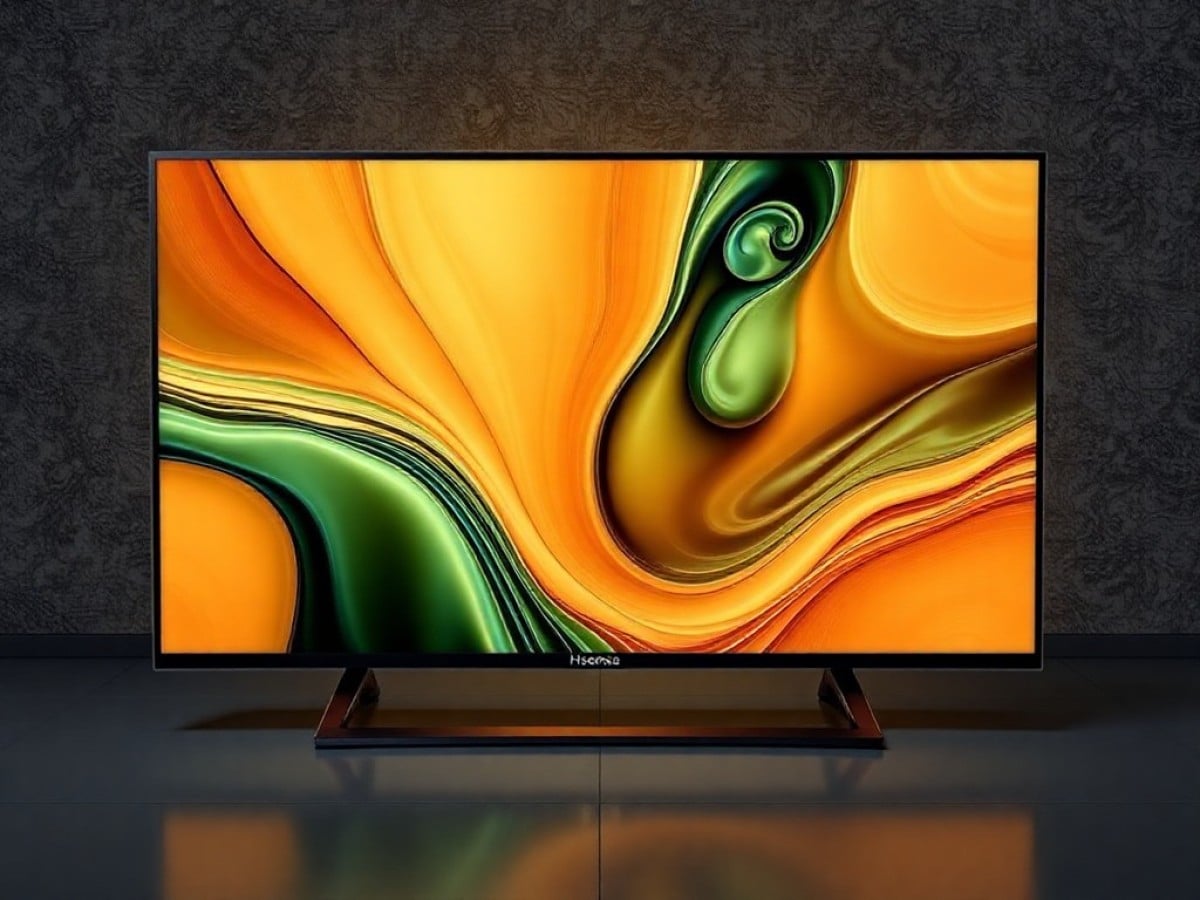
The Hisense 55E7Q Pro is part of the Chinese manufacturer’s aggressive push into the market of affordably priced QLED TVs, aiming to make technology typically reserved for higher-end models more accessible.
This TV is primarily designed for versatility, featuring a native 144 Hz panel, full HDR compatibility including Dolby Vision IQ and HDR10+ Adaptive, and a suite of advanced gaming features such as Pro Game Mode, VRR, and ALLM.
As a budget model, it uses a simplified Full LED backlight instead of a Mini-LED system, and it has a significantly lower peak brightness which curtails its HDR capabilities.
With its 55-inch VA LCD panel displaying an Ultra HD resolution (3840 x 2160 pixels), this model utilizes 8-bit + FRC processing to achieve over a billion color shades, enhanced by Quantum Dot technology for more vibrant and accurate colors compared to traditional LEDs.
The TV is available in a wide range of sizes from 43 to 100 inches to meet various market needs. Priced at around 450 euros for the 55-inch version, it targets those who want to enjoy a modern, fluid image without investing in the higher U7, U8 ranges, or an OLED model.
However, the budget pricing requires compromises on maximum brightness, contrast, and sound amplitude, which we will detail in this review to determine if the 55E7Q Pro truly deserves a spot in your living room.
Why You Should Never Reheat These Foods in the Microwave – The Hidden Dangers Experts Warn About
I tried the top 5 guard dogs—here’s what makes these breeds the ultimate protectors
In competition, the Hisense 55E7Q Pro directly challenges the TCL C69K, which is sold for just a few tens of euros more and offers a Mini-LED backlight with significantly higher brightness. Also available in the same price range are Samsung’s entry-level QLEDs like the Q70, and LG’s QNED models targeting the same demographic of family and gaming users without breaking the bank.
Hisense 55E7Q ProTechnical Specifications
| Model | Hisense 55E7Q Pro |
|---|---|
| Dimensions | 1234 mm x 768 mm x 274 mm |
| Maximum Resolution | 3840 x 2160 pixels |
| Screen Size | 55 inches |
| Compatible HDR | HDR10, HDR10+, Dolby Vision |
| HDMI Ports | 4 |
| Compatible Surround | Dolby Atmos |
| Number of Speakers | 2 |
| Speaker Power | 30 watts |
| Audio Output | Speakers, Optical |
| Operating System (OS) | Vidaa U |
| Voice Assistant | Amazon Alexa, Vidaa Voice |
| Energy Efficiency | E |
| Product Sheet |
Hisense 55E7Q ProDesign and Connections, with Inverted V-shaped Feet
The Hisense 55E7Q Pro features a simple and functional design appropriate for its entry-level status, without unnecessary frills but with a decent finish for its price range. The rear chassis is entirely made of black plastic, a common solution in this market segment that helps keep production costs at a reasonable level, even though it obviously doesn’t convey a high-end feel to the touch.
The edges of the panel are relatively thin on the top three sides, which helps focus attention on the image, while the bottom border is slightly thicker to accommodate the control electronics.
Expect a 97 cm gap between the two inverted V-shaped feet that do not offer alternative positions in either width or height. The minimum depth of the furniture must be 27.5 cm. The screen’s elevation from the furniture is about 6.5 cm, barely enough to place a soundbar underneath without obstructing the infrared port located in the center.
Note the possibility of wall mounting thanks to the VESA 400 x 200 mm fixtures for an even more discreet and modern appearance in the living room.
Overall, the 55E7Q Pro does not attempt to compete with high-end models in terms of design but fully embraces its status as a practical and accessible TV, which should suffice for most users who prioritize image quality and features over pure aesthetic appeal.
The Hisense 55E7Q Pro offers a fairly complete set of connections for a TV in this price range, although it features only three HDMI ports instead of the four typically found on most competing models, which could be a limitation if you have multiple devices to connect simultaneously such as a gaming console, UHD Blu-ray player, multimedia box, and a TV decoder.
Among these three HDMI inputs, two are compatible with HDMI 2.1, supporting 4K at 120 Hz, VRR (Variable Refresh Rate), and ALLM (Auto Low Latency Mode), and only HDMI 2 supports eARC (Enhanced Audio Return Channel) to send sound to a compatible soundbar or home cinema amplifier.
The third HDMI port is limited to the HDMI 2.0 standard and thus to a maximum refresh rate of 60 Hz in 4K, which is sufficient for connecting a classic Blu-ray player or an IPTV box but will limit the performance of the latest generation consoles.
The presence of two USB ports allows for playing videos, photos, and audio files from a USB stick or external hard drive, and can also power a low-consumption external device like a Chromecast dongle.
The TV also includes an optical S/PDIF audio output for connecting a soundbar or amplifier without eARC, an RJ45 Ethernet port for a more stable wired connection than Wi-Fi, as well as standard antenna sockets for DTT, cable, and satellite with DVB-T2, DVB-C, and DVB-S2 tuners.
The Fransat certification and HbbTV 2.0.4 compatibility ensure access to catch-up TV services and interactive features offered by French channels, complementing the traditional TV experience. Wi-Fi 5 is present to ensure adequate speeds (but not the highest) when streaming 4K HDR content from platforms like Netflix, Prime Video, or Disney+, while Bluetooth 5.0 allows connecting wireless headphones, portable speakers, or even a keyboard and mouse to ease navigation through the interface.
The Apple AirPlay 2 feature allows screen sharing from an iPhone, iPad, or Mac, simplifying the streaming of photos, videos, and music stored on your iOS and macOS devices. The TV also supports DLNA for playing content from a local multimedia server on your home network, a feature appreciated by users who have a significant digital library. The array of connections and wireless protocols make the 55E7Q Pro a well-equipped TV for family and connected use, although the absence of a fourth HDMI port may frustrate the most demanding users who have numerous devices.
The Remote Control
The remote control included with the Hisense 55E7Q Pro features a classic and functional design, but it is somewhat disappointing due to its finish and the quality of its materials, which betray the TV’s budget nature. Entirely made of lightweight plastic, it feels fragile to the touch and clearly lacks the sturdiness found in the premium remotes of Hisense’s U7 or U8 ranges. There is no charge holding system with a solar panel or a rechargeable battery. You must use two AAA batteries.
However, the buttons are quite stiff, which is a good thing as it provides a satisfying tactile feedback. The lack of backlighting is another downside, although this feature remains rare on entry-level TVs (except for Thomson), and it’s hard to fault Hisense in this segment.
The button layout is still coherent, with direct shortcuts to major streaming platforms such as Netflix, Prime Video, YouTube, Apple TV, TV Channels+ (Hisense’s IP channel platform), and Disney+, speeding up access to content without having to navigate through the interface menus. A dedicated button activates the built-in microphone for voice commands via Alexa or Vidaa Voice, allowing you to start a search, change the channel, or adjust the volume without touching the remote control. The remote operates via infrared and Bluetooth. Overall, this remote fulfills its basic mission and effectively controls all the TV’s functions.
Hisense 55E7Q ProImage Quality and Measurements
The Hisense 55E7Q Pro relies on a VA (Vertical Alignment) type LCD panel combined with a Full LED Direct backlight with QLED technology, meaning a Quantum Dot film is placed in front of the LEDs to enhance color saturation and accuracy.
This QLED technology achieves more vibrant and accurate colors than traditional LED panels, especially in green and red hues, which are more intense without falling into artificial oversaturation. The VA panel offers superior native contrast compared to IPS panels, resulting in deeper blacks and better rendering in dark scenes, even though the absence of a Mini-LED system limits the TV’s ability to finely manage bright zones on a black background.
The Direct LED backlight distributes LEDs across the entire panel surface rather than just the edges as in Edge LED systems, which improves overall lighting uniformity and reduces light leakage in the corners, even though blacks remain slightly grayish compared to what OLEDs or mid-to-high-end Mini-LEDs offer.
Of course, the TV offers several pre-configured image modes including Standard, Energy Saving, Sport, Filmmaker, Game, as well as ACR Enhancement (i.e., via AI), each with a different color profile and gamma curve to suit the type of content being viewed.
The Filmmaker mode, recommended by cinema professionals, respects the creators’ intentions with quite satisfactory colorimetry. We measured an average delta E of 3.54 in SDR, a score that is not optimal since the trained human eye can then perceive some color deviations between the requested color and the displayed color, the score being below 3.
The average color temperature of 6394 K is very close to the reference standard of 6500 K. The average gamma is slightly higher than the expected value in the test conditions (2.4) since it was measured at 2.6, resulting in images that are darker than intended on the screen.
During our test sequences with movies and series in 4K HDR from Netflix, Prime Video, and Disney+, we observed that the TV delivers smooth and pleasing images to the eye on animated content and mainstream series, with punchy colors that are immediately appealing.
We did not observe any posterization effects, which is always a good thing, as the screen thus offers consistent color gradients. The overall image remains quite dark, too dark for our taste.
Action scenes benefit from the high refresh rate, which significantly reduces motion blur compared to traditional 60 Hz panels, and the Ultra Motion (MEMC) processing interpolates images to achieve even greater fluidity on content at 24 or 30 frames per second, although some purists may prefer to disable this function to preserve the original cinema rendering.
On UHD Blu-ray content tested, bright and colorful scenes perform very well with beautiful saturation and properly exploited 4K definition, but dark scenes quickly reveal the TV’s limitations with blacks that lack depth and blooming (light halos around bright objects on a black background) that remains visible around subtitles and bright special effects.
The peak brightness measured at only 373 cd/m² in HDR Filmmaker mode greatly limits the visual impact of HDR content, especially if you are used to Mini-LED TVs that easily exceed 1000 cd/m² or high-end OLEDs. Note that the ACR Enhancement mode (via AI) achieves a slightly higher peak (420 cd/m²).
This modest brightness results in a functional HDR rendering, but without a real “wow” effect, as the highlights lack punch and the very bright areas are smoothed to prevent clipping (loss of detail in overexposed areas). In practice, HDR Dolby Vision IQ and HDR10+ still provide an increase in dynamism and shadow detail compared to standard SDR.
Regarding color fidelity, it is very good as we measured an average Delta E of 2.06 when the Filmmaker mode is activated and 2.09 with the ACR mode (AI Enhancement). Note that usually, modes enhanced via artificial intelligence often offer content that is much too saturated, which is not the case here, as Hisense has managed to calibrate the image accurately. Finally, the color space coverages are not extraordinary, considering the QLED technology used here.
The viewing angles remain the classic weak point of VA panels with a loss of brightness, accompanied by a noticeable color shift that dulls the image for viewers sitting on the sides.
Hisense 55E7Q ProGaming
The Hisense 55E7Q Pro has clearly been designed with gamers in mind (hence the Pro suffix in its name), and it incorporates a range of gaming features that make it particularly attractive for owners of PlayStation 5, Xbox Series X, or gaming PCs.
The 144 Hz panel is a key feature, with VRR (Variable Refresh Rate) compatibility via AMD FreeSync Premium that synchronizes the screen’s refresh rate with the source to eliminate image tearing and stuttering during fast-paced scenes.
This FreeSync Premium technology works perfectly with Xbox Series X and S consoles as well as recent AMD and Nvidia graphics cards that support VRR, ensuring exceptional fluidity in competitive games like FPS or racing games.
The Game Mode activates automatically via ALLM (Auto Low Latency Mode) as soon as a compatible console is detected, drastically reducing the latency time between the action on the controller and its display on the screen.
We measured a particularly low input lag of 13.8 ms, which corresponds to a single frame delay and guarantees absolute responsiveness, essential for demanding gamers who play online.
For those who prioritize color fidelity, at Hisense, you can activate Game Mode and thus enjoy the corresponding technologies while leaving the image mode in Filmmaker. If you prefer more saturated colors, switch to another mode.
It is worth noting the presence of two HDMI ports supporting frequencies up to 144 Hz, while the third is limited to 60 Hz.
In addition, gamers will also appreciate the presence of a dedicated gaming menu that displays the current refresh rate, the status of VRR and ALLM, and options to finely adjust brightness, contrast, and black levels without leaving the game.
Hisense 55E7Q ProAudio
The audio system of the Hisense 55E7Q Pro relies on a minimalist 2.0 stereo configuration with two
Similar Posts
- Tested: Haier H65S80GUX – A Precision-Focused 65-Inch TV at Just €600!
- Samsung Takes Aim at “Fake QLED TVs” in Bold New Ad: Results Are Surprisingly Unexpected!
- TCL 65C7K Review: Is This the New Premium Segment Leader?
- TCL X11L Review: Can Mini-LED SQD Truly Rival Premium OLED TVs?
- Sony Bravia 7 II Review: More Affordable True RGB Mini LED Than Bravia 9 II!

Maya Singh is a senior editor covering tablets and hybrid devices. Her work explores how these tools reshape digital productivity and learning. She also contributes to feature editorials on emerging tech.