
Scientists confirm: This is the most effective way to get your cat’s attention, according to new research
Elderly Couple Refuses Reserved Seats—Viral Train Standoff Sparks Fiery Debate on Courtesy
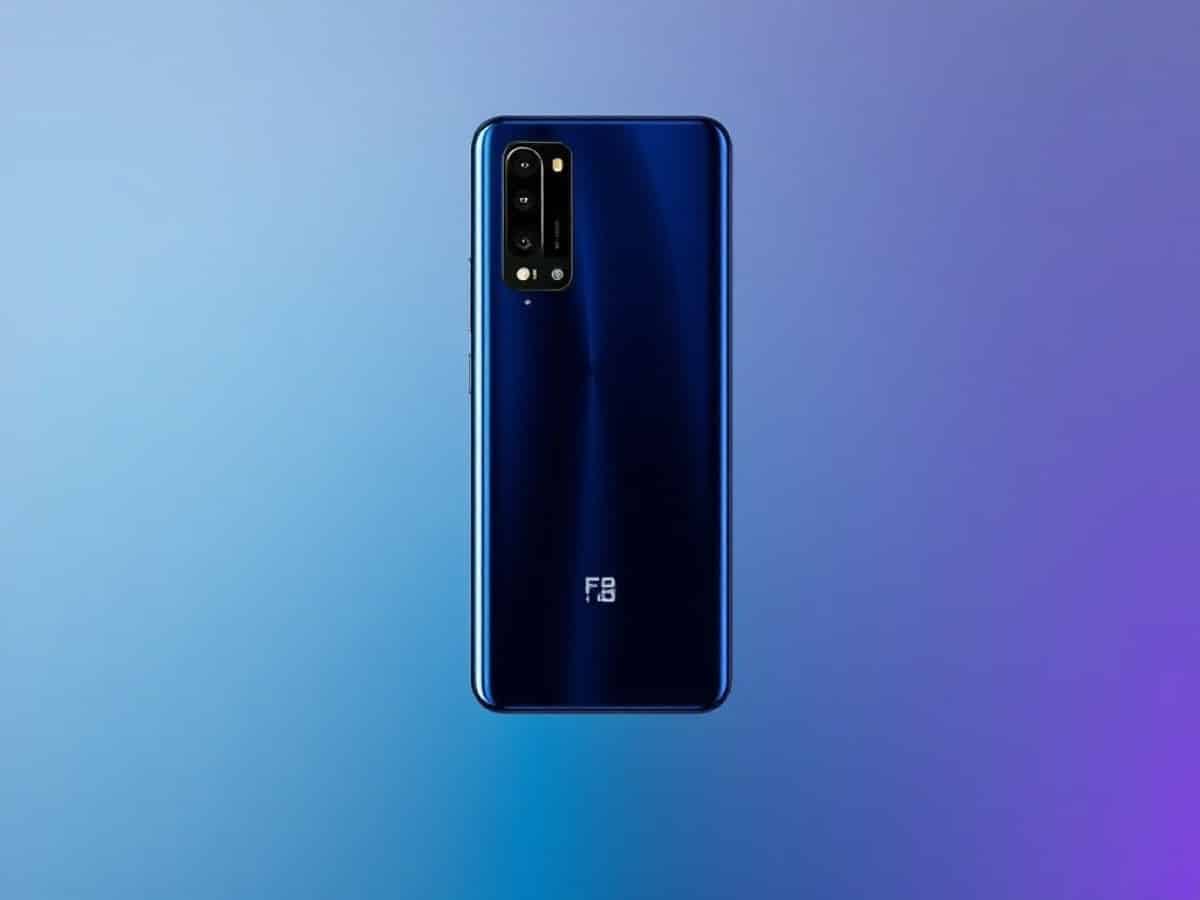
The Xiaomi Poco F8 Pro positions itself as the “balanced” model in the F8 series: featuring a high-end SoC, a large battery, and a very bright screen, but without the Ultra’s additional audio and some premium features. The goal, as with the previous Poco F7 Pro, is to offer a flagship experience while maintaining a more compact chassis and a more affordable price.
In practice, this deliberate compromise skips some photo and audio refinements to focus instead on raw power, battery life, and display comfort in everyday use. Let’s see if these decisions make the Poco F8 Pro a better value for money than its big brother, the Poco F8 Ultra.
Xiaomi Poco F8 ProSpecifications
| Model | Xiaomi Poco F8 Pro |
|---|---|
| Dimensions | 75.25 mm x 157.49 mm x 8.0 mm |
| Manufacturer Interface | HyperOS |
| Screen Size | 6.59 inches |
| Resolution | 2510 x 1156 pixels |
| Pixel Density | 419 ppi |
| Technology | AMOLED |
| SoC | Qualcomm Snapdragon 8 Elite |
| Graphic Chip | Qualcomm Adreno 830 |
| Internal Storage | 256, 512 GB |
| Rear Camera |
Sensor 1: 50 MP Sensor 2: 50 MP Sensor 3: 8 MP |
| Front Camera | 20 MP |
| Wi-Fi | Wi-Fi 7 (be) |
| Bluetooth | 5.4 |
| 5G | Yes |
| NFC | Yes |
| Fingerprint Sensor | Under the screen |
| Connector Type | USB Type-C |
| Battery Capacity | 6210 mAh |
| Weight | 199 g |
| Colors | Black, Silver, Blue |
| Product Page |
This review was conducted using a smartphone provided by the brand.
Xiaomi Poco F8 ProDesign
The Poco F8 Pro adopts a relatively compact format for a “large” 6.59-inch smartphone: approximately 157.5 mm in height, 75.3 mm in width, and 8 mm in thickness. The weight is around 199 g, which is reasonable considering the 6210 mAh battery and noticeably lighter than many “Ultra” models that weigh around 220 g.
The chassis combines a front protected by Gorilla Glass 7i, an aluminum frame, and a glass back, creating a rigid and creak-free assembly. The bottom border around the screen is reduced to 1.68 mm according to the manufacturer, with slightly thinner sides.
The edges are almost flat, but the frame is micro-curved at the edges to improve grip: the curvature is slight, just enough to break the angle without affecting landscape grip. The edges house, at the bottom, the SIM tray, the main speaker, the USB-C port, and a microphone; at the top, a second microphone and an infrared transmitter; on the right side, the volume and power buttons.
In hand, the width of around 75 mm and the reasonable thickness allow one-handed use for simple interactions, although the top of the screen remains hard to reach with small hands without adjusting the grip. The matte glass back does quite well at limiting fingerprints and improves grip compared to completely smooth glass, while maintaining a relatively understated look in the three main colors (black, blue, silver).
In terms of durability, the device is certified IP68, which means complete protection against dust and prolonged immersion up to about 1.5 m for 30 minutes. This places it in a still limited club of “almost flagship” smartphones that are truly waterproof at this level.
The rear camera module is rectangular, centered at the top, with a limited but sufficient protrusion to slightly tilt the phone when placed flat without a case. The optical fingerprint reader is integrated under the panel, at a comfortable height; the recognition speed is high, with unlock times close to instant in normal use, and especially a high success rate even with wet fingers.
Xiaomi Poco F8 ProScreen
The Poco F8 Pro is equipped with a 6.59-inch LTPS AMOLED panel, in 2510 × 1156 pixels (1.5K), with a ratio of about 19.5:9. The refresh rate reaches 120 Hz, with adaptive management. The panel is 12-bit, capable of displaying 68 billion colors, and the PWM chopping frequency goes up to 2160 Hz to limit perceived flickering at low brightness.
The specifications announce a typical brightness of about 600 nits, an HBM mode around 2000 nits, and a peak of 3500 nits on 25% of the screen surface.
Our measurements with our probe and Portrait Displays’ CalMAN Ultimate software confirm that the Poco F8 Pro is very convincing: the screen reaches 1090 nits in SDR and up to 1986 nits in HDR, ensuring comfortable readability and true bright peaks on compatible content. In practice, readability in full sunlight is excellent: the interface remains very readable, colors retain their saturation, and HDR videos gain in punch without completely crushing the whites.
In terms of colorimetry, while it was the most natural on the Poco F8 Ultra, the “Original Color Pro” mode here does not offer the expected fidelity: with an SDR Delta E measured at 3.92, it remains above the threshold of 3 and displays especially a red far too saturated compared to the reference. The coverage reaches 103% of sRGB but only 69% of DCI‑P3, which limits its interest for cinema content, while the average temperature of 6720 K leans slightly towards the cold without becoming frankly bluish. In HDR, the Delta E climbs to 7.1, a sign that this profile is clearly not the one to choose if one aims for the most neutral possible restitution.
Paradoxically, it is the default mode “Vivid” that turns out to be the most natural despite its name: the SDR Delta E drops to 2.99, with better control of the red, and the average temperature is measured at 6677 K, very close to the target of 6500 K. The coverage climbs to 117% of sRGB and 78% of DCI‑P3, which gives more latitude for colored content, while remaining globally coherent to the eye. Even if the HDR Delta E remains high at 6.65, this profile offers the best compromise between fidelity, visual punch, and viewing comfort, making it the most relevant choice.
The refresh rate can be locked at 60 Hz or 120 Hz, or left adaptive; in the latter case, the OS plays on a few fixed steps rather than dynamically descending to 1 Hz as on the most advanced LTPO panels. For touch, the sampling frequency reaches 480 Hz in normal use, with a game mode that offers “instant touch sampling” up to 2560 Hz. This very high value significantly reduces perceived latency in fast-paced games, which is noticeable in FPS or competitive titles.
Design, screen, software updates, AI features, photo quality, battery life: the Samsung Galaxy S25 Ultra is the best smartphone of the year 2025 according to Frandroid. Enjoy a €273.05 discount at Samsung.
Xiaomi Poco F8 ProPerformance
The Poco F8 Pro is powered by a 4 nm Snapdragon 8 Elite, with an 8-core CPU (2 high-performance cores over 4.3 GHz, 6 efficient cores around 3.5 GHz) and a latest-generation Adreno GPU. It is paired with 12 GB of LPDDR5X RAM and UFS 4.1 storage (256 or 512 GB), ensuring very high read/write speeds.
On AnTuTu v10, the scores do not exceed 3 million points, but they still position the device in the high end of the Android spectrum. On pure CPU tests (like Geekbench), the F8 Pro is always in the zone of the best recent Snapdragons, and even outperforms last year’s Poco F7 Ultra, which was equipped with the same chip.
However, like the Poco F8 Ultra, this Poco F8 Pro seems to suffer from a fairly marked throttling issue. When pushing the chip to the maximum for an hour, it remains stable for about ten minutes before losing almost all its power for a few seconds, then gradually recovering. These spikes are quite unusual but could be the result of the heat generated by the smartphone, which was really hot during this test. We hope that an update will quickly correct this issue.
In real use (interface, multitasking, browsing, social networks), the smartphone remains perfectly fluid, including with a large number of apps in memory thanks to the 12 GB of RAM.
Heavy 3D games like Genshin Impact or Wild Rift run at 60 fps or 120 fps depending on the title in high graphics, with occasional drops or a progressive decrease in framerate only during very long sessions, precisely where the system slightly limits frequencies to maintain temperature.
Xiaomi Poco F8 ProSoftware
The phone runs on Android 16 with HyperOS 3, the latest iteration of Xiaomi’s custom overlay. The interface includes a separate control center from notifications, a strong dose of customization (themes, icons, animations, Always-On Display), and a game manager (Game Turbo) that allows you to force the frame rate, block alerts, and monitor system status in real time.
The management of background applications is quite aggressive by default, which helps battery life, but can cut off some tasks if permissions are not adjusted; settings allow these optimizations to be disabled on a case-by-case basis.
As is often the case with Poco, the device arrives with several pre-installed apps, most of which are uninstallable.
As with the Poco F8 Ultra, you get 4 years of major updates and 6 years of security updates. A decent duration for the former and competitive for the latter.
Xiaomi Poco F8 ProPhoto
The Poco F8 Pro uses an optical block that includes three sensors:
- A 50 MP wide-angle, Dual Native ISO Fusion Max with OIS f/1.88
- An 8 MP ultra-wide-angle with an aperture of f/2.2
- A 50 MP telephoto lens equivalent to 60 mm (2.5x zoom) with OIS f/2.2
This is the first time that a Pro model signed by Poco has the right to a telephoto lens, the previous Poco F7 Pro had to make do with a simple wide-angle and ultra-wide-angle duo. The selfie part is handled by a 20 MP sensor.
Wide-angle
In good light, the main sensor delivers detailed images, with good texture rendering and a wide dynamic range, thanks in particular to an announced range of 13.2 EV for the sensor. The focus is fast and reliable, including on close subjects, which limits misses in everyday photos.
At night, the dedicated mode on the main sensor smooths noise and recovers details in the shadows, but fine textures and micro-contrasts remain a notch behind the best camera phones, sometimes with a slightly “plastic” rendering.
Ultra-wide-angle
The 8 MP ultra-wide-angle is more limited: the lower resolution is felt on the edges, where sharpness drops, and noise arrives earlier in medium to low light. Distortion is well corrected, but dynamics and color accuracy are behind the main sensor
Similar Posts
- Xiaomi 15T and 15T Pro Launch Date Revealed: Here’s What We Know!
- Poco X8 Pro Review: Unleashing the Ultimate Budget Gaming Phone with RGB LEDs!
- Xiaomi 15T Review: High-End Smartphone Overshadowed by Poco Contender
- Xiaomi Redmi Note 15 Pro+ Review: A Convincing Smartphone Challenged by Xiaomi’s Classics
- Xiaomi 15T Pro Review: Experience Luxury Features Without the High Price!

Maya Singh is a senior editor covering tablets and hybrid devices. Her work explores how these tools reshape digital productivity and learning. She also contributes to feature editorials on emerging tech.