
Scientists confirm: This is the most effective way to get your cat’s attention, according to new research
Elderly Couple Refuses Reserved Seats—Viral Train Standoff Sparks Fiery Debate on Courtesy
While Samsung has been launching generation after generation of book-style foldables, and Motorola stuck with its Razr flip phones, the tech world has been eagerly awaiting Motorola’s entry into the large foldable market. Now, it’s finally here.
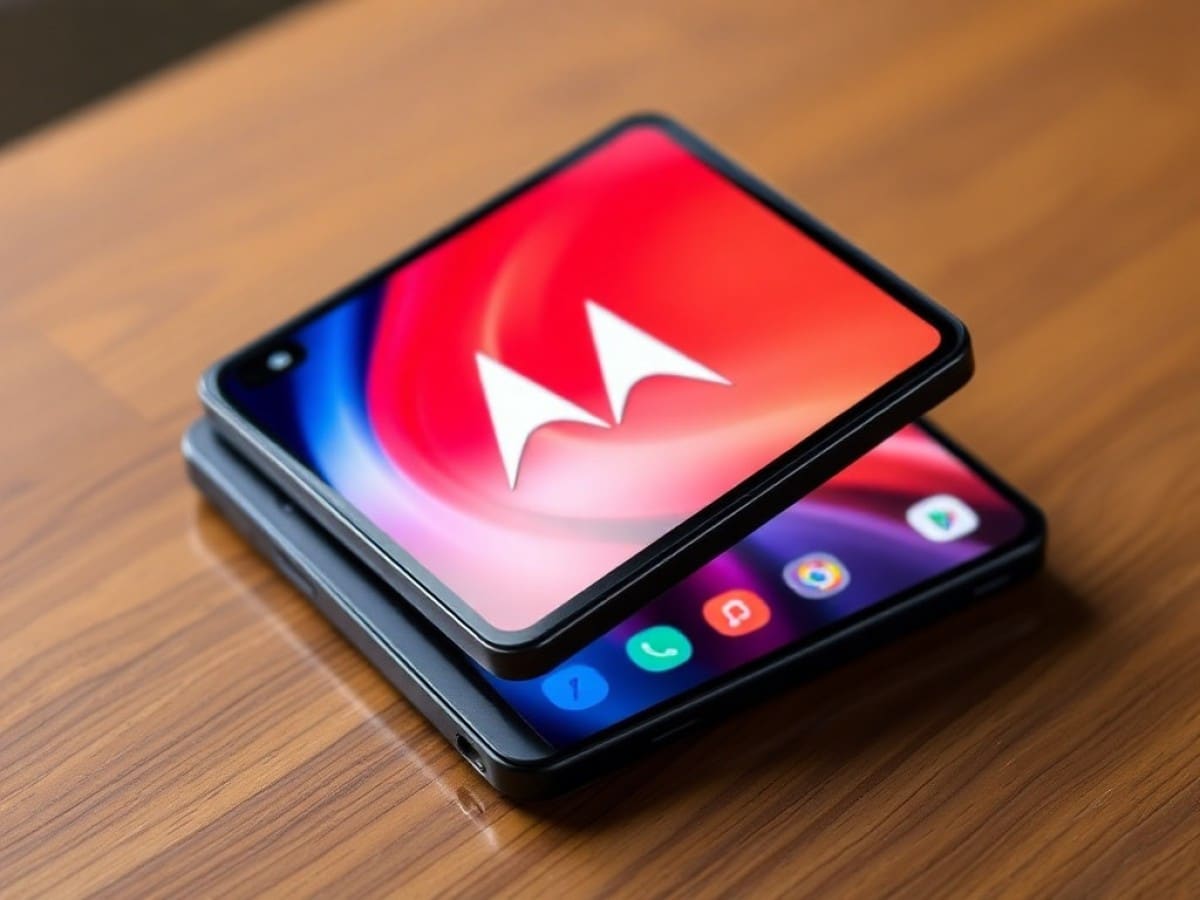
The Razr Fold moves away from the flip design to open like a notebook, revealing an 8.1-inch internal display. It boasts specifications that aim to outdo the competition, featuring a larger screen, a more substantial battery, the fastest charging available, a triple 50-megapixel camera setup, and a stylus included: Motorola seems to have checked nearly all the boxes.
I’ve spent about ten days using this phone as my primary device, and this is where things get a bit complicated.
An impressive spec sheet doesn’t always tell you how the device will perform in your pocket, under the sun, during intense gaming sessions, or on a bad network day. Therefore, the real question isn’t whether the Razr Fold wins the specs race—it often does—but how it performs in everyday use and whether entering the market after competitors have launched seven generations is enough to make a mark. Here are my thoughts.
Motorola Razr Fold Technical Specifications
| Model | Motorola Razr Fold |
|---|---|
| Dimensions | 144.5 mm x 160.05 mm x 4.55 mm |
| User Interface | Hello UX |
| Screen Size | 8.1 inches, 6.56 inches |
| Resolution | 2484 x 2232 pixels |
| Pixel Density | 410 ppi |
| Display Technology | OLED |
| SoC | Qualcomm Snapdragon 8 Gen 5 |
| GPU | Qualcomm Adreno 829 |
| Internal Storage | 512 GB |
| Rear Camera |
Sensor 1: 50 MP Sensor 2: 50 MP Sensor 3: 50 MP |
| Front Camera | 20 MP |
| Video Recording Resolution | 8K@30fps |
| Wi-Fi | Wi-Fi 7 (be) |
| Bluetooth | 6.0 |
| 5G | Yes |
| NFC | Yes |
| Fingerprint Sensor | Side-mounted |
| Connector Type | USB Type-C |
| Battery Capacity | 6000 mAh |
| Weight | 243 g |
| Colors | White, Blue |
| Product Sheet |
From this spec sheet, it’s clear that Motorola isn’t aiming to offer an “affordable” foldable: at €1,999, it’s squarely in Galaxy Z Fold territory, just below the regular price of the Galaxy Z Fold 7. The manufacturer compensates with a generous configuration (16 GB of RAM and 512 GB of storage as standard, where some rivals start at 256 GB) and includes a stylus in the box in Europe, whereas it’s sold separately in the US.
Before we dive into the testing, there’s a detail worth mentioning: the processor. Motorola has chosen the Snapdragon 8 Gen 5, not the 8 Elite Gen 5 that powers most flagship phones in early 2026. It’s a step below Qualcomm’s very latest high-end chip, a decision that suggests budget considerations. We’ll see how this compromise affects performance later in the review.
The unit for this test was provided by the brand.
Motorola Razr FoldErgonomics and Design
First impressions count, and I must admit: it feels solid. The Razr Fold fits nicely in the hand without the bulkiness found in earlier foldables. When closed, it measures less than a centimeter thick (9.9 mm) and weighs 240 g. It’s heavier than the Z Fold 7’s 218 g, but the difference is minimal when held, and the weight distribution is good.
Regarding finishes, Motorola has opted for a fashionable approach. There are only two colors, both Pantone certified: a Blackened Blue with diamond-engraved patterns and a Lily White with a silkier touch.
My unit was the dark blue, which could easily be mistaken for black. The back isn’t made of the usual frosted glass but a textured material that’s pleasing to the touch and more grippy, both literally and figuratively, as it tends to collect dust and lint from pockets, which can be brushed off with a fingernail.
The real ergonomic highlight is on the edge. Where the ultra-thin Galaxy Z Fold 7 leaves almost no room for the thumb to open it—often slipping and requiring multiple attempts—Motorola has designed a more natural grip. It might seem like a minor detail until you experience the frustration of the opposite. In daily use, opening the Razr with one hand is a smooth action rather than a minor struggle.
Then there’s the camera bump. It protrudes quite a bit at the back. Motorola justifies this with larger sensors, and we’ll see that this argument holds up. The gentle slope leading to the camera module avoids the “stair-step” effect. It’s not the stealthiest design, but it’s not unattractive either.
The hinge is made of stainless steel, with the now-standard teardrop mechanism seen on premium models. The movement is crisp, well-damped, and without play.
The external display is protected by Gorilla Glass Ceramic 3, a first on a smartphone. In practical terms, Corning promises better drop resistance. It’s hard to quantify day-to-day, but I did have an unfortunate drop on concrete: the glass was scratched, true, but it didn’t break. I’ll take it.
The device boasts dual IP48 and IP49 ratings. The former indicates protection against small particles and immersion up to 1.5 m for 30 minutes; the latter, more unusual, certifies resistance to high-temperature water jets. For a foldable, whose mechanics remain a point of vulnerability, this is reassuring. For comparison, it’s better than the Z Fold 7 in terms of water jet protection, although the Pixel 10 Pro Fold remains the only one in the trio fully dustproof (on paper, but that’s debatable).
The fingerprint sensor is integrated into the side button, reliable in my testing, but it’s positioned quite high up on the edge: you need to stretch your thumb to reach it. This is my main gripe with the controls, along with two other annoyances. First, the power button feels a bit mushy. Second, and more importantly, the dedicated AI button, stuck between the other keys, disrupts tactile orientation and cannot be reassigned to another function.
Another minor regret: the lack of Qi2 magnets at the back. Place the Razr on a magnetic charger designed for this standard, and it slips due to the lack of attachment. On Android, the Pixel is more or less alone in carrying this feature. That said, overall, the design work is quite successful: the Razr Fold stands between the very square Galaxy and the more rounded Pixel, with a distinct tactile identity.
Motorola Razr FoldPerformance
At the heart of the device lies a Snapdragon 8 Gen 5 processor supported by 16 GB of RAM. While it’s not the most powerful chip on the market—that title goes to the 8 Elite Gen 5—it’s still a top-tier processor, not a mid-range in disguise. The choice is primarily an economic one, and to be honest: in most everyday uses, the difference with competitors isn’t immediately noticeable.
The 16 GB of RAM and 512 GB of storage are more than ample. It’s the only configuration available, which simplifies both the customer’s decision-making and Motorola’s inventory management. The storage is based on fast memory, with excellent sequential read speeds noted in dedicated tests.
In daily use, there’s nothing to report: browsing, messaging, office tasks, multitasking with several apps—everything runs smoothly. Raw power is never a problem for ordinary tasks, and the large internal screen makes multitasking genuinely comfortable.
It’s in gaming where Motorola’s decision is noticeable. On high-demand open-world titles pushed to the max, I observed some frame drops where the Z Fold 7 performs better, better equipped in terms of chipset. The Razr holds its own honorably but isn’t the top choice for hardcore gamers.
On the plus side, the thermal management is commendable. Motorola has incorporated a real liquid cooling system. I found (and measured) that the Razr stays cooler under sustained load. This doesn’t prevent the performance drop mentioned earlier, but the phone handles heat better over time, which counts for long sessions.
My feeling, though, is that while the power is there, the software optimization isn’t flawless. I noticed occasional stutters here and there, especially in some interface animations, and slight delays elsewhere (more on that in the camera section). None of these are deal-breakers, but at a €2,000 price point, these small glitches stand out against the fluidity of a Galaxy or a Pixel (which is less powerful).
Motorola Razr FoldDisplay
Let’s start with the cover display, as Motorola has made it a real selling point. It’s a 6.6-inch pOLED LTPO panel in a 21:9 aspect ratio, capable of ramping up to 165 Hz. It’s the largest external panel in its category and has the highest refresh rate. LTPO technology allows the screen to automatically adjust its frequency—from very low to save battery life to the maximum for smoothness.
Inside, we unfold to a 2K resolution, 8.1-inch pOLED LTPO display at 120 Hz. Again, it’s one of the largest internal displays on the foldable market, and it’s perfectly crisp for reading, photo editing, or scrolling through a comic book. The shape is quite square, similar to the Z Fold 7.
Brightness is another major strength. Motorola claims peak brightness of 6,200 nits on the internal display and about 6,000 nits on the cover, the highest values currently available on a foldable. In practice, the peak only applies to small areas under specific conditions, but the margin is such that readability in direct sunlight is never compromised. During my tests on a bright spring day, I had no trouble viewing either screen.
The difference in refresh rates between the two screens (165 Hz outside, 120 Hz inside) mainly benefits the handful of games that support very high frame rates. Day-to-day, you’ll mostly enjoy very smooth scrolling on the cover display, making it as pleasant to use as a good conventional smartphone.
For those sensitive to OLED flickering, Motorola announces a 720 Hz PWM modulation on the cover, a higher frequency of brightness variation, thus less likely to fatigue the eyes. These are impressive figures, but they’re still below some rivals like Oppo Find or Honor Magic.
Content-wise, both screens support HDR10+ and, notably, Dolby Vision, a high dynamic range format that neither the Z Fold 7 nor the Pixel 10 Pro Fold supports. On paper, that’s a strong selling point. In practice, I must admit I didn’t notice a significant difference in everyday viewing, but the feature is there for those who consume a lot of compatible content.
The central fold, the bane of this format, is well managed. You really only notice it when tilting the phone and when light catches it at an angle. To the touch, there’s a slight depression at the center, but it fades from notice during normal use. It’s generally as discreet as what the Galaxy offers, and more subtle than on previous generations.
In summary, the display aspect is one of the Razr Fold’s most convincing features. Brighter, more refreshed, larger, compatible with Dolby Vision: Motorola has crafted a real success here. It’s worth noting, however, that in brightness measurements under standardized conditions, the Pixel manages to be brighter on its internal panel; but in real-life use, the Razr never lacks punch.
Motorola Razr FoldPhotos and Videos
The Razr Fold features a triple 50-megapixel camera setup, which, on paper, is more generous than its competitors. It includes a primary Sony Lytia sensor with an f/1.6 aperture and optical stabilization, a 122° ultra-wide-angle lens also at 50 MP with autofocus and macro mode, and a 50 MP periscopic telephoto lens with 3x optical zoom and stabilization.
The real advantages are the sizes of the sensors. Motorola has included larger-than-average photodiodes: the main sensor is reportedly the largest among current foldables, and even the telephoto lens surpasses the main sensor of the Pixel 10 Pro Fold in surface area—a rarity, as telephoto lenses are usually tiny. More surface area means more light captured, which theoretically means more detail and better low-light performance.
In practice, the main sensor delivers the best photos I’ve ever taken with a Motorola device. It’s a clear break from the brand’s history, whose flagships have often been disappointing in this area.
In broad daylight, the sharpness is there, the level of detail is high, and the device finally competes with Samsung or Pixel.
The downside is the unpredictable software processing. Sometimes the
Similar Posts
- Android 16 Beta Hits Eight New Motorola Smartphones: Find Out Which Ones!
- Galaxy Z Flip 7 Series Unveiled: Apple and Motorola’s Influence Clearly Evident
- Motorola Unveils Two Smartphones Under €200: What Do They Look Like?
- Galaxy Z Fold 8: Major Camera Upgrades Coming, Here’s What’s Changing!
- iPhone’s New Foldable Design Features Unique Samsung Screen: Even Samsung Hasn’t Dared to Use It!

Maya Singh is a senior editor covering tablets and hybrid devices. Her work explores how these tools reshape digital productivity and learning. She also contributes to feature editorials on emerging tech.