
Scientists confirm: This is the most effective way to get your cat’s attention, according to new research
Elderly Couple Refuses Reserved Seats—Viral Train Standoff Sparks Fiery Debate on Courtesy
Introducing the Power2: A New Benchmark in Smartphone Battery Capacity
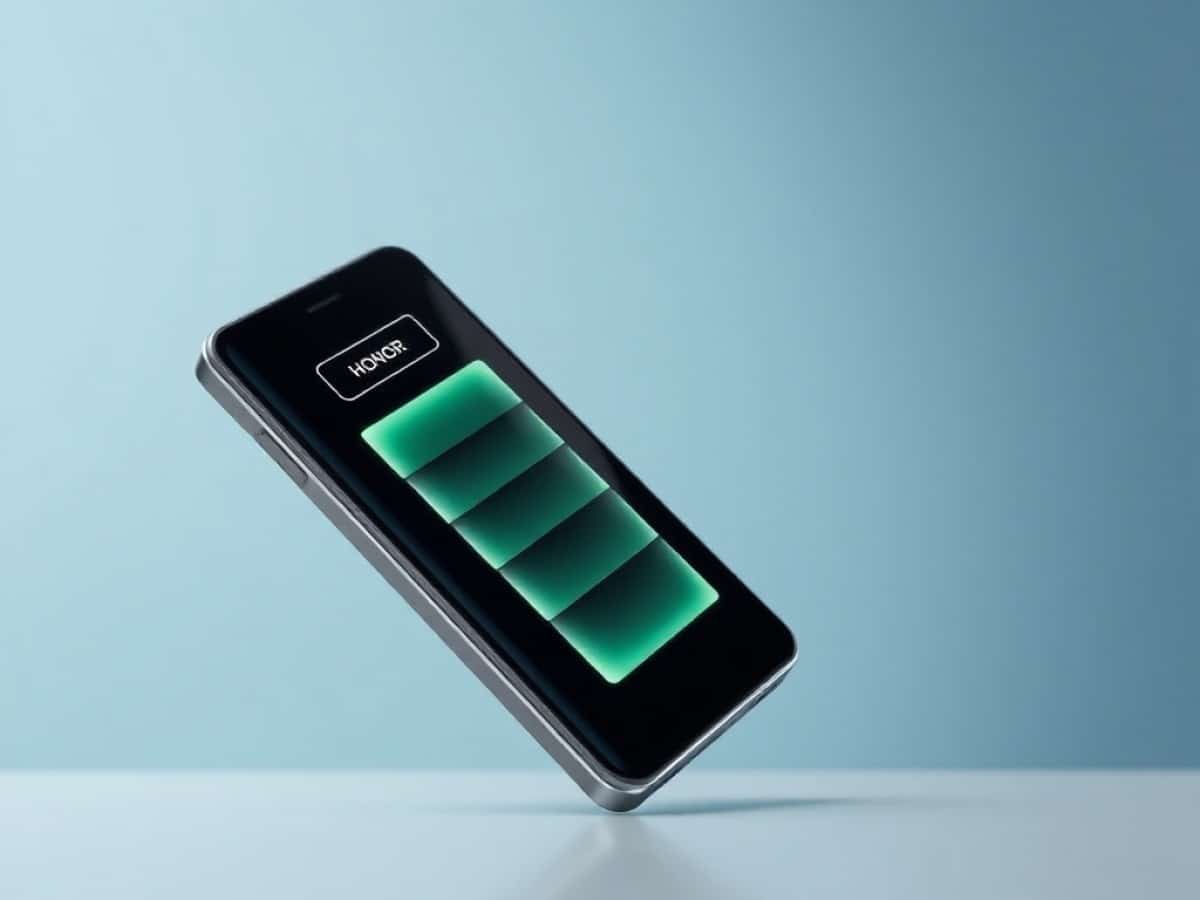
The Chinese manufacturer Honor has recently unveiled an impressive achievement in the smartphone market with its new model, the Power2. This device, which features a design that gently nods to inspiration (to put it politely), is equipped with a battery of almost unbelievable capacity: 10,800 mAh! In truth, the actual certified capacity is slightly less, at 9,886 mAh, but this is still significantly higher than what we are accustomed to. For context, the 6.3” iPhone 17 Pro has a battery capacity of 3,998 mAh with a SIM card (or 4,252 mAh with an eSIM), and the 6.9” iPhone 17 Pro Max offers 4,823 mAh with a SIM (or 5,088 mAh with an eSIM).
Compact Design, Massive Power
Despite its robust battery, the Power2 maintains a sleek profile with a 6.79″ display, dimensions of 162.1 x 76.3 mm, and a thickness of 7.98 mm. This makes it more compact and thinner than the iPhone 17 Pro Max, which measures 163.4 x 78 mm and has a thickness of 8.75 mm. Impressively, it manages to house a battery that is twice as large as that of the iPhone and still includes a physical SIM card slot. The battery not only boasts a capacity that dwarfs that of many competitors, but it also supports rapid charging at 80 W—double the rate of the iPhone’s battery. Furthermore, it features a reverse charging mode, capable of acting as an external battery pack to deliver a 27 W wired charge to devices such as a depleted iPhone.
The Technology Behind the Power
The secret to the Power2’s remarkable battery capacity lies in its silicon-carbon, or silicon-carbon technology, which achieves a higher density than traditional lithium-ion batteries. This is due to the use of a silicon and carbon composite in place of the standard graphite in the anode. Silicon is capable of storing up to ten times more lithium ions than graphite, while a carbon structure accommodates swelling and enhances the battery’s lifespan. While silicon electrodes are not a new concept (Honor discussed this technology two years ago), their application has been increasingly refined and the production costs have decreased.
Currently, silicon-carbon batteries are quite rare in Western smartphones. According to Frandroid, this scarcity is largely due to stringent European norms that demand high levels of thermal stability and expansion control in batteries. Apple, known for its interest in advancing iPhone battery technology—especially with the upcoming thinner models and the much-anticipated folding model set to release in September—is undoubtedly exploring all avenues to increase battery capacity. Rumors suggest that Apple started developing its own battery technology in 2018, aiming to introduce its first in-house battery by 2025. However, there is no immediate expectation of a revolutionary breakthrough in this area.
Similar Posts
- Honor’s Ultra-Thin Smartphone with Record Battery Capacity: Release Date Revealed!
- iPhone Air’s eSIM Delayed: Free Pro Subscribers Must Wait!
- eSIM Guide: Activate Your Virtual SIM Card on iPhone Easily!
- Tim Cook Promises Extended Battery Life for the New iPhone Air: Details Inside
- iPhone 18 Pro Max Charges at Lightning Speed: Hits Unprecedented 52W!

Ethan Rivers focuses on Android smartphones, emerging mobile platforms, and operating systems. With a critical yet fair perspective, he evaluates devices on performance, design, and ecosystem compatibility.