
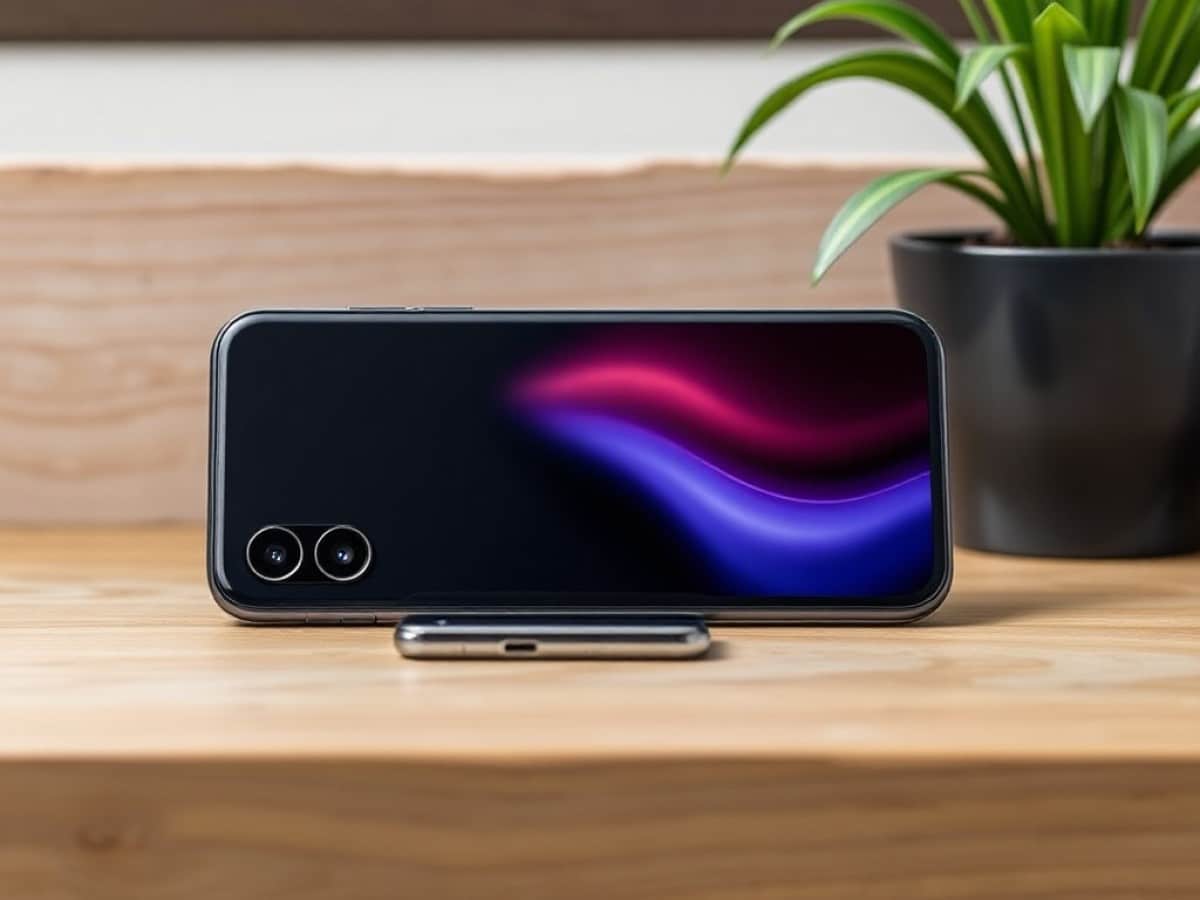
The Galaxy S26 hits the market with a price tag of 1,000 euros. For this price, the device shows minimal evolution except in its performance, powered by the Exynos 2600 chipset. After several weeks of testing, here are our thoughts.
Scientists confirm: This is the most effective way to get your cat’s attention, according to new research
Elderly Couple Refuses Reserved Seats—Viral Train Standoff Sparks Fiery Debate on Courtesy
The Galaxy S26 Ultra seems to have stolen the spotlight with its new privacy screen, a stunning marketing move by Samsung.
However, the Galaxy S26 Ultra isn’t the only new smartphone from the South Korean manufacturer’s 2026 lineup. There’s also the standard Galaxy S26, which should not be overlooked as it cleverly disguises its capabilities behind a facade reminiscent of the revamped Galaxy S25.
The real gem of this device lies within its core with the Exynos 2600, a proprietary SoC that has received significant attention from Samsung’s engineers. Long shunned (rightly or wrongly, depending on who you ask), the Exynos appears to be a promising release this year, according to initial benchmarks. These previews were enough to pique my curiosity and compelled me to dive deep into testing the Galaxy S26. If it lives up to its promises, it could very well be one of the pleasant surprises of the early year.
Samsung Galaxy S26Technical Specifications
| Model | Samsung Galaxy S26 |
|---|---|
| Dimensions | 71.7 mm x 149.6 mm x 7.2 mm |
| User Interface | One UI |
| Screen Size | 6.2 inches |
| Resolution | 2340 x 1080 pixels |
| Pixel Density | 409 ppi |
| Technology | AMOLED |
| SoC | Samsung Exynos 2600 |
| Internal Storage | 256, 512 GB |
| Rear Camera | Sensor 1: 50 MP Sensor 2: 10 MP Sensor 3: 12 MP |
| Front Camera | 12 MP |
| Video Recording Resolution | 8K@30fps |
| Wi-Fi | Wi-Fi 7 (be) |
| Bluetooth | 5.4 |
| 5G | Yes |
| NFC | Yes |
| Fingerprint Sensor | Under the screen |
| Connector Type | USB Type-C |
| Battery Capacity | 4300 mAh |
| Weight | 167 g |
| Colors | Black, White, Purple, Blue |
| Product Sheet |
Samsung Galaxy S26Design
If you’ve ever held a Galaxy S25, don’t expect a different experience with the Galaxy S26.
It appears Samsung has recycled much of the design from its predecessor, which was already quite similar to the Galaxy S24.
The edges are still slightly rounded, with flat sides and back, and the screen. The screen has grown by 0.1 inches, which doesn’t significantly alter everyday use. More so, Samsung has increased the device’s width by 1 mm to accommodate this change. Given that the standard S26 is a device suited for smaller hands, this width increase seems somewhat counterintuitive.
The real novelty, if any, lies at the back. Like the rest of the lineup, there’s a redesigned camera module with lenses placed on a raised platform. This island accentuates the camera bump. It’s not cumbersome in hand, but placing the phone on a table causes it to wobble at the slightest touch.
However, where Samsung has listened to feedback is in the quality of the finishes. Here, it’s flawless with an aluminum frame and both sides covered by Gorilla Glass Victus 2 for optimal shock protection. Additionally, the device retains the IP68 rating, although an IP69 rating would have been nice to match some Chinese competitors.
Samsung Galaxy S26Screen
The S26 now sports a 6.3-inch screen diagonal. Other than that, it features a typical setup with an OLED display, a 120 Hz refresh rate with LTPO technology, and a Full HD+ resolution.
Samsung states the maximum brightness remains unchanged at 2600 nits. Our tests show an improvement over the Galaxy S25, as we recorded 2560 nits in HDR and 1380 nits in SDR, making it perfectly legible outdoors under sunlight.
However, this is the only positive aspect of this calibration since the colorimetry is a bit off, as usual with Samsung. Using the CalMAN Ultimate software by Portrait Displays, we noticed a significant drift in the most vibrant colors.
The overall presentation is consistent, but it lacks naturalness for purists. Similarly, the temperature gives a slightly warm appearance. We also observed a slight decrease in the coverage of color spaces, both in sRGB and DCI-P3. In simpler terms, the color nuances are less on this S26 compared to the S25.
| Galaxy S26 | Galaxy S25 | |
| Average DeltaE SDR | 4.1 | 5.24 |
| Temperature | 6,115 K | 6,344 K |
| SDR Brightness | 1,380 nits | 1,204 nits |
| sRGB | 115% | 131% |
| DCI-P3 | 77% | 88% |
| Average DeltaE HDR | 7.02 | 6.1 |
| HDR Brightness | 2,560 nits | 2,460 nits |
Samsung Galaxy S26Performance
Let’s discuss the highlight of the S26: its SoC. As mentioned earlier, Samsung has equipped the S26 and S26 Plus with its Exynos 2600 this year.
This chipset was the main reason I wanted to test the base model. After hearing many rumors about it, I wanted to form my own opinion and see what it truly had to offer.
In benchmarks, it holds its own but doesn’t surpass the Snapdragon 8 Elite Gen 5 from Qualcomm, which remains the king of SoCs in 2026.
That’s considering all values combined. When we look into details, there are no pleasant surprises. It falls short in terms of both the main processor and the graphics processor. This holds even for smartphones that don’t utilize Qualcomm’s SoC as efficiently, like the GT 8 Pro from Realme here. When compared to the best, the gap becomes even more pronounced.
However, it’s important to keep things in perspective. No, the Exynos 2600 isn’t a bad chip. It does keep up with the best. In real-world conditions, I never encountered any slowdowns. Especially noteworthy is that photos taken in rapid succession are captured instantly with each press of the shutter button, even at high frequencies.
To push it to its limits under real conditions, I installed Genshin Impact. With all graphic settings at maximum, it operates at 60 fps, with occasional drops to 58 fps and more rarely to 50 fps. However, it’s evident here that the GPU is operating at full capacity.
In Fortnite, in Epic graphics mode, reaching 120 fps is far off. It hovers around 70 fps instead.
But I’m frustrated because the Exynos 2600 could have been even more competitive if it had been paired with better thermal management.
I ran my stress test multiple times to see how it reacted under full load. Well, the 2600 quickly throttles itself to protect against overheating. The heat output is too great to allow it to operate at full power for too long. Yes, this is an extreme case, but with high-end SoCs, one would expect good management of thermal outputs without resorting to water cooling like Redmagic.
This is one of Samsung’s choices. The manufacturer wanted to maintain maximum thinness. It’s the same reason that explains the absence of magnets for native compatibility with Qi2 charging.
Samsung Galaxy S26Software
Like its bigger sibling the Galaxy S26 Ultra, the S26 runs on One UI 8.5, Samsung’s interface based on Android 16. There are a few new features and of course, artificial intelligence functions.
In terms of software, there is no difference between the three smartphones of the 2026 S series. Thus, you can completely refer to our test of the S26 Ultra for a detailed analysis of the new functions.
Here are the novelties of version 8.5:
AI Features
- Simplified photo editing: Modifications are now made via direct voice or textual commands.
- Intelligent keyboard (Now Nudge): The keyboard analyzes your messages to suggest contextual shortcuts (e.g., directly opening your travel photos to share them). It also integrates a writing aid capable of transforming your ideas into lists or tables.
- Extended audio eraser: Initially limited, this feature allows you to isolate the voice and reduce ambient noise on third-party apps like YouTube or TikTok.
- Boosted search: A new explorer (“Finder”) uses AI to intelligently search through your files, contacts, and applications.
Interface and Service Evolutions
- Now Brief & Now Bar: Contextual tools to organize the day and display real-time information (although improvements to the “Bar” are still subtle).
- Promise of autonomous AI: Samsung plans to integrate Gemini to command services (Uber, VTC) from start to finish, but this feature is not yet available in France.
As always, we lament the presence of some bloatware: three Microsoft apps and LinkedIn. When you see that Nothing manages to launch smartphones for less than 400 euros without pre-installed apps…
To counterbalance, we are pleased to find once again the 7 years of software and security updates.
Samsung Galaxy S26Photo
Continuity, optimization, refinement—choose the word you prefer, but it doesn’t change the fact: the camera setup of the Galaxy S26 is exactly the same as that of the Galaxy S25, period.
Any improvements, if there are any, can only be software-based and consequently, the Galaxy S25 could just as well benefit from them, unless the Exynos 2600 is deeply involved.
Here is the trio of rear sensors:
- a 50 MP main (f/1.8, 1/1.56″, 1.0µm)
- a 10 MP x3 telephoto (f/2.4, 1/3.94″, 1.0µm)
- a 12 MP ultra-wide (f/2.2, 1/2.55″, 1.4µm)
Main Camera
The main 50 MP sensor remains the cornerstone. In our test shots, the dynamic range management is very good. Even against a very bright sky, the Galaxy S26 manages to preserve details in the shadow areas of structures without generating unwanted noise. It’s clean, effective, and very “ready to share.”
However, the sharpness deserves a closer analysis. While the center of the image impresses on textures like stone or asphalt, we also see a slight white outline around certain objects. The manufacturer thus simulates a sharpness that the optics do not naturally deliver.
As for colorimetry, we’re looking at a flattering rendering, especially on green tones which “pop,” even if it sometimes strays from true color fidelity.
Ultra-Wide and Macro
The 12 MP ultra-wide offers beautiful color consistency. There’s almost no color shift when switching from the main module to this one, which is quite rare and worth noting. However, the physical limits of the f/2.2 optics become apparent: as soon as you move away from the center of the photo, the sharpness drops significantly. The edges of the image are much “softer.”
For the macro mode, Samsung uses a smart switch to the ultra-wide. The result is adequate for shooting a detail up close, but it lacks depth and detail richness compared to what a dedicated sensor or a larger main sensor would offer.
Portrait Mode and Zoom
The portrait mode is neat, but I find its bokeh a bit harsh; it tends to spread too much over the subject.
Regarding zoom, we have x3 optical, then hybrid, and then digital up to x30.
At x3, the rendering is impeccable. The sharpness is there, and the textures are respected.
At x10, the AI begins to “redraw” the contours. It’s flattering on the phone’s screen, but the “paint-like” appearance becomes visible if you zoom into the image.
At x20 and x30, we reach the limits of the exercise. Software smoothing erases all naturalness, and digital noise is ubiquitous. “It’s a pinch zoom.“
Selfie
The Galaxy S26 relies on a solid base: its Dual Pixel autofocus. We get very good sharpness that does justice to details like here the beard and mustache. It’s clear and precise. The exposure is also well managed. The image is bright without burning out the highlights, and the colors are true to reality.
Night Main Camera
The long exposure time, controlled by AI, manages to make a dark scene perfectly legible. Samsung consistently prioritizes exposure over the original ambiance. While visibility is perfect, we sometimes regret a lack of realism, as the device tends to erase the night atmosphere in favor of artificial clarity.
Technically, the management of high lights is exemplary. Bright signs and street lamps are perfectly contained, without any halo effect. It’s clean, but a zoom on the photo of the bar reveals the downside: to eliminate grain, Samsung applies color patches that are too smooth, as seen on the walls and floor here.
Ultra-Wide and Zoom
As soon as we leave the main sensor, the material limits of the components reappear.
The ultra-wide is the most challenging. If the center remains acceptable for a well-l
Similar Posts
- Samsung Galaxy S26 Camera Specs Revealed: Leak Gives Us a Sneak Peek!
- Samsung’s Galaxy S26 to Feature Revolutionary Camera Tech: Expect Major Upgrades!
- Galaxy Z Flip 8 Camera Revealed: What Surprises Does Samsung Have in Store?
- Galaxy S25 Edge Design Leaked: Specs & Details Revealed!
- Galaxy S26 Ultra Drama: European Version Less Powerful Due to Exynos 2600 Chip?

Maya Singh is a senior editor covering tablets and hybrid devices. Her work explores how these tools reshape digital productivity and learning. She also contributes to feature editorials on emerging tech.