
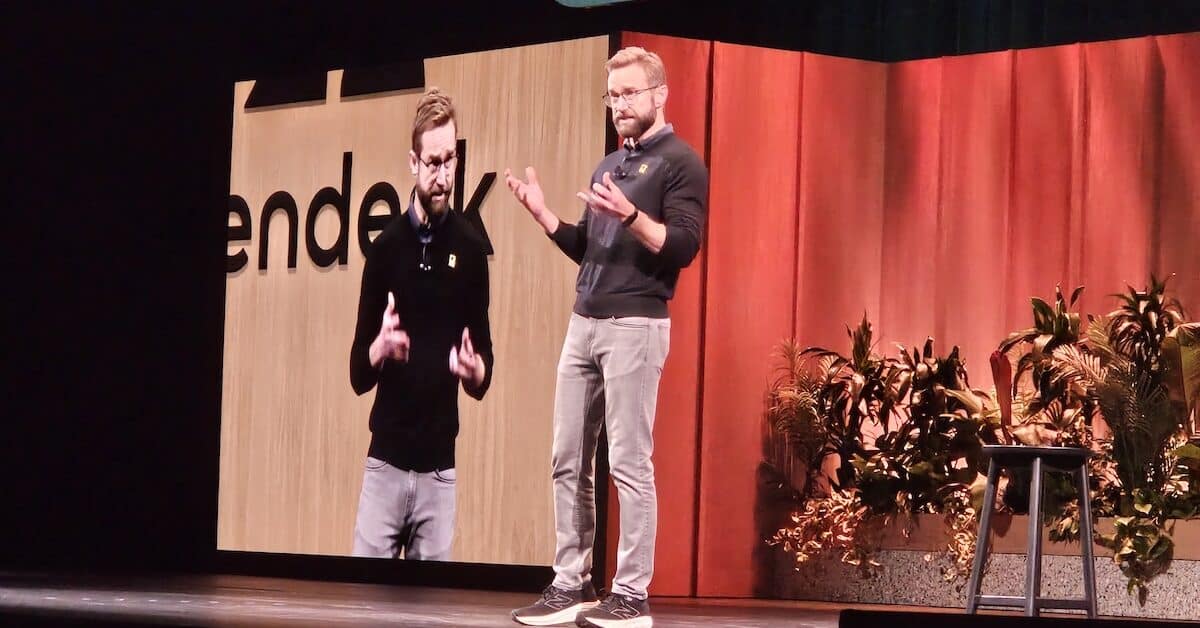
From crisis zones to leading the Signpost program at the International Rescue Committee (IRC), Andre Heller Perache sheds light on the operations of a humanitarian client service in an era where agentive AI is coming into play.
Scientists confirm: This is the most effective way to get your cat’s attention, according to new research
Elderly Couple Refuses Reserved Seats—Viral Train Standoff Sparks Fiery Debate on Courtesy
Founded in 1933 at the behest of Albert Einstein, then a refugee physicist, to support opponents of the Nazi regime, the International Rescue Committee (IRC) now operates in over 40 countries assisting people displaced by conflicts and disasters.
Within the IRC, the Signpost program was initiated in 2015 alongside Mercy Corps, amid the Syrian refugee crisis in Greece. The concept: to establish digital help centers on platforms already used by people (WhatsApp, Facebook, local websites) to provide them with localized, verified, and often critical information. Over ten years, Signpost has reached nearly 20 million users across about 40 countries, in 25 languages, and was awarded the first European Humanitarian Innovation prize (InnovAid) in 2024.
Andre Heller Perache leads Signpost globally. Before this, he managed the IRC’s response to the Ebola epidemic in the Democratic Republic of the Congo between 2028 and 2019. The program joined Zendesk’s Tech for Good in 2020 and has been experimenting with a layer of generative AI tested in several countries since 2024. At Relate 2026, Andre Heller Perache spoke to an audience of corporate customer service professionals, a parallel he personally cultivates.
Why You Should Never Reheat These Foods in the Microwave – The Hidden Dangers Experts Warn About
I tried the top 5 guard dogs—here’s what makes these breeds the ultimate protectors
What exactly is Signpost? Who does this project assist, and how is it executed on the ground?
Signpost is a digital technology and human rights project that transforms information into empowerment for populations facing a crisis, whether it stems from armed conflict or a disaster, for example. Signpost provides these individuals with the right information, at the right time, to make critical decisions and access vital services during the most challenging moments of their lives.
Before Signpost, you were the director of the Ebola response for the IRC in the Democratic Republic of the Congo during a significant health crisis in 2018-2019. What led you from the Ebola field to heading a digital information program?
My humanitarian journey actually began with Doctors Without Borders (MSF) well before that. I worked on the frontlines for about a decade before joining the IRC. After a break following my time with MSF to work in tech, I was fascinated by the energy and spirit of how people wanted to solve problems differently, starting from the users and iterating. I got progressively absorbed. Living in London at the time, I ended up working for several tech startups. Between these steps, I led the Ebola response for the IRC in the DRC. And it was my manager who asked if I’d be interested in exploring this new technology project called Signpost, which merged human rights with tech. It was a blend of all my passions, leading me to this role today.
In a podcast, you mentioned: “Our goal is empowerment through information, which is very similar to customer experience in business. The stakes, however, are completely different.” For someone in traditional customer service, what aspects are similar between the two realms, and what are completely different?
I would say it’s the context that differs. Often, the tools might be the same, but they need to be adjusted to the situation. The customer experience in a business might involve an account, a password issue, something not working in a service. Here, the issues people face are not about a refund or similar, but about: how do I enroll my children in school in a country where I’ve fled an armed conflict? How do I apply for asylum and legal protection in a new place? How do I access medical care for my diabetic husband? How do I find services that can support me after experiencing a lot of physical violence and needing to rebuild?
The context is really different in the aid sector. But the platforms and tools we use as part of Signpost are the same. With the support of Zendesk, it turns out that a multi-channel communication system, an easy-to-manage content management platform, web applications, and connections with digital channels for social engagement are tools that really work in this context, provided they are adapted.
In traditional customer service, the objective is to resolve quickly, with CSAT (customer satisfaction index), response time, and first-contact resolution. At Signpost, what are your real KPIs? How do you measure whether an exchange has truly helped someone fleeing a conflict zone?
We apply many of the same metrics as in a classic customer service environment: response time, resolution time of a ticket. We also deploy simple customer satisfaction surveys, much like a business would: thumbs up or thumbs down, a quick three-question survey like “Was this helpful? Did it help you exercise your human rights?” Our KPIs are largely driven by the same metrics.
KPIs are part of the puzzle, but for the work we do as humanitarians, we need to go further.
One of the hardest things to prove in our work is the real impact it has had on their lives. To measure this, we conduct randomized controlled trials: can we prove that our interactions have changed their ability to navigate complex environments, to avoid danger? We have an ongoing research program on this. We strongly believe in evidence-based, result-oriented work. KPIs are part of the puzzle, but for the work we do as humanitarians, we need to go further.
Corporate customer service sometimes deals with sensitive topics (health, finance…) but at Signpost, each conversation can have a crucial impact on a decision: seeking asylum while fleeing a zone, accessing healthcare. How do you train and protect the teams who are on the frontline every day?
These frontline responders are really the heart and soul of our project. They are always recruited from the local communities. Sometimes, they are local response agencies with which we partner on this work. These professionals are social workers. They are trained for this type of work.
We have a rigorous training protocol for all our employees worldwide. So hundreds of people have gone through the same training program, not just on technological tools but also on methods: psychosocial first aid, for example, or what we call a “protection-informed response,” meaning people have understood how their words and actions can impact survivors of violence. It’s the same type of rigorous and evidence-based training we would use for face-to-face services. We just do it digitally.
Why did you choose Zendesk in 2020, and what has this partnership concretely changed for Signpost?
It was actually Zendesk that found us. I had just joined Signpost, which was still a promising proof of concept, but the technological tools we were using at the time were not scalable at all. It was a fragmented tech stack, which was costly.
Zendesk contacted us and said, “Your mission is to empower people with information. Our mission is to empower people with information.” It was just when the Covid pandemic was hitting. At the time, Zendesk had a face-to-face donation model where collaborators volunteered in their communities. They pivoted to a Tech for Good program like: we can no longer do face-to-face because of the pandemic, so we will use our tech to support communities as best we can. And they found us.
A project that was barely holding together, in pieces, suddenly became something that could unlock global scaling, using their tools and adapting them to our contexts.
I took a big gamble, went all in. They presented themselves in a way that made me feel that beyond testing their tools in our contexts, it really mattered to them. For me, that made all the difference. We did a pilot in Colombia. Very early on, their team mobilized, they worked with us. We realized we now had a scalable model at large scale. A project that was barely holding together, in pieces, suddenly became something that could unlock global scaling, using their tools and adapting them to our contexts. It really made all the difference for Signpost. A huge impact.
You are deploying SignpostAI, with generative AI chatbots, in many countries. It’s a sensitive topic: language models hallucinate, and inaccurate information can lead to dramatic consequences. How do you manage the risk, and what have you learned from the initial deployments?
We got involved in AI quite early. Generative AI communicates at an infinite scale and draws on the knowledge available on the Internet, a model that put pressure on ours, deeply centered on the human. But we had an asset: 50,000 articles of original content and thousands of user interactions.
At the end of 2022, beginning of 2023, we understood that we needed to harness this technology. Make it useful, consistent, reliable, and amplify the impact of our human teams on the frontline. We joined a Google accelerator program, AI for Social Impact, and learned the ropes. Through our field teams and our legal experts, we learned where it was appropriate to use this tech and where it was not.
We ran our initial pilots as a productivity tool, in Italy, Greece, Kenya, Mexico, Libya, and in the Americas (El Salvador, Guatemala, Honduras). We could create very good tools, but not quite perfect. The lesson: we can gain in efficiency, but for a greater impact, we need to invest in the ability to orchestrate the transition between AI agents and humans, and let AI do the routine work.
Having an AI system that understands the limits of its own knowledge, and knows when to intervene or not, is very complex.
Having an AI system that understands the limits of its own knowledge, and knows when to intervene or not, is very complex. We are still piloting agents that do that today, through the framework we built at SignpostAI. This framework serves not only Signpost: it also serves education programs, anti-human trafficking efforts, refugee resettlement. In the end, we’ve built foundations to unlock agentive AI in applications either on the frontline responder side or on the client side.
Safety always comes first in a humanitarian context, and the margin for error is extremely low, if not zero. The amount of testing and safeguards necessary is very significant. We’ve been working on this for a year and a half, two years. We’re at an inflection point: a few models are ready to scale.
The number of people in need far exceeds the sector’s resources to respond. AI is a big bet. It needs to be taken. It’s a bit scary, it needs to be done right, but it’s a big bet to have more impact with fewer resources, in this moment of global crisis.
Is it more difficult to do your job today than it was a few years ago?
The pressures we face today are very different. We are consolidating several teams internally, we’ve created a new architecture for the organization’s AI approach. It’s a time of great transition. These moments are always difficult, but there’s a lot of promise behind them.
It’s a delicate thread to pull, between drawing the best from our humanity and drawing the best from our technology at the same time.
The Ebola crisis in the DRC is currently worsening. What changes for you in this crisis compared to the one you faced six years ago on the ground?
Honestly, very little. Dealing with an extremely deadly infectious disease epidemic in a context like the DRC is complex. I believe the strain of Ebola currently circulating is not covered by the vaccines, and current treatments do not cure it properly, whereas the last outbreak could be contained thanks to these means.
The world is accelerating at a spectacular pace on many levels. But we still face the same problems as before, and they need to be solved, sometimes with the same methods. It’s very concerning. I know that our teams are preparing, engaging right now, and supporting the Ministry of Health and frontline teams, essential to these responses. I hope we have learned from the previous one, and that we will know how to better face this one.
In Denver, you addressed an audience of corporate customer service professionals. If you had to retain one lesson from Signpost that would be useful to someone who heads a traditional customer service, what would it be?
It won’t surprise anyone: the voices of customers must be at the heart of everything you do. When you follow your customers, they will lead you in the right direction.
Andre Heller Perache, Senior Director, Signpost, IRC
Senior Director of the IRC’s Signpost program since 2020, Andre Heller Perache has led the scaling of the digital humanitarian aid project across nearly 40 countries. Holding a Master’s degree in Political Science from the London School of Economics, he previously directed the IRC’s response to the Ebola epidemic in the Democratic Republic of the Congo, after ten years at Doctors Without Borders (MSF) as Country Director, including in Haiti and South Sudan.

Jordan Park writes in-depth reviews and editorial opinion pieces for Touch Reviews. With a background in UI/UX design, Jordan offers a unique perspective on device usability and user experience across smartphones, tablets, and mobile software.