
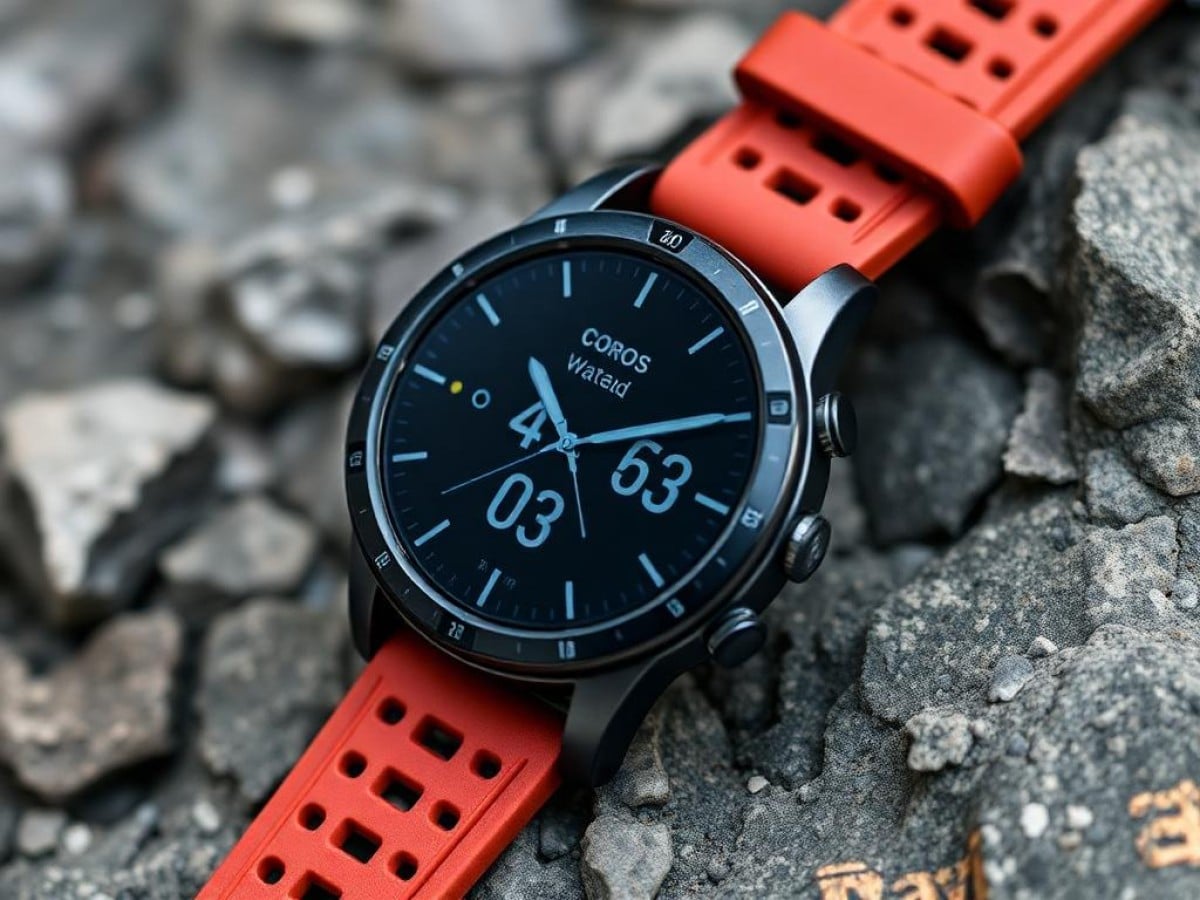
After focusing on sports like running, trail running, and cycling, Coros is now venturing into outdoor activities such as hiking and fishing with its new Coros Nomad. Here is a detailed review.
Scientists confirm: This is the most effective way to get your cat’s attention, according to new research
Elderly Couple Refuses Reserved Seats—Viral Train Standoff Sparks Fiery Debate on Courtesy
Over the past few years, Coros has experienced significant growth in the sports watch market, establishing itself as an increasingly fierce competitor against brands like Garmin.
Previously focusing primarily on road and trail runners, Coros is now aiming to reach a broader audience. Following its venture into cycling with the Coros Dura, the company now introduces a watch designed for outdoor activities with the Coros Nomad. Here is a complete review.
Coros Nomad Specifications
The Coros Nomad comes with the following specifications:
– **Model**: Coros Nomad
– **Dimensions**: 47.8 mm x 47.8 mm x 16.4 mm
– **Screen Resolution**: 260 x 260 pixels
– **Display Type**: MIP
– **Internal Storage**: 32 GB
– **Weight**: 41.5 g
– **Heart Rate Sensor**: Yes
– **Sleep Tracking**: Yes
– **Accelerometer**: Yes
– **Ambient Light Sensor**: No
*This watch was provided by the manufacturer for testing purposes.*
Coros Nomad: A Robust and Imposing Adventure Watch
At first glance, the Coros Nomad bears a resemblance to other durable watches from the brand, like the Coros Apex 2 Pro or the Coros Vertix 2S. However, while those models primarily target trail runners, the Coros Nomad is designed for all kinds of outdoor activities, from hiking and trekking to fishing and camping.
The Coros Nomad is available in three nature-inspired colors: dark gray, brown, and green, and it comes in a single size – 47.8 x 47.8 x 16.4 mm, which is relatively large. The design is reminiscent of certain Garmin models, like the Garmin Instinct 3 or Garmin Enduro 3, featuring an aluminum case protected by a plastic layer around most of the edges and the bezel around the screen. The screen itself is shielded by reinforced mineral glass. Additionally, the watch is water-resistant up to 5 ATM, making it suitable for swimming in pools, though not for diving.
Despite its substantial size, the Coros Nomad is surprisingly lightweight, weighing just 41.5 grams without the strap, compared to 57 grams for the Garmin Enduro 3 and 52 grams for the Garmin Instinct 3 Solar. With the included silicone strap, the total weight is 61 grams.
Why You Should Never Reheat These Foods in the Microwave – The Hidden Dangers Experts Warn About
I tried the top 5 guard dogs—here’s what makes these breeds the ultimate protectors
The strap of the Coros Nomad uses a standard attachment system with quick-release pins, allowing for the integration of any 24 mm strap. Coros has also announced that the watch will later be offered with nylon straps for a lighter weight and more comfortable fit.
The placement of the buttons on the Coros Nomad is intuitive, featuring a digital crown and a back button on the right, and a new action button on the bottom left. The buttons are large enough to be easily operated.
Overall, this is a smartwatch that exudes durability, perfectly suited for outdoor sports. Yet, its relatively light weight makes it comfortable enough that you may even forget you’re wearing it.
Coros Nomad: A Modest but Energy-Efficient Display
Last year, Coros surprised many by introducing the Coros Pace Pro, its first sports watch with an Amoled display. However, the company made it clear that not all its models would switch to this more vibrant, colorful, and detailed display technology, as the choice of display would largely depend on the watch’s purpose.
For the Coros Nomad, which is aimed at adventurers and hikers, Coros opted for a Memory-in-Pixel (MIP) display, known for its energy efficiency. The watch features a 1.3-inch screen with a resolution of 260 x 260 pixels and a pixel density of 200 pixels per inch. While this is lower than the pixel density of more conventional smartwatches like the Apple Watch Series 10, which has 326 pixels per inch, it is typical for MIP displays.
Although MIP screens are less vibrant and detailed than other types of displays, they consume less power and offer better readability in direct sunlight. This is because the transflective technology used in these displays enhances visibility by reflecting external light, similar to e-readers.
Another advantage of the Coros Nomad’s MIP display is that it remains on all the time without significantly draining the battery, unlike the “always-on” mode of an Amoled display.
The display of the Coros Nomad is also touch-sensitive, allowing you to interact with the watch through taps and swipes. Additionally, Coros has included a gesture control feature to activate the backlight, which is particularly useful for improving screen visibility in the evening or indoors: simply raise your wrist, and the screen will light up for a few seconds. This function automatically turns off at the time set for sleep within the Coros app.
As for the watch faces, five are pre-installed on the Coros Nomad, with some customization options available, particularly for colors. However, many more can be downloaded through the Coros app on your smartphone.
Coros Nomad: A Simple Interface to Master
Like all Coros watches, the Coros Nomad is compatible with both Android and iPhone. To set it up, you need to install the Coros app available on both the Play Store and the App Store.
As mentioned earlier, the watch is equipped with three buttons, including a rotating crown, in addition to the touch screen. Despite this, the controls are quite intuitive, centered around activities and the data timeline:
– Pressing the crown opens the list of activities.
– A short press on the back button (bottom right) acts as a back function or changes the complications on the watch face.
– A long press on the back button (bottom right) opens the toolbox.
Moreover, rotating the crown will naturally allow you to scroll through menus or switch from one data point to another in the data timeline, just like the touch function of the screen.
In this data timeline, you will find the training calendar, the evolution of your running level, the results of your FTP test on a bike, sleep tracking, and stress monitoring. One of the new features of the Coros Nomad is the addition of an “Environments” widget, which provides a weather overview not only of your current location—as was previously the case—but also of five different places. This allows you to organize yourself optimally during a long journey, with minimum and maximum temperatures and weather conditions for the next five days.
While the Coros Nomad is primarily designed for sports or outdoor activities, it includes some standard connected features. These include local music storage—only with MP3 files—with 32 GB of storage, which you can listen to via headphones connected to the watch via Bluetooth. The Coros Nomad can also control a GoPro or Insta360 camera and receive notifications from apps on your smartphone. However, it does not allow the installation of third-party apps like those available on Wear OS or Apple Watch.
Although the Coros Pace Pro is equipped with two microphones, it does not include a speaker and therefore cannot make phone calls directly from the wrist.
Coros Nomad: A Watch Tailored for Adventure Fishing
Regarding health and sports tracking features, the Coros Nomad includes everything you would expect from a brand’s watch.
It features an optical heart rate sensor, dual-frequency GPS tracking, a barometric altimeter, an accelerometer, a gyroscope, a compass, a temperature sensor, a pulse oximeter, and even an electrocardiogram.
GPS Accuracy of the Coros Nomad
For GPS tracking during training, the Coros Nomad offers two tracking modes: all systems (GPS, Glonass, Galileo, Beidou, and QSZZ) or dual-frequency (multiband).
The watch is therefore compatible with the dual-frequency GNSS tracking system for more accurate distance and tracking, especially in urban environments.
To assess the accuracy of the watch, I wore it on my wrist during several running sessions in various environments (city, park, and track) and compared the distances and tracks to those of a reference watch, the Garmin Forerunner 970.
In general, the measurements of distance between the two watches were very similar. It is also worth noting that the Coros Nomad offers a dedicated track running training mode, with automatic tracking at each lap, although I disabled it for the purposes of the GPS tracking test.
As can be seen, the watch performs very well in tracking routes, regardless of the environment. On the track, the different passes in the first lane overlap well. In the park, the tracking is very close to that of the Garmin watch, and in the city, despite the buildings and numerous turns, the tracking is very coherent.
Additionally, the Coros Nomad introduces some new features in terms of mapping. Not only does the watch offer local mapping to better orient yourself on trails or during hikes, but this mapping is enhanced with the appearance of street names, points of interest, and a differentiation between roads and trails, significantly improving the experience.
The Coros Nomad also features a “return to start” function and “turn-by-turn” navigation, with detailed route information. However, unlike Garmin models, it does not allow for automatic rerouting if you deviate from the initially planned route.
Heart Rate Accuracy of the Coros Nomad
In terms of heart rate analysis, the Coros Nomad uses the same optical heart rate sensor as previous models from the brand, such as the Coros Pace Pro or the Coros Vertix 2S.
To evaluate the reliability of heart rate tracking, I wore the watch on my wrist during several varied running sessions, whether at a constant pace, threshold, or with shorter but more intense intervals. I then compared the data with that of a high-end heart rate strap, the Garmin HRM 600, which uses an electrocardiogram.
In general, the Coros watch performs very well in analyzing heart rate, despite some slight misses on intensity peaks during the third session. The watch is especially good at analyzing intensity variations and measuring changes in heart rate both upwards and downwards with good responsiveness.
However, it should be noted that wrist-based heart rate measurement will depend on many factors, such as how tightly the watch is worn or the size of the wrist. Coros also offers a bicep heart rate sensor, the Coros Heart Rate Sensor.
Sports and Health Functions of the Coros Nomad
The Coros Nomad includes all the classic functions of Coros watches. You will have access to running level analysis, training level evolution, sleep analysis, and training load measurement.
The watch also integrates an electrocardiogram that can be used to measure heart rate variability (HRV) more accurately than with the optical sensor, through the “health check” function, without having to wear a heart rate strap.
In terms of training profiles, Coros clearly focuses on outdoor activities. While you will find classic training modes for running, cycling, swimming, and trail running, the Coros Nomad features no fewer than seven different profiles for fishing (boat, coastal boat, sea, kayak, fly boat, coastal, or fly). On these profiles, the watch screen displays the time, heart rate, and number of catches, recorded using the action button or the back button. The scrolling screens are by default set to display weather, wind, or atmospheric pressure.
If the action button is not used for navigation within the watch, it really comes into its own during activities. It can be assigned to two functions of your choice: display of the map or recording of notes.
These notes can be a new catch in the context of fishing or the addition of a point of interest (such as a fountain) encountered on a hiking trail. You can also use the microphones to record voice notes as reminders. Even better, with the “Extender” function, which allows you to view the activity live on the Coros app on your smartphone, you can take a photo directly, or add a video later.
These different notes, whether vocal, visual, or points of interest, can later be found directly in the summary of the outing, geolocated at each place where you captured them. This “adventure journal” will also automatically transcribe voice notes into written form. Even better, the journal can then be shared with your loved ones with a simple link that includes the route, summary of the data, and the various notes.
Finally, as is always the case with Coros watches, the Coros Nomad will allow automatic export of recordings to Strava, Training Peaks, Relive, Google Health Connect, or Apple Health. You can also connect an external heart rate sensor or a Coros Pod 2 stride sensor via Bluetooth LE.
Excellent Autonomy of the Coros Nomad
The Coros Nomad is a watch primarily dedicated to outdoor activities such as hiking, long trails, or trekking. It is therefore logical that it includes a large battery for substantial autonomy.
The brand advertises 22 days of daily use with sleep, stress, and heart rate tracking, as well as 50 hours of GNSS tracking for all systems and 34 hours of dual-frequency GPS tracking. This is more than enough for a weekend of hiking.
For my part, as with all watch tests on Frandroid, I pushed the settings to the maximum to evaluate the autonomy of the Coros Nomad. I set the GPS tracking to be as accurate as possible (dual frequency), activated sleep, stress, and heart rate tracking for real-time monitoring. Additionally, I activated the screen backlight with each wrist lift during the day and turned it off automatically at night.
With all these settings, the watch lasted 16 days before its battery was drained. During these more than two weeks, I also took the opportunity to train with the GPS for 10 sessions, totaling more than 11 hours with dual-frequency GPS tracking.
For charging the watch, Coros provides, as with its Pace Pro, a small USB-C to proprietary port adapter. This is also supplied with a very practical keychain holder. Therefore, there is no need to carry a specific cable, just your keys and any USB-C cable.
To go from 0 to 100% battery, it takes about an hour and a half according to Coros. However, I noticed an even faster charge, with a full charge from 0 to 100% in 65 minutes.
Call and Communication Capabilities of the Coros Nomad
The Coros Nomad is compatible with Bluetooth for connection to a smartphone and Wi-Fi for updates or map downloads.
However, even though the watch includes a microphone, it does not have a speaker and therefore cannot be used to answer phone calls on your wrist in the absence of wireless headphones.
As mentioned, the Coros Nomad supports Bluetooth LE and can therefore connect to third-party sensors such as a heart rate strap, but it does not support ANT+.
The watch lacks NFC and 4G, but you can rely on dual-frequency GPS and compatibility with the GPS, Glonass, Galileo, Beidou, and QSZZ constellations.
Price and Release Date of the Coros Nomad
The Coros Nomad has been available in France since August 19. It comes in three colors: green, brown, or dark gray.
The watch is priced at 369 euros.
For comparison, its main competitor, the Garmin Instinct 3 Solar 45 mm, which does not include mapping but features solar charging and a flashlight, is priced at 400 euros.
In the Coros range, the Nomad is priced more accessibly than the Apex 2 and Pace Pro, which are 399 euros, but higher than the Coros Pace 3, which is 249 euros.
Similar Posts
- Garmin Forerunner 170 Review: Affordable Sports Watch Packs a Punch!
- Garmin Vivoactive 6 Review: Discover the Ultimate Lightweight Fitness Watch for Runners!
- Suunto Run 2 Review: Stunning Maps and Display Under €300!
- Decathlon Fit 100 Review: Discover the Lightweight, Affordable Sports Watch!
- Polar Grit X2 Review: Discover the Durable, Compact, Stylish Sports Watch!

Maya Singh is a senior editor covering tablets and hybrid devices. Her work explores how these tools reshape digital productivity and learning. She also contributes to feature editorials on emerging tech.