
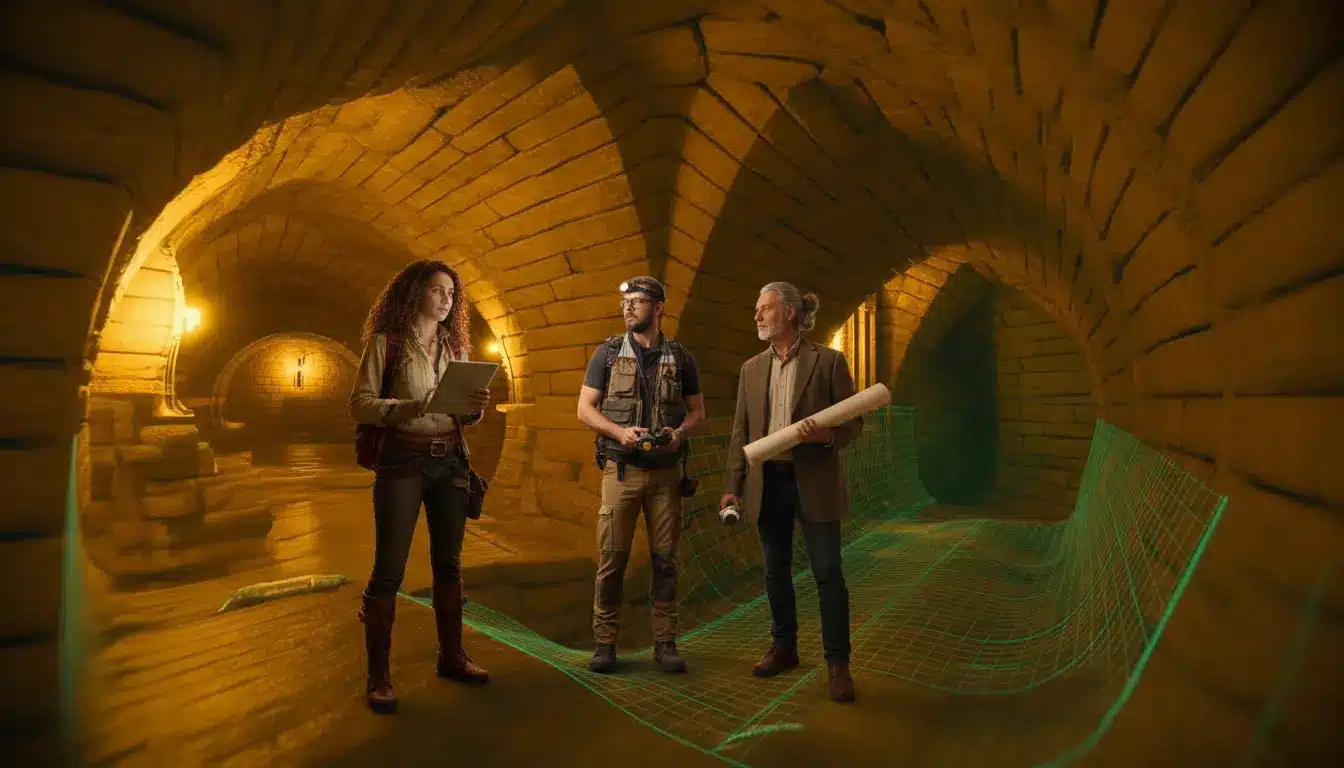
When you think Leonardo da Vinci, you might picture the Mona Lisa’s enigmatic smile or scientific drawings that were centuries ahead of their time. But get ready to add “tunnel whisperer” to Leonardo’s resume: long-suspected secret passages under Milan’s Sforza Castle have finally stepped into the limelight, thanks to the magic of modern technology and some very persistent researchers. Let’s dig (not literally, please) into a Renaissance mystery finally brought to light—and find out how these underground corridors bridge art, war, and the future of cultural tourism.
Scientists confirm: This is the most effective way to get your cat’s attention, according to new research
Elderly Couple Refuses Reserved Seats—Viral Train Standoff Sparks Fiery Debate on Courtesy
Unraveling a Renaissance Riddle Under Sforza Castle
Leonardo da Vinci isn’t just the face behind iconic masterpieces—he’s apparently also the original architect of intrigue in Milan. Researchers have recently confirmed the existence of underground tunnels beneath Sforza Castle, putting centuries-old speculation to rest. These tunnels had been hinted at for generations, but remained hidden from even the most eagle-eyed historians. The big reveal? It took ground-penetrating radar and laser scanning (now that’s tech Leonardo would have swooned over) to finally illuminate the mysterious pathways first documented by the man himself in the late 15th century.
Sforza Castle itself has a dramatic backstory. Rebuilt in the 15th century by Francesco Sforza, Duke of Milan, it was transformed into a formidable fortress with imposing towers, elegant courtyards, and lavishly frescoed halls. When Ludovico Sforza took the reins in 1494, he didn’t just want a castle—he wanted a legacy. Enter Leonardo. The Renaissance superstar was summoned to adorn the castle and, while he was at it, casually documented in his Codex Forster I the blueprint of a network of tunnels weaving beneath the castle’s surface. Fast-forward to today: what was once speculation, finally confirmed.
Military Secrets and Personal Pathways: The Many Faces of the Tunnels
Why dig tunnels under such an elegant residence? As you might suspect, some motives were less about art and more about defense. Much evidence suggests these hidden passageways served military purposes, offering secret escape routes or rapid movement in times of siege. But wait—Leonardo (and the Sforza family) seldom did anything one-dimensional. Some tunnels carried a distinctly personal twist. In an almost poetic blending of power and piety, one passage reportedly linked the castle directly to the Basilica of Santa Maria delle Grazie—home, as you probably guessed, to Leonardo’s famous Last Supper fresco. This secret corridor could have granted privileged access to the Sforza family tombs, symbolically intertwining secular might and spiritual legacy.
- The tunnels may have offered quick, private access between the castle and church.
- This unique link reflects both the military and personal, intimate aspects of Sforza life.
- Leonardo’s dual legacy as artist and innovator expands even further as these passageways come to light.
Technology and the Dawn of Digital Heritage
The real heroes of this chapter? The avant-garde tools behind the rediscovery. Ground-penetrating radar and laser scanning didn’t just map out lost corridors, they enriched our entire understanding of historical structures. Francesca Biolo of Politecnico di Milano emphasizes how crucial these technologies are to uncovering inaccessible spaces and paving the way for new studies of secret passages. The power of these methods isn’t just in confirmation—it’s in possibility. Integrating these findings into digital models opens thrilling new doors for historical and archaeological research and shows how technology can breathe new life into how we perceive even the most familiar monuments.
Not stopping at digital blueprints, experts like geomatics professor Franco Guzzetti are developing a digital twin of Sforza Castle. This virtual replica won’t just be a feast for the eyes—it’s being enhanced with historical data, tracking the castle’s transformations across the centuries. There’s even talk of incorporating augmented reality: imagine visiting Sforza Castle and being able to roam (virtually, at least) through its most secret crevices, experiencing spaces that have been off-limits for hundreds of years. The delight of Leonardo’s art now meets the delight of modern gadgetry—proof that old secrets and new tech make for an irresistible pair.
Cultural Tourism and the Future: Making the Invisible, Visible
Today, Sforza Castle is home to three distinguished museums: the Pinacoteca, the Museum of Ancient Art, and the Museum of the Pietà Rondanini. But the new tunnels are poised to turn the spotlight back onto the castle’s role as a living heritage site. Historians and culture lovers are already buzzing. And for the tourism sector, the implications are tantalizing. Digital and augmented reality tools could one day let curious visitors explore these forgotten corridors, revealing a lesser-known layer of Milan’s heritage and turning an ordinary trip to the castle into an immersive journey through history.
- Enriching the visitor experience by granting virtual access to inaccessible spaces
- Redefining how technology and history dance together in the modern age
- Sparking renewed interest in the ways old mysteries can still surprise us
As the digital twin project gains momentum, we’re left with tantalizing questions. How will these emerging technologies reshape our understanding and experience of cultural heritage in the coming years? Are these tunnels only the beginning of what’s waiting to be discovered just beneath our feet?
Conclusion: The rediscovered tunnels of Sforza Castle are more than a historical footnote. They are the meeting point of art, engineering, ambition, and innovation—proof that when you combine a genius like Leonardo da Vinci with patience, curiosity, and a dash of twenty-first century technology, history truly comes alive. So the next time you marvel at a Renaissance masterpiece, spare a thought for the secrets still slumbering underground, waiting (im)patiently for their moment in the digital sun.
Why You Should Never Reheat These Foods in the Microwave – The Hidden Dangers Experts Warn About
I tried the top 5 guard dogs—here’s what makes these breeds the ultimate protectors
Similar Posts
- AI Revolution: Top 10 Image Generators of September 2025 Unveiled!
- Scientists Go Deeper Than Ever in Hunt for Dark Matter—and the Latest Results Change Everything
- Stunned detectorists uncover 1,400-year-old Anglo-Saxon gold treasure—experts say missing eye may hold secret meaning
- AI Showdown: Top 10 Image Generators of October 2025 Unveiled!
- AI Revolution: Top 10 Image Generators of August 2025 Unveiled!

Jordan Park writes in-depth reviews and editorial opinion pieces for Touch Reviews. With a background in UI/UX design, Jordan offers a unique perspective on device usability and user experience across smartphones, tablets, and mobile software.