
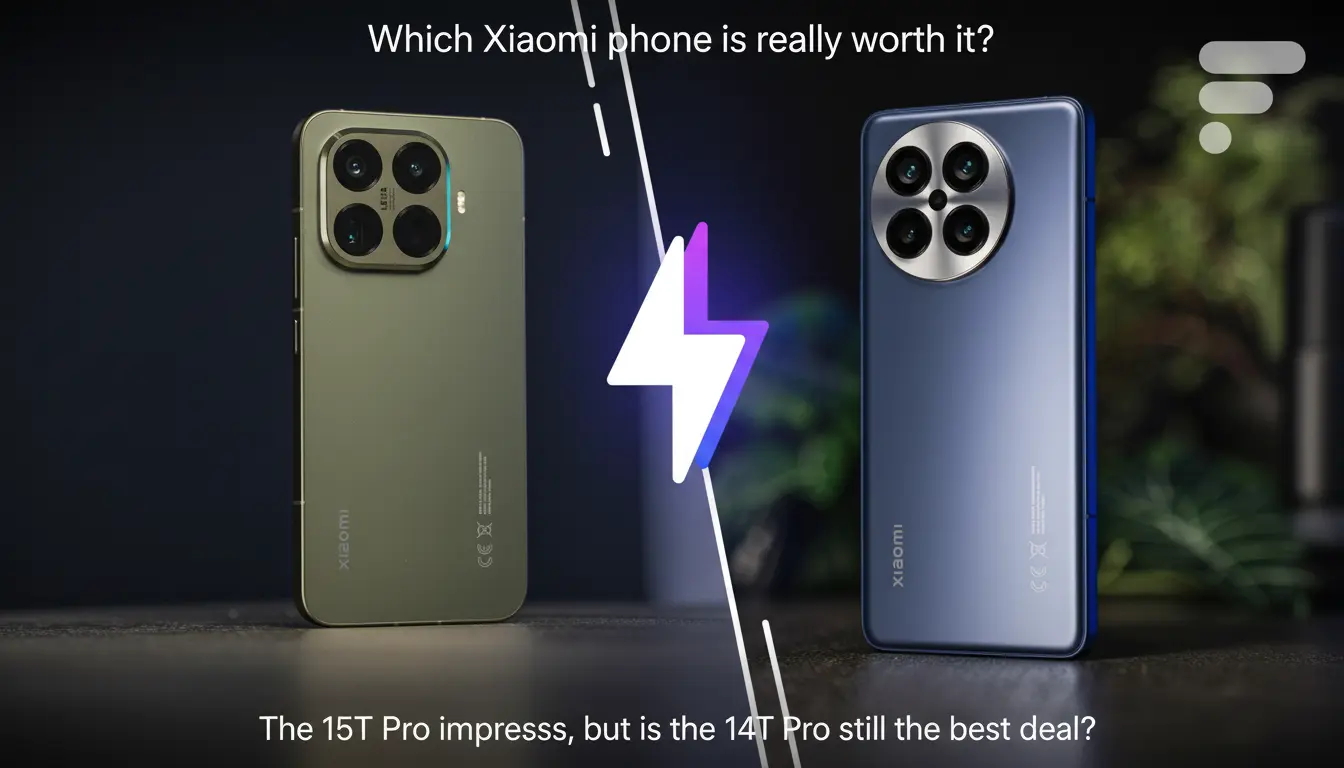
New year, new dilemma: Which Xiaomi flagship is truly the standout choice for 2024? Is the shiny new Xiaomi 15T Pro really worth the extra cash, or does last year’s 14T Pro remain the unstoppable value king for savvy shoppers? Let’s roll up our sleeves and break down the facts—no fluff, only the real deal.
Scientists confirm: This is the most effective way to get your cat’s attention, according to new research
Elderly Couple Refuses Reserved Seats—Viral Train Standoff Sparks Fiery Debate on Courtesy
Design, Display, and Build: The Look and Feel Showdown
This year, Xiaomi hasn’t just refreshed its flagship on paper. The Xiaomi 15T Pro arrives bigger and, paradoxically, sleeker. Its display grows from 6.67″ to 6.83″, while the body actually gets 0.4 mm thinner. Larger but more streamlined—a 210-gram beauty with rounder, less angular lines that just look, well, better. The camera block still juts out confidently, but overall, the phone strikes a pleasant, balanced visual impression. Bonus points for those ultra-slim screen bezels—a treat fit for a premium phone.
Both phones boast IP68 certification, so they can survive extended dips in fresh water (though your bathtub stories are your own business). But the 15T Pro has the harder-wearing Gorilla Glass 7i on its screen versus the Gorilla Glass 5 on the 14T Pro—a small but real advantage.
Screens and Colors: Brightness vs. Accuracy
Besides being bigger, the 15T Pro’s display is a beacon—literally. Our tests show it hits over 3000 nits, doubling the brightness of its predecessor and entering the impressive territory of the latest Apple iPhones. Both devices share a 1.5K resolution panel with a 144 Hz refresh rate—plenty smooth for any mere mortal.
Here’s the curveball: despite its headline-grabbing brightness, the 15T Pro’s screen falls short in color coverage compared to the 14T Pro. Last year’s model covered over 97% of the DCI-P3 color gamut, while this year’s drops to just 68%. That’s a surprising (and a bit sad) step back for people obsessed with true-to-life color.
Xiaomi’s screen calibration also remains on the cooler side, defaulting to above 7000K. So, be ready to play with the color wheel settings for that oh-so-cozy warm tone you crave. Thankfully, Xiaomi does give you the tools to tweak it to your liking.
Performance, Software, and Upgrades: Numbers and Nice-to-haves
- Both launch with HyperOS 2.0, with an upgrade to a version based on Android 16 coming in October. So, no jealousy here—both will be on par feature-wise soon.
- On app and AI features, both are loaded: advanced photo editing, writing assistance, real-time translation, and AI-generated subtitles included.
- But, the 15T Pro sneaks ahead when it comes to the update promise: five major Android upgrades compared to four for the 14T Pro, plus an extra year for security updates on both.
Performance-wise, the 15T Pro is powered by the MediaTek Dimensity 9400+, which builds upon the already excellent 9300+ in the 14T Pro. Everyday use? Both are zippy. Hardcore gaming? The new one takes the crown, especially in GPU performance—the numbers don’t lie. Gamers and benchmark chasers, take note!
Camera Improvements and Battery Life: Where the 15T Pro Pulls Ahead… Sometimes
This is where things get interesting. The 15T Pro introduces a 5x telephoto lens, doubling the zoom of the previous model. If you’re big on portraits or want that pro “compression” effect? The new hardware lets you shoot images with depth and a professional vibe miles beyond its little brother. Wide-angle shots, though? No meaningful difference detected between the two—so landscapes and group selfies are safe either way.
Xiaomi and Leica still deliver gorgeous, color-rich photos, though sometimes they go a bit heavy on the saturation. Still, the results are eye-pleasing and lively—the Instagram crowd will approve.
Why You Should Never Reheat These Foods in the Microwave – The Hidden Dangers Experts Warn About
I tried the top 5 guard dogs—here’s what makes these breeds the ultimate protectors
The battery in the 15T Pro gets a bump to 5500 mAh from 5000 mAh in the 14T Pro. However, in real-world usage, you won’t necessarily feel the difference—both will handle a heavy day, but true power users (over six hours of screen-on time a day… you know who you are) may still want to live near a charger.
Charging, though, is an area where Xiaomi decided to “calm down.” The 14T Pro pumped out blazing 120W wired charging, fully topped up in just 20 minutes. The 15T Pro is limited to 90W, now taking around 35 minutes. Both still offer wireless charging up to 50W, which is nothing to scoff at.
Verdict: Is the 15T Pro Worth Splurging On?
The all-important bottom line? The Xiaomi 15T Pro improves almost every aspect over last year’s model, shining especially in screen brightness, telephoto photography, and the promise of one extra year of major updates—a serious win for long-term owners. But (and it’s a big but), at almost 200€ more, it needs to be your perfect fit. The 14T Pro remains extremely competent and versatile in photography, delivers similar battery stamina, and is nearly as powerful in day-to-day use.
So, what’s the right call? If you’re itching for the latest tech, crave that 5x telephoto lens, or value every drop of screen brightness and longevity in updates, the Xiaomi 15T Pro justifies its higher price. But, if you love a good deal and the missing enhancements won’t keep you up at night, the 14T Pro’s still a champion for your wallet without feeling outdated.
The best upgrade? Ask yourself whether that 200€ stretch answers your needs—or just your tech FOMO. Choose wisely, and enjoy the Xiaomi ride, whichever route you take.
Similar Posts
- Xiaomi 15T and 15T Pro Launch Date Revealed: Here’s What We Know!
- Xiaomi Redmi Pad 2 Pro Review: Balanced Tablet with Some Flaws
- Xiaomi Smartphone Users Rejoice: Get HyperOS 3 Before Everyone Else!
- Xiaomi 15T Pro Review: Experience Luxury Features Without the High Price!
- Ultra-Thin Smartphone Craze Continues: Xiaomi Challenges the iPhone Air

Jordan Park writes in-depth reviews and editorial opinion pieces for Touch Reviews. With a background in UI/UX design, Jordan offers a unique perspective on device usability and user experience across smartphones, tablets, and mobile software.