
Scientists confirm: This is the most effective way to get your cat’s attention, according to new research
Elderly Couple Refuses Reserved Seats—Viral Train Standoff Sparks Fiery Debate on Courtesy
Apart from its entry-level C series models and the high-end GT series (such as the recent Realme GT 8 Pro), Realme also offers mid-range smartphones which provide a compelling equipment-to-price ratio, appealing to a broad array of potential buyers.
This year, the lineup includes the Realme 16 Pro and Realme 16 Pro+. The latter is priced between 480 and 550 euros, while the Realme 16 Pro, which is the focus of this review, is slightly more affordable at around 400 euros.
It should be noted that Realme skipped the launch of the Realme 15 Pro in France, which was introduced last summer with a Game of Thrones edition. The company has decided to only release even-numbered models in Europe.
With this new smartphone, Realme faces fierce competition from the best smartphones in this price range from brands like Honor, OnePlus, Nothing, Xiaomi, and Samsung.
Let’s explore what the Realme 16 Pro offers to outshine the various devices launched in recent months in this “lower mid-range” segment of the market.
Technical Specifications
Why You Should Never Reheat These Foods in the Microwave – The Hidden Dangers Experts Warn About
I tried the top 5 guard dogs—here’s what makes these breeds the ultimate protectors
| Model | Realme 16 Pro |
|---|---|
| OS Version | Android 16 |
| Manufacturer Interface | Realme UI |
| Screen Size | 6.78 inches |
| Resolution | 2780 x 1264 pixels |
| Pixel Density | 450 ppi |
| Technology | AMOLED |
| SoC | Mediatek Dimensity 7300-Max |
| Internal Storage | 256 GB |
| Rear Camera |
Sensor 1: 200 MP Sensor 2: 8 MP |
| Front Camera | 50 MP |
| Wi-Fi | Wi-Fi 6 (ax) |
| Bluetooth | 5.4 |
| 5G | Yes |
| NFC | Unknown |
| Connector Type | USB Type-C |
| Battery Capacity | 6500 mAh |
| Colors | Gold, Purple, Gray |
| Product Sheet |
Design
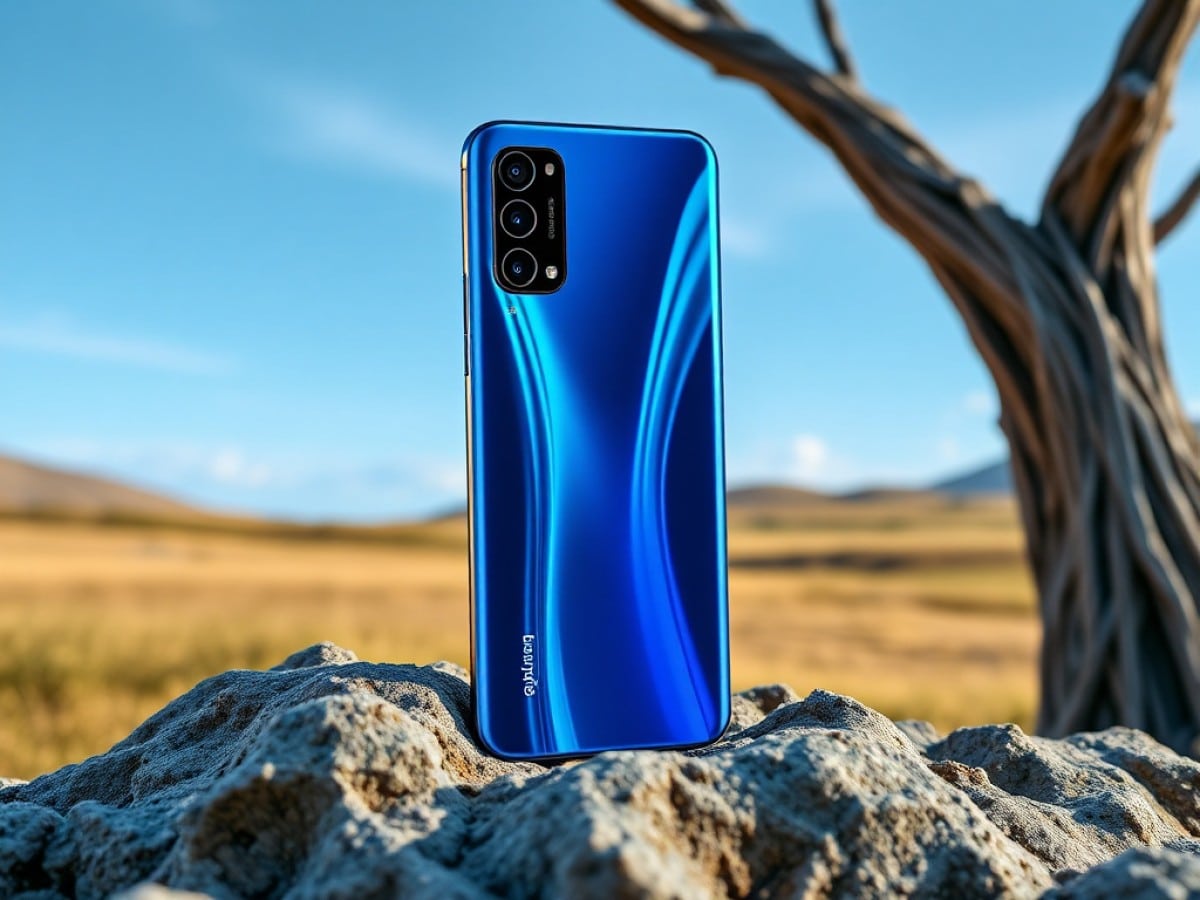
Available in dark gray, gold, or purple, the Realme 16 Pro features a decidedly modern design, with a flat screen, edges, and back. The rear is covered with a matte surface that easily attracts fingerprints.
The camera block is quite unique. Similar to that of the Realme 15 Pro, it is square-shaped. The new feature is a compartment that houses the two camera lenses, beneath which are the flash and a dummy lens (this last one corresponds to the telephoto lens that equips the Realme 16 Pro’s bigger sibling, the Realme 16 Pro+).
Additionally, the smartphone measures 7.8 mm in thickness and weighs 195 grams. It is also fully waterproof and dustproof (certified IP68 and IP69K), and the fingerprint sensor is located at the bottom of the screen.
However, the screen is not protected by Corning’s Gorilla Glass 7i, as is the case with the Nothing Phone (4a), or Gorilla Glass Victus 2, as found on the Xiaomi Redmi Note 15 Pro 5G. It is only marked with AGC DT star D+ without further details (DragonTrail reinforced glass from AGC).
Display
The Realme 16 Pro features a screen that uses a 6.78-inch LTPS OLED panel. While it is capable of displaying very precise images (2772 x 1272 pixels), they are – by default – shown in Standard mode (2354 x 1080 pixels).
As for the refresh rate, the smartphone offers somewhat strange management. In theory, it can reach 144 Hz (which – in our opinion – doesn’t add much compared to 120 Hz mode, especially on a smartphone).
In practice, within the display settings, you can choose between Standard mode (60 Hz), High (144 Hz), and Automatic Selection. The issue arises when using High mode, as it allows you to define the refresh rate used on a per-app basis (60 Hz, 90 Hz, 120 Hz, and 144 Hz).
However, during our test, the 144 Hz mode could not be activated with the installed games (Fortnite, Genshin Impact, Call Of Duty, PUBG), although it was assigned by default to a few non-essential accessories, such as the compass (!!).
Regarding display quality, the Realme 16 Pro offers several color profiles: Vivid, Natural, Cinematic, Vibrant, and Advanced (DCI-P3 or sRGB). Additionally, the manufacturer advertises the following maximum brightness levels:
- 1000 nits (standard mode)
- 1400 nits (adaptive brightness)
- 6500 nits in HDR peak
Are these levels verified in practice, and what can be said about the color accuracy of the display? We checked this using our probe and the CalMAN Ultimate software from Portrait Displays.
And indeed, the results are praiseworthy. First, the actual brightness perfectly matches what the manufacturer claims: 591 nits measured in standard display mode, 999 nits when activating the Extra Brightness option, and 1398 nits at maximum in Adaptive Brightness mode.
Moreover, using the Cinematic display profile, the average color temperature is 6544 K (perfectly neutral colorimetry). The average Delta E is only 1.79 (exemplary color fidelity), and the DCI-P3 color space is almost entirely reproduced (at 95%). Well done!
Performance
Unlike the Realme 14 Pro, which uses a Mediatek Dimensity 7300 Energy processor, and the Realme 15 Pro, which includes Qualcomm’s Snapdragon 7 Gen 4, the Realme 16 Pro is powered by the Mediatek Dimensity 7300 Max.
It features eight cores, divided into two blocks: one comprising four cores with a frequency of 2.5 GHz, and another, also with four cores, operating at 2.0 GHz (like all other versions of the Dimensity 7300).
The processor is paired with 8 GB of memory and storage options of 256 GB or 512 GB. It is worth mentioning that the manufacturer offers a performance mode called “GT Boost,” which provides significantly better performance than the default mode.
In terms of raw performance, as measured by various benchmarks, the Dimensity 7300 Max chip turns out to be slightly less powerful than Xiaomi’s Redmi Note 15 Pro’s Dimensity 7400 Ultra (which seems normal!), but also than the Snapdragon 6 Gen 3, found in the Samsung Galaxy A36, or the Snapdragon 6 Gen 4, which powers the Honor Magic8 Lite.
The Snapdragon 7s Gen 3 of the Nothing Phone (4a) is still a bit more powerful, but less so than the Snapdragon 8s Gen 3 of the OnePlus Nord 5.
In a price range similar to that of the Realme 16 Pro, the Xiaomi Poco X7 Pro and Poco X8 Pro smartphones display the highest performance, thanks to their Dimensity 8400 Ultra and Dimensity 8500 Ultra chips.
In short, the Realme 16 Pro is clearly not a powerhouse. However, it suffices for everyday office/multimedia use. The performance level is even adequate for gaming, allowing for smooth animations (up to 60 frames per second), despite using the highest graphic level, in Fortnite, for example.
Two positive aspects of the Mediatek Dimensity 7300 Max processor are its very reasonable temperature increase (50 degrees after one hour of intensive computing) and – consequently – minimal throttling (performance limitation), since the chip has always been able to deliver at least 89% of its full potential.
Software
The Realme 16 Pro runs on Android 16, supplemented by the Realme UI 7 user interface.
According to the manufacturer, Android updates are guaranteed for the next five years, and for six years for security updates. Admittedly, this is not yet at the level of what Samsung or Google offer, namely 7 years of updates. But it’s already quite good (and better than others, like Nothing, which only assures 3 years of major updates).
However, we could have done without the few bloatwares that burden the interface at the first startup.
On the bright side, the software environment provided by the Realme 16 Pro is complete and original. In addition to Gemini Live, there are features to assist with writing (AI Writer) and translation (AI Translation).
Let’s quickly move on to the new function called AI Game Coach, which aims to provide in-game information, supposedly to help the player (provided they use the game grip that supports this function), which seems more like marketing talk than anything else (when will AI play and win for us?).
The AI Smart Loop is more interesting. It allows copying text (or an image) and then dragging it to the edge of the screen to display the applications that can use this type of content.
There are also numerous AI functions that allow for photo retouching:
- AI Recomposition (auto cropping)
- AI Eraser (magic eraser)
- AI Relighting (for portraits)
- Ultra Sharpness
- Remove Blur
- Perfect Shot by AI (for group photos)
- Remove Reflections
- AI Landscape (optimization)
Plus other original and fun photo functions (see below).
Photography
Two lenses are present on the back of the Realme 16 Pro:
- A wide-angle, with a 200-megapixel sensor
- An ultra-wide-angle, paired with an 8-megapixel sensor.
A 50 MP selfie sensor complements this configuration.
As we have already noted, the smartphone offers unique services from the moment of capture:
- AI Composition: real-time advice is provided to capture THE perfect photo.
- Light Effects: use of filters that add lens effects to light sources present in the scene being photographed.
Once the photos are taken, they can be edited using the AI Editing Genius.
This feature offers the following functions:
- AI LightMe: generates original light effects (spotlight, neon, window shadow, etc.).
- AI StyleMe: several image transformation effects (Emoji, modeling photoshoot, Cartoon shot).
- AI Inspiration: automatic modifications after analyzing the photo.
Wide-Angle
The wide-angle lens is equivalent to a 23 mm, with an aperture of f/1.8. It is paired with a Samsung sensor (with optical stabilization).
By default, photos are captured in 12 megapixels. However, it is also possible to generate images in 50 megapixels, or even 200 megapixels.
And, as often, photos taken in broad daylight prove to be of excellent quality, highly precise.
At night, the sharpness of the images produced is satisfactory, if the surrounding light sources are not too distant.
Ultra Wide-Angle
The ultra wide-angle lens has a focal length equivalent to 16 mm and an aperture of f/2.2.
The images it produces are of good quality, even if the precision is not overwhelmingly impressive overall.
At night, the results in ultra wide-angle mode are variable, ranging from not too bad to not at all satisfactory (in short, it’s a bit less worse than what can often be observed).
In the best case scenario, the image is generally satisfactory, if not examined too closely. In the worst case, the photo is blurry.
Zoom
The Realme 16 Pro is not equipped with a telephoto lens. In this area, only the British manufacturer Nothing stands out, offering smartphones priced between 350 and 450 euros, yet equipped with a telephoto lens, with a 3.5x optical zoom on the recent Nothing Phone (4a), for example.
Thus, if we settle for a small magnification factor, such as 2x, the results are quite good.
Even with a 4x digital zoom, the images can be shared with loved ones or on social networks.
However, from a 10x digital zoom, the quality of the shots progressively deteriorates (and this is perfectly normal!).
At night, the 2x digital zoom does not disappoint. Most of the time, we benefit from quite precise images, if the lighting conditions are not too unfavorable.
Even photos taken with a 4x digital zoom can sometimes prove satisfactory. Not bad compared to more expensive models!
Selfie
On a positive note, selfies benefit from good precision. Skin details are finely reproduced. However, the smartphone does not bother with stray hairs that protrude here and there when it comes to performing face outlining to apply the Bokeh effect. Indeed, these simply disappear (it’s a common phenomenon, but not excusable nonetheless).

Maya Singh is a senior editor covering tablets and hybrid devices. Her work explores how these tools reshape digital productivity and learning. She also contributes to feature editorials on emerging tech.