
Scientists confirm: This is the most effective way to get your cat’s attention, according to new research
Elderly Couple Refuses Reserved Seats—Viral Train Standoff Sparks Fiery Debate on Courtesy
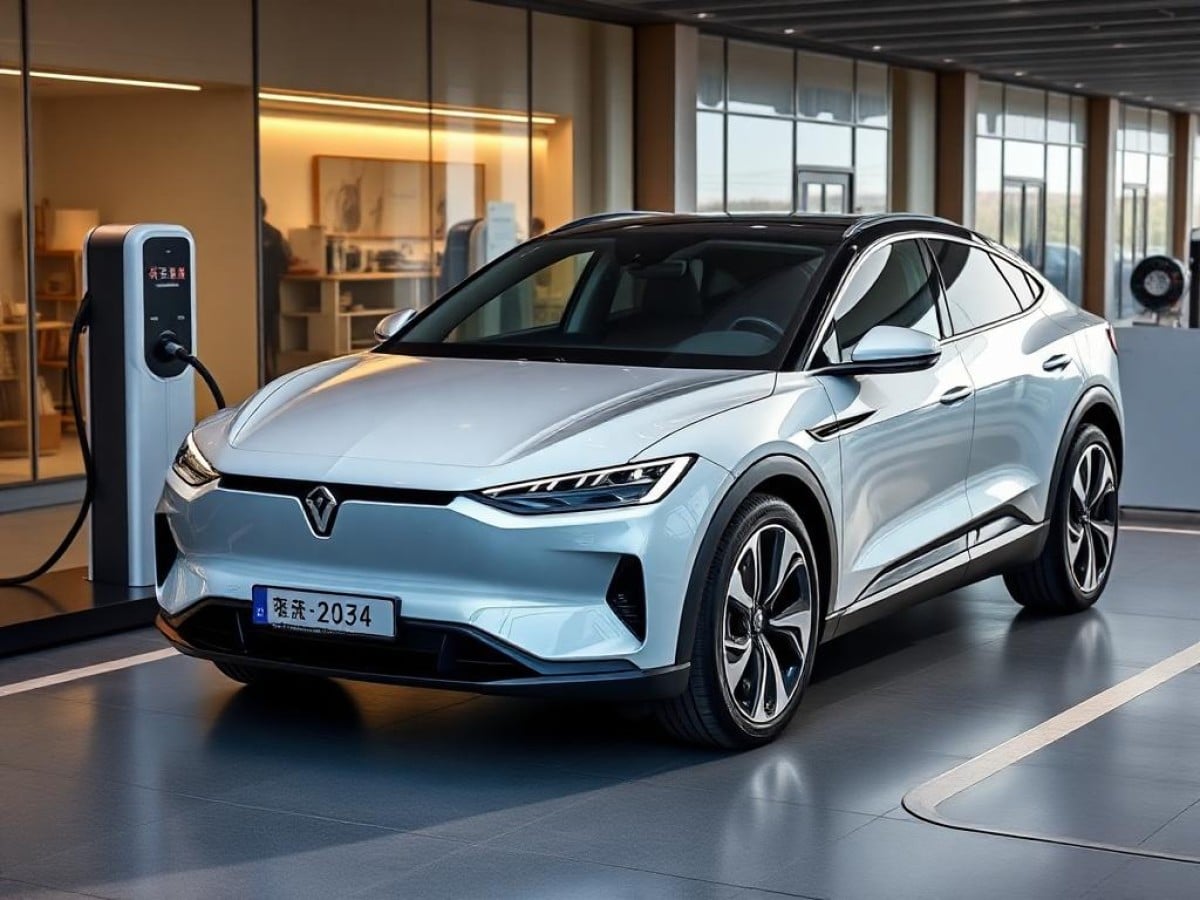
When I was handed the keys to the Xpeng G9, I was certain of two things: first, that this Chinese electric SUV would take me across a large part of Europe. Second, that it would be the perfect opportunity to evaluate, on the ground, what a manufacturer like Xpeng can truly deliver in the Old Continent.
From Paris to Bordeaux, Lisbon, Porto, and back to France… Over 4,000 kilometers on the odometer, traversing nearly all types of roads—from the Paris ring road to Iberian highways and Portuguese country roads, to the tight alleys and cramped parking lots of historic city centers. Here are my thoughts.
A brief note: I tested the Performance version of the Xpeng G9, which features all-wheel drive and a 98 kWh battery, model year 2025. This is not the new 2026 model that will be marketed in France in the coming months, which can be charged in just 12 minutes. The “my” Xpeng G9 took 20 minutes to charge, which is still outstanding.
We have previously reviewed the Xpeng G9 with a “standard” test. Here, we will focus on details that become more apparent after several days of use, whether they are positive or negative.
And don’t worry: if you find this car too big or too expensive, the smaller Xpeng G6 (a competitor to Tesla’s Model Y) might appeal to you.
I should mention that I am used to driving a Tesla Model 3 daily since 2020, and am quite familiar with the Tesla Model Y. You’ll understand why this detail is important as you read on.
Why You Should Never Reheat These Foods in the Microwave – The Hidden Dangers Experts Warn About
I tried the top 5 guard dogs—here’s what makes these breeds the ultimate protectors
A Majestic SUV with Supreme Comfort
The Xpeng G9 commands presence. Measuring 4.89 meters in length, 1.94 meters in width, and 1.68 meters in height, and weighing 2.3 tons, it’s definitely not built to typical European dimensions.
Yet, I managed to park it in an underground garage in Porto, where the width limit was 1.80 meters, thanks to its formidable 360° camera. This feature allows you to see all four wheels in real time, a blessing for precision maneuvers, similar to the Smart #5. Clearly, without the cameras, I would never have managed to park there without damaging the rims. With a Tesla, I would likely have scraped the rims since its cameras do not show the wheels.
The comfort matches the size: air suspensions, massaging, ventilated, and heated seats, even a “zero gravity” position for the front passenger, excellent noise insulation, and a high-end audio system. Traveling in this car feels like being in a moving lounge, and the finishes are truly top-notch.
The only minor issue was the hood that “vibrated” at high speeds: no noise, but visually odd. Xpeng assures that this is not a problem, likely just a result of its thin material fluttering at high speeds.
The audio system cleverly isolates sound channels: the driver can listen to music while the front passenger watches a series on their screen with Bluetooth headphones. A nicely thought-out detail: speakers in the headrest of the driver’s seat for calls or GPS instructions in complete privacy, without disturbing the rest of the cabin.
Rapid Recharging and Manageable Range
On highways, the G9 excels: charging from 10 to 80% takes just 20 minutes on the right charging stations, specifically those at 800 volts (Ionity, Electra, TotalEnergies, etc.). These are the majority installed at service areas.
During the return trip from Porto to Bordeaux (about 1,000 km), three 20-minute stops were sufficient. Literally just enough time for a restroom break and a sandwich, and then we were back on the road. It was even too quick for a lunch break!
The charging curve is impressive: the car draws more than 300 kW upon plugging in, and still pulls 150 kW at 80%. After that, it drops rapidly below 100 kW. While not as impressive as a Porsche Taycan or Smart #5, it’s better than a Tesla (except the older Model Y with a BYD battery).
However, on alternating current (AC) chargers, it’s a different story: the charge sometimes plateaued at under 32 A, with no clear explanation from Xpeng. This is a minor issue for home or underground parking charging, as it results in losing about 1 kW of power. Not a dealbreaker, but a small bug that’s always a bit unsettling.
Then there’s the route planner. Poorly adapted for Europe, it bases its calculations on recent consumption without accounting for regulatory speeds or terrain.
The outcome: bizarre estimates, mid-journey plan changes, and sometimes the unpleasant surprise of a rapidly decreasing range after a recalibration. For instance, the “Insufficient Range” message appeared frequently, even though I had enough range to reach my destination.
It even directed me to a Tesla Supercharger, where the G9 charges very poorly on 400-volt stations like Tesla’s (over an hour instead of 20 minutes), being limited to 74 kW. At 800 volts, the Xpeng G9 can reach up to 320 kW.
According to our colleagues at Automobile Propre, on a 175 kW station, the charge from 10 to 80% is completed in 24 minutes. This too is quite an achievement.
Frankly, one would expect better from such an ambitious manufacturer. Especially for a car like this, where the combination of a large battery and fast charging makes it an ideal candidate for long trips. I couldn’t rely on the route planner to select my charging stops, and I used ABRP (A Better Route Planner) which never let me down.
Software Bugs and Potential
The G9 isn’t yet fully optimized software-wise for Europe. For example, if the driver exits, the car can lock itself and activate the alarm, even if a passenger is still inside.
Another minor but telling issue: the charging port flap closes automatically, not leaving enough time to replace the CCS plug cap. As a result, you drive away from the service area with a rubber cap dangling from the rear wing, as if you forgot to put the fuel cap back on.
The reason: this cap doesn’t exist in China (they use a different connector), and the Chinese engineers likely didn’t consider this scenario.
These kinds of small bugs were found in the early Smart #1 or Volkswagen ID.3 models. And like with those, one can hope that future updates will fix these issues.
The infotainment system is smooth and comprehensive, but not as intuitive as Tesla’s. The mobile app does its job.
There’s no “dog mode,” a somewhat imperfect “sentinel mode” (remote alarm) that doesn’t allow live viewing through the car’s cameras, and some features are still poorly translated or missing. For example, the “Home” and “Work” addresses are translated as “Suburb Settings.” We’re still trying to figure out the connection.
Similar Posts
- Driving the Xpeng P7+: Experience Tesla Model S Luxury at a Model 3 Price
- XPeng P7+ Review: This Chinese Electric Car Charges Twice as Fast as a Tesla Model 3!
- iPhone 18 Pro Max Charges at Lightning Speed: Hits Unprecedented 52W!
- This Electric Car Might Just Outdo My Tesla: Testing Smart #5’s Fastest Charge in France
- Elon Musk Becomes The $1 Trillion Man: A Fortune Beyond Imagination

Maya Singh is a senior editor covering tablets and hybrid devices. Her work explores how these tools reshape digital productivity and learning. She also contributes to feature editorials on emerging tech.