
Scientists confirm: This is the most effective way to get your cat’s attention, according to new research
Elderly Couple Refuses Reserved Seats—Viral Train Standoff Sparks Fiery Debate on Courtesy
In a market saturated with huge smartphone screens nearing 7 inches, the segment for compact high-end devices is increasingly resembling an endangered species.
Yet, it is precisely in this niche that Xiaomi continues to make its mark in 2026. Skipping the number “16” to align with competitors’ numbering (hello Apple), the Chinese manufacturer launches the Xiaomi 17.
The goal: to include the latest Qualcomm SoC, a large battery, and a Leica-branded lens within a chassis that is easy to handle with one hand.
I’ve tested it for a month, and here is my review.
Xiaomi 17Technical Specifications
| Model | Xiaomi 17 |
|---|---|
| Dimensions | 71.8 mm x 151.1 mm x 8.06 mm |
| User Interface | HyperOS |
| Screen Size | 6.3 inches |
| Resolution | 2656 x 1220 pixels |
| Pixel Density | 460 ppi |
| Technology | OLED |
| SoC | Qualcomm Snapdragon 8 Elite Gen 5 |
| Graphic Chip | Adreno 840 |
| Internal Storage | 256, 512 GB |
| Rear Camera |
Sensor 1: 50 MP Sensor 2: 50 MP Sensor 3: 50 MP |
| Front Camera | 50 MP |
| Video Recording Resolution | 8K@30fps |
| Wi-fi | Wi-Fi 7 (be) |
| 5G | Yes |
| NFC | Yes |
| Fingerprint Sensor | Under the screen |
| Connector Type | USB Type-C |
| Battery Capacity | 6330 mAh |
| Weight | 191 g |
| Colors | Black, Blue, Green, Pink |
| Product Sheet |
Xiaomi 17Design
The Xiaomi 17 does not aim to revolutionize the aesthetics of the modern smartphone. It’s hard not to see an iPhone behind its clean and straight lines. It’s no coincidence Xiaomi jumped from Xiaomi 15 to Xiaomi 17…
From the first glance, the lineage with Apple’s products is striking. We see this “brick” format with flat edges reminiscent of the iPhone 17’s aesthetic. However, Xiaomi adds its own touch with the so-called “Golden Arc” design: the angles and the junctions between the frame and the front/back faces are subtly rounded to prevent the edges from cutting into the palm of the hand. And indeed, it’s a smart move.
One of the strengths of this model lies in its compactness. At only 151.1 mm in height, it stands as one of the most manageable high-end smartphones currently available. Unlike the 17 Ultra, which is criticized for its top-heavy imbalance due to its imposing camera module, the weight of 191 grams of the Xiaomi 17 is perfectly distributed. Using it with one hand is not only possible but quite enjoyable.
The build quality is also top-notch. It starts with the black screen bezel that measures only 1.18 mm and is perfectly symmetrical. Then, the unibody frame uses an aluminum alloy, while the front face is protected by the new Xiaomi Shield Glass, purportedly offering increased resistance to falls.
On the back, the matte glass finish is pleasant. It’s soft to the touch and, most importantly, completely resistant to fingerprint marks. On the downside, this texture combined with anodized aluminum makes the phone particularly slippery. A protective case seems necessary to prevent accidents. However, the Xiaomi 17 is IP68 certified
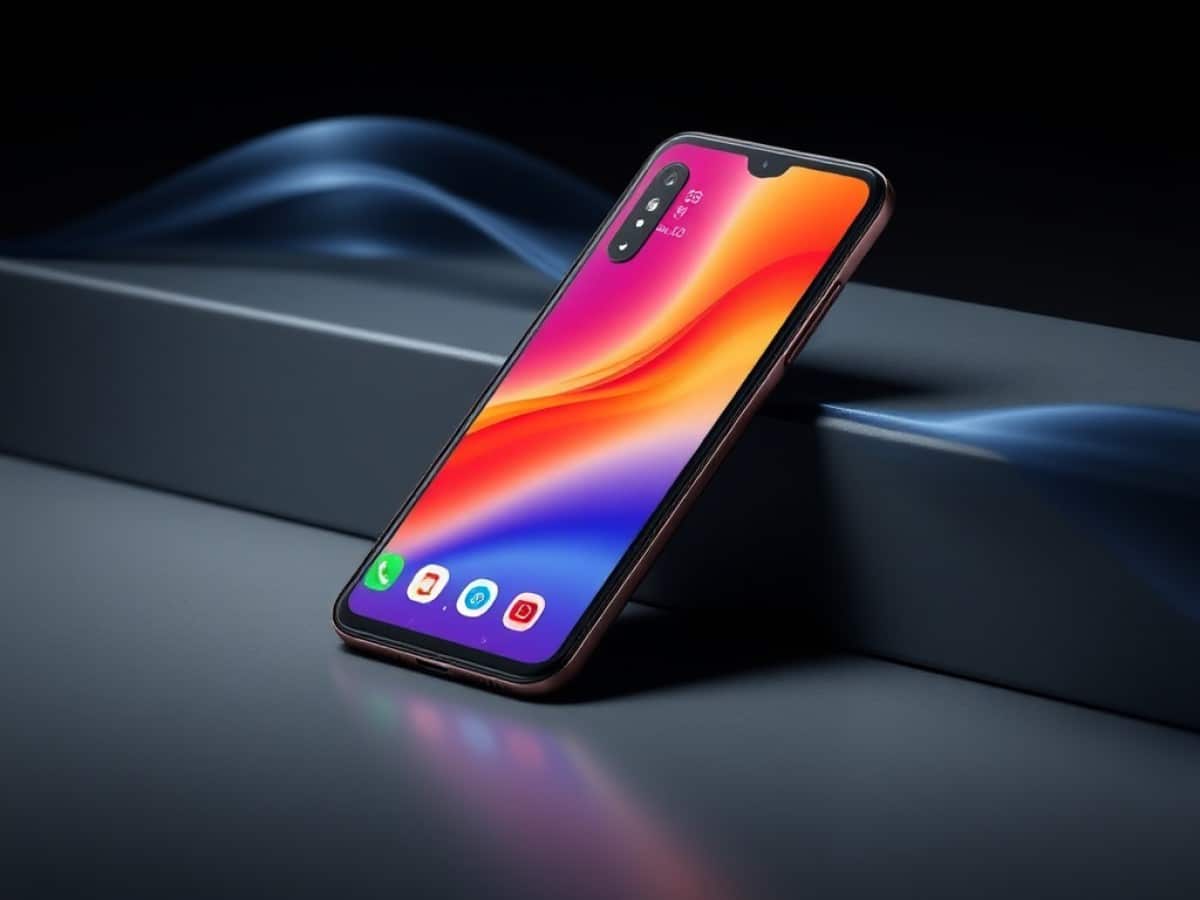
The camera block, located in the upper left corner, adopts a square format with rounded edges. It is tinted in the same color as the chassis, which helps it blend more into the overall design.
This module houses three lenses optimized by Leica, a dual LED flash, and a laser sensor. Note that it is not excessively protruding, but its position still somewhat unbalances the device when it is placed on a table. The infamous wobble effect.
I also note that making small, high-powered formats is no easy feat. The compact size imposes obvious physical limitations. The heat dissipation area being smaller than on a larger model, the casing tends to heat up significantly during intensive tasks.
Xiaomi 17Screen
The Xiaomi 17 is compact. It uses a 6.3-inch panel. Yes, it seems already large, but not so much compared to the 6.9 inches of its big brother, the Xiaomi 17 Ultra.
This panel is AMOLED and LTPO. Thus, its refresh rate dynamically varies from 1 to 120 Hz. The resolution is 2656 x 1220 pixels. In all these aspects, there’s nothing new; it corresponds to its predecessor. There’s a change in modulation frequency, which helps reduce flickering and increase eye comfort.
The brightness is also supposedly boosted to reach 3500 nits, according to Xiaomi. I took our probe and the CalMAN Ultimate software from Portrait Displays, and it turns out we were not misled. It’s a bit more than 2000 nits in SDR and 3400 nits in HDR. The figures are almost there, and we have a screen that dazzles significantly when its brightness is cranked all the way up.
That was the first good surprise. Regarding calibration, we’re not too bad either, although we slightly exceed our limits. In any case, the color temperature is just right, hovering around 6500K.
However, the coverage of the color spaces could be better for the DCI-P3. We would have liked more color nuances in this space.
| Average DeltaE SDR | 3.04 |
| Color Temperature | 6461K |
| SDR Brightness | 2018 nits |
| sRGB | 119 % |
| DCI-P3 | 79 % |
| BT 2020 | 54 % |
| Average DeltaE HDR | 6.31 |
| HDR Brightness | 3396 nits |
Xiaomi 17Performance
Under the hood, the Xiaomi 17 packs the best of what is currently available: a Qualcomm Snapdragon 8 Elite Gen 5. Manufactured with a 3-nanometer precision, this chip introduces the custom Oryon Gen 3 CPU cores, capable of reaching up to 4.6 GHz. For the graphics part, we find the GPU Adreno 840.
In terms of raw power, the results are unfortunately not the best. In the average of our benchmarks, it ranks last among all the Snapdragon 8 Elite Gen 5 smartphones we’ve tested so far. Even the Find X9 Pro, which struggled to manage its Dimensity 9500, beats it.
However, it manages to run all the major games from the Play Store. It perfectly holds 60 fps on Genshin Impact and 120 fps (between 117 and 120 fps) on Asphalt Legends. And that, without using the turbo mode of HyperOS. Nevertheless, after a few races, my hands get somewhat hot, and that’s where we find its little issue.
The Downside: The Thermal Challenge
Housing such a powerhouse in such a small chassis poses a physical problem: heat dissipation. Xiaomi has deployed extensive means with a new sophisticated vapor chamber equipped with a unidirectional valve to accelerate thermal transfer.
In practice, the results are more nuanced. While the phone is very responsive in daily use — apps open in 1 to 2 seconds and multitasking is absolutely smooth — the limits appear during prolonged use.
After about twenty minutes, the compact chassis begins to show its limitations. I recorded surface temperatures climbing up to 50°C, making handling uncomfortable.
To prevent overheating, the system then activates an aggressive thermal throttling: my stress test reveals a violent drop in performance. At times, the SoC runs at only 30% of its capabilities. The Xiaomi 17 clearly struggles to keep up.
Finally, a word about virtual RAM. We advise you to be cautious with it. While it allows adding up to 12 GB via UFS 4.1 storage, its activation heavily impacts energy consumption without providing a noticeable fluidity gain for the average user.
Xiaomi 17Software
The Xiaomi 17 natively runs on Android 16, covered by the new version of the in-house interface: HyperOS 3. While Xiaomi has made considerable efforts to streamline its system, iOS’s influence remains omnipresent, for better or worse… and always with its share of pre-installed applications. At 1000 euros, that’s a bit messy.
The big news in this version is HyperIsland. Unabashedly inspired by Apple’s Dynamic Island, this virtual pill dresses up the punch hole of the front camera. It dynamically displays your timers, the music playing, or your voice recordings. Xiaomi goes a bit further than its model by allowing to switch between active applications with a simple swipe on the area, a successful integration that really facilitates multitasking.
Regarding AI, we find classic productivity tools (text summary, real-time translation, live subtitles) and creative functions like out-painting to extend the decor of a photo.
However, not everything is perfectly on point yet. While the interface’s fluidity is exemplary, some AI tools lack polish. The magic eraser, for example, still leaves too many artifacts or coarse blurs when removing complex objects.
Lastly, in terms of software durability, Xiaomi offers 5 years of Android updates and 6 years of security updates. Here, the brand remains behind the 7 years promised by Google or Samsung on their respective flagships.
Xiaomi 17Photography
The Xiaomi 17 opts for a consistent hardware strategy with three 50-megapixel sensors. The idea is to offer a constant definition, whether you’re taking a selfie or a landscape with the ultra-wide-angle lens, always with Leica-engineered lenses.
- 50 MP wide-angle sensor (f/1.7) with optical stabilization
- 50 MP ultra-wide-angle sensor (f/2.4)
- 50 MP x2.6 telephoto lens (f/2.0) with optical stabilization
Wide-angle
The main Light Fusion 950 sensor confirms Xiaomi’s strong
Similar Posts
- Xiaomi Redmi Note 15 Pro 5G Review: More Power, Longer Battery Life – Can It Compete with Honor & Samsung?
- Xiaomi 15T Pro Review: Experience Luxury Features Without the High Price!
- Xiaomi 15T and 15T Pro Launch Date Revealed: Here’s What We Know!
- Xiaomi 15T Review: High-End Smartphone Overshadowed by Poco Contender
- Xiaomi Redmi Note 15 Pro+ Review: A Convincing Smartphone Challenged by Xiaomi’s Classics

Maya Singh is a senior editor covering tablets and hybrid devices. Her work explores how these tools reshape digital productivity and learning. She also contributes to feature editorials on emerging tech.