
Scientists confirm: This is the most effective way to get your cat’s attention, according to new research
Elderly Couple Refuses Reserved Seats—Viral Train Standoff Sparks Fiery Debate on Courtesy
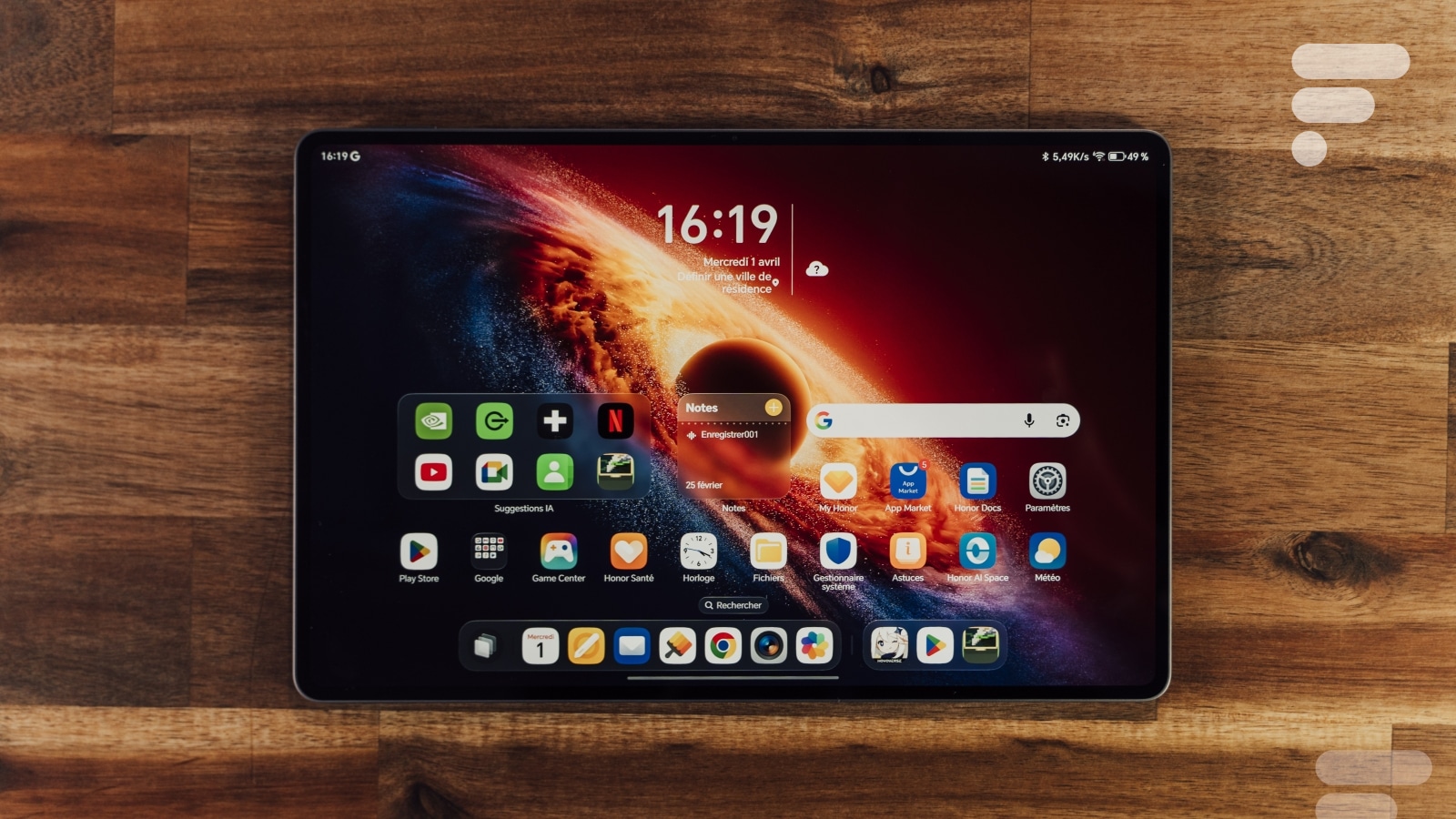
The Honor MagicPad 4 claims the title of the world’s thinnest tablet, surpassing even the iPad Pro, which was already a leader in slimness. However, its sleek profile doesn’t mean a compromise in its specs. It features an unprecedented Snapdragon processor in a tablet, a massive battery, and an OLED screen that’s perfect for multimedia. Just reading its specifications made me eager to test it.
I’ve been using it almost daily for over a month now. After an initial hands-on, it’s time to share my findings.
Specifications
| Model | Honor MagicPad 4 |
|---|---|
| Dimensions | 273.4 mm x 178.8 mm |
| Screen Size | 12.3 inches |
| Resolution | 3000 x 1920 pixels |
| Pixel Density | 290 PPI |
| Screen Technology | OLED |
| Processor Model | Snapdragon 8 Gen 5 |
| RAM | 12, 16 GB |
| Internal Memory | 256, 512 GB |
| Rear Camera | 13 MP |
| Front Camera | 9 MP |
| Wifi | Wi-Fi 7 (be) |
| Bluetooth | 6.0 |
| Waterproof | Unknown |
| Weight | 450 grams |
| Colors | White, Gray |
| Product Details |
Design: An Engineering Marvel at 4.8 mm
I will never forget my first encounter with the Honor MagicPad 4. It may seem trivial, but the thinness is striking!
Honor has accomplished the feat of reducing the thickness to just 4.8 mm. For context, that’s thinner than the 13-inch iPad Pro (5.1 mm) and the iPad Air 13 (5.6 mm). This pursuit of slimness does not compromise its lightness, as the device weighs about 450 grams.
It feels almost like holding a sheet of paper, yet it does not evoke any concerns about its durability. This is thanks to a unibody metal chassis that provides excellent finishing. It is available in two classic colors: Gray and White.
The handling is enhanced by ultra-thin edges of less than 4 mm, which achieve a screen-to-body ratio of 93%. The OLED screen is truly showcased in this design.
Despite its extreme slimness, the MagicPad 4 retains an eight-speaker system that we appreciated in the MagicPad 2.
It features a unibody metal chassis. Honor claims this has significantly increased its robustness compared to the previous generation.
However, to reduce weight, only the outer shell is made of metal. The internal part of the chassis is plastic.
Display: The OLED that Outshines the Sun
The display is one of the major highlights of this tablet. Honor has moved away from the LCD technology used in the MagicPad 3 to a 12.3-inch OLED panel. The 3K resolution of 3000 x 1920 pixels ensures a pixel density of 290 PPI.
The panel has a 16:10 aspect ratio, which is quite different from the 4:3 format of the iPad Pro. While Honor pitches this tablet as a productivity tool, I can’t help but think that it’s equally well-suited for a multimedia experience. An OLED with a 16:10 aspect ratio is a great combo for watching movies and TV shows.
Additionally, it handles gaming well thanks to excellent smoothness achieved by an adaptive refresh rate with five stages peaking at 165 Hz, outdoing the 120 Hz of the iPad Pro.
But it’s the brightness that really impressed me: a peak of 2400 nits announced. It’s better than the previous generation and even more impressive in reality! Under our tests, the tablet reached up to 3000 nits in HDR using the CalMAN Ultimate software from Portrait Displays. In SDR, it’s more modest with 830 nits, but still good for a tablet.
As for color accuracy, it’s quite good with a DeltaE barely exceeding target values in SDR and HDR. Flesh tones and the grayscale are slightly off. The color temperature is good at 6341K, very close to the 6500K daylight standard. Thus, the whites are truly white. And with OLED, the black levels are infinitely deep.
Regarding the range of color shades, it’s perfect on the sRGB space, but it doesn’t fully cover the DCI-P3, achieving only 90%.
Overall, the experience with this display is excellent. There are no major drawbacks and the brightness is exceptionally good, similar to the Magic 8 Pro. In use, I’ve never noticed any issues and it’s a fantastic device for entertainment. GeForce Now, Netflix, YouTube—everything has been great since I got my hands on it.
For eye protection, Honor includes several features:
- PWM Dimming at 5280 Hz to eliminate flickering.
- AI Defocused Display to reduce eye strain.
- Circadian Display boosting melatonin by 20%.
Performance: The First Glimpse of Snapdragon 8 Gen 5
The MagicPad 4 is the first to feature Qualcomm’s Snapdragon 8 Gen 5 platform. This 3nm octo-core chip clocks up to 3.8 GHz. It’s the little sister of the Snapdragon 8 Elite Gen 5 found in devices like the Magic 8 Pro.
According to my compilation of benchmarks, the MagicPad 4 scores a normalized 59,991 points. It’s neck and neck with the Samsung Galaxy Tab S11 Ultra (59,863) and the Redmagic Astra (59,881). However, it’s slightly behind the OnePlus Pad 3 (62,566).
A common feature among these three tablets is the use of a Snapdragon 8 Elite, the top SoC of 2025. Additionally, Qualcomm has enhanced this SoC’s network capabilities.
In terms of memory, there are two configurations: 12 GB or 16 GB of RAM. My test model is the less equipped of the two. Yet, I never felt restricted. The MagicPad 4 runs smoothly. Even in gaming, it handles my Genshin Impact sessions well, even with all graphics settings maxed out. It maintains 60 fps.
My throttling test confirms my positive impressions. The tablet’s Honor is completely free from it. The processor operates at full speed over an extended period, never faltering, evidence of excellent cooling system optimization.
One might worry about excessive heat on the casing. However, that’s not an issue either. Using a thermal probe, I recorded 31°C at the hottest point of the chassis after an hour of stress testing.
Software: MagicOS 10 and Bridging to Apple
The tablet operates on MagicOS 10 (based on Android 16). Honor has focused significantly on productivity with a PC Mode capable of handling up to 20 floating windows simultaneously. I enjoyed this feature during my flight to MWC 2026. With the additional keyboard, it’s a compact tablet that truly allows you to do everything on the go, just like a real PC.
Artificial intelligence is pervasive through the AI Meeting Agent, which enables:
- Real-time audio transcription.
- Automatic meeting minute generation.
- Noise reduction via voiceprint (AI Voiceprint).
These are features I’ve seen but not yet analyzed in-depth.
But the real surprise is the interoperability with the Apple ecosystem. The MagicPad 4 can serve as a wireless extended display for a Mac, fully recognize AirPods, and natively supports editing Keynote, Pages, and Numbers documents. It even allows direct backup to iCloud, breaking the usual barriers between Android and Apple products.
This is something I would have liked to test, but it’s not yet available. As a user of Mac, iPhone, and AirPods, I’m eager to see if it holds up because if it does and it also comes to Honor smartphones, it would greatly facilitate my (re)switch to Android.
Lastly, it’s worth noting that the MagicPad 4 comes with six years of software and security updates. A commendable commitment that offers peace of mind.
Photography: Just the Basics
As is common with tablets of this size, the photography aspect remains secondary. It features a 13 Megapixel rear camera (f/2.0) with autofocus.
The front features a 9 Megapixel camera (f/2.2) optimized for video conferencing. The photos are decent in good lighting but less usable as the light dims. It’s adequate for scanning documents via the integrated AI, but don’t expect it to replace your smartphone.
Audio: 8-Speaker System
Despite its slimness, the MagicPad 4 includes eight speakers. The sound output is certified IMAX Enhanced and DTS X:Ultra. Honor’s AI audio spatialization provides a broad soundstage, ideal for movie watching. While the bass is understandably lacking due to the reduced resonance chamber volume, the clarity of the mids and highs is surprisingly good.
Network and Communication: The Arrival of Bluetooth 6.0
The connectivity includes the best available. Thus, it has Wi-Fi 7, but also introduces Bluetooth 6.0 in this model. For network speed, I downloaded an entire season of Tehran in just a few minutes—almost too fast. The USB-C port conforms to the 3.2 Gen1 standard, enabling fast transfers and effective video output.
Battery Life: The Cost of Slimness?
You can’t shave off 1 mm of thickness without a cost. To achieve a 4.8 mm thickness, Honor had to reduce the battery capacity to 10,100 mAh. For comparison, the thicker MagicPad 3 housed a 12,450 mAh battery.
Fortunately, the switch to OLED, the energy efficiency of the Snapdragon 8 Gen 5, and optimizations in MagicOS 10 allow for a full day’s work without a hitch. On PCMark, it lasts just over 8 hours. Watching a 2.5-hour movie only uses up 11% of the battery, which is quite good. Especially noteworthy is the almost nonexistent standby power consumption. Good news, because I don’t get the same result with a OnePlus Pad 3, for example.
The 66W fast wired charging allows for quick recharging, even though a higher power would have been preferable to compensate for the reduced raw capacity.
Price and Availability
The MagicPad 4 has been available since March 1, 2026. It comes in two versions:
- MagicPad 4 12+256 GB at 699 euros
- MagicPad 4 16+512 GB at 799 euros
Optional accessories include a stylus or a case with a keyboard. I’ve tested the latter. The typing experience is comfortable. There are two angles of inclination. There’s no touchpad on this one; you need to use the touchscreen, which tends to move. This is the only negative point for this case, but it can be significant.
Honor MagicPad 4
at the best price
-
Honor
599 €
Similar Posts
- Top Prime Day Tablet Bargains: 11 Massive Discounts on iPads and Androids Revealed!
- Top Early Prime Day iPad Deals: Massive Discounts on iPad Air, Pro, Accessories & More!
- Black Friday Alert: Top 5 iPad Deals at Unbeatable Prices!
- iPad Pro M5 vs. M4 Comparison: Discover the Most Significant Upgrades!
- iPad 11 Review: Apple’s Best Affordable Tablet Yet! See Why It’s a Game-Changer.

Maya Singh is a senior editor covering tablets and hybrid devices. Her work explores how these tools reshape digital productivity and learning. She also contributes to feature editorials on emerging tech.