
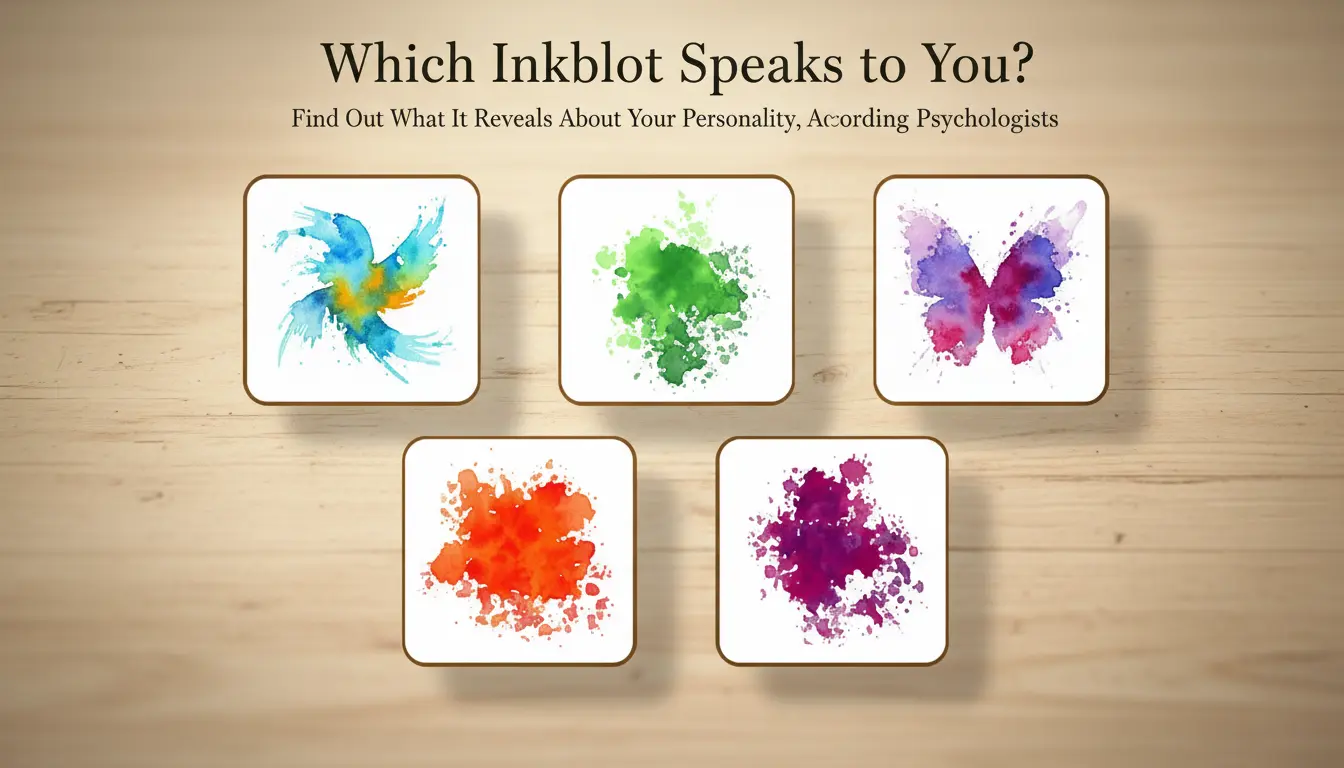
Ever gazed at a bizarre inkblot and wondered what it says about your deepest, darkest secrets—or maybe just what you had for lunch? Welcome to the enigmatic world of the Rorschach inkblot test, a psychological adventure that dares you to look at smudges and see yourself. Let’s unravel what happens when you ask, “Which inkblot speaks to you?” and what psychology says your choice might reveal.
Scientists confirm: This is the most effective way to get your cat’s attention, according to new research
Elderly Couple Refuses Reserved Seats—Viral Train Standoff Sparks Fiery Debate on Courtesy
What Is the Rorschach Inkblot Test, Anyway?
So, you might have stumbled upon the famous inkblot test, more properly called the Rorschach test (named after its 1920s inventor, Swiss psychologist Hermann Rorschach). The idea is beguilingly simple: you look at a series of mysterious, symmetrical inkblot images, and describe what you see. Why? Because, according to projective psychology, your mind projects elements of your own personality into your interpretation.
Rorschach wasn’t the first to dabble with ambiguous pictures; earlier, Alfred Binet—the very same mind behind early intelligence testing—had played with the notion that inkblots could unveil someone’s mental prowess. But it was Dr. Rorschach who, after studying over 400 patients, chose the now-classic set of ten inkblots—famously detailed in his 1921 book, Psychodiagnostik—that would go on to mesmerize and baffle psychologists and patients alike.
The Test in Practice: How It’s Used and Interpreted
The Rorschach test isn’t your average pop quiz or internet meme. It’s actually one of the most frequently used medico-legal personality evaluations in the United States (trailing only the MMPI-2). During the test, a psychologist shows you the inkblots and carefully notes your verbal responses—including extra comments that might not directly answer the question; in projective psychology, there’s often meaning in the margin notes!
A few key factors psychologists analyze:
- Location: Which part of the inkblot do you focus on?
- Form: Are you describing the overall shape, or getting lost in the details?
- Color: Does color stand out to you? (Hint: color recognition often points to emotional awareness!)
- Additional details: Any specific or idiosyncratic features you mention.
The sum of your responses, plus how common or unique they are, helps the professional piece together clues about your character traits and personality makeup. Sometimes, a psychologist will ask targeted follow-up questions—always helping sharpen the view.
Interpreting the Ink: What Your Responses Might Mean
Some responses are as classic as a little black dress—very common and expected. Others, however, are so unique that they might hint at unusual patterns of thought. For instance, seeing a lot more sexual imagery than average (over four out of ten inkblots) can, according to certain interpretation manuals, even point towards complex psychological states (like schizophrenia); conversely, having no such responses might raise eyebrows about sexual frustration. Don’t worry: you’re not alone. Apparently, almost every inkblot has hidden features that could inspire a risqué reading.
If you spot symmetrical features and mention them, you’re considered reflective—after all, Rorschach designed the cards with symmetry on purpose. But if out of all ten blots, you mention symmetry just once, psychologists might see it as a sign of egocentrism or even overestimating your self-worth.
Got an eye for the margins and contours? That signals rational skills and perhaps a flair for analytic intelligence. If you’re fixated on every tiny detail, psychologists might read it as vigilance or impulsivity—or, if you go a bit overboard, potential anxiety.
Why You Should Never Reheat These Foods in the Microwave – The Hidden Dangers Experts Warn About
I tried the top 5 guard dogs—here’s what makes these breeds the ultimate protectors
Here’s where things get even more fascinating:
- If you discern movement, your mind could be imaginative, mature, and creative.
- Spotting animals in motion? That’s believed to relate to underlying drives and a dynamic problem-solving style.
- But if you only see movement in inanimate objects? That may indicate stress and anxiety.
- Describing colors acknowledges emotional awareness and expressiveness (according to psychologists).
There’s even a school of thought that connecting image elements beyond the obvious means you possess great intellectual potential, leadership qualities, ambition, and abstract thinking.
Controversies, Limitations—and Good Advice
Of course, let’s not gloss over the skepticism: many researchers question the validity of the Rorschach. Yet, many mental health professionals defend it passionately, arguing that the test—when interpreted rigorously—can yield meaningful insight. What’s not up for debate? Only a qualified psychologist should be trusted to make sense of your test results. Online tests and self-diagnoses don’t come with the same professional rigor (or witty banter). If you’re curious to try it, remember: it’s the expert’s context and clinical questions that bring the inkblots to life.
In the end, whether the inkblots whisper secrets about your personality, or just confirm you’re a little weird (like the rest of us), the key is not what you see—but how you see it, and with whom you share it. If you’re seeking answers about yourself, why not view the experience as a conversation—preferably with a trusted professional, rather than just your coffee mug?
Similar Posts
- ChatGPT Guide: Mastering Emoji Use to Enhance Your Chats!
- Transform Your ChatGPT Personality: Master GPT-5 Customization Now!
- Does Your Blood Type Really Reveal Your Intelligence, EQ, and Career Path? The Surprising Truth
- What Does Your Apple Choice Reveal About Your Personality? This Psychological Test Explains All
- Your Favorite Sleeping Position Reveals Surprising Secrets About Your Personality

Jordan Park writes in-depth reviews and editorial opinion pieces for Touch Reviews. With a background in UI/UX design, Jordan offers a unique perspective on device usability and user experience across smartphones, tablets, and mobile software.