
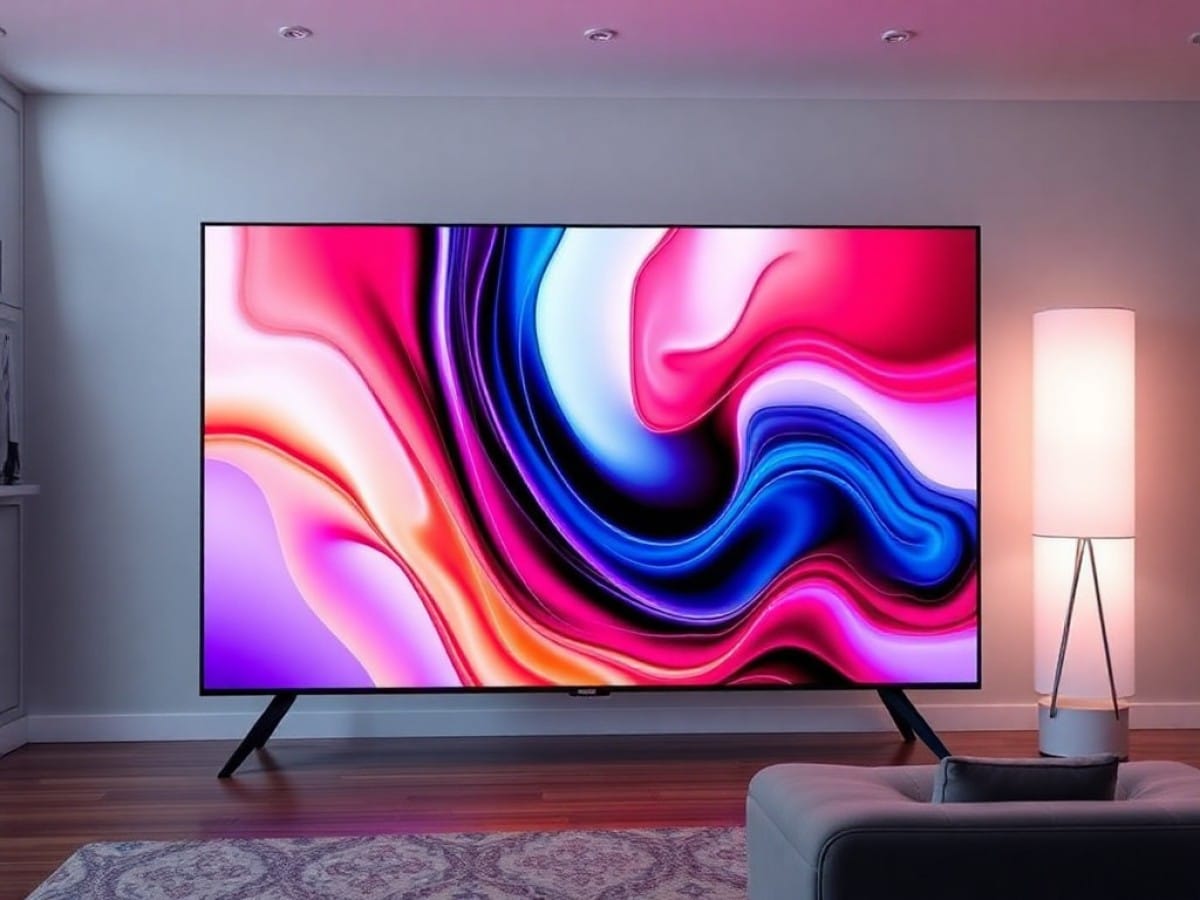
This year, LG has decided to split its flagship C6 series into two, offering models that are less bright than others. The LG OLED77C6, a 77-inch model, is one of these. I have tested it and here are my thoughts.
Scientists confirm: This is the most effective way to get your cat’s attention, according to new research
Elderly Couple Refuses Reserved Seats—Viral Train Standoff Sparks Fiery Debate on Courtesy
The LG OLED77C6 is the new 77-inch variant from the C6 series, sitting mid-range in the Korean manufacturer’s 2026 OLED lineup. Unlike the smaller sizes in the C6 family (42, 48, 55, and 65 inches), this 77-inch model (along with the 83-inch version) features a so-called “Tandem” OLED panel made up of multiple organic layers stacked together, which allows it to achieve significantly higher brightness levels compared to LG’s “classic” OLED TVs. It is comparable to TVs in the G6 series.
The difference in panel technology between the smaller sizes and the 77-inch version is a crucial aspect, especially for HDR performance and daytime use in a bright living room. Additionally, LG pairs this panel with its third-generation Alpha 11 processor, already used in the pricier G6 series, responsible for upscaling, fine contrast management, noise reduction, and motion handling.
Here, the idea is to offer a large-screen model that is not just a simple extrapolation of the smaller versions, but a TV optimized for immersive home cinema use, while maintaining a price positioning meant to be more accessible than the G series.
In the market, the LG OLED77C6 faces several serious competitors. From Samsung, the 77-inch S95F features QD-OLED technology, which is highly competitive in terms of color volume and brightness, while the Panasonic Z95B aims to remain the benchmark for color fidelity, offering a true home cinema atmosphere with support for all HDR formats.
In this context, the OLED77C6 aims to meet the demands of both cinephiles and gamers, leveraging the new tandem panel specific to large sizes to establish itself as a particularly relevant model in the 77-inch category.
LG OLED77C6 Specifications
| Model | LG OLED77C6 |
|---|---|
| Screen Size | 77 inches |
| Maximum Resolution | 3840 x 2160 pixels |
| Display Technology | OLED |
| Backlighting | Unknown |
| HDR Compatibility | HDR10, Dolby Vision |
| Refresh Rate | 165 Hz |
| Processor | Alpha 11 4K Gen 3 |
| VRR | Yes |
| ALLM | Yes |
| Audio Power | 40 watts |
| Compatibility | Dolby Atmos |
| Channels | 2.2 |
| Audio Outputs | Headphones, Speakers, Optical |
| HDMI Ports | 4 |
| HDMI ARC/eARC | Yes |
| Antenna Input | 1 |
| USB Ports | 2 |
| Optical Output | 1 |
| Headphone Jack | Yes |
| Ethernet | Yes |
| PCMCIA (CI+) Port | Yes |
| Wi-Fi Version | Wi-Fi 5 (ac) |
| Bluetooth Version | 5.3 |
| Frame / Stand Color | Black |
| Stand Position | Central |
| Operating System (OS) | webOS |
| Assistant | LG ThinQ |
| AI Features | Yes |
| Airplay Compatible | Yes |
| Chromecast Compatible | Yes |
| Microphone on the Remote | Yes |
| Product Sheet | Available |
LG OLED77C6 Design
The design of the LG OLED77C6 follows directly from what LG offers in its previous OLED ranges, featuring a very sleek silhouette that almost exclusively highlights the display area. From the front, the TV is practically all screen, bordered by ultra-thin edges (just 3 mm), which quickly disappear as soon as content begins to play.
The frame has a dark, discreet finish that keeps the focus on the image.
However, the 77-inch format does impose a significant physical presence: the TV largely dominates the visual field and will inevitably overpower a standard TV stand, making it a natural choice for a spacious living room or a dedicated home cinema room. Fortunately, LG has equipped it with a central stand that needs to be assembled.
Assembly is straightforward and it ensures perfect stability for the screen. Note that the stand’s base measures 52 cm wide by 27 cm deep, with the screen raised 6 cm above the TV stand on which it is placed.
From the side, the TV sports the typical OLED design with an extremely thin upper part of the panel (just 4 mm), plus a thicker section at the bottom, which houses the electronics (only 5 cm thick), the power supply, and the audio system.
This additional thickness is reasonable for a TV of this size and does not hinder placement on a stand or wall mounting, especially since VESA compatibility allows for relatively simple installation, provided that the wall is strong enough to support a product of this weight.
The rear finish, although slightly less luxurious than that of the G series, remains refined for a C series model, with clean lines and a well-organized arrangement of connectors designed to simplify cable management when concentrated in the center.
This is not the “gallery” TV concept that is flush against the wall, but rather a compromise between sleekness, robustness, and ease of installation, consistent with the target market for this product.
The overall impression is one of seriousness and sturdiness, without unnecessary frills, featuring an aesthetic neutral enough to fit into a variety of interiors, whether contemporary or more traditional. It may not reach the sophistication of the ultra-thin chassis and premium finishes of the G6, but the 77C6 definitely stands above an entry-level model in terms of perceived quality.
LG OLED77C6 Connectivity
In this aspect, nothing has changed. Indeed, the connectivity options of the LG OLED77C6 are identical to those of previous models, which are on par with other brands. They are organized in a single block, simplifying connections especially if the TV is wall-mounted, and everything necessary to enjoy the latest Blu-ray technology and video games from any console is present.
The TV features four HDMI inputs, all compatible with the HDMI 2.1 standard, meaning it can handle a 4K signal at high refresh rates, with support for VRR (Variable Refresh Rate) and ALLM (Auto Low Latency Mode). This comprehensive approach avoids having to choose between devices to connect to more or less advanced ports, which can be an issue on competing models that only offer two fully compatible inputs. The presence of an HDMI eARC port also ensures a quality connection with a soundbar or home cinema amplifier, allowing for uncompressed high-definition audio tracks.
In addition to the HDMI ports, the OLED77C6 includes two USB ports for playing content from an external drive, as well as an Ethernet port for a more stable wired network connection, in addition to built-in Wi-Fi. There is also an optical audio output, still useful for some older audio systems, as well as an antenna input and a satellite input, covering all TV reception needs.
As an OLED TV, the issue of burn-in remains a legitimate concern for some users. LG has implemented a series of mechanisms designed to limit this risk, as it has in previous generations: subtle image shifting to prevent fixed elements from always remaining in the same place, pixel refreshing when the TV is in standby, and automatic brightness management for interfaces containing logos or static elements.
The tandem panel technology used on the 77-inch model is also designed to offer better light efficiency, which allows for more light output for the same amount of energy, thus potentially reducing thermal stress on the subpixels. Although there is no zero risk, these various devices, combined with normal and varied use, should ensure reasonable durability of the panel, even in this large format.
The Remote Control
The remote control supplied with the LG OLED77C6 is an evolution of the brand’s famous Magic Remote. It is identical to the one supplied with the G5 series, combining classic buttons and a gyroscope-based on-screen pointing system. It has a size that is neither too small (like those of Samsung TVs) nor too large (like those of Panasonic TVs). The buttons are naturally positioned under the fingers. There is one that allows for customizing a shortcut, and last year’s Apps button has been replaced by a call to the Alexa voice assistant, located at the bottom, next to those that provide access to Netflix, Prime Video, Disney+, Rakuten TV, and LG Channels.
Rated 9/10 by the Frandroid editorial team, the TCL C89K television is a sure bet for those looking for a high-performing Mini LED experience. As the World Cup approaches, the 65-inch version is available at an exceptional price of €999.
The remote also incorporates a microphone for controlling the TV’s voice functions, whether it’s launching an app, searching for content, or controlling compatible smart home devices. Voice recognition improves with each generation and now understands naturally phrased queries quite well, making it truly practical for everyday use. Note also that, like last year’s model, as well as the remotes supplied with Philips or Samsung TVs, the controls are toggle for managing the volume and switching channels. Unfortunately, there is still no backlighting for the buttons. It’s a pity.
Subjective Image Quality
In terms of image, the LG 77C6 fully benefits from the specific OLED panel used on this 77-inch diagonal, which is not the same as on the smaller versions of the series. The “Tandem” structure, with multiple emissive layers stacked together, allows for higher brightness levels while maintaining the fundamental qualities of OLED: perfectly deep blacks, almost infinite contrast, and no halo around bright objects on a dark background. Also note the Hyper Radiant Color and Brightness Booster Ultra functions, like the TVs from the G6 and W6 series.
In a completely dark room, night scenes gain depth thanks to blacks that literally blend into the environment, while details in dark areas remain well preserved, provided that an appropriately adjusted image mode is selected.
Colors appear rich and extremely natural without exaggeration, with excellent coverage of the color spaces used for HDR formats, resulting in a particularly attractive image on Dolby Vision and HDR10 content (recalling that LG TVs do not support the HDR10+ format).
The TV offers a palette of image modes designed to cover different uses.
The Home Cinema and Filmmaker modes prioritize fidelity, with a color temperature closer to cinema standards and less aggressive motion handling, which will suit quality films and series.
Standard or Vivid modes enhance contrast and saturation more, to flatter the eye in a bright environment or for more informal TV programs. For demanding users, the Expert modes (Bright Room and Dark Room in SDR) provide a more neutral base, while the dedicated game modes reduce display latency while maintaining a good level of detail in the shadows.
Lower definition content, whether TV channels or 1080p streams on streaming platforms, benefits from the treatment of the Alpha 11 processor, which improves perceived sharpness without generating too many artifacts when properly calibrated.
In use, with recent 4K HDR films from streaming services or Ultra HD Blu-ray discs, the 77C6 offers a very immersive experience. Large diagonals are particularly sensitive to image processing quality, and this model manages to maintain a sense of coherence in wide shots, with well-held contours and smooth movements when interpolation options are moderately adjusted.
The rare posterization effects we noted in the previous series are completely absent here. Thanks to the processor, which does its job perfectly.
Very bright scenes, such as snow-covered landscapes or science fiction sequences filled with light sources, benefit from the panel’s increased ability to produce bright peaks, giving a sense of relief and punch that was not always found in previous generations of OLED TVs.
Conversely, in dark scenes, contrast remains a major strength, and the 77-inch size enhances the feeling of being immersed in the action, provided there is sufficient viewing distance. Overall, the subjective image quality proves very convincing, whether for a demanding cinema session or for more routine viewing of series and shows.
Our Measurements, With Probes
Beyond the excellent subjective quality, we have, of course, carried out several measurements on this TV. It should be noted that these measurements are only valid for the 77 and 83-inch TVs in this series. We will be testing a 65-inch model shortly to provide our measurements and highlight the differences.
As a reminder, all measurements are made with default settings, with only the brightness sensor disabled. Under these conditions, we observed excellent color fidelity with SDR content. Indeed, we recorded an average Delta E of 1.14, which is well below the threshold of 3, below which the human eye can no longer distinguish between the displayed color and the requested color. This is one of the best levels we have measured. Only the G5 (0.79, the record) and Panasonic Z95B (True Cinema mode at 1.31 and Filmmaker mode at 1.36) perform better.
Moreover, the average color temperature is ideal with a value of 6442 K (target value at 6500 K) with extremely little chromatic drift. The chart is really a model of its kind. Moreover, the gamma is also extremely well managed to produce fairly bright images when needed and less so when it’s not. Thus, the average gamma was measured at 2.42 with excellent adherence to the reference line except for a slight break for the 95% gray value.
The rec.709 color space is fully covered, even more so (98.80%), which is not really a surprise and thus allows for enjoying the most extended colors in this range.
The TV supports HLG, HDR10, and Dolby Vision modes. It still does not support the HDR10+ format.
For HDR content, the factory settings are also perfect, and there is really nothing to complain about. If the G5 holds the record for color fidelity with an average Delta E of 0.51, this 77C6 model matches it with a measurement of 0.51 in Filmmaker mode. It’s perfect! The other modes are a bit less faithful, with 2.41 for Home Cinema mode, 3.73 for Game Optimizer mode, while Standard mode is at 6.34, unsurprisingly, well above the threshold of 3.
Regarding the peak brightness, under dark conditions, which we always do to compare the different measurements of TVs, with a 10% window, we recorded 2110 cd/m² compared to 2412 cd/m² for the 55-inch G5 and only 1200 cd/m² for the
Similar Posts
- LG OLED65G6 TV Review: Pushing Boundaries in Visual Excellence!
- Panasonic 55Z95B Review: Is This the Ultimate Home Cinema TV?
- I Tested the Hisense UR9S TV: Best Color Accuracy Ever & Dolby Vision 2 Compatible!
- TCL 65C7K Review: Is This the New Premium Segment Leader?
- I Explored Samsung’s R95H TV: Experience Top-Tier 75-inch Micro RGB Brilliance

Maya Singh is a senior editor covering tablets and hybrid devices. Her work explores how these tools reshape digital productivity and learning. She also contributes to feature editorials on emerging tech.