
Scientists confirm: This is the most effective way to get your cat’s attention, according to new research
Elderly Couple Refuses Reserved Seats—Viral Train Standoff Sparks Fiery Debate on Courtesy
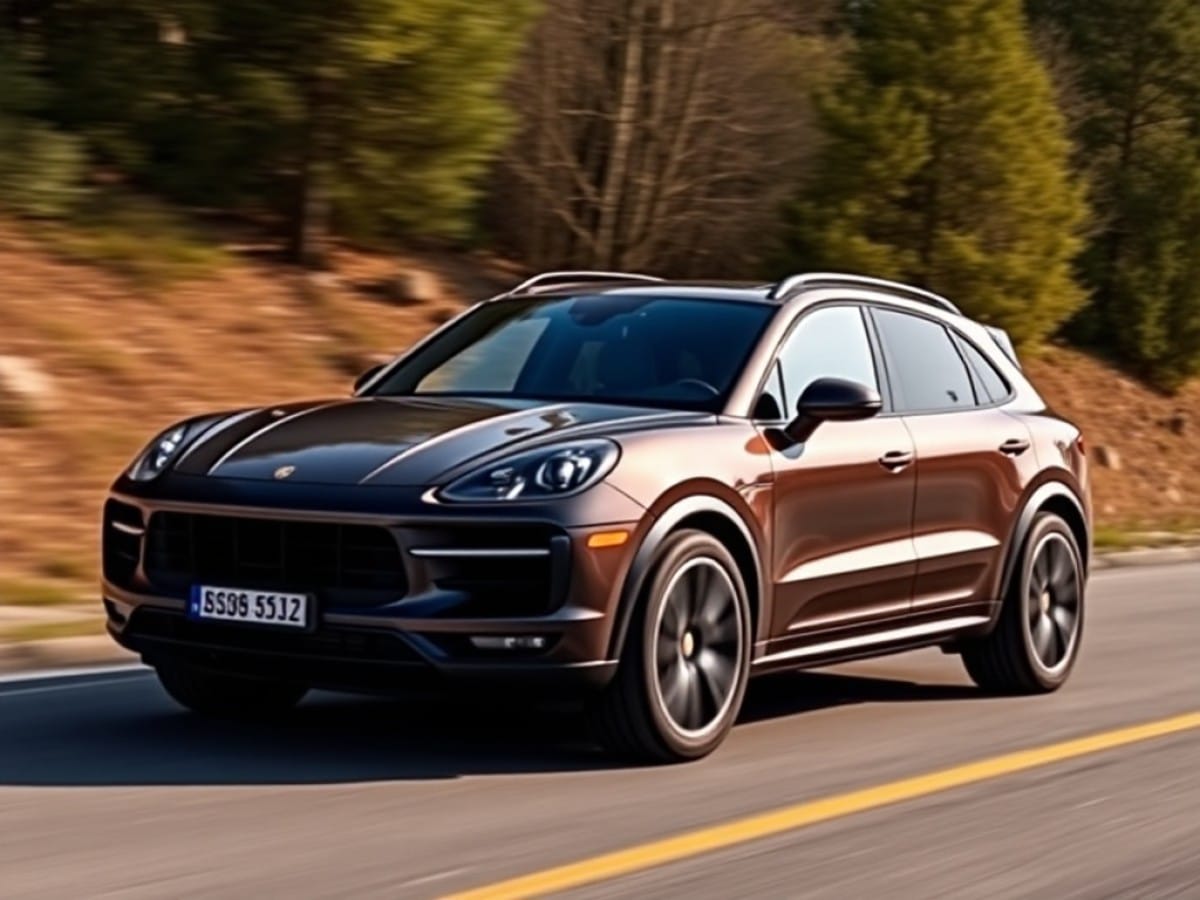
In Stuttgart, within Porsche’s heartland, the German brand introduced the new Cayenne Electric. The specifications are staggering: the Turbo version boasts 1,156 horsepower, accelerates from 0 to 100 km/h in 2.5 seconds (faster than the new 911 Turbo S), has a WLTP range of 642 km, and charges from 10 to 80% in just 16 minutes.
But that’s not all; the vehicle also features a spacious interior with a 781-liter trunk, a towing capacity of 3.5 tons, and the largest screen surface ever seen in a Porsche, including a unique folded OLED display.
The Cayenne Electric undoubtedly becomes the most potent and practical serial production Porsche to date. I had the privilege of exploring this electric SUV during an exclusive static session in Stuttgart.
Here are my thoughts on this model that redefines the standards of premium electric SUVs, scheduled to hit the French roads by 2026.
Technical Specifications
| Model | Porsche Cayenne |
|---|---|
| Dimensions | 4.99 m x 1.98 m x 1.68 m |
| Power (horsepower) | 408 horsepower |
| 0 to 100km/h | 4.8 s |
| Level of autonomy | Semi-autonomous driving (level 2) |
| Max speed | 230 km/h |
| Main screen size | 14.9 inches |
| Car-side plug | Type 2 Combo (CCS) |
| Entry-level price | 105,200 euros |
|
Try it out |
Product sheet |
A Subtle Yet Bold Evolution in Design
Starting with its appearance, the new Cayenne Electric embraces an evolution of the brand’s design language, featuring a lower hood, ultra-thin Matrix LED headlights optionally available with HD technology, and muscular fenders that reflect Porsche’s DNA. The elegantly sloping roofline remains a central element of the silhouette.
The frameless doors, the pronounced crease in the surfaces, and the three-dimensional design of the side skirts painted in Volcanic Grey Metallic (or high gloss black on the Turbo) create a two-tone concept that emphasizes the vehicle’s sporty proportions.
At the rear, the light strip features a distinctive 3D effect with graphic animations, while the backlit Porsche lettering adds a modern touch.
On the Turbo model showcased, numerous contrasting elements feature the exclusive Turbonite color: Porsche badges, wheel faces, and window surrounds. Aerodynamics also play a crucial role, with a drag coefficient of 0.25, making the Cayenne Electric one of the most streamlined SUVs in its category.
The Porsche Active Aerodynamics system adjusts aerodynamic properties based on the situation: movable cooling flaps at the front, an adaptive roof spoiler, and on the Turbo, active aeroBlades at the rear that extend the lateral separation edges to enhance airflow.
Personally, I appreciate the aesthetic evolution of the Cayenne Electric, but I find it becoming too generic, less assertive than the current generation. The design aims to be more mainstream, potentially appealing to a broader audience, particularly in China, but perhaps at the expense of a more defined identity.
Generous Dimensions
Weighing 2.5 tonnes, the new Cayenne Electric measures 4,985 mm in length, 1,980 mm in width, and 1,674 mm in height, which is 55 mm more than the combustion engine model. The real advantage lies in the wheelbase: 3,023 mm, nearly 13 cm more. This increase translates into unprecedented legroom at the rear for a Cayenne.
The rear seats now come with standard electric adjustment, offering 15 cm of longitudinal travel and a backrest inclination from 11 to 29 degrees. The trunk volume varies from 553 to 781 liters depending on the seat position and increases to 1,588 liters with the seats folded down. Add a 90-liter frunk, and you get a total volume that exceeds the Cayenne combustion model by 99 liters.
Onboard, the cabin feels spacious, enhanced by the immense panoramic glass roof. However, it’s a pity there’s a small transmission tunnel at the rear, making the middle seat less comfortable.
This versatility is boosted by an impressive towing capacity: from 3 to 3.5 tonnes depending on the package chosen.
The Flow Display: A World-First OLED Innovation
Stepping inside, the first thing that catches your eye is the Flow Display: a gracefully curved 12.25-inch OLED panel that seamlessly integrates into the center console. It’s the automotive industry’s first-ever folded screen, an innovation that clearly separates display and control areas.
This screen can operate in full-screen mode or split into two areas: the “scene” above the fold for navigation or cameras, and the “terminal” below for shortcuts or a virtual keyboard. The visual impact is striking, and the interface’s responsiveness is exceptional.
The Flow Display is accompanied by a 14.25-inch OLED digital instrument cluster and, optionally, a 14.9-inch passenger display. A head-up display with augmented reality is available, equivalent to an 87-inch screen projected 10 meters ahead of the vehicle.
Together, these screens form the largest display area ever seen in a Porsche. Rest assured, essential functions such as air conditioning and audio volume remain accessible via physical buttons.
To enhance usability, Porsche has developed the “Ferry Pad,” a wrist rest that allows ergonomic operation of both digital and analog elements, even during dynamic driving. It’s quite pleasant to use, and I’m eager to see how it performs on the road.
Porsche Digital Interaction: A Refined Android Automotive Experience
The system is based on Android, but with an interface, functions, and a voice assistant entirely developed by Porsche, with no trace of Google.
The Porsche App Centre includes Apple Music, Spotify, YouTube, Amazon Music, Audible, Home Assistant, as well as solo and multiplayer games.
The Voice Pilot assistant uses artificial intelligence to understand complex and interconnected requests, recognize context, and respond like a real conversationalist. You can control navigation intuitively and access a vast online knowledge base. This is a significant evolution from traditional voice assistants, which are often limited to predefined commands.
The panoramic roof with Sunshine Control uses an electric liquid crystal film, allowing it to switch between transparent and opaque modes. This technology was already available on the Porsche Taycan… and the Renault Scénic.
Another innovation is the panel heating, which not only warms the seats but also large contact surfaces such as armrests and door panels.
The extended ambient lighting includes a communication light, an animated light strip that welcomes passengers and visualizes different vehicle states, such as the charging process.
The Digital Key allows you to unlock and start the vehicle via a smartphone, eliminating the need for a physical key. And that’s almost a must-have feature for a car in 2025.
Two Powertrains, Including the Most Powerful Serial Production Porsche
The Cayenne Electric range initially comprises two models: the Cayenne Electric and the Cayenne Turbo Electric, both equipped with all-wheel drive and Porsche’s electronic traction management system (ePTM). Intermediate versions are planned for the future, but all versions will have all-wheel drive.
Cayenne Turbo Electric: Supercar Performance
The Cayenne Turbo accelerates from 0 to 100 km/h in 2.5 seconds, from 0 to 200 km/h in 7.4 seconds, and reaches a top speed of 260 km/h. These performances are made possible by a newly developed drivetrain that delivers up to 850 kW, equivalent to 1,156 horsepower, and up to 1,500 Nm of torque with Launch Control activated.
This is the most powerful serial production Porsche ever. In normal driving mode, up to 630 kW (857 horsepower) is available. The Push-to-Pass function allows an additional 130 kW (176 horsepower) to be activated for 10 seconds at the push of a button.
To put these performances in context: the Cayenne Turbo Electric is faster than the new 911 Turbo S, which accelerates from 0 to 100 km/h in 2.5 seconds as well, but with a power of 711 horsepower and 800 Nm of torque. Thus, the electric SUV surpasses the iconic sports car in terms of raw power.
Cayenne Electric: Already Highly Competitive
The entry-level model develops 300 kW (408 horsepower) in normal operation and 325 kW (442 horsepower) with 835 Nm of torque with Launch Control. It accelerates from 0 to 100 km/h in 4.8 seconds and reaches a top speed of 230 km/h.
These performances place the Cayenne Electric on par with the best premium electric SUVs, while retaining Porsche’s sporting DNA.
The Cayenne Electric boasts exceptional energy recovery figures, reaching Formula E levels with up to 600 kW of recovery power. In everyday use, about 97% of all braking can be managed solely by the electric motors, according to the German manufacturer.
Mechanical friction brakes rarely need to intervene, reducing wear and enhancing overall efficiency. For the Cayenne Turbo, Porsche Ceramic Composite Brake (PCCB) is available as an option.
Note that there is no “one pedal” mode on the Cayenne Electric, as is the case with all Porsche electric vehicles. This choice by the Stuttgart firm is to “improve the efficiency” of its cars. In other words: it’s better not to brake when possible, as not all energy is recovered with regenerative braking.
A Technological Chassis for a Versatile SUV
The Cayenne Electric owes much of its versatility to its chassis. Adaptive air suspension with Porsche Active Suspension Management (PASM) is standard on both models. The Turbo also benefits from the Porsche Torque Vectoring Plus (PTV Plus) rear limited-slip differential.
Both models can be equipped with rear-wheel steering, which turns the rear wheels up to five degrees. The turning radius is reduced to 11.1 meters, and the steering becomes 12.5% more direct, contributing to the vehicle’s agility.
Finally, Porsche Active Ride is available for the first time on the SUV. This active suspension system, already used on Porsche sports sedans, almost completely compensates for body movements and ensures exceptional stability, dynamics, and comfort. The Cayenne remains parallel to the ground, even during sudden accelerations, turns, and braking.
We had the opportunity to take the electric Cayenne for a spin on the track, and my colleague Romain was quite surprised by the handling (and performance).
Battery: Range, Charging, and Consumption
At the heart of the Cayenne Electric models is a newly developed 113 kWh gross (108 kWh net) high-voltage battery, which benefits from double-sided cooling for optimal thermal management.
This cooling system, with a plate above and below the battery, boasts a power of 10 kW, equivalent to 100 refrigerators.
This “function-integrated” battery is an integral part of the body. Although it weighs 600 kg, it increases the body’s rigidity, occupies 12% less space than a second-generation Taycan, lowers the center of gravity, and allows for a more spacious cabin.
However, it remains repairable: the electronics and the 6 modules of 32 NMCA (nickel, manganese, cobalt, and aluminum) cells produced by LG are easy to replace.
The WLTP range reaches up to 642 km for the Cayenne Electric and up to 623 km for the Turbo. In the WLTP urban cycle, the range even increases to 806 km, an impressive figure, though slightly nuanced given the battery’s XXL size.
Thanks to 800-volt technology, the Cayenne can recharge with up to 400 kW of power in direct current. The charge level can go from 10 to 80% in less than 16 minutes, and you can recover 323 km of range (Cayenne) or 315 km (Cayenne Turbo) in just 10 minutes.
The charging power remains above 350 kW until the charge level reaches 55%, and all this from a temperature of 15°C.
The battery is split into two to ensure compatibility with 400-volt chargers, like Tesla Superchargers, without the need for a booster. It can then reach up to 200 kW, with a charge from 10 to 80% in about thirty minutes.
The Cayenne Electric is also the first production car to optionally support inductive charging. The Porsche Wireless Charging system works up to 11 kW. Simply park the vehicle above a ground plate, with a distance of 15 cm between the underside of the car and the induction plate, and the charging process starts automatically.
Note that the Cayenne Electric does not yet offer a V2L (Vehicle-to-Load) function, which would allow it to power external electrical devices.
Price and Positioning: A More Accessible Electric Cayenne Than the Hybrid
The Cayenne Electric is available for order now, with prices starting at 107,600 euros for the Cayenne Electric and 167,200 euros for the Cayenne Turbo Electric.
An interesting point: the base Cayenne Electric is less expensive than the current Cayenne plug-in hybrid, priced at 118,200 euros.
The three powertrain ranges (electric, plug-in hybrid, and combustion) will continue to be offered in parallel on the markets, thus mixing two different generations.
The Cayenne Electric enters a premium electric SUV market that is already well occupied. Two competitors deserve particular attention: the Tesla Model X and the Xpeng G9, the latter in its new version with ultra-fast charging.
The price of the Model X Long Range starts at around 100,000 euros fully equipped, which is approximately 7,600 euros less than the Cayenne Electric. However, they are not quite the same segment.
The price of the Xpeng G9 starts at 59,990 euros, almost half the price of the Cayenne Electric, with a charge from 10 to 80% in just 12 minutes.
The Cayenne Electric: A Premium (But Expensive) Balance
Against these two competitors, the Cayenne Electric positions itself as the most performant, versatile, and technologically advanced electric SUV.
It surpasses the Model X in terms
Similar Posts
- Dacia Spring Review: Is France’s Cheapest Electric Car Still Overpriced?
- More Powerful Than a Porsche, Cheaper Than a Tesla: Testing the 1500 HP Xiaomi SU7 Ultra Electric Car
- Driving the Audi Q6 Electric: Cheaper & Better Equipped Than a Porsche Macan!
- I Tested the DS N°7 Electric SUV: A Game-Changer with 740 km Range for the Brand’s Future!
- Discover the Polestar 4 Electric: A Game-Changing Car Missing One Key Feature!

Maya Singh is a senior editor covering tablets and hybrid devices. Her work explores how these tools reshape digital productivity and learning. She also contributes to feature editorials on emerging tech.