
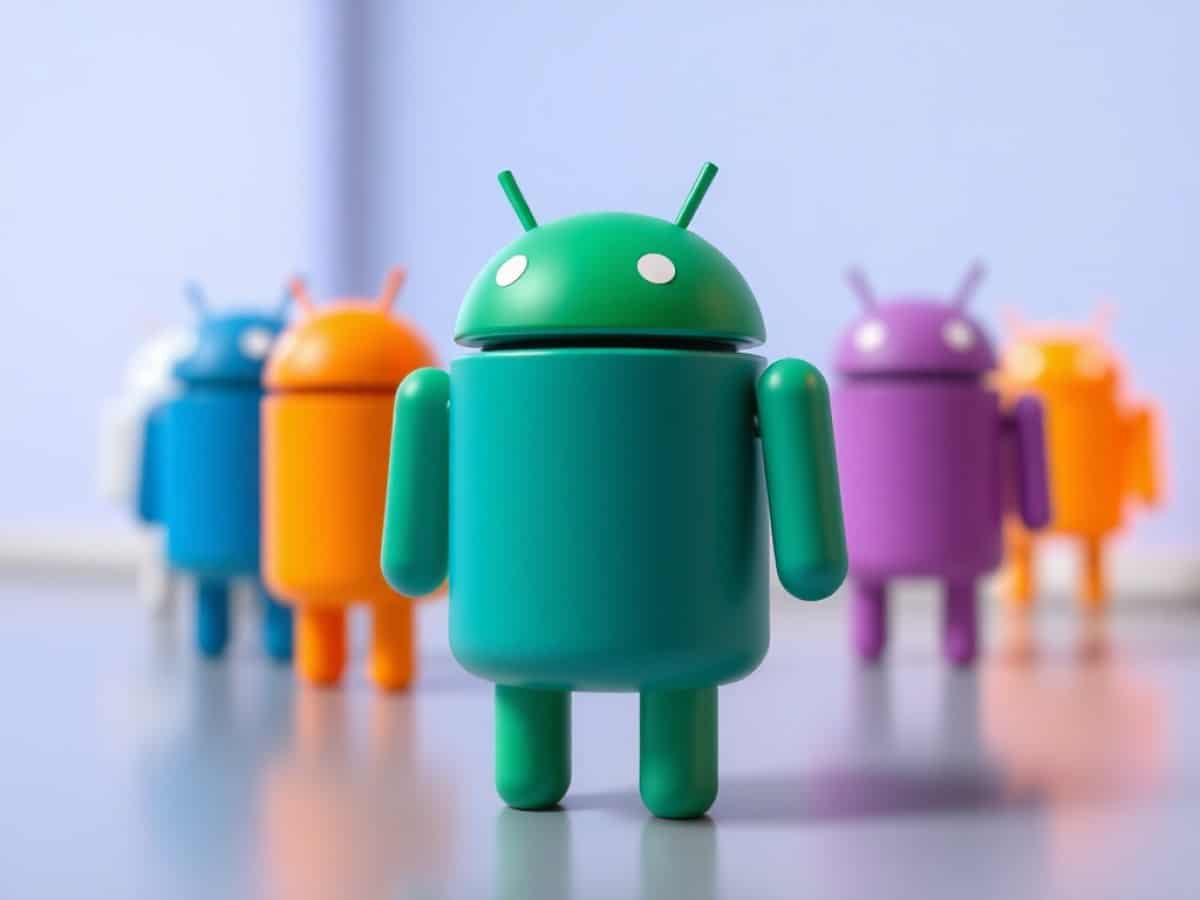
Google hosted its Android Show: I/O Edition 2026 on Tuesday, May 12th. This event showcased a range of exciting updates including Gemini Intelligence, redesigned 3D emojis, enhanced voice dictation, and even a new laptop.
Scientists confirm: This is the most effective way to get your cat’s attention, according to new research
Elderly Couple Refuses Reserved Seats—Viral Train Standoff Sparks Fiery Debate on Courtesy
A week prior to its annual Google I/O 2026 conference, Google presented its Android Show: I/O Edition. Highlights included the introduction of the Googlebook, a laptop engineered to harness Google’s AI power, and Gemini Intelligence, a suite of AI features for Android, alongside several platform updates.
1. Custom Widgets Created Using Natural Language
With the “Create My Widget” feature, users can develop fully customized widgets by simply describing their preferences, eliminating the need for manual setup. For instance, a cyclist could design a weather widget that only shows wind speed and rain probability. A cooking enthusiast might request three high-protein recipe suggestions each week. These widgets can be easily added and resized directly on the home screen. The feature will also be available on Wear OS watches.
“Create My Widget” will initially roll out on the latest Samsung Galaxy and Google Pixel devices this summer, and will gradually become available on other Android devices.
2. Rambler: Enhanced Voice Dictation That Removes Hesitations
Google introduces “Rambler” in Gboard, a new voice dictation feature powered by Gemini Intelligence. This tool not only transcribes speech in real time but also removes hesitations like “uh,” repetitive words, and autocorrections to produce clean and concise text. For example, if a user says “meeting at 3 PM… uh, 2 PM,” the sent message will read “meeting at 2 PM.”
Rambler also supports multiple languages in a single message and ensures that audio is neither stored nor recorded.
3. Quick Share Now Interoperable with AirDrop
Google has expanded the compatibility of its Quick Share feature to include more manufacturers. Following the Pixel, this feature will become available on devices from Samsung, OPPO, OnePlus, Vivo, Xiaomi, and Honor later this year. For devices not directly compatible, Quick Share can now generate a QR code to share files to an iPhone via the cloud. Additionally, Google announced the integration of Quick Share into some third-party apps, starting with WhatsApp.
Android 17 also introduces a new tool for transferring data from iOS to Android, covering passwords, photos, messages, favorite apps, contacts, eSIM card, and home screen layout.
4. Pause Point: A Forced Break Before Distracting Apps
Pause Point is a new digital wellbeing feature in Android. When a user tries to open an app they’ve marked as distracting, Android will impose a ten-second pause before allowing access. During this time, users can perform a breathing exercise, set a timer to limit app usage, view their favorite photos, or switch to an alternative app. To discourage bypassing, disabling Pause Point requires restarting the phone.
Why You Should Never Reheat These Foods in the Microwave – The Hidden Dangers Experts Warn About
I tried the top 5 guard dogs—here’s what makes these breeds the ultimate protectors
5. Noto 3D: Android Emojis Shift to Three Dimensions
Google is updating its entire collection of 4,000 Android emojis with a new set called Noto 3D. These new visuals move away from flat designs to volumetric representations, adding depth, detail, and texture to make expressions clearer in digital communication. Noto 3D emojis will be available across all Google devices, starting with Pixel smartphones later this year.
Bonus. Googlebook: A New AI-Centric Laptop
Google also unveiled the Googlebook, a new category of laptop designed from the ground up for Gemini Intelligence. A standout feature is the “Magic Pointer,” developed with Google DeepMind, which integrates Gemini: simply pointing at an element on the screen provides context-sensitive suggestions, such as scheduling a meeting from a date in an email or viewing two images together.
The Googlebooks are also designed to complement an Android phone: mobile apps can be accessed directly from the laptop without downloading. Quick access to phone files is planned via the file explorer. The first models, produced in collaboration with Acer, ASUS, Dell, HP, and Lenovo, are expected in the fall of 2026.
Similar Posts
- 15 Years After Chromebook: Google Unveils Its Revolutionary Googlebook
- Google Boosts Gemini Intelligence Ahead of WWDC and iOS 27: What to Expect!
- Google’s New AI Can Predict Your Next Move on Your Smartphone: See How It Works!
- AirDrop vs. Wi-Fi: New Quick Share Update Triggers Annoying Bug!
- Z Flip’s Screen Unlocks Gemini: Turn Your Smartphone Into a Personal Assistant!

Jordan Park writes in-depth reviews and editorial opinion pieces for Touch Reviews. With a background in UI/UX design, Jordan offers a unique perspective on device usability and user experience across smartphones, tablets, and mobile software.