
Scientists confirm: This is the most effective way to get your cat’s attention, according to new research
Elderly Couple Refuses Reserved Seats—Viral Train Standoff Sparks Fiery Debate on Courtesy
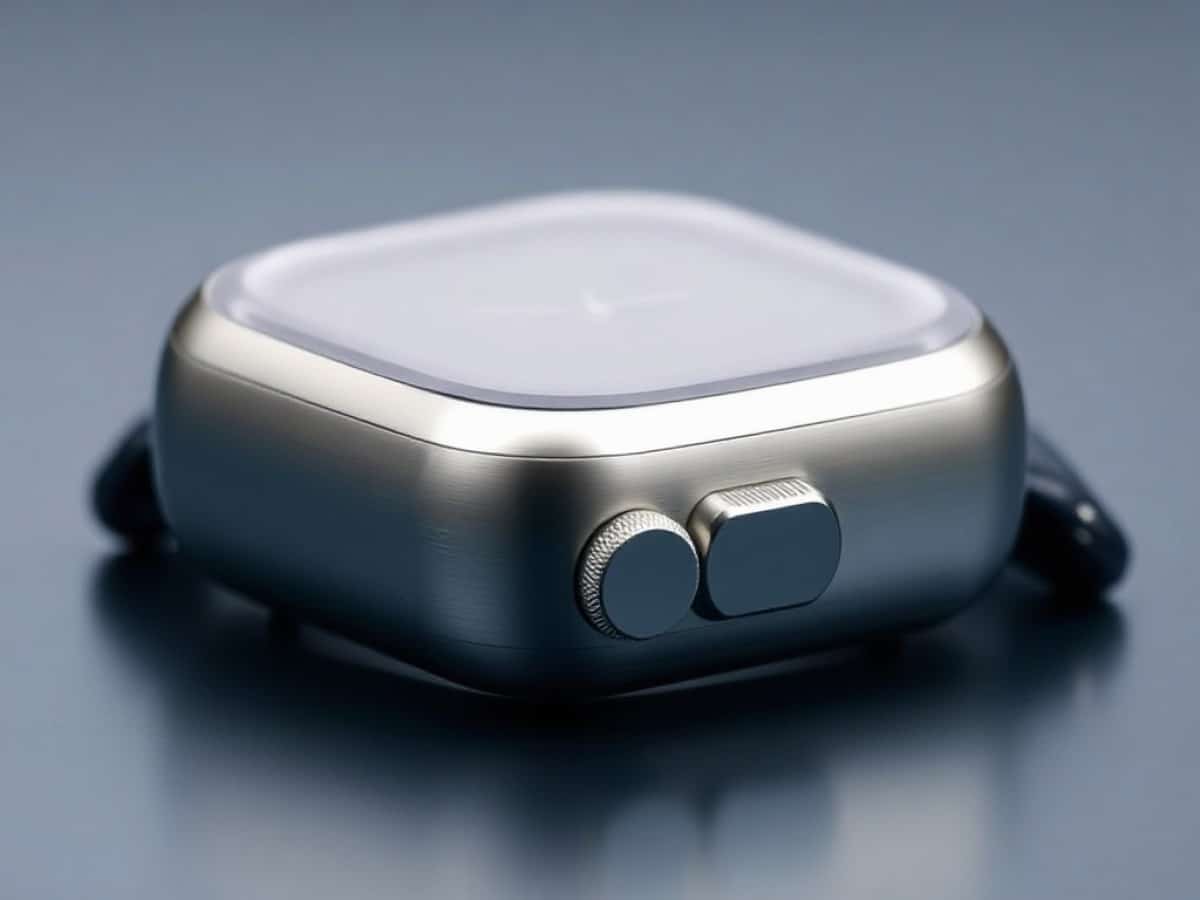
The additive manufacturing technique of 3D printing builds the object layer by layer until it closely matches the desired final shape. Unlike the subtractive process of machining forged parts used previously, which requires removing large amounts of material. This shift results in using half as much material to manufacture the casings of the Apple Watch Ultra 3 and the titanium casings of the Apple Watch Series 11, compared to earlier generations.
“A 50% reduction is a monumental advance – we can produce two watches from the same amount of material,” said Sarah Chandler. “If you trace the entire process, it makes a huge difference for the planet.”
Overall, Apple estimates that this new process should save over 400 tons of raw titanium this year.
From above, rows of blocks rise from the ground like white Lego skyscrapers, operating day and night. These are the 3D printers tirelessly crafting the titanium casings for the Apple Watch Ultra 3 and the Apple Watch Series 11.
Each machine is equipped with a galvanometer containing six lasers that simultaneously apply all the layers (over 900 in total) required to produce a single casing. Before the printing phase, the raw titanium must be powdered, a process that involves precisely measuring its oxygen content to temper its properties, which become explosive when exposed to heat.
“It was a highly precise materials science,” stated Kate Bergeron. “The powder particles had to be 50 microns in diameter, akin to very fine sand,” explained Dr. J. Manjunathaiah. “Once exposed to the laser beams, it behaves differently depending on whether it contains oxygen or not. Thus, we had to find a way to keep the oxygen content low.”
“To achieve a layer thickness of exactly 60 microns, we had to compress it very finely,” added Kate Bergeron. “We had to move as quickly as possible to be able to reproduce it on a large scale, yet as slowly as needed to ensure accuracy. This allowed us to be efficient while meeting design objectives.”
After printing, a technician vacuums the powder residue from the mounting plate in a process called coarse dusting. Since the parts are printed in an almost final state with all the necessary cuts on the casing, there might be powder residues left in crevices. An ultrasonic cleaner is then used to remove these powder residues during the fine dusting phase.
During the separation process, a thin electrified wire saws between each casing, while a cooling liquid is simultaneously sprayed to limit the heat generated by the cutting. An automated optical inspection system then measures each casing to ensure the precision of its dimensions and appearance. This is the final quality control step that guarantees the casings are ready for the final treatment.
“Mechanical engineers are world champions of solving puzzles,” declares Kate Bergeron. “Their task is to fit the printed circuit board, the screen, the battery – everything that goes inside the casing during the final assembly – and ensure everything fits. We conduct tests throughout the process to make sure the watch is functional, then we add the software part and run it for a while to ensure all features meet our requirements.”
Another major improvement brought by 3D printing is the ability to print textures in places normally inaccessible during the forging process. For the Apple Watch, improving the sealing process at the antenna housing in the cellular connectivity models was crucial. Inside the casing, the cellular models have a slot filled with plastic that allows the antenna to function. By using 3D printing to apply a specific texture on the inner surface of the metal, Apple has achieved better adhesion between the plastic and the metal.
It took several years to put all the pieces of this puzzle together, starting with a series of demos and proof of concepts to refine the procedure, from the composition of the alloy to the printing process itself. After trials conducted on smaller scales on products from previous generations, the team was confident they could meet the challenges associated with using titanium.
“We always try to make small adjustments before moving on to the next step,” explains Kate Bergeron. “This has given us even more flexibility than before in terms of design. Now that we have achieved this feat on a large scale, in a truly sustainable way, and with the desired aesthetic and structural results, the possibilities are limitless.”
This flexibility in design has another advantage that goes beyond the Apple Watch: a USB-C port on the new iPhone Air. By creating a brand-new port with a casing made from the same 3D-printed recycled titanium powder, Apple has managed to create an incredibly thin and durable design.
This is what can be expected when the laws of physics, material innovation, exceptional design, and an unwavering commitment to environmental protection converge – and it’s magical.
Apple has showed off part of its 3D printing process for titanium Apple Watch Ultra 3 cases pic.twitter.com/d3pTTMrQav
— Aaron (@aaronp613) November 18, 2025
Similar Posts
- Apple Declares iPhone 11 Pro, MacBook Air Intel, and Watch Series 5 Vintage: Upgrade Now!
- iPhone 17 Pro Ditches Titanium: What’s Behind Apple’s Surprising Decision?
- Apple Watch Update: New Modular Face Coming This September?
- Titanium Vanishes from iPhone 17 Pro: Why the Shift Back to Aluminum?
- Apple Watch Update: watchOS 11.6.2 Released to Fix Bugs!

Ethan Rivers focuses on Android smartphones, emerging mobile platforms, and operating systems. With a critical yet fair perspective, he evaluates devices on performance, design, and ecosystem compatibility.