
Scientists confirm: This is the most effective way to get your cat’s attention, according to new research
Elderly Couple Refuses Reserved Seats—Viral Train Standoff Sparks Fiery Debate on Courtesy
The Xgimi Titan, unveiled at IFA 2026, marks a significant shift for the Chinese brand, previously known for its compact “lifestyle” models such as the Halo, MoGo, and Horizon 20 series. With this new 4K laser projector, Xgimi now targets true home cinema enthusiasts who desire to project giant images on a fixed screen in a dedicated room or a meticulously optimized living space.
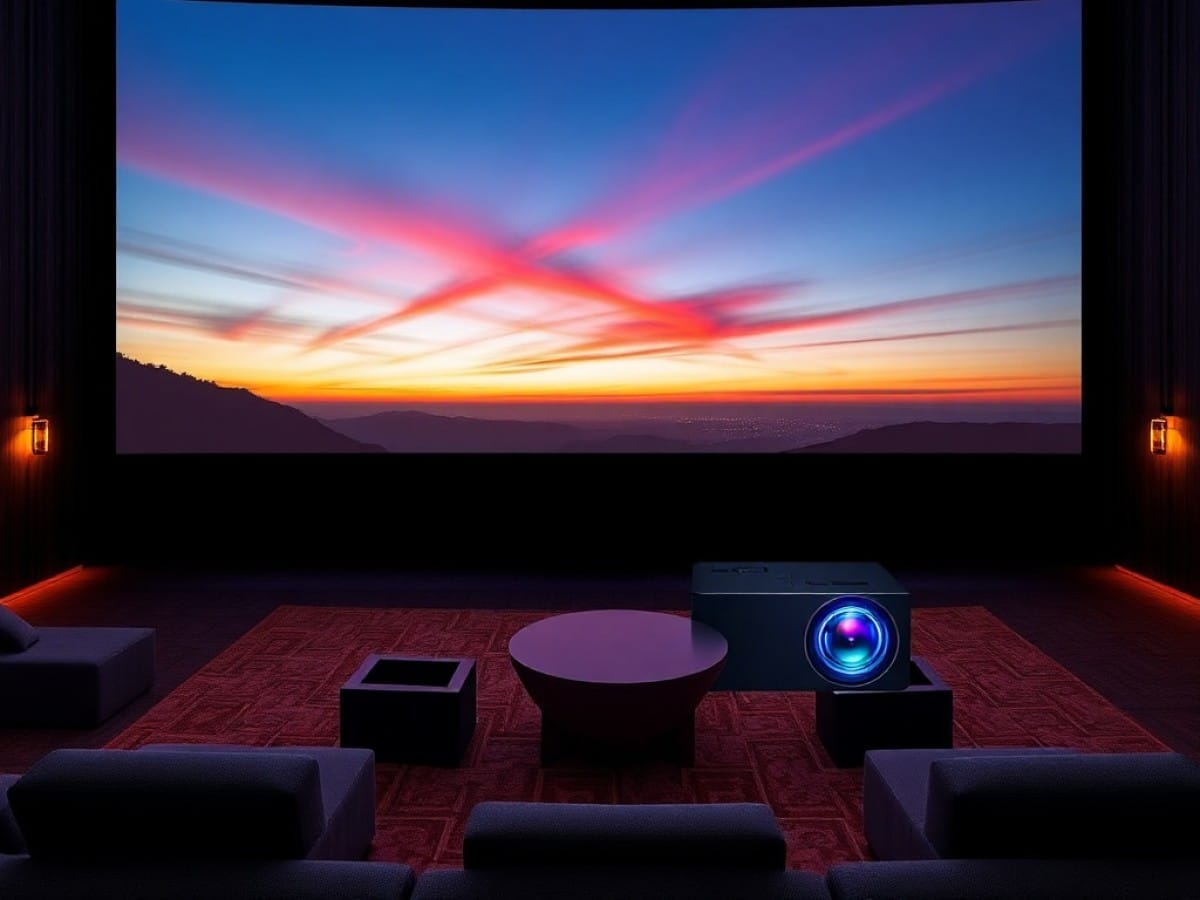
Gone are the days of compact, portable projectors. The Titan boasts a substantial, rigid chassis designed to stay in one place. On paper, the goal is clear: to compete with industry benchmarks like Sony, JVC, Epson, or Optoma in the home cinema arena, all while relying on modern DLP architecture.
The Xgimi Titan’s specs are especially tempting, featuring a larger-than-usual 0.78-inch Texas Instruments DLP chip, paired with XPR technology to project a simulated 4K UHD image that can substantially exceed 2.5 meters in width. The device utilizes a dual-laser system with a phosphor wheel, boasting 5000 lumens ISO and supporting HDR10, HDR10+, Dolby Vision, IMAX Enhanced, and includes a Filmmaker mode.
Purely from a home cinema perspective, the Titan is designed for a permanent installation: optical zoom, motorized vertical and horizontal lens shift, and comprehensive connectivity for home automation integration. Conversely, Xgimi has omitted Smart TV features.
It faces stiff competition from serious contenders like Epson’s laser 4K “pro-UHD” models, Sony Bravia 7’s SXRD, and JVC’s DLA-NZ500 D-ILA. It remains to be seen if, in practical use, it can justify its ambitious positioning and its launch price of around 3,999 euros, placing it at the higher end of consumer projectors.
Xgimi TitanTechnical Specifications
| Model | Xgimi Titan |
|---|---|
| Focal Type | Long |
| Image Definition | Ultra HD (simulated) |
| Technology | DLP |
| Brightness (ISO) | 5000 Lumens |
| Compatibility HDR | HLG, Dolby Vision, HDR10+ |
| Number of HDMI Ports | 2 |
| ALLM | Yes |
| Product Sheet |
Test Conditions
The Xgimi Titan projector tested was loaned to us by the brand. It was tested in conjunction with a Lumene Movie Palace UHD Platinum 300C screen. Measurements were taken using professional equipment directly in front of the screen to minimize errors and provide values consistent with what the viewer can actually see. This protocol is the same for all tests of ultra-short throw projectors to enable comparison.
Xgimi TitanDesign, a True “Titan”
The Xgimi Titan features a design that sharply contrasts with the small, luminous cubes the brand has previously accustomed us to. It also stands out from other projectors currently available on the market.
We commend the massive and original rectangular chassis, set on four metallic legs that slightly elevate the projector to ensure excellent stability on a shelf or piece of furniture, while also facilitating ceiling mounting by simply removing these supports.
The overall build conveys a sense of seriousness with a leather-textured top plate and a large aluminum ring around the lens, giving it a premium product feel designed to remain in a fixed installation.
The dimensions, 441 x 345 x 158 mm weighing about 11.5 kg, remind us that this is a device meant for fixed home cinema use, yet its size is quite manageable given the available light output, especially when compared to some even bulkier competitors from Epson, Optoma, Sony, or JVC.
The front is entirely covered with acoustically transparent fabric behind which the integrated speakers are hidden, maintaining a clean line without increasing visible grilles.
The top part is particularly well-finished, with a pleasant touch texture and a coherent visual identity, much closer to a hi-fi device or a home cinema amplifier than a simple living room projector.
This is felt right from the unboxing, where Xgimi has included foam protection for the lens during transport, which is then replaced by a glass protection module that screws on the front, enhancing the feel of handling high-end equipment.
The four height-adjustable metallic legs are another welcome detail as they not only perfectly stabilize the Titan on furniture but also allow fine adjustment of the level to minimize digital corrections.
Once removed, the chassis naturally lends itself to ceiling installation, where its relatively compact size for this category of very bright projector is fully appreciated.
On the side and rear, the ventilation is seamlessly integrated with openings that do not break the general lines of the device.
Finally, Xgimi smartly incorporated a few basic physical buttons directly on the chassis, under the panel of connectors, at the rear. They are thus perfectly accessible even if the device is hung upside down on the ceiling.
These allow for powering on, minimally navigating the menus, and validating certain operations without always depending on the remote control, which is always appreciated during setup or in case of misplacing the remote.
The overall design is very coherent: neither ostentatious nor excessively minimalist, but clearly aimed at serious home cinema use, with aesthetic and practical choices well supporting the technical ambitions of the product.
Xgimi TitanConnectivity
All the connections on the Xgimi Titan are grouped at the back, in a band that clearly reflects its home cinema vocation. It includes two HDMI 2.0 inputs, one of which supports eARC for multi-channel audio return to a soundbar or home cinema amplifier, which is now essential if you want to enjoy Dolby Atmos or DTS-HD sound from a UHD Blu-ray player or a streaming box.
The number of HDMI ports may seem limited on paper, but in a typical installation, an audio-video amp or at the very least a soundbar is used anyway, which centralizes all sources before sending a single cable to the projector, making this limitation less significant.
Besides the HDMI ports, the Titan offers two USB ports, one 3.0 and one 2.0, allowing you to connect a USB stick or external drive to play media files directly through the integrated player. There’s also an optical digital audio output, a mini-jack output for an analog audio system or headphones, an RJ45 Ethernet port for a stable wired network connection, and an RS232 port intended for home automation integrations or customized control systems.
The networking capabilities extend beyond Ethernet, as the Titan also includes Wi-Fi for updates and some network playback functions, even though, in the absence of a true integrated Smart TV platform, this module doesn’t provide direct access to streaming services. This lack of a “connected TV” interface might surprise those used to more mainstream projectors, but it ultimately makes sense with a very home cinema-oriented approach since it leaves this task to external sources that are updated more often, like a media player, an Apple TV box, a Nvidia Shield TV, or a latest-generation console.
The power supply is integrated within the chassis, which avoids having to hide a large external transformer and simplifies wiring, especially if mounted on the ceiling.
The Remote Control
The remote control provided with the Xgimi Titan is the same as those used with the brand’s high-end models, featuring a metallic finish that immediately inspires confidence and a compact yet sufficiently elongated form for a good grip. The only difference is the absence of dedicated buttons for streaming platforms.
The weight is well distributed, the buttons naturally fall under the thumb, and you never feel like you’re juggling an accessory that’s too light or too hollow, which matters in a dark room where you often operate by feel. It includes dedicated buttons for automatic adjustments, focus, and especially image modes, with four buttons allowing you to quickly switch from a Standard profile to a Movie, Vivid, or TV profile depending on the content being viewed.
The remote operates via Bluetooth, which avoids the need to precisely aim at the projector, a convenient feature when the device is installed on the ceiling or at the back of the room. It also features partial backlighting.
Another area for improvement: the remote relies on traditional AAA batteries, whereas some competitors now offer rechargeable batteries via USB-C or hybrid solutions with an integrated solar sensor.
Xgimi TitanThe Screen
The Xgimi Titan projector is sold without a screen. This leaves the choice to the user, but if the budget is limited, one might be tempted to set it up without a screen (using a wall as a projection surface) and thus lose the benefit (relatively important) of having a surface optimized for projection. Expect to spend between 500 and 2,700 euros for screens of various sizes with a specifically treated surface.
Xgimi TitanInstallation
The installation of the Xgimi Titan relies on conventional optics with a zoom range of 1.2‑1.8:1 and a particularly generous motorized lens shift. In practice, this means that the projector can be placed on a shelf or a ledge at the back of the room, or hung from the ceiling several meters away from the screen, while precisely adjusting the image position without physically moving the device. The vertical lens shift allows for ±100% correction, and the horizontal lens shift ±40%, offering a very comfortable margin to deal with room constraints, whether it’s an already installed screen or bulky furniture.
The zoom, focus, and lens shift adjustments are motorized and accessible from the remote control, with dedicated menus that allow for (very) precise framing within the screen limits. The setup takes only a few seconds as it’s just a matter of adjusting the zoom and shift functions from the remote to find an image perfectly suited to a screen (ideally), even on a base of 3 meters (the size of our test screen).
The Titan also integrates proximity sensors on either side of the chassis that interrupt projection when someone passes too close to the beam to protect the eyes. In practice, these sensors are a bit too sensitive and cut the image as soon as you move near the projector, even when staying out of the direct beam axis. Fortunately, this function can be disabled.
In summary, the Xgimi Titan is set up like a true home cinema projector: ideally permanently, with particular attention paid to placement and optical adjustments, but without any real technical difficulty.
Xgimi TitanThe Image in Subjective Mode
From a purely subjective standpoint, the Xgimi Titan proved particularly convincing, especially in how it handles light and precision on large image bases. The combination of the 0.78-inch DLP chip and the dual phosphor laser source provides a dense, extremely legible image with a very marked sharpness, but without tipping into excessive over-sharpening. The advantage of having a 0.78-inch chip is its ability to offer a more stable and precise image compared to other models equipped with a 0.47-inch chip.
Test patterns show fine lines reproduced with great sharpness, numbers and letters perfectly outlined, and a very appreciable uniformity from the center to the edges of the screen. Yes, we are still dealing with an image with simulated Ultra HD definition but of very high quality, using the XPR treatment that moves the matrix extremely quickly to give the illusion of higher definition.
In real use, on films and series in Ultra HD, this translates into very detailed textures of skin, fabrics, or settings, without any colored halo or visible aberration, which greatly contributes to the sense of realism. Thanks to the quality of the optical block installed here, it offers excellent precision across the entire canvas surface, even in the corners.
Xgimi offers several image modes that strongly influence the overall rendering: Film, TV, Standard, Vivid, Sport, Filmmaker, and Performance. The Standard, TV, or Sport profiles tend to pull a bit too cold and slightly exaggerate the contrast to flatter an undemanding eye, at the expense of some naturalness.
Conversely, the Film, Filmmaker, or IMAX Enhanced modes provide a much more balanced base for cinema use, with more nuanced colors, better-controlled dynamics, and an overall soft render without loss of detail. After a few trials, the Film mode gives a particularly coherent image even before any extensive calibration, if necessary.
SDR content then benefits from a comfortable, stable image, with good readability in the shadows and credible flesh tones, provided that the light power is slightly reduced in a completely dark room to avoid a sensation of an image that is too “lit up.”
However, it is on HDR and Dolby Vision content that the Titan really makes a difference compared to the majority of projectors we usually encounter. When launching films like 1917, Dune: Part Two, or Top Gun: Maverick from a UHD Blu-ray player, you immediately feel that the light reserve
Similar Posts
- BenQ W2720i Review: Does This Android TV Back-Room Projector Measure Up?
- Nothing Projector Matte White Screen Test: Brighter Images, Less Contrast!
- I Tried the Leica Cine Compact 1: Experience Easy Living with 4K Laser Projection
- Valerion VisionMaster Max Review: Triple Laser Projector Targets Home Cinema Heights
- ViewSonic M1B Max Review: Google TV in a Sub-€500 Mini Portable Projector!

Maya Singh is a senior editor covering tablets and hybrid devices. Her work explores how these tools reshape digital productivity and learning. She also contributes to feature editorials on emerging tech.