
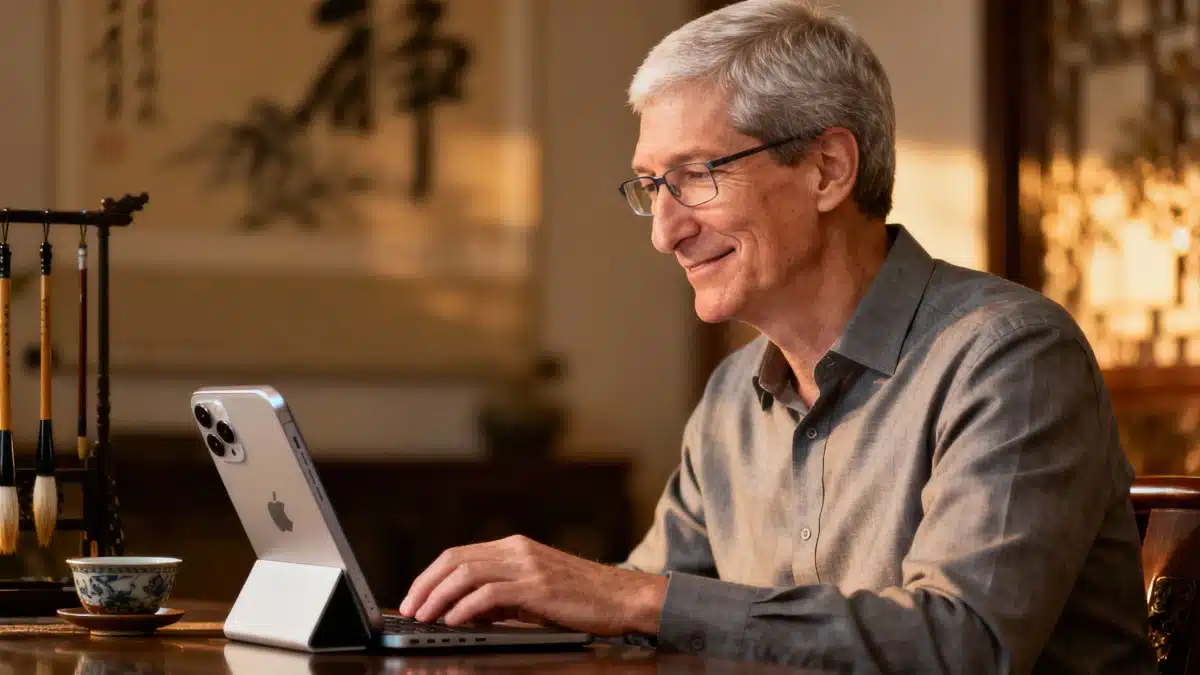
Buckle up for turbulence: Apple’s latest move in China might just be Tim Cook’s most daring flight yet. As US–China tensions simmer, Apple’s CEO seems determined to land the iPhone Air right in the eye of the storm—without crashing the company’s careful balance between two economic giants.
Scientists confirm: This is the most effective way to get your cat’s attention, according to new research
Elderly Couple Refuses Reserved Seats—Viral Train Standoff Sparks Fiery Debate on Courtesy
The Trade War Tightrope: Apple’s Delicate Dance
The ongoing trade war between the United States and China is more than just a headline generator—it’s a high-stakes chess match for global tech leaders, with Apple right in the middle of the board. Apple has always appeared to be in a tricky position, juggling (with the deftness of a circus performer) the expectations of the White House while staying on good terms with Chinese authorities. For tech companies wanting to remain close to the American President, reducing ties with China to a minimum is often a must. Easy, right? Think again.
Up until now, Tim Cook has performed this diplomatic dance skillfully. Evidence? The Apple CEO found himself on the guest list of Donald Trump during Trump’s state visit to the United Kingdom—and he didn’t come alone. One of the president’s daughters joined him, highlighting just how much in Apple’s favor the political winds were blowing (at least for the moment).
Playing Both Sides: The Perils of Overstepping
A harmonious relationship with the American administration is crucial for Apple—but no one’s naive enough to think it’ll last forever. The company clearly needs the goodwill of the US government, but just as crucially, it requires an attentive ear in Beijing. Some US companies, Nvidia and Qualcomm among them, leaned a little too eagerly toward pleasing President Trump. What did they get for their efforts? China targeted them for alleged violations of local anti-trust laws. There’s a thin line between pleasing and provoking—and Tim Cook is all too aware of how easy it is to cross.
- Apple must carefully balance American and Chinese interests.
- Other US tech firms have faced Chinese crackdowns after aligning closely with the US administration.
Tim Cook Hits Shanghai: The iPhone Air’s Awaited Arrival
During his recent trip to China, as reported by Reuters, Cook swung by the Shanghai Apple Store and paid a visit to the developers of Labulu Dolls. Yet, the real headline-grabber was Cook’s reminder that the much-anticipated iPhone Air would soon be available in China—as soon as local industry authorities give the green light to its eSIM technology. The message was clear: Apple isn’t just selling devices; it’s signaling its commitment to the market (without putting all its apples in one basket, naturally).
That’s not all. Despite having recently presented a glass trophy on a 24-carat gold base to the American president—commemorating Cupertino’s “American Manufacturing Program”—Tim Cook reportedly assured Chinese industry minister Li Lecheng that Apple will continue to invest in China. The precise investment size remains a mystery (perhaps it’s best not to share all your cards when sitting between two superpowers).
- The iPhone Air’s Chinese debut hinges on eSIM approval by industry authorities.
- Apple reaffirmed its long-term investment in China but kept the details under wraps.
The Foxconn Factor—and the Perilous Balance
Foxconn’s sprawling assembly lines still dominate Apple’s manufacturing in China, even though the company is trying to diversify by setting up sites in India and Vietnam. Yet, a significant portion of parts used to produce Apple’s iconic devices are sourced straight from China. Sabih Khan, Apple’s newly minted COO, could confirm this first hand after visiting Lens Technology, the Chinese firm responsible for supplying the glass in both iPhones and Apple Watches.
Unlike some of its competitors, like Google or OpenAI, Apple’s reliance on physical devices rather than just services patches it directly into the web of global supply chains—and thus into the tempest of international geopolitics. Apple has to keep a precarious equilibrium between the wishes of the US President and those of Chinese authorities. It’s a balancing act at which Tim Cook has become a seasoned master over the years.
- Foxconn remains Apple’s key assembly hub, but new manufacturing sites are being explored.
- Critical components for iPhones and Apple Watches are still largely produced in China.
- Physical products expose Apple to greater geopolitical risk than companies focused mainly on digital services.
Conclusion: Navigating a trade war isn’t for the faint of heart—or the clumsy. With the iPhone Air’s launch in China hinging on local government approval and ongoing investments, Tim Cook continues to walk a high wire. Apple’s future in China depends not just on supply chains or trophies, but on a nearly acrobatic ability to say yes to both Washington and Beijing—without ever accidentally saying yes to a trade war disaster. Stay tuned: in this game, the stakes (and the smartphones) have never been higher.
Why You Should Never Reheat These Foods in the Microwave – The Hidden Dangers Experts Warn About
I tried the top 5 guard dogs—here’s what makes these breeds the ultimate protectors
Similar Posts
- Foxconn Invests $1.5 Billion in India: Trump Threatens 25% Tariff on Apple Products
- iPhone 17 Price Hike Likely: Analysts Predict Major Increase
- Tim Cook confirms major boost in Apple’s China investments—what’s behind this bold move?
- Tim Cook Surpasses Steve Jobs in Tenure as Apple CEO: How Has Apple Changed?
- Trump Threatens Apple: Huge Tax if iPhones Produced Outside USA

Jordan Park writes in-depth reviews and editorial opinion pieces for Touch Reviews. With a background in UI/UX design, Jordan offers a unique perspective on device usability and user experience across smartphones, tablets, and mobile software.