
Scientists confirm: This is the most effective way to get your cat’s attention, according to new research
Elderly Couple Refuses Reserved Seats—Viral Train Standoff Sparks Fiery Debate on Courtesy
Entering Europe through the Stellantis network, Chinese automaker Leapmotor is relatively small compared to some of its local rivals like BYD and MG.
Despite its size, Leapmotor is aiming to expand, and the European market seems welcoming with an interesting product offensive that includes the affordable T03, one of the cheapest electric cars on the market, as well as the B10, a C-segment SUV that impresses with its budget-friendly price tag.
Among the few Chinese players in the French market, Leapmotor isn’t the most talked-about. Even on a global scale, the manufacturer is still considered “small,” especially when compared to giants like BYD and MG.
Since 2019, Leapmotor has sold one million vehicles worldwide. Although a small number globally, it’s a significant achievement for a company that started from nearly nothing.
Leapmotor has largely gained recognition through the T03, a compact electric model priced similarly to the Dacia Spring, which accounts for the bulk of the brand’s sales in France. The company hopes to sell about 3,000 units this year, a figure comparable to BYD’s performance in France about two years ago. But Leapmotor’s strength lies in having access to Stellantis’ distribution network and about a hundred sales points across the country.
However, having a relevant range is crucial, and Leapmotor is actively developing it. High-volume models are expected by 2027, particularly with the launch of a B-segment electric SUV.
Currently, the range includes the city car T03, the C10 electric SUV with a range extender, and the focus of today’s review, the B10, an all-electric model competing against the Peugeot e-3008, Skoda Elroq, and MGS5 EV, all at highly competitive prices.
But does a low price necessarily mean cheap quality? And are we ready to accept some compromises for reduced prices? That’s what we went to verify in the south of France, on the sometimes winding roads of the Nice hinterland.
Why You Should Never Reheat These Foods in the Microwave – The Hidden Dangers Experts Warn About
I tried the top 5 guard dogs—here’s what makes these breeds the ultimate protectors
Technical Specifications
| Model | Leapmotor B10 |
|---|---|
| Dimensions | 4.52 m x 1.89 m x 1.66 m |
| Power (horsepower) | 215 horsepower |
| Autonomy level | Semi-autonomous driving (level 2) |
| Max speed | 170 km/h |
| Car charging port | Type 2 Combo (CCS) |
|
Try it out |
Product sheet |
Design: Smooth as a Pebble
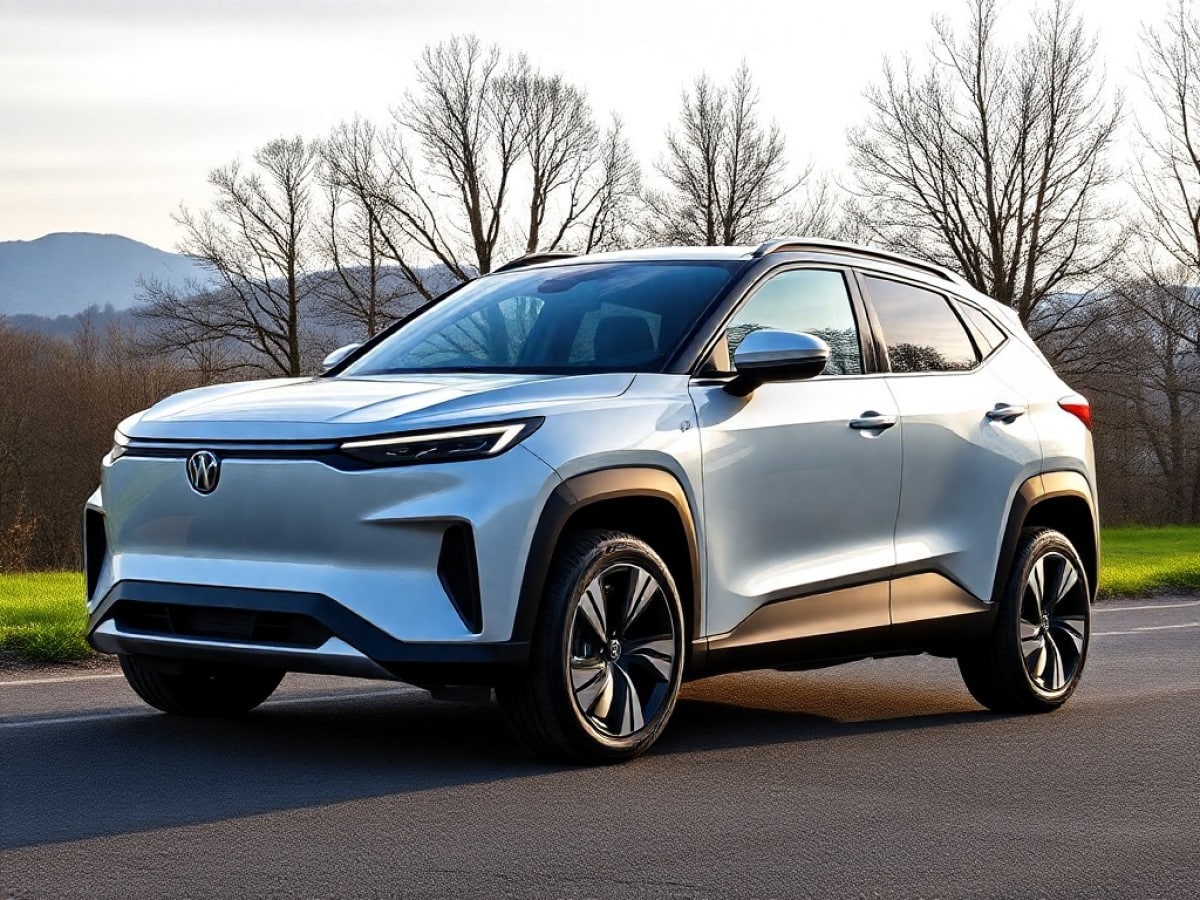
In the realm of aesthetically bland electric SUVs, the Leapmotor B10 isn’t the king, but it certainly takes a prominent spot.
It embodies all the modern electric SUV design cues: LED strips at the front and back, rounded lines, marked shoulders… In short, nothing groundbreaking. Mercedes does the same, as does Porsche with its new Macan, not to mention other Chinese manufacturers.
With dimensions of 4.52 meters long, 1.89 meters wide, and 1.66 meters tall, it aligns with competitors like the Skoda Elroq and Renault Scénic.
Mounted on 18-inch rims, the overall look is quite generic, and anyone purchasing this type of vehicle likely isn’t doing so for its unique aesthetic appeal, but rather for other features, which we’ll explore further below.
Spaciousness: Good Ideas and Compromises
Once inside, originality isn’t what immediately catches the eye. Heavily inspired by the ergonomics of Tesla and BYD models, the B10 eschews physical controls in favor of a large 14.6-inch touchscreen.
This layout’s advantage is the spacious interior due to the absence of a central tunnel, thus offering plenty of everyday storage. From behind the wheel, the feeling of space is enhanced by a large 1.83 m² panoramic roof (non-opening) that can be covered with a blind at the touch of a button on the central screen.
The rear seating area is also excellent for an SUV of 4.52 meters in length. Leapmotor could have even added a few more centimeters of knee space by recessing the seats further.
Nintendo Switch 2, Google Pixel 10, Garmin Forerunner, Xiaomi Scooter…
Discover our exclusive selection and take advantage of promo codes!
Hurry, stocks are limited 😉
The downside is the trunk, which isn’t particularly large for its category. Leapmotor reports a base capacity of 430 liters, expandable to 1,415 liters by folding the seats, which is perfect for luggage or shopping. A small space under the floor offers a spot to store tools or charging cables.
Unlike the version we saw in China a few weeks ago, our European model has a small frunk squeezed in, but it helps keep the trunk free of charging cables, the triangle, and the vest. It’s better than nothing, we might say.
Infotainment: The Car’s Strong Suit
Leapmotor’s infotainment system is a major highlight. Although the brand is part of the Stellantis group, there’s a clear gap between what the Chinese manufacturer offers and what’s available on, for example, the Peugeot e-3008.
The system is clear, sharp, responsive, and surprisingly well-designed for a vehicle that relies entirely on touchscreen controls—a rarity worth noting.
As mentioned earlier, the B10 features a large 14.6-inch screen powered by a Qualcomm Snapdragon 8155 chip (or 8295A for the higher-end versions).
This chip serves as the brain for the infotainment system, managing the central HD screen and the Leapmotor OS 4.0 Plus system, which will be compatible with Apple CarPlay and Android Auto (from January 2026 via an OTA update). The interface even integrates AI assistants like DeepSeek or Tongyi Qianwen in China, capable of answering your questions in real time.
In addition, the touchscreen is complemented by an 8.8-inch digital instrument cluster on all versions. A small screen that follows the lead of the larger one, offering clarity, conciseness, and great readability.
The entire infotainment ecosystem is a success in our view. Even the French translations of certain features have been refined, unlike those from MG, which sometimes led to oddities.
The navigation system is paired with the inevitable route planner that allows the car to determine charging stops based on your battery level. It even shows the exact point where the battery will be completely depleted if you skip one of its charging recommendations, thinking you can go further.
Driving Experience: Where It Falls Short
While Chinese cars excel in technology, they often fall behind in the driving and dynamics department. This is true for the Leapmotor B10, which is far from being a benchmark on the road.
All our test models were top-tier Life ProMax versions equipped with a 67.1 kWh battery and an electric motor delivering 217 horsepower and a maximum torque of 240 Nm. This setup enables the car to accelerate from 0 to 100 km/h in 8 seconds, while the top speed is capped at 170 km/h. There are four driving modes available, as well as three levels of regenerative braking.
There are no complaints about the mechanical parts; the performance is as expected and certainly not laughable. However, the same can’t be said for the chassis and suspension systems.
Despite assurances from the brand that this model was designed by a team of Chinese engineers and then fine-tuned by Italian chassis engineers in Balocco, the home of Alfa Romeo, Maserati, and Fiat, to make specific adjustments for the more demanding European customers, the results are underwhelming.
The setup includes McPherson strut front suspension and a multilink rear, all with European-style tuning, meaning stiffer bushings and dampers, while the steering has also been recalibrated.
Yet, on the road, it just doesn’t add up. The car is too stiff on low-speed compressions and far too loose at medium and high speeds, with poorly controlled body roll during more spirited driving. The ride is paradoxically too stiff at low speeds and too soft at higher speeds, all with a poorly guided front end by these Chinese Ling Long tires, which have been criticized for poor performance on other Chinese models, like the initial version of the BYD Dolphin introduced here in 2023.
Opting for tires from Michelin or Pirelli would have cost two to three times more, according to the brand, for a result that would have been “not much different”. However, some of our test fleet models were fitted with Goodyear tires on the front (and Ling Long on the rear) to replace presumably too worn front tires after a first round of tests. Some colleagues who drove these cars seemed less critical than us in this regard. Perhaps a better tire could already correct some issues!
Then there are the ADAS, a major issue for Chinese brands when they come to Europe. Proof of this is that the lane departure warning was already turned off before we even got into the car. Although we usually deactivate it during tests because of its intrusiveness, this time, it was strangely pre-disabled.
We regretted turning it back on, as the system isn’t quite up to scratch, similar to the early tests of the MG4, although not as dangerous. The car delivers overly aggressive steering corrections to keep us on track, which can be quite startling.
In China, the high-end versions add a LiDAR (a laser sensor for precise 3D vision) and features like remote parking and autonomous city driving. However, we don’t get these in Europe, primarily for regulatory reasons and also due to cost.
Range, Consumption, and Charging
Unlike other Chinese manufacturers, Leapmotor offers two battery options. The first is equipped with a LFP (lithium-iron-phosphate) battery with a capacity of 56.2 kWh, offering the SUV a maximum range of 361 kilometers according to the WLTP cycle. Charging from 30 to 80% takes 20 minutes at a power of 140 kW. Not exceptional, but average for the category.
Another battery option uses the same LFP chemistry but with a higher capacity, listed at 67.1 kWh. The range increases to 434 kilometers WLTP, but the charging time doesn’t improve. It still takes 20 minutes for 30 to 80%, with the power increasing to 168 kW in direct current. The good news is that the Leapmotor B10 comes with a heat pump and bi-directional V2L charging.
What’s interesting about these batteries is the “Leap 3.5” architecture and the integration of the batteries directly into the chassis, eliminating the need for multiple cells and bulky modules; the floor structure alone is enough to house the battery. More simplicity obviously means less weight, weighing in at 1,845 kg.
That’s almost lightweight for a vehicle in this category! The length of the multiplexing cables has also been reduced by about 50% compared to a typical electric car, which, according to Leapmotor, “reduces the possibilities of breakdowns”.
As for consumption, we drove about 115 km on the hilly roads of the French Riviera, where the car’s dynamics can be thoroughly tested, but also where speeds are very low due to traffic. The result was a respectable score of 15.2 kWh / 100 km, translating to a real-world range of about 400 km on this type of route.
However, a brief stint on the highway at 130 km/h allowed us to see that the same consumptions skyrocket, more than 27 kWh / 100 km in this case, which would barely allow for just over 200 km on a full charge in this scenario.
The theoretical average consumption, WLTP, which accounts for energy losses during recharging, is 17.3 kWh / 100 km.
Price, Availability, and Competition
The B10 has its flaws, but it also has its strengths, including its price. And remember, a cheap car doesn’t necessarily mean it’s a good deal. A case in point is the price increase of the Dacia Spring over the years with few technical improvements until the latest update a few weeks ago.
For the Leapmotor B10, the base price starts at €29,900 for the entry-level Life Pro version (a naming convention similar to Volkswagen’s electric models) with the smaller 56.2 kWh battery. In France, the core model will be the Life ProMax with a 67.1 kWh battery. The announced range: 434 km. It will cost €31,900 to get it, and you’ll need to add another €1,000 for the Design ProMax trim with more standard features. Leapmotor is already offering discounts of up to €2,000 for those still deciding.
With the Peugeot e-3008 and Renault Scénic E-Tech out of reach, its main competitor in France will be the MG S5, starting at €32,490 with the smaller 49 kWh battery promising a range of 340 km.
The vast majority of customers opt for the 64 kWh pack, which offers a 480 km WLTP range, for €35,990 in the base Comfort trim and €38,490 in Luxury. These are higher prices than the Leapmotor B10, but they also offer significantly more refined services and better suitability for the European market.
With the backing of Stellantis
Similar Posts
- Tested: Peugeot 3008 Dual Motor Electric – Unveiling the French SUV’s 4×4 Version!
- Dacia Spring Review: Is France’s Cheapest Electric Car Still Overpriced?
- Electrifying Ride: Opel Mokka GSe, the SUV Version of Peugeot 208 GTi!
- I Tested the Leapmotor B05: Is This $15,000 Cheaper Electric Car Worth Your Money?
- I Test-Drove the Aito 8: Why This Impressive Chinese Electric Car Will Lose Its Edge in Europe

Maya Singh is a senior editor covering tablets and hybrid devices. Her work explores how these tools reshape digital productivity and learning. She also contributes to feature editorials on emerging tech.