
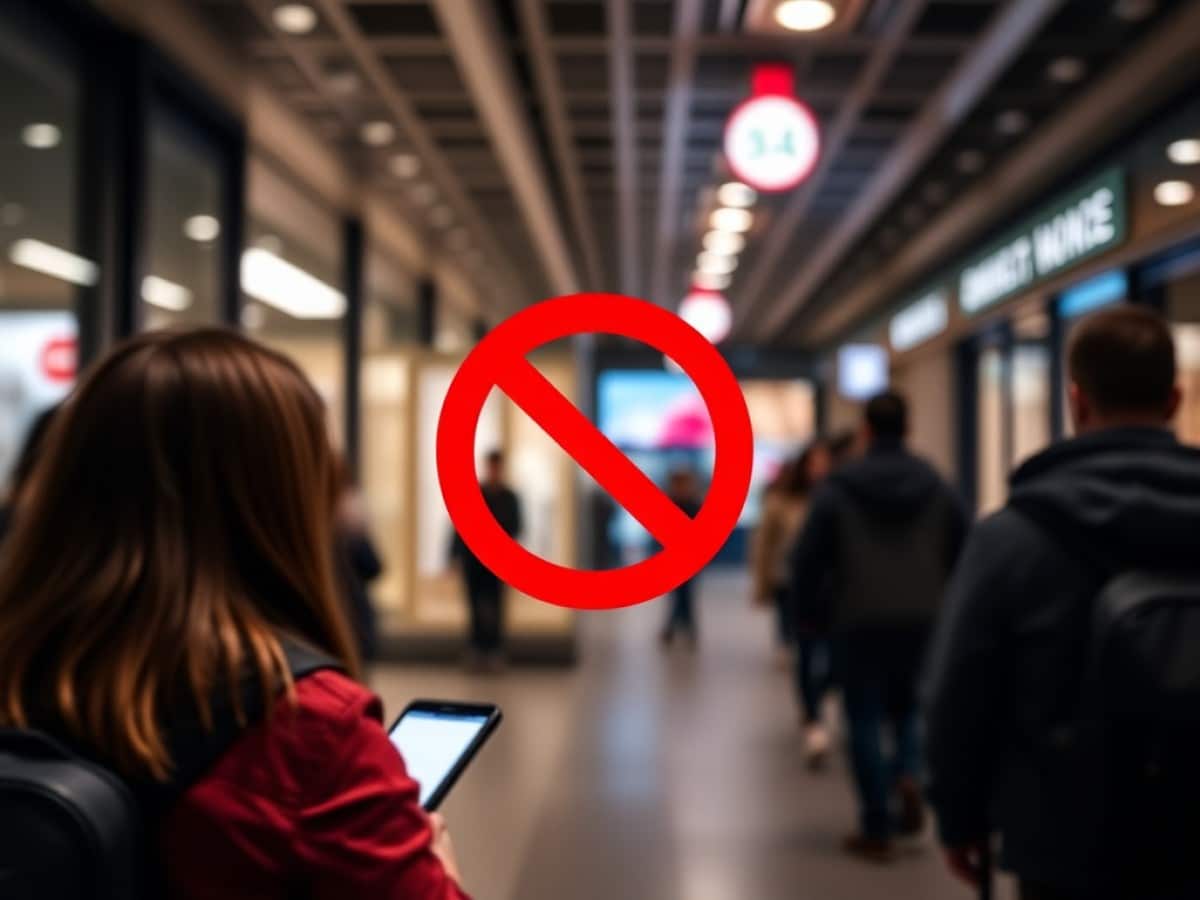
The British government has initiated an unprecedented pilot project to test a real ban on social media among hundreds of teenagers. As Australia has already taken similar steps and France continues to debate the issue, the United Kingdom is moving forward with a scientific approach. Recognizing the potential problems social media can create for young people, the British government has decided not to legislate blindly or delay action due to pressure. Instead, it is experimenting with various levels of restrictions involving real teenagers in real family settings over a six-week period to observe potential changes.
Scientists confirm: This is the most effective way to get your cat’s attention, according to new research
Elderly Couple Refuses Reserved Seats—Viral Train Standoff Sparks Fiery Debate on Courtesy
Diverse Groups of Teens in a Unique Experiment
The experiment, orchestrated by the Department for Science, Innovation, and Technology (DSIT), involves 300 teenagers aged 13 to 17 from across the four nations of the UK. These participants are divided into four distinct groups, each experiencing different conditions:
- Group 1: Complete removal of social media apps to simulate an actual ban.
- Group 2: Limited to one hour per day on platforms like TikTok, Snapchat, and Instagram.
- Group 3: Access is blocked from 9 PM to 7 AM, effectively setting a digital curfew.
- Group 4: No restrictions are imposed, serving as the control group.
The families involved will be interviewed at the start and conclusion of the experiment. Researchers will assess the impact on academic performance, sleep quality, and family relationships.
Increasing Political Pressure Over Recent Months
In January 2026, the House of Lords passed an amendment—against government advice—to ban social media use for those under 16, with 261 votes in favor and 150 against. Notable figures like actor Hugh Grant have publicly supported this initiative. Pinterest has also advocated for the ban for under-16s.
Why You Should Never Reheat These Foods in the Microwave – The Hidden Dangers Experts Warn About
I tried the top 5 guard dogs—here’s what makes these breeds the ultimate protectors
Prime Minister Keir Starmer declined to support this amendment without solid data but mentioned that he was keeping all options open. A national consultation launched in early March has already received nearly 30,000 responses and will conclude on May 26. Depending on the findings, decisions will likely be made accordingly.
Supporting Academic Study
In conjunction with the pilot, an academic study led by psychologist Amy Orben from the University of Cambridge, in partnership with the Bradford Institute for Health Research, is recruiting 4,000 students aged 12 to 15 from 10 schools in Bradford. The goal is to understand the effects of reducing social media usage on a larger scale.
Both initiatives aim to gather a robust body of evidence to support (or refute) the enactment of a national law. The potential ban for those under 16 could significantly disrupt the business models of major platforms like Instagram, TikTok, and Snapchat in one of Europe’s key markets.
The results are expected by the summer of 2026. Regardless of the outcome, the UK could become the first major European country to impose a social media ban on minors. This study might demonstrate that simply restricting access could be sufficient.
Similar Posts
- YouTube and Facebook Dominate the U.S. Social Media Landscape: Trends and Insights
- Australia Bans Social Media for Teens: Platforms Find Loopholes to Dodge Law
- UK Considers Social Media Ban Under 16 Amid Public Pressure: Citizens Push for Change
- Taking a Break From Social Media: Young Adults See Reduced Anxiety and Depression
- Social Media May Impede Teen Reading Skills: New Study Reveals

Samantha Klein is a seasoned tech journalist with a sharp focus on Apple and mobile ecosystems. With over a decade of experience, she brings insightful commentary and deep technical understanding to the fast-evolving world of consumer technology.