
Scientists confirm: This is the most effective way to get your cat’s attention, according to new research
Elderly Couple Refuses Reserved Seats—Viral Train Standoff Sparks Fiery Debate on Courtesy
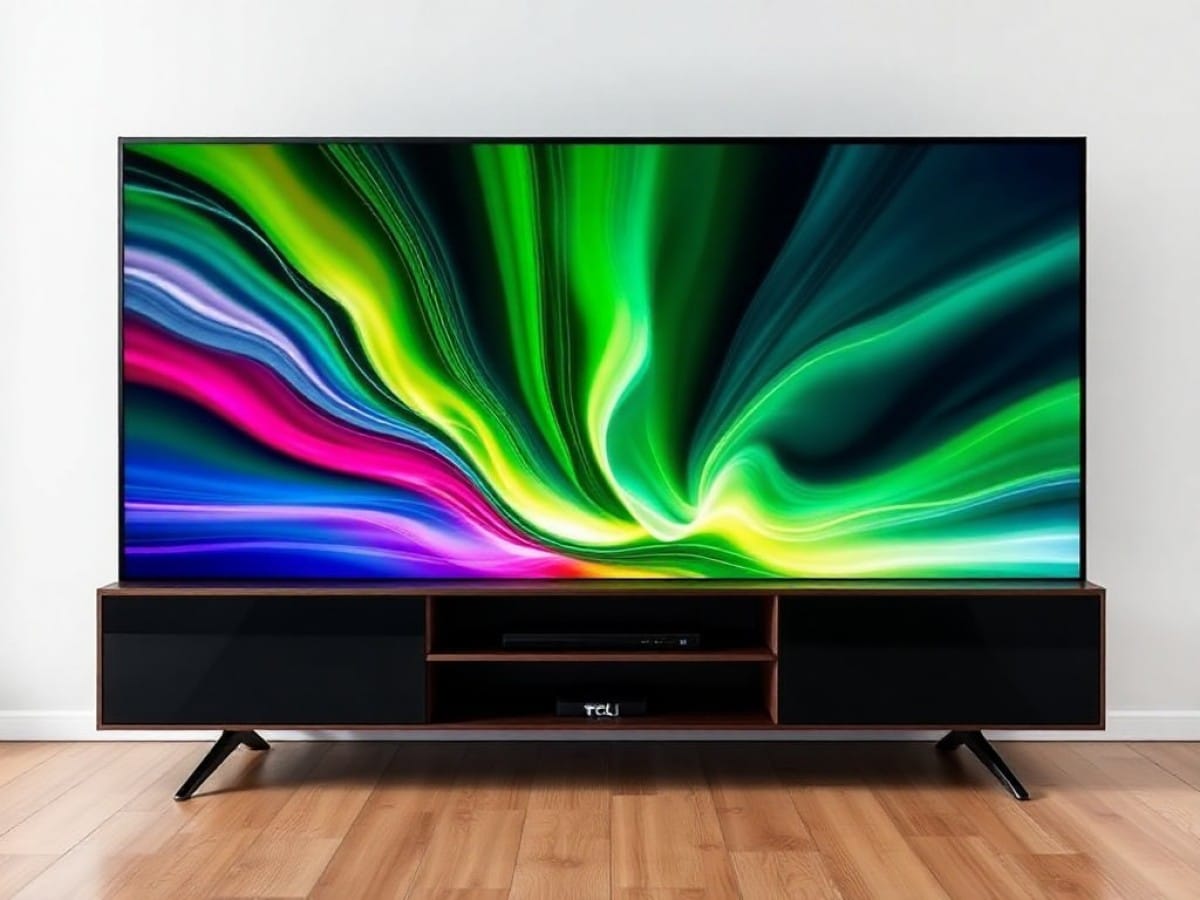
The 65C89L marks TCL’s ambitious entry into the high-end 4K television market, featuring a panel that employs a cutting-edge LCD backlight technology: SQD-Mini LED. This technology allows for precise contrast control and full compatibility with HDR standards such as Dolby Vision IQ and HDR10+. TCL aims to provide a compelling alternative to established Mini LED models from Samsung Neo QLED and LG’s QNED series, and to compete with top-tier LCDs from Sony and Hisense, which offer promising new RGB Mini LED technology for a broad color palette, often at a more aggressive price point for the features offered.
The TV features a 65-inch diagonal, but it is also available in 55, 75, 85, and 98 inches. It boasts a 4K Ultra HD resolution of 3840 x 2160. Expect a native refresh rate of 144 Hz, extensive gaming features including VRR, ALLM, FreeSync Premium Pro compatibility, and even a Game Accelerator that can push the effective refresh rate up to 288 Hz on certain HDMI inputs, all four of which support these optimization technologies.
Like other TCL TVs, it utilizes Google TV as its smart interface and supports Dolby Atmos with speakers that face upwards. TCL’s challenge is to deliver a more striking, brighter, and better-controlled image than its direct competitors while maintaining a competitive price against the flagship models from Korean and Japanese giants. Let’s see if TCL succeeds in this endeavor and whether the previous generation (C89K) really falls short in a detailed test.
TCL 65C89LTechnical Specifications
| Model | TCL 65C89L |
|---|---|
| Screen Size | 65 inches |
| Maximum Resolution | 3840 x 2160 pixels |
| Display Technology | LCD |
| Backlight | Yes |
| Backlight Type | SQD Mini LED (with local dimming) |
| HDR Compatibility | Dolby Vision, HDR10+ |
| Refresh Rate | 144 Hz |
| Processor | TSR AiPQ Processor |
| VRR | Yes |
| ALLM | Yes |
| Other Video Game Optimization Technology | AMD FreeSync Premium |
| Compatibility | Dolby Atmos |
| Audio Outputs | Speakers, Optical |
| Number of HDMI Ports | 4 |
| HDMI ARC/eARC | Yes |
| Antenna Input | 1 |
| Number of USB Ports | 2 |
| Optical Output | 1 |
| Headphone Jack | Unknown |
| Ethernet | Yes |
| PCMCIA (CI+) Slot | Unknown |
| Wi-Fi Version | Wi-Fi 6 (ax) |
| Bluetooth Version | 5.4 |
| Frame / Stand Color | Black |
| Stand Position | Central |
| VESA Standard | 300 x 300 mm |
| Operating System (OS) | Google TV |
| Assistant | Google Assistant |
| AI Functions | Yes |
| Airplay Compatible | Yes |
| Chromecast Compatible | Yes |
| Microphone on Remote Control | Yes |
| TV Dimensions without Stand (WxHxD) | 1434 mm × 860 mm × 56 mm |
| TV Dimensions with Stand (WxHxD) | 1434 mm × 824 mm × 368 mm |
| TV Weight without Stand | 21.1 kg |
| TV Weight with Stand | 23.1 kg |
| Product Sheet |
The TCL 65C89L TV was provided by the brand for this review.
TCL 65C89LDesign: Familiar yet with a nearly invisible frame
From a distance, this TV might look similar to many others, yet a closer look reveals a striking detail: its nearly borderless frame described by TCL as “Zero Border”.
As can be seen in the photo below, this means that the frame around the display is incredibly thin (only 1 mm) on three sides, allowing the panel to occupy almost the entire front once the TV is turned on. The edges are subtly metallic.
The screen is supported by a relatively compact central stand, the same as on the previous series. This design makes it easy to place the TV on a standard-width furniture piece without needing a very wide surface, which is sometimes required with offset stands. This central base measures 39 cm wide by 37 cm deep. It elevates the screen by 4 cm in its lowest position or 7 cm if you wish to install a sound bar in front, without obstructing the infrared receiver at the center. At the back, there’s a hub system for cables, and TCL provides several plastic elements to guide the wires.
The rear chassis is covered with a high-quality plastic plate, with a visible effort made on integrating the power supply and processing electronics, which do not protrude unsightly. This allows the screen to be elegantly wall-mounted.
Regarding thickness, this model isn’t the thinnest, measuring 5 cm. This volume is necessary to house the full-array backlighting and its matrix of thousands of LEDs, but TCL has managed to maintain a relatively sleek profile, especially at the edges.
The WHVA 2.0 Ultra panel is covered with a slightly satin surface, designed to minimize direct reflections without sacrificing perceived contrast, although rooms with windows facing the screen will still require some installation precautions. However, it doesn’t quite reach the level of Samsung’s high-end TVs or the treatment applied on the Sony Bravia 9 II, for example.
Finally, on the top part, similar to the C89K, note also the presence of discreet grilles for the integrated speakers, which blend into the design without adding a visually prominent element, even though TCL emphasizes the slimness of the panel more than a prominent audio signature as seen in some competing models with integrated sound bars. On this note, a Bang & Olufsen partner mention is inscribed on the bar underlining the screen.
TCL 65C89LConnectivity: Four fully-capable HDMI 2.1 inputs
The connectivity of the TCL 65C89L is one of its strong points, as the TV offers (finally) four full-bandwidth HDMI 2.1 inputs, capable of handling a 4K signal up to 120 Hz, with support for VRR (Variable Refresh Rate) and ALLM (Auto Low Latency Mode). This allows for simultaneous connection of multiple latest-generation sources such as a PlayStation 5, an Xbox Series X, a gaming PC, and possibly a 4K Blu-ray player, without the need to juggle an external HDMI switch. TCL announces FreeSync Premium Pro compatibility, ensuring smooth variable refresh rate management with AMD graphics cards and some consoles, reducing tearing and stuttering in games.
Beyond the HDMI inputs, there is a USB 3.0 port for connecting a hard drive or a USB stick to directly play multimedia content from the TV. The presence of a digital optical audio output makes it easy to connect the TV to a sound bar or a home cinema amplifier without eARC, although one of the HDMI ports is eARC compatible, which remains the best solution for enjoying modern multichannel audio streams.
Finally, on the network side, the 65C89L is equipped with Wi-Fi for accessing streaming platforms and connected services, as well as Bluetooth for connecting wireless devices such as headphones or compatible controllers. An RJ45 Ethernet port is available for those who prefer a more stable wired connection, if necessary.
The Remote Control
The remote control provided with the TCL 65C89L continues in the line of recent remotes from the brand, with a relatively elongated format, a fairly slim grip, and a layout of keys that prioritizes ease of use in daily operation. It features a central directional pad surrounded by essential keys for navigating the Google TV interface, accessing menus. Volume and channel change keys remain easily accessible with one hand.
The presence of direct access keys to major streaming platforms (Netflix, YouTube, Prime Video, TCL Channel, and Live TV) allows for quick launching of favorite services, although the exact selection of services may vary by market. Similar to Sony now, particularly on the remote provided with the Sony Bravia 9 II, there is a customizable button for launching a favorite function or application.
Note the presence of backlighting that lights up as soon as a key is pressed.
The remote also includes a microphone for voice commands via Google Assistant, enabling content search, application launching, or control of compatible smart home devices without having to manually enter text on screen. It is powered by two AAA batteries.
Very conveniently, on the side, there is a dual button for managing brightness and even more interestingly, another key to display the picture mode menu.
TCL 65C89LSubjective Image Quality
Subjectively, the image produced by the TCL 65C89L is quite impressive due to its overall visual impact, largely thanks to the SQD-Mini LED panel. Let’s remember that SQD (Super Quantum Dot) Mini LED technology is an evolution based on three major aspects: a new Ultra Color Filter, a reinforced Quantum Dot structure, and an optimized backlight with more zones. According to TCL, the Ultra Color Filter provides a 33% increase in the color range compared to the previous generation, while maintaining accurate color reproduction. Note that this figure is from a brand laboratory measurement on the 98-inch model (C8L versus C8K), and not on this 65-inch version.
Additionally, the Quantum Dot structure itself receives a more robust protective layer and extra barriers against water and oxygen, which, according to TCL, would reduce the colorimetric gap by 69% compared to the BT.2020 reference—a figure measured in the brand’s laboratory on the 98-inch model versus the C8K. Lastly, the backlight sees a density increase of 20 to 25% depending on the models, with LEDs that are presented as of higher quality for finer brightness control.
Indeed, in practice, one can appreciate very saturated colors while maintaining good finesse in gradients in high-quality 4K content. Posterization effects are almost non-existent.
The TV offers several predefined image modes, ranging from very dynamic profiles designed for showrooms or very bright rooms, to more cinephile modes that seek to more faithfully respect the directors’ intentions, particularly with the Film mode or, even better, Filmmaker mode, or specific variants for Dolby Vision.
HDR content from services like Netflix, Disney+, or Prime Video clearly benefits from the TV’s ability to manage high light peaks while maintaining deep blacks thanks to local dimming across a large number of zones, resulting in a very striking image on night scenes illuminated by neon signs or point light sources. However, despite this management, the TV is not free from blooming effects (halos around the brightest objects on dark backgrounds).
Directly in front of the screen, it’s manageable, but as soon as you move slightly to the side, blooming is quite noticeable.
In cinema use, with UHD Blu-ray films, the TCL 65C89L proves capable of reproducing a detailed image, where textures of faces, costumes, or sets stand out with great precision, aided by the AiPQ scaling treatment for sources that are not natively 4K.
Wide shots in very bright scenes benefit from very good readability in the highlights, without completely crushing the darker areas.
In daily broadcasting, on HD TNT or compressed streaming feeds, the video processing works well to smooth out digital noise without making the image too artificial, especially if you take the time to deactivate some more aggressive filters.
Television shows, series, and sports events benefit from the fluidity provided by the high native frequency, with a motion interpolation system that can be adjusted to find a balance between movement sharpness and a cinema-like rendering.
Matches, in particular, benefit from the generally high contrast and sustained brightness, which helps maintain good
Similar Posts
- TCL X11L Review: Can Mini-LED SQD Truly Rival Premium OLED TVs?
- Sony Bravia 7 II Review: More Affordable True RGB Mini LED Than Bravia 9 II!
- TCL 65C7K Review: Is This the New Premium Segment Leader?
- I Explored Samsung’s R95H TV: Experience Top-Tier 75-inch Micro RGB Brilliance
- Tested: Haier H65S80GUX – A Precision-Focused 65-Inch TV at Just €600!

Maya Singh is a senior editor covering tablets and hybrid devices. Her work explores how these tools reshape digital productivity and learning. She also contributes to feature editorials on emerging tech.