

Scientists confirm: This is the most effective way to get your cat’s attention, according to new research
Elderly Couple Refuses Reserved Seats—Viral Train Standoff Sparks Fiery Debate on Courtesy
Within Amazfit’s range of smartwatches, while the Bip and Active models are entry-level and the T-Rex models cater to adventure and trail, the Balance models strike the perfect balance between refined design, high-end features, and sports watch performance.
Following the initial launch of the Amazfit Balance in 2023, the Chinese manufacturer introduced the Amazfit Balance 2 in June 2025. Here is its full review.
Amazfit Balance 2Technical Specifications
| Model | Amazfit Balance 2 |
|---|---|
| Dimensions | 47.4 mm x 47.4 mm x 12.3 mm |
| Screen Resolution | 480 x 480 pixels |
| Panel | AMOLED |
| Weight | 43 g |
| Heart Rate Sensor | Yes |
| Sleep Analysis | Yes |
| Accelerometer | Yes |
| Ambient Light Sensor | Yes |
| Protection Rating | 10 ATM |
| Product Sheet |
The watch for this review was provided by the manufacturer.
Amazfit Balance 2Elegant and Durable Design
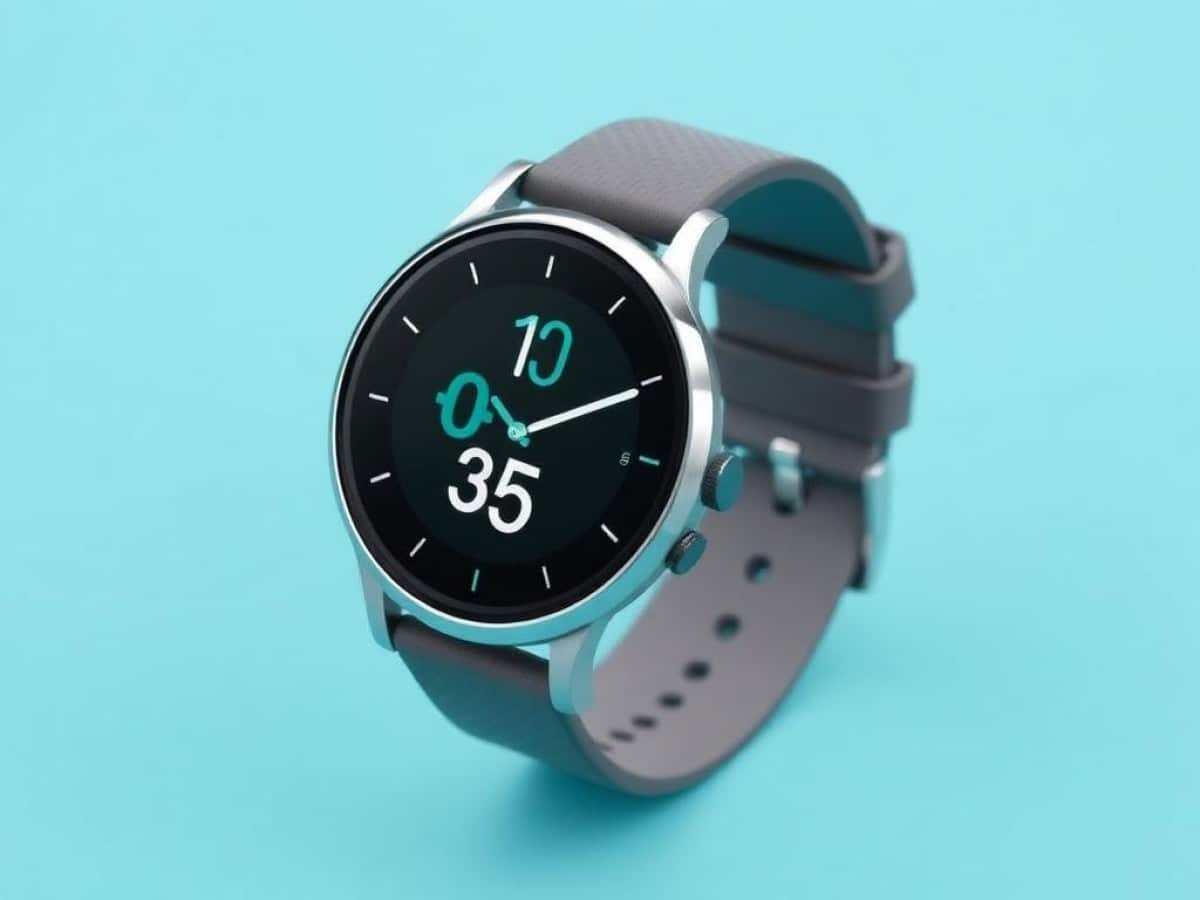
The Amazfit Balance 2, while primarily aimed at sports and health tracking, does not compromise on design, offering a particularly stylish appearance.
Indeed, we are presented with a watch measuring 47.4 x 47.4 x 12.3 mm, featuring a slightly beveled glass on the outside to reveal the rehaut around the display. Importantly, unlike many sports watches at the same price point, the Amazfit Balance 2 does not settle for a simple plastic case but boasts a matte aluminum alloy frame for a striking effect.
However, between the watch’s unique and rather large format and the material used, we have a watch that is slightly heavier than what competitors offer, with 43 grams without the strap, compared to 37 g for the Coros Pace Pro, 39 g for the Garmin Forerunner 165, or 34 g for the Samsung Galaxy Watch 8. While not particularly cumbersome in everyday use, it is a factor to consider. For more accurate sports data, it’s advisable to tighten the strap more to prevent movement caused by inertia.
In addition to its aluminum frame, the Amazfit Balance 2 benefits from sapphire glass screen protection, enhancing scratch resistance. It also boasts a 10 ATM water resistance rating, making it suitable for diving up to 45 m deep.
The watch’s finishes are also particularly meticulous. Notably, on each side of the case, there’s a slight protrusion that gives it a distinctive signature compared to the all-round watches. On the right, the protrusion even separates the rotary crown, at the top, from the back button, at the bottom. Small, discreet gaps are also present for the microphone, speakers, and barometric altimeter.
Regarding the straps, the Amazfit Balance 2 comes with two silicone models, one red and one black. This is a thoughtful touch that allows for customizing the watch’s look to match one’s outfit. Moreover, since the watch uses a standard quick-release pump attachment system, the Balance 2’s strap can be replaced with any standard 22 mm wide model. This is a significant advantage.
Amazfit Balance 2Effective Display, Though Not Outstanding
As usual with Amazfit, the manufacturer has included an AMOLED display in its watch. In this case, it’s a round 1.5-inch diameter panel with a resolution of 480 x 480 pixels, offering a pixel density of 323 pixels per inch.
Practically, this means a display detailed enough that individual pixels are not visible to the naked eye. For comparison, the “Retina” displays of the Apple Watches reach about 326 pixels per inch. Additionally, the AMOLED technology used here allows for a display with sufficient contrast to avoid any graying effect on the black elements of the screen, as each of these pixels is turned off.
Amazfit also states that the Balance 2’s panel can reach up to 2000 cd/m². However, in practice, with the watch set to automatic brightness—thanks to the ambient light sensor—I must admit that I sometimes wished for a bit more brightness. This is particularly true during afternoon running sessions, where the screen appeared less comfortable compared to the excellent panel of the Garmin Forerunner 970, for instance.
Of course, the watch also features an always-on display that can be configured and automatically disabled at night when the “sleep” mode is activated. Importantly, this mode can be scheduled to turn on and off automatically at specific times.
Regarding the watch faces, the Amazfit Balance 2 comes pre-loaded with eight models. Unfortunately, these are not customizable, and neither their color nor the complications offered can be changed. However, more virtual faces can be downloaded from the store integrated into the Zepp app. This store offers a very diverse range of faces—both free and paid—including models inspired by sports cars, looks borrowed from mechanical watches, or minimalist designs.
Amazfit Balance 2Rich Interface and Effective Voice Assistant
The Amazfit Balance 2 runs on Zepp OS 5, the latest version of Amazfit’s operating system. The watch is also compatible with both Android smartphones and iPhones and requires the Zepp app for setup and connection to the smartphone.
Zepp (formerly Amazfit)
Download for free
When it comes to navigating the interface, the Balance 2 adopts an approach similar to that of Wear OS smartwatches, using swipes from the home screen:
- Swipe up: access to notifications;
- Swipe down: access to quick settings;
- Swipe left/right: access to widgets / go back
Additionally, using the two physical buttons, you can open various watch menus:
The Huawei Watch GT 6 Pro will appeal to cyclists: up to 21 days of battery life, highly accurate GPS, and an estimation of power based on speed, altitude, slope, weight, and bike, even without a power sensor.
- Short press on the crown: access to the list of sports activities / validation;
- Long press on the crown: access to the Zepp Flow voice assistant;
- Double press on the crown: access to Zepp Pay
- Short press on the lower button: access to the list of apps / go back.
Here, Amazfit has separated the list of available sports workouts from that of the apps offered. This choice is not the most intuitive initially, but one gets used to it after a few days.
It’s also worth mentioning that the watch features a functional rotating crown that allows, as on the Apple Watch, to scroll through menus vertically. However, it has no function from the home screen or widgets.
As for contactless payments, the watch does indeed have an NFC chip. However, it only supports cards from Moorwand, Dipocket, Treezor, and Curve institutions. For other banks, you will need to opt for a Curve account that acts as a bridge between your bank and the Zepp Pay service.
The watch also features a microphone and a speaker used for Bluetooth calls, but also, and especially for the Zepp Flow voice assistant. This voice assistant, based on GPT-4, is much more effective than what was previously available on Google Assistant or Bixby.
However, it must be admitted that Google’s transformation of Google Assistant into Gemini has allowed Google to take a step ahead. Here, you can ask Amazfit’s AI questions, start a guided workout, or play music, but that’s about it. Faced with a more complex search, such as suggestions for nearby Mexican restaurants and a request for directions to get there, Zepp Flow indicates that it is not capable of offering this and simply opens the “Plan” app on the watch, without any route guidance.
As for the apps, the Amazfit Balance 2 does offer some functions of a classic smartwatch—like the calendar, weather, music, mapping, or compass—but overall, it is mostly functions related to health or sports tracking: barometric altimeter, sleep, stress, thermometer, or meditation. The Zepp app on the smartphone does integrate an app store for third parties, but apart from those from DJI or GoPro, no major apps available under Wear OS will be found.
However, the watch will not only allow receiving notifications from messages coming from the smartphone—for example from Samsung Messages or WhatsApp—but also responding to them using a virtual keyboard or voice dictation—provided you are using an Android smartphone.
Amazfit Balance 2Precise Sport Tracking and Advanced Fitness Analytics
Regarding the various sensors used for sports and health tracking, the Amazfit Balance 2 employs a rather standard array including an optical heart rate sensor, an accelerometer, a gyroscope, a barometric altimeter, a temperature sensor, and a pulse oximeter.
However, the watch does not feature a blood pressure monitor or an electrocardiogram that can sometimes be found on smartwatches or sports models from some competitors.
The GPS Accuracy of the Amazfit Balance 2
The Amazfit Balance 2 benefits from dual-frequency geolocation tracking based on six GNSS constellations. Thus, it includes not only GPS, but also Galileo, Glonass, Beidou, or QZSS.
Additionally, the watch offers four GPS tracking modes for varying levels of precision—at the expense of battery life. Besides the “precision” mode and the “energy saving” mode, there is also an automation mode and a “customize” mode that allows choosing whether to use one or two frequency bands, the choice of constellations, and the priority to fixing speed or accuracy.
For the test of the Amazfit Balance 2, I opted for the precision mode in various environments during running sessions. I then compared the measurements and traces to those of a high-end running watch, the Garmin Forerunner 970.
| Runs | Reference | Amazfit Balance 2 | Deviation |
|---|---|---|---|
| Run 1 (park) | 9,249 km | 9,214 km | -0.38% |