

With its Exynos 2500 chip, a 6.7-inch OLED display and a 3x telephoto lens, the Galaxy S26 FE closely mirrors many of the strengths of the Galaxy S26+. And it comes at a significantly lower price point.
Scientists confirm: This is the most effective way to get your cat’s attention, according to new research
Elderly Couple Refuses Reserved Seats—Viral Train Standoff Sparks Fiery Debate on Courtesy
Every year Samsung follows a familiar script: after unveiling its main Galaxy S flagship line in February, the company refreshes the range in the fall by introducing a “Fan Edition” model derived from the larger sibling — in this case the Galaxy S26+. Think of the Galaxy S26 FE as a slightly pared-down S26+, or a lighter version of that phone.
The FE keeps the same display size as the Galaxy S26+ but pares back a few components so Samsung can offer it at a lower price and deliver a stronger performance-to-cost ratio.
The Galaxy S26 FE replaces the Galaxy S25 FE and shares many characteristics with that predecessor. Some will say the differences are minimal:
- Same screen
- Same camera setup
- Same battery
- Same charging choices
In reality, the S26 FE mainly diverges from the S25 FE in two areas: the rear camera module has a new look, and it receives a faster Samsung Exynos processor. It also ships with Android 17 and features a front camera with a slightly wider field of view.
Why You Should Never Reheat These Foods in the Microwave – The Hidden Dangers Experts Warn About
I tried the top 5 guard dogs—here’s what makes these breeds the ultimate protectors
Given its relatively accessible price, is this new premium handset a compelling alternative to the Galaxy S26+? Here’s our full appraisal.
Samsung Galaxy S26 FEOur video
Samsung Galaxy S26 FESpecifications
| Model | Samsung Galaxy S26 FE |
|---|---|
| Dimensions | 76.9 mm x 161.6 mm x 7.4 mm |
| Manufacturer UI | One UI |
| Screen size | 6.7 inches |
| Resolution | 2340 x 1080 pixels |
| Pixel density | 385 ppi |
| Display technology | AMOLED |
| SoC | Samsung Exynos 2500 |
| GPU | Samsung Xclipse 950 |
| Internal storage | 128, 256 GB |
| Rear cameras |
Sensor 1: 50 MP Sensor 2: 12 MP Sensor 3: 8 MP |
| Front camera | 12 MP |
| Video recording | 8K@30fps |
| Wi‑Fi | Wi‑Fi 6 (ax) |
| 5G | Yes |
| NFC | Yes |
| Fingerprint sensor | Under-display |
| Connector type | USB Type‑C |
| Battery capacity | 4900 mAh |
| Weight | 193 g |
| Colors | Blue, Green, Gray |
| Product page |
Samsung Galaxy S26 FEDesign
With Samsung updating the styling of its 2026 Galaxy S models compared with the 2025 line, it was natural that the S26 FE would get the refreshed aesthetic language too.
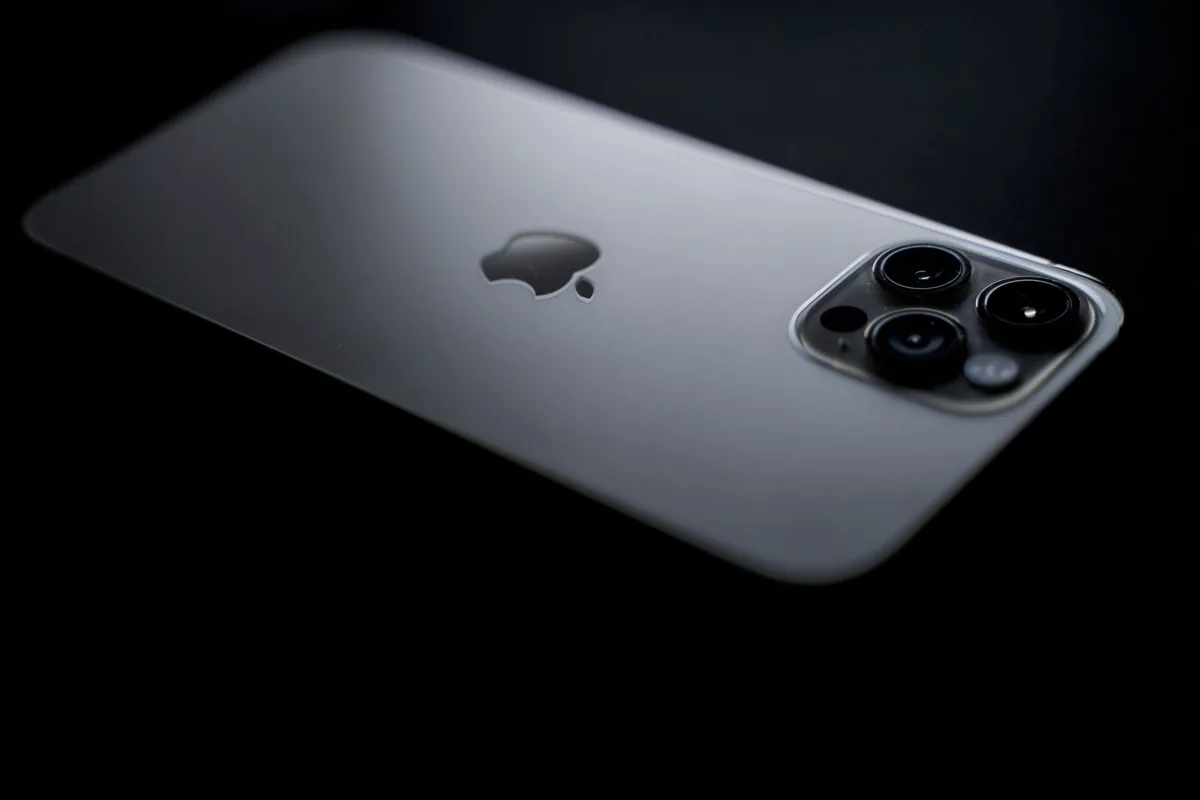
The most visible change is the camera island: instead of three separate camera lenses placed independently across the back (as on the S25 FE), the three rear optics now sit together under a single glass plate.
Functionally this is a minor change, but it lets Samsung market the S26 FE as sporting a new look. The brand also says this unified module helps keep dust from slipping between lenses. Whether you prefer this look is a matter of personal taste.
Otherwise, the S26 FE shares the S26 family’s language: a flat glass rear (which shows fingerprints fairly clearly), flat sides, an aluminum frame, very narrow black bezels around the display, and a flat screen protected by Gorilla Glass Victus+.
This year’s color lineup includes graphite, sea‑green and blue. The phone feels premium and comfortable in hand, with the fingerprint sensor located toward the bottom portion of the display.
Weight and thickness are almost identical to the prior FE model: 193 g (versus 190 g) and 7.4 mm thick. The Galaxy S26+ is slightly lighter and a touch thinner (190 g and 7.3 mm).
As expected for a high-end device, the S26 FE comes with IP68 dust and water resistance: it can withstand dust and survive immersion in up to 1.5 meters of fresh water for 30 minutes. Samsung advises against heavy use at the beach or in chlorinated pools, however.
Samsung Galaxy S26 FEDisplay
The S26 FE uses a 6.7‑inch OLED panel, just like the Galaxy S26+. But where the S26+ offers a QHD+ resolution (3120 x 1440), the FE is limited to Full HD+ (2340 x 1080).
Both models support a 120 Hz refresh rate, but the S26 FE’s screen does not employ LTPO technology. That means the FE cannot finely vary its refresh rate the way the S26+ can; you can choose the adaptive mode (up to 120 Hz) or lock it to 60 Hz, but not the granular steps available on the higher-end model.
The FE’s panel is bright enough for everyday use, although it doesn’t quite reach the S26+’s peak levels. In our measurements, the maximum brightness when auto‑brightness is enabled is around 1100 nits — adequate for reading outdoors in bright sunlight.
Under HDR content, we measured peaks up to 1839 nits using our Calibrite Display Pro HL probe and CalMAN Ultimate software from Portrait Displays.
One weakness is color accuracy: with the Vivid color profile selected the average Delta E sits around 4.6; color temperature averages 6676 K (close to the 6500 K target); and coverage of the DCI‑P3 gamut is roughly 76% (about 51% for BT.2020).
In short, while the S26+ is brighter overall, the S26 FE’s display performs well enough to deliver a pleasing image in most conditions.
Samsung Galaxy S26 FEPerformance
Samsung chose the Exynos 2500 for the S26 FE — a step up from the Exynos 2400 found in the S25 FE, but still below the top-tier Exynos 2600 used in the Galaxy S26. The FE is paired with 8 GB of RAM.

The Exynos 2500 features ten cores, including a high‑speed prime core clocked at 3.3 GHz. In benchmark suites like Geekbench, AnTuTu and 3DMark it delivers very solid results, outperforming the older S25 FE.
Some rivals in the ~€800 price bracket perform less impressively, for example:
- The Oppo Reno 16 Pro with a MediaTek Dimensity 8550 Super.
- The Xiaomi 17T with a Dimensity 8500 Ultra.
That said, the Exynos 2500 does not match the raw power of the Exynos 2600 in the S26 and S26+, nor does it beat phones equipped with Snapdragon 8 Elite (Honor 600 Pro) or Dimensity 9500 (Xiaomi 17T Pro).
On the graphics side, the GPU is particularly capable. You can run Fortnite under optimal settings at 120 fps with Epic graphics quality.
Thermals remain reasonable during gameplay, even after 30 minutes of gaming. However, sustained heavy CPU workloads do cause throttling: the processor can drop to roughly 67% of peak performance during prolonged intensive tasks.
Samsung Galaxy S26 FESoftware
The S26 FE ships with Android 17 and One UI 9. Samsung promises long-term support: seven major Android upgrades and seven years of security patches — coverage that extends through September 2033.
Like other Galaxy S phones, the S26 FE includes the full suite of Galaxy AI capabilities:
- Assistants for real-time translation and writing help.
- Tools for analyzing audio recordings and web pages.
- AI-enhanced editing and video optimization features (e.g., object tracking, audio eraser).
- Now Brief
- Now Nudge
When editing photos, AI-powered features are particularly useful and numerous:
- Remove unwanted objects or people.
- Reposition elements within a frame.
- Create new elements by typing a description, speaking it aloud, or sketching directly on the screen.
- Apply stylistic transformations — 3D sketch, watercolor, pencil, comic book looks, etc. The Sci‑Fi style is fun because it places the subject in a futuristic scene, and styles can be layered for unique results.
Samsung Galaxy S26 FECamera
The S26 FE largely carries over the S25 FE’s camera hardware and is close to the S26+’s setup — the principal difference is the telephoto sensor’s resolution. The rear array includes three cameras plus the front shooter:
- Main (wide): 23 mm equivalent, f/1.8, 50 MP sensor with optical image stabilization.
- Ultra wide: f/2.2, 12 MP sensor.
- Telephoto: 75 mm equivalent (3x optical zoom), f/2.4, 8 MP sensor with OIS (the S26+ uses a 10 MP telephoto).
- Front (selfie): 30 mm equivalent (or 23 mm in wide mode), 12 MP.
Wide (main)
By default the main camera processes images at 12 MP, but you can enable a 50 MP capture mode. Some competitors have moved to much higher native sensor resolutions — 200 MP sensors, for example, on the Oppo Reno 16 Pro or the Honor 600 Pro.
Still, the S26 FE produces very pleasing wide-angle shots in a variety of lighting situations.
At night, Samsung’s quad‑pixel binning technology improves low-light performance while keeping color rendering relatively accurate. The night shots look excellent when viewed on the phone’s display, though they can reveal limitations when blown up on a large monitor.
Ultra wide
Ultra-wide photos are generally good, though as is common with many smartphones detail is stronger in the center and falls off toward the edges.
Low-light ultra-wide shots become much harder to salvage. If there are nearby light sources, you can get passable results, but in dim settings image quality drops noticeably.
Zoom
The S26 FE’s telephoto provides a 75 mm focal length for a 3x optical zoom. Competing devices such as the Oppo Reno 16 Pro and Honor 600 Pro offer slightly longer optics (about 80 mm, ~3.5x), while the Xiaomi 17T and 17T Pro go further with a 5x telephoto (~115 mm).
In practice, shots taken between 2x and 3x look excellent, and images remain acceptable up to about 10x magnification.
2x
3x
Nighttime zooms — even modest ones like 2x (cropped from the main sensor) or 3x (optical) — often lose sharpness unless there is abundant ambient lighting.
10x
At 10x digital zoom details begin to suffer and image fidelity degrades, an effect that’s more apparent when images are viewed on a large screen.
20x
As you push past roughly 15x (five times the optical reach), quality declines rapidly. Samsung’s aggressive interpolation and enhancement algorithms struggle to maintain natural detail, resulting in noticeably degraded images.
On a smartphone display the loss of detail is less obvious, but the limitations are still present.
30x
Using the maximum digital zoom is best reserved for situations where no other option exists, because images become very approximate at these extreme levels.
Selfie
Selfies are sharp given good lighting — shots are captured at 4000 x 3000 pixels when conditions allow, and skin detail is finely rendered.
The front camera offers a 30 mm equivalent focal length for standard selfies, and a 23 mm wide option for group shots. This wide framing is a bit broader than on the S25 FE (which was 26 mm).
Indoors or in low-light environments selfie detail diminishes somewhat, but images generally remain acceptable.
At night the screen can act as a fill light for the subject, though not as intensely as some Xiaomi phones. Nighttime selfies tend to be only fairly detailed, but they still look fine when viewed on the phone itself.
Video
Video recording is excellent: the rear camera can capture 4K at 60 fps with HDR, and the front camera can also shoot high-quality clips. The rear sensor even supports 8K recording at 30 fps.
For stabilization at QHD/60 fps there are two modes: a “super stabilization” option that locks the horizon, and another stabilization mode without the horizontal lock.
The horizon-locking mode is very effective and is the clear choice for most handheld shooting. From the first second of recording the phone locks the horizon and maintains it even if you rotate the phone abruptly; this makes moving footage impressively stable.
Samsung Galaxy S26 FEAudio
The stereo speakers deliver a competent performance overall. Unlike some phones where the top earpiece and bottom speaker are noticeably unbalanced, the S26 FE presents a more even soundstage.
Maximum volume is satisfying and the frequency range is fairly well represented, including bass. It’s unfortunate there’s no built-in equalizer to tailor the sound, but the default output is pleasant and usable for media playback.
Samsung Galaxy S26 FEConnectivity
The S26 FE accepts dual nano‑SIMs, or a combination of a nano‑SIM and an eSIM, or two eSIMs.
As with most high-end handsets, there’s no microSD slot for storage expansion — a frustrating limitation for users who like expandable storage.
Connectivity includes Wi‑Fi 6E and Bluetooth 5.4 (the Galaxy S26+ offers Wi‑Fi 7 and Bluetooth 6). The USB‑C port supports USB 2.0 speeds on the FE, whereas the S26+ moves up to USB 3.2.
Samsung Galaxy S26 FEBattery
The S26 FE packs a 4900 mAh battery, matching the capacities used in the S25 FE and the S26+. Samsung still hasn’t adopted silicon‑carbon (Si/C) lithium‑ion cells for the Galaxy S series, unlike its foldable Z models (Z Flip 8, Z Fold 8 Ultra, Z Fold 8) which do use the newer chemistry despite having smaller capacities.
Rival Chinese brands such as Honor, Oppo and Xiaomi have embraced Si/C chemistry to fit much larger battery capacities — sometimes 6000–7000 mAh — into their designs.
On paper Samsung lists the S26 FE battery’s minimum cycle life at 1,200 full charge cycles, compared with 2,000 cycles advertised for the S25 FE. The nominal capacity is unchanged, but the guaranteed longevity is lower.
We measured runtime under various scenarios with screen brightness set to 250 nits.
Under a mixed office/media workload using the PCMark battery test with adaptive refresh enabled, the S26 FE dropped from 100% to 20% in 11 hours 40 minutes.
Running the same test with the refresh rate fixed at 60 Hz extended endurance only slightly to 12 hours 45 minutes.
Those results are middling: they should translate to about one to two days of typical use, but they lag behind models like the Honor 600 Pro or Xiaomi 17T Pro, which benefit from larger batteries.
In a video streaming test (60 Hz) the phone lasted roughly 21 hours — the battery lost 38% after 8 hours of Netflix streaming. This is lower than Samsung’s local-play claim of 29 hours, and illustrates the difference between streaming and offline playback.
For wired charging, the S26 FE supports up to 45 W, the same as the S25 FE and equal to the wired limit on the S26+. This is faster than the S26’s 25 W, but still behind many mid-range rivals that offer 80–100 W charging.
In practice, with Samsung’s separate 45 W charger you can expect:
- About 70% in 30 minutes
- About 91% in 45 minutes
- About 98% in 55 minutes
So while wired charging isn’t slow in real use, competitors do charge significantly faster.
Wireless charging is capped at 15 W, same as the previous FE model. Some rivals support much faster wireless charging (for example, 50 W on certain Honor and Xiaomi devices).
Samsung Galaxy S26 FEPrice and availability
Unveiled on August 27, the Galaxy S26 FE went on sale in France on September 4.
It’s offered in two configurations:
- €799 for 8 GB RAM + 128 GB storage,
- €899 for 8 GB RAM + 256 GB storage.
These launch prices represent an increase over the S25 FE’s debut (the 128 GB model was €749 and the 256 GB was €809 at release): +€50 and +€90 respectively.
Fortunately, Samsung’s online store was offering a promotion at the time of writing that could cut €100 instantly, and an additional €50 discount when paying with PayPal — bringing the effective prices down while the promotion lasts to €649 (128 GB) and €749 (256 GB), which are much more compelling figures.
For context, the Galaxy S26 launched in February at €999 for the 12 GB / 256 GB configuration and can be found at around €799 from some resellers; it has a smaller 6.3‑inch screen. If you want the larger display of the standard S26+ you’ll pay considerably more: Samsung lists the S26+ at €1369 currently (it has risen €100 since launch) while retailers such as Fnac or Darty sell it nearer €1100.
If you already own a Galaxy S25 FE, upgrading to the S26 FE offers little: screen, battery and charging remain unchanged and the main gain is a faster chipset. For others, the S26 FE becomes attractive when on promotion, particularly at the €649 price point.
Against the Xiaomi 17T Pro and Honor 600 Pro, however, the S26 FE is outclassed if you compare full price: those rivals generally deliver more raw performance, longer battery life and 512 GB storage options for around €800.
Samsung Galaxy S26 FE
at the best price
<button type="button" role="radio" aria-checked="true" tabindex="0" data-state="active" data-value="new" class="relative z-1 inline-flex items-center
font-fontFamilySecondary font-semibold text-font-body
whitespace-nowrap cursor-pointer
bg-transparent border-none rounded-full
disabled:opacity-50 disabled:cursor-not-allowed
switcher-option___J271O
switcher-option-boxed___1mFEg switcher-option-boxed-active___xPSGS justify-center conditionOption___Hm6iZ”>New16<button type="button" role="radio" aria-checked="false" tabindex="-1" data-state="inactive" data-value="renewed" class="relative z-1 inline-flex items-center
font-fontFamilySecondary font-semibold text-font-body
whitespace-nowrap cursor-pointer
bg-transparent border-none rounded-full
disabled:opacity-50 disabled:cursor-not-allowed
switcher-option___J271O
switcher-option-boxed___1mFEg justify-center conditionOption___Hm6iZ”>Refurbished3
-
Amazon€597.50
-
Boulanger€649.00
-
Fnac€649.00
-
Darty€649.00
-
Cdiscount€702.13
Similar Posts
- Samsung Galaxy S26 Camera Specs Revealed: Leak Gives Us a Sneak Peek!
- Galaxy Z Flip 8 Camera Revealed: What Surprises Does Samsung Have in Store?
- Galaxy S25 Edge Design Leaked: Specs & Details Revealed!
- Samsung’s Galaxy S26 to Feature Revolutionary Camera Tech: Expect Major Upgrades!
- Galaxy Z Fold 8: Major Camera Upgrades Coming, Here’s What’s Changing!

Maya Singh is a senior editor covering tablets and hybrid devices. Her work explores how these tools reshape digital productivity and learning. She also contributes to feature editorials on emerging tech.