
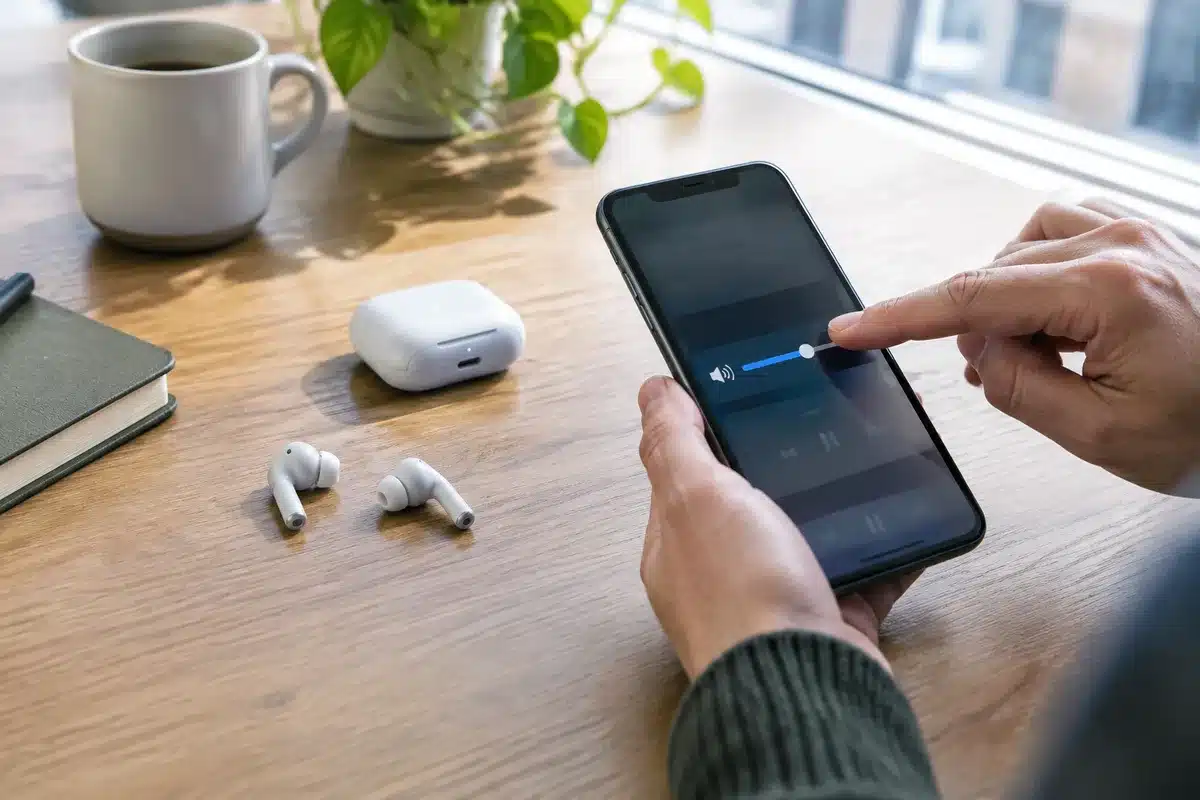
Two years ago, adding active noise cancellation to the AirPods 4 surprised many: getting real noise reduction from earbuds that don’t seal the ear canal was impressive. Apple pulled it off, but at the time ANC was reserved for the pricier model near €200. With the AirPods 5, Apple goes further: ANC is now standard and included even on the entry-level pair.
Scientists confirm: This is the most effective way to get your cat’s attention, according to new research
Elderly Couple Refuses Reserved Seats—Viral Train Standoff Sparks Fiery Debate on Courtesy
As with last year’s release, Apple offers two AirPods 5 configurations. The base model, priced at €149, comes with a conventional USB-C charging case. The upgraded version, at €169, adds wireless charging, swipe volume control on the stem and roughly one extra hour of battery life with ANC enabled.
Acoustically, the two variants are largely the same.
In other words, the €169 AirPods 5 include all the features of the former AirPods 4 ANC that sold for €199, and the €149 version only forgoes wireless charging and the case speaker. Both promise improved performance for noise cancellation and sound quality.
I listened to them and compared them directly with the AirPods 4 ANC and the AirPods Pro (3rd gen). The results are surprising.
| Features | AirPods 5 | AirPods 5 with wireless case |
| Form | Open-fit (stem) | Open-fit (stem) |
| Active Noise Cancellation (ANC) | Yes | Yes |
| Chip | Apple H2 | Apple H2 |
| Volume control on stem | No | Yes (swipe) |
| Earbud battery life (with ANC) | 4 hours | 5 hours |
| Charging options for case | USB-C | USB-C, Qi wireless, MagSafe (no magnet), Apple Watch charger |
| Speaker in case | No | Yes (Find My) |
| Ingress protection | IP57 | IP57 |
Apple AirPods 5Technical specifications
| Model | Apple AirPods 5 |
|---|---|
| Type | open-fit earbud (stem) |
| Active Noise Cancellation | Yes |
| Battery life claimed (ANC on) | 4 hours |
| Battery life with case | 20 hours |
| Product page |
This review was carried out with units purchased by the editorial team.
Apple AirPods 5Open-fit ergonomics at their best
Unlike the AirPods Pro 3, the AirPods 5 are button-style, open-fit earbuds. They don’t use silicone tips to seal the ear canal; instead they sit at the entrance of the ear. That’s the appeal of this design: no pressure inside the ear canal and no sense of claustrophobia for listeners who find in-ear tips uncomfortable.

Retention remains excellent. When you place an AirPod into the ear you might think it won’t stay put, but it does—secure through ordinary movement, only giving up under heavy jumping or intense perspiration. Comfort is outstanding, with no fatigue even after several hours of continuous wear.
The stem still houses a pressure sensor: a squeeze pauses playback, two squeezes skip forward, three skip back, and a long press toggles listening modes. On the wireless-case model, swiping along the stem adjusts volume similarly to the AirPods Pro. The basic €149 pair still requires the iPhone, Apple Watch or Siri for volume changes.
That omission is unfortunate — volume control is a basic, expected feature.
Another welcome, if less flashy, upgrade is the improved ingress protection: the AirPods 5 are certified IP57, up from IP54 on the AirPods 4. Water resistance is notably better while dust protection remains comparable. Practically, IP57 means the earbuds can tolerate temporary immersion up to about one meter for 30 minutes, so an accidental drop in water shouldn’t necessarily be fatal. Apple still advises these are designed for non-aquatic activities and warns that resistance may decline with wear.
The charging case remains compact and lightweight (around 40 g with earbuds). The standard case charges via USB-C; the €169 case adds Qi charging, compatibility with Apple Watch chargers, and a small speaker for the Find My feature.
Apple AirPods 5Internal design
Inside each AirPod sits Apple’s H2 chip, the same processor used across several AirPods generations (Pro 2 & 3, AirPods 4, and the second-generation Max). The H2 handles advanced audio processing, ANC algorithms and adaptive EQ. The buds also include two beamforming microphones, an inward-facing mic, and multiple sensors that monitor head motion, voice activity and ear placement.
The drivers themselves don’t appear to have been radically changed: Apple still specifies a custom high-excursion transducer and my measurements align closely with the AirPods 4, suggesting the speaker unit wasn’t completely replaced.
Apple does say it redesigned the acoustic architecture of the housing, adding venting intended to equalize sound pressure within the shell. In theory that helps by preventing the back wave from the driver from causing unwanted resonance of the diaphragm. We’ll see later whether this architectural shift delivers audible benefits versus the AirPods 4.
Apple AirPods 5Features reserved for Apple devices
As with every AirPods release, the richest experience is still tied to Apple hardware. There’s no dedicated Android app, so on a non-Apple smartphone the AirPods operate mainly as standard Bluetooth headphones. Spatial Audio, Adaptive Transparency, Conversation Awareness, Personalized Volume and Siri interactions require being inside Apple’s ecosystem — there’s no workaround.
The AirPods 5 pack a range of smart features. The adaptive mode blends ANC and transparency to let environmental sounds through while dynamically attenuating loud noises. Conversation Awareness automatically lowers music volume when you start speaking and enhances nearby voices, then restores the previous level after the conversation ends. Personalized Volume adjusts playback level depending on the ambient environment.
All of these functions work very well.
On top of that you get Personalized Spatial Audio with dynamic head tracking, Siri Interactions (for example you can answer a call with a head nod or shake), and the ability to use the AirPods as a remote control for the camera. These options are accessible from the iPhone settings.
Apple also offers live translation in face-to-face conversations — an impressive capability, but it requires an iPhone 15 Pro or later, iOS 26 or newer, Apple Intelligence enabled and the Translate app.
Bluetooth-wise, nothing new: the AirPods 5 continue to use the AAC codec within Apple’s ecosystem and do not support high-res Bluetooth codecs such as LDAC or aptX HD. Given the overall sound performance though, that omission is not a deal-breaker. A reminder: excellent musicality doesn’t necessarily require exotic codecs.
Latency is still perceptible in fast-paced gaming — you’ll notice a few milliseconds of delay — but video syncing is handled flawlessly. Connection range holds to around 10 meters and even works through a wooden floor in my testing.
Automatic switching between Apple devices behaves as expected: the AirPods pair to one device and then seamlessly switch between iPhone, iPad and Mac as you move between them.
Spatial Audio that still impresses
The AirPods 5 support Apple’s Spatial Audio, which can create a more immersive presentation from stereo tracks and an even wider effect for Dolby Atmos content on Apple Music.
This feature has been trendy in recent years and often underwhelming on competing headphones, but on AirPods it generally succeeds and enhances the pleasure of listening. I’ll return to this in the listening impressions below.
Apple AirPods 5Active noise cancellation that removes up to 50% more noise, says Apple
Apple doesn’t claim these are the absolute best ANC in the market — that title is still aimed at the AirPods Pro 3 — but positions the AirPods 5 as the top-performing open-fit ANC earbuds. In real use the ANC is impressive and noticeably improved over the AirPods 4 ANC. That’s remarkable for an open design: without the passive seal you can’t rely on physical isolation, so the H2 chip must work harder, measuring external sounds and generating inverse signals in real time to cancel them at the eardrum.
The quiet bubble the AirPods 5 create is surprising given their open nature and is strong even compared to many closed designs. The H2 handles midrange noise particularly well. In a car with windows open or near busy roads, road noise and gusts of wind are much less intrusive; the wind is still audible but no longer disrupts listening.
In very loud situations or when turning your head suddenly, the ANC can dip for a few milliseconds before recovering.
The AirPods Pro 3 remain a step ahead in raw ANC effectiveness, thanks largely to their foam-injected silicone tips that create a tighter seal.
The Transparency mode is still very natural, too: microphones and processing fade away so that the user really feels as if there are no earbuds in the ears.
Apple AirPods 5A denser, more refined sound
There isn’t a radical shift in sonic signature from the AirPods 4 to the AirPods 5 — which is good, because the previous generation sounded very good. You’ll still hear surprisingly deep bass for open-fit buds: full and well-defined, a midrange that’s largely neutral and rich, and finely rendered highs that can be slightly emphasized in the very top end. Overall the AirPods 5 offer a soft, nuanced sound that remains dynamic as you raise the volume.
The bass is a touch fuller, and the midrange feels more organic due to a slight presence boost; the extreme highs are a bit tamed by masking effects compared with the previous generation, so the result retains an airy character without being fatiguing.
Are the AirPods 5 better than the 4? Clearly, yes.
Frequency response of the AirPods 5
The response curve is far from flat, but you should interpret it with the human ear’s sensitivity in mind. While measurements show peaks and dips, some of those lie in frequency bands that are less salient to most listeners.
For example, there’s a noticeable bump around 40 Hz in the bass, but this is in the infra-bass range and its perceived impact is subtler than the raw graph suggests. Likewise, a prominent spike near 14 kHz sits at the upper edge of audibility for most people; even if you have acute hearing, those very high frequencies tend to add texture rather than harshness. That peak does, however, influence perceived dynamics across the spectrum.
Apple appears to have focused on the midrange: between roughly 200 and 600 Hz the response is quite even, covering voices and instrument fundamentals smoothly. The upper midrange (around 2–3 kHz) is deliberately restrained to avoid harshness. The presence region near 4 kHz is slightly elevated, which adds perceived detail compared with the AirPods 4 ANC.
Listening impressions with the AirPods 5
Here We Are, Gloria Estefan. This track features a beautifully captured vocal; the AirPods 5 render minute inflections with realism. The original mix isn’t the widest, but these earbuds give the vocal room and keep the snare from masking the voice.
Heroes (A Reality Tour Live), David Bowie. Possibly one of the best live versions of the song. The kick drum is tight and powerful at the start, the stage feels expansive and Bowie’s voice remains natural and present. Any sibilance is audible but never offensive.
Me and Bobby McGee, Janis Joplin. Joplin abuses the mic and tape as usual, and the AirPods 5 capture her raw presence. The backing strings, piano and gritty electric guitars are all present and cohesive, lending the performance intimacy and impact.
On a dense, challenging mix like Back to Black by Amy Winehouse, the AirPods 5 manage to tame the harshness. The recording remains cold and compressed in places, but it never becomes unpleasant — the earbuds let the emotion through.
More rewarding: High Hopes (Live At Pompeii) by David Gilmour on YouTube. The AirPods 5 reproduce the concert atmosphere convincingly: Gilmour’s vocal range, his nylon-string guitar tones in the outro, the resonant bell-like tones and the suspended lap steel are all very well defined.
Dynamics and Spatial Audio
Dynamic behavior is excellent and comparable to the AirPods 4: level differences are respected and the soundstage layers are clearly separated. When the recording is relaxed, the playback is too. Spatial precision remains good in both stereo and spatialized content.
Converting stereo tracks to Spatial Audio remains effective, but the biggest gains come with Dolby Atmos masters on Apple Music: the experience is notably richer.
Everybody Wants to Rule the World by Tears for Fears demonstrates this well. In stereo it’s dense and slightly compressed, typical of ’80s production. In Atmos the contrast is substantial: bass becomes more impressive, vocals clearer, synths and guitars feel more distinct and airy. The same holds true for tracks like Free Bird (Lynyrd Skynyrd) or Relax (Frankie Goes to Hollywood) when you have good Atmos masters.
Apple’s implementation remains strong. The gap between the AirPods 5 and the AirPods Pro is surprisingly small: on some tracks I even preferred the AirPods 5 for their open presentation and less forward treble. The Pros still lead in sheer power and low-frequency solidity when pushed to very high volume levels.
Apple AirPods 5Calls: keeping background noise out of the conversation
I used the AirPods 5 daily for phone and video calls while the AirPods 4 are my usual pair. Call quality is excellent on both models and differences are minimal. Even in a car with windows open or near a construction site the earbuds protect the speaker’s voice impressively. There were times I doubted whether the other party could hear me clearly because I could barely hear my own voice — yet my correspondent reported almost no background noise, only faint suction sounds occasionally.
Apple AirPods 5Battery: the same weak spot
The review sample I tested was the USB-C case model, for which Apple promises up to four hours of playback with ANC active. That’s the same maximum runtime Apple quoted for the AirPods 4 ANC, and battery life remains the main shortcoming of these earbuds. In everyday use you can exceed four hours if you’re in a moderately quiet environment, but on public transit or in a car the buds tend to drop off a little after the four-hour mark.
High-performance ANC and continuous audio processing consume power, and the open-fit driver’s greater distance from the eardrum also influences energy needs versus a sealed in-ear design.
The €169 variant is more interesting here: Apple claims up to five hours with ANC on and up to 22 hours total with the case, versus 20 hours for the USB-C-only case.
Apple AirPods 5Price and competition
The AirPods 5 start at €149 for the basic version and €169 for the wireless-case model. For the extra €20 you get wireless charging, the case speaker, on-stem volume control and roughly one hour more ANC runtime — a worthwhile upgrade if your budget allows.
Retailers may still stock the AirPods 4 ANC while supplies last, but unless you can pick them up for under €149 there’s little reason to opt for the older model now.
The AirPods Pro 3 maintain advantages: a more secure fit, stronger ANC, longer battery life and heart-rate detection. But they come at roughly a €100 premium.
at the best price
Similar Posts
- New Powerbeats Fit Launch: The Successor to Beats Fit Pro Unveiled!
- Huge Deal Alert: AirPods Max Drop to €497 from €579! Grab Yours Now!
- AirPods Pro 3 Users Report Annoying Noise: Find Out What’s Causing the Buzz!
- AirPods Pro 3 are coming, and you’re going to love their new health feature
- AirPods Pro 3 Review: Early Impressions Burst with Excitement

Maya Singh is a senior editor covering tablets and hybrid devices. Her work explores how these tools reshape digital productivity and learning. She also contributes to feature editorials on emerging tech.