
Scientists confirm: This is the most effective way to get your cat’s attention, according to new research
Elderly Couple Refuses Reserved Seats—Viral Train Standoff Sparks Fiery Debate on Courtesy
Sony’s Bravia range has always held a special place in the consumer television market, balancing the technical excellence of its high-end OLED models with more affordable but equally refined Mini LED options. With the Bravia 7 II and Bravia 9 II, the Japanese manufacturer introduces a significant technological breakthrough within its lineup: a backlighting system called True RGB, which replaces the traditional blue LED system combined with a quantum dot conversion film with independent clusters of red, green, and blue diodes.
This technology is also utilized by TCL in the MR9L series, Hisense with the UR8S and UR9S, as well as Samsung (under the Micro RGB label) in the MR95H series, LG in the MRGB86, MRGB87, MRGB88, and MRG96 series, and Philips in the MLED981 TV range. In short, in 2026, there are many televisions featuring this new backlighting system, and Sony faces strong competition in this market segment.
Therefore, the Bravia 7 II needs to impress with its versatility, high brightness, and Sony’s expertise in calibration, rather than an unbeatable price/performance ratio.
This television replaces the Bravia 7 released in 2024 and is positioned just below the Bravia 9 II, our reference in LCD TVs, a more premium model that benefits from additional anti-reflective treatment and superior brightness. Technically, the Bravia 7 II includes Sony’s XR processor, a proprietary chip responsible for intelligent upscaling, fluidity management through XR Motion Clarity technology, and image processing that closely respects the director’s intent and My Cinema presets. It runs on Google TV 14 and offers broad compatibility with recent gaming consoles, particularly the PlayStation 5, with specific optimizations.
Available in various sizes from 50 to 98 inches, this television targets home cinema enthusiasts and demanding cinephiles, ready to invest in true-to-life imagery without necessarily switching to OLED.
Why You Should Never Reheat These Foods in the Microwave – The Hidden Dangers Experts Warn About
I tried the top 5 guard dogs—here’s what makes these breeds the ultimate protectors
Sony Bravia 7 II 65 InchesTechnical Specifications
| Model | Sony Bravia 7 II 65 Inches |
|---|---|
| Screen Size | 65 inches |
| Maximum Resolution | 3840 x 2160 pixels |
| Display Technology | LCD |
| Backlight | Yes |
| Backlight Type | RGB Backlight Master Drive Pro |
| HDR Compatibility | HDR10, Dolby Vision |
| Refresh Rate | 120 Hz |
| Processor | XR Processor |
| VRR | Yes |
| ALLM | Yes |
| Audio Power | 40 watts |
| Compatibility | Dolby Atmos, DTS-X |
| Channels | 2.0 |
| Audio Outputs | Speakers, Optical |
| Number of HDMI Ports | 4 |
| HDMI ARC/eARC | Yes |
| Antenna Input | 1 | 2 |
| Number of USB Ports | 2 |
| Optical Out | 1 |
| Analog Audio/Video Input | 0 |
| Ethernet | Yes |
| PCMCIA Port (CI+) | Yes |
| Wi-Fi Version | Wi-Fi 6E |
| Bluetooth Version | 5.3 | Black |
| Stand Position | Central | 300 x 300 mm | Google TV | Google Assistant, Amazon Alexa | Yes | Yes | Yes | Yes | 1447 mm x 907 mm x 341 mm | 26.6 kg | 30.7 kg | D | 8 | Product Sheet |
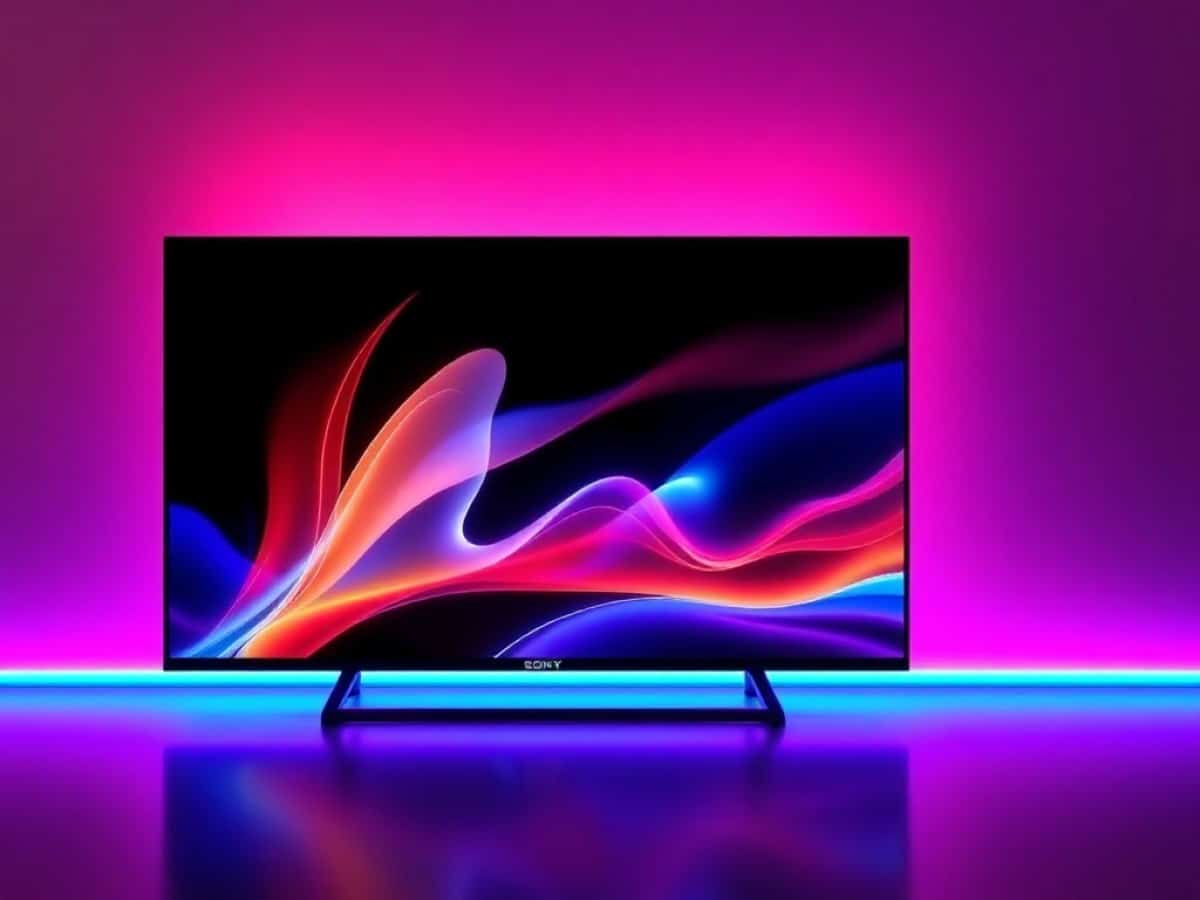
Sony Bravia 7 II 65 InchesSleek and Refined Design
Sony has always placed a high emphasis on the aesthetics of its high-end televisions, and the Bravia 7 II is no exception. The front of the TV features ultra-thin borders on all four sides, enhancing the immersive experience once the screen is on.
The lower part of the chassis remains discreet, which further enhances the impression of a display almost entirely dedicated to viewing. However, it doesn’t quite reach the ultra-thin borders of the C89L, which boasts the thinnest borders on the market.
The central stand is identical to that of the Bravia 9 II. It is a semi-transparent element present in models from 50 to 85 inches, while the 98-inch model uses two separate stands. This base cleverly conceals cables running through the back of the TV, adding a visually appealing touch that makes the device look good even when it’s off.
The footprint of the stand is relatively small, allowing the TV to be placed on a moderately sized piece of furniture without sacrificing stability. For the 65-inch version tested, expect dimensions of 34 cm wide by 34 cm deep. While it’s impossible to adjust the height, the 8 cm of elevation is enough to install a soundbar without obstructing either the view of the image or the infrared receiver.
At the back, a cable management module is offered, centrally located, for an organized installation of wires.
The back of the TV, made of textured plastic with a pattern, gives a nice sense of perceived quality, although Sony has abandoned the checkerboard pattern that adorned some of its previous high-end models.
The profile of the TV remains quite slim on the sides. This slimness greatly facilitates wall mounting, especially since the connectors are positioned on the side rather than towards the bottom, a practical choice for close-to-wall installations.
The overall finish, although largely made of plastic, conveys a sense of robustness and solidity, with no signs of manufacturing defects noted during my examination.
At the bottom of the frame, on the left side, manual controls for volume, power, and a dedicated button for turning off the built-in microphone can be found, proving that Sony has considered everyday practical use as much as pure aesthetics.
Sony Bravia 7 II 65 InchesConnectivity
The Bravia 7 II offers a total of four HDMI ports, but only two of them utilize the full bandwidth of HDMI 2.1. Unfortunately. This is also the case for the Bravia 9 II, while LG, Samsung, TCL, and Hisense now offer all 4 HDMI 2.1 full-speed ports on their high-end models.
These two HDMI 2.1 ports support VRR (Variable Refresh Rate) and ALLM (Auto Low Latency Mode), and one of them also serves as an eARC port for high-quality audio return to a compatible amplifier or soundbar.
The other two HDMI inputs, limited to HDMI 2.0b, therefore do not allow for 4K at 120 frames per second, which could be an issue for gamers with multiple latest-generation consoles connected simultaneously.
Additionally, there are two USB ports, a digital optical audio output, an Ethernet port for a stable network connection, as well as an antenna/cable input and a built-in satellite tuner compatible with DVB-S2. On the wireless side, Wi-Fi and Bluetooth 5.3 make it easy to connect audio devices or gaming accessories without cables.
The TV also includes Apple AirPlay functionality as well as compatibility with Google Assistant, Amazon Alexa, and Apple HomeKit, making it a particularly flexible device in a varied smart home environment.
The Included Remote Control
The remote control that comes with the Bravia 7 II is identical to the one provided with the Bravia 9 II. Note that Sony also includes another remote with numeric keys for quickly switching channels, if necessary.
The remote is comfortable to hold, thanks to a reasonable length and a textured finish on the sides and back. In addition to the usual navigation and volume adjustment buttons, it includes direct shortcuts to several popular streaming platforms, including Crunchyroll, Netflix, Disney+, Prime Video, YouTube, and of course, the in-house service: Sony Pictures Core, which is highlighted by a more prominent position.
A dedicated button allows for a quick overview of essential settings such as image, sound, or network, avoiding the need to delve into the full settings of Google TV. The My Cinema interface also benefits from a dedicated button, which is convenient for quickly changing the TV’s settings for both sound and image. Note also the ability to assign a function to the Shortcut button (star), designed for this purpose.
The remote features a backlighting system that activates as soon as you pick it up, which is very convenient. Finally, it is powered by a rechargeable battery via a USB-C port.
Sony Bravia 7 II 65 InchesSubjective Image Quality
The True RGB backlighting is really at the heart of the innovation in the Bravia 7 II, as with the Bravia 9 II series. As mentioned earlier, instead of traditional Mini LED panels that rely on blue diodes combined with a quantum dot film to generate the full color spectrum, this technology uses three types of separate diodes—red, green, and blue—grouped within each local control zone.
This architecture theoretically allows for superior color purity, with better separation between primary hues and a reduction of unintended color mixing that is typically observed with traditional blue LED backlighting. Additionally, blooming effects are less noticeable. From a frontal view, it is not present on video content. If you move away from the central position, some blooming can be seen, but it remains very limited.
The TV offers several image modes, some of which are particularly bright and saturated, ideal for watching sports in the absence of a dedicated mode specifically designed for this purpose, as well as a more measured Standard mode. However, the mode that should win your favor is the Professional mode, in the absence of a Filmmaker mode, still shunned by Sony. Like the Bravia 9 II and some other Sony TVs, you can also use the two image modes calibrated for Netflix and Prime Video.
Indeed, the Professional mode prioritizes a natural and accurate reproduction of hues. Unsurprisingly, this mode proved to be the best choice for watching movies and series. Like the Bravia 9 II TV, this series also offers the My Cinema presets, which automatically adjust all audiovisual settings according to the ambient conditions of the room and the artistic intent of the content being aired.
In addition, the TV supports a wide range of compatibility with Dolby Vision, IMAX Enhanced, and the standard HDR10, with Sony still opting not to support HDR10+.
Sequences from movies like <
Similar Posts
- TCL X11L Review: Can Mini-LED SQD Truly Rival Premium OLED TVs?
- Sony Bravia 3 Review: Unbelievable Value for an LED TV – Find Out Why!
- Samsung Unveils A Giant 115-Inch TV: The Mysterious Micro RGB Revolution Begins
- I Tested the Hisense UR9S TV: Best Color Accuracy Ever & Dolby Vision 2 Compatible!
- I Tested the TCL 65C89L: Bright Mini LED for €1800 Struggles to Advance

Maya Singh is a senior editor covering tablets and hybrid devices. Her work explores how these tools reshape digital productivity and learning. She also contributes to feature editorials on emerging tech.