
Scientists confirm: This is the most effective way to get your cat’s attention, according to new research
Elderly Couple Refuses Reserved Seats—Viral Train Standoff Sparks Fiery Debate on Courtesy
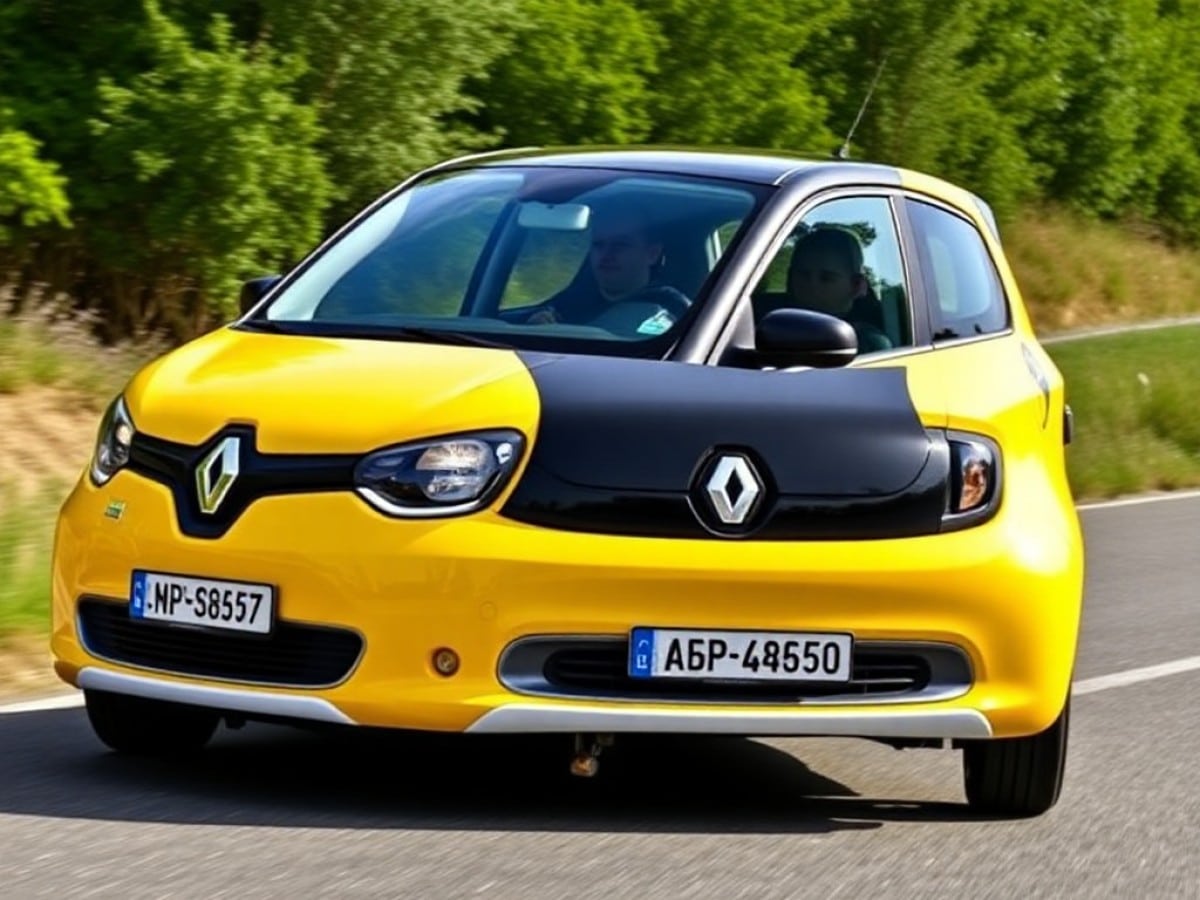
The Renault Twingo E-Tech boasts an appealing design, competitive pricing, and clever features. On paper, it seems set to replicate the commercial success of its older sibling, the R5 E-Tech.
Its virtues were largely praised during our first test drive under ideal conditions in Ibiza, where we drove the high-end “Techno” model. But one question remained: How does this electric city car perform under real-life conditions?
To answer this, I spent a weekend driving the entry-level electric Twingo, the one that sells for under €20,000.
Between Paris and the rural areas of Somme, I tested the least expensive Twingo E-Tech over more than 430 km. From its specific features to consumption, charging, and driving comfort, you’ll find this car remarkably endearing.
Specifications
| Model | Renault Twingo E-Tech (2025) |
|---|---|
| Dimensions | 3.79 m x 1.72 m x 1.49 m |
| Power (horsepower) | 82 horsepower |
| 0 to 100km/h | 12.1 seconds |
| Level of autonomy | Assisted driving (level 1) |
| Top speed | 130 km/h |
| Embedded OS | Android Automotive OS |
| Main screen size | 10.1 inches |
| Car-side plug | Type 2 Combo (CCS) |
|
Try it out |
Product page See the test |
The test vehicle was loaned to us by the brand.
A “First Price” Version That’s Far From Basic
Nearly Identical Style
The high-end Twingos gleaming under the Ibiza sun were a sight to behold. What can we expect from the entry-level version?
Visually, it’s a relief to see that a Twingo remains a Twingo, as the differences between the two versions are minimal. LED headlights are still present, both at the front and rear, maintaining its charming appearance.
It’s quicker to list the differences. The rear windows lose their tinting, the door pillar sports raw instead of shiny plastic, the antenna is traditional (unlike the shark fin on the Techno version)… and that’s about it.
Oh, and let’s note the specific wheels. While the standard 16-inch hubcap doesn’t revolutionize anything, Renault was elegant enough to offer an optional 18-inch wheel (€600), named Mikado and absolutely charming.
The color palette remains strictly the same; thus, one has access to the lovely shades of the Twingo, including the Absolute Green (€600) of our test model which, coupled with these splendid wheels, has an unmatched likeability. A joy in everyday life.
Preserved Practicality
The “entry-level” aspect of this Twingo Evolution is more visible when you open the door.
Several elements that added cheer to the cabin have been removed: the body-colored insert on the dashboard is replaced by speckled white plastic, while the upholstery becomes (even) sadder with barely worked black fabric.
Fortunately, not everything is lost. The door panels retain the painted part, adding a touch of color; the steering wheel loses its TEP wrapping for good old plastic, but the grip remains excellent.
Moreover, the equipment is far from basic. Manual air conditioning comes standard, the displays remain digital with their endearing graphics.
The central screen is still there; it loses Google services, including navigation and the Play Store, but keeps smartphone replication via Android Auto or Apple CarPlay wirelessly. More than enough for daily use.
Additionally, the centerpiece of this cabin is preserved: the independent and sliding rear seats over 17 cm. A real added value of this Twingo, allowing the boot volume to vary from 205 to 305 liters according to the VDA standard. However, the passenger seat loses the ability to fold down.
Identical Technical Sheet
Another satisfying element: the least expensive Twingo makes no concessions on the technical part, entirely shared with the high-end version.
Thus, we find the 27.5 kWh net LFP battery paired with a 60 kW (80 hp) electric motor and 175 Nm of torque. The performances are identical, with a top speed set at 130 km/h and a 0 to 100 km/h dispatched in 12.1 seconds, but the 26 kg saved (1,200 kg curb weight) allows for a slight increase in range… two additional kilometers according to the WLTP cycle, an obviously negligible difference in real life.
Regarding charging, the situation is the same: rapid charging is not standard but remains available as an option – a Dacia Spring, for example, reserves this privilege for the top-end version only.
This 50 kW charger comes with an 11 kW alternating current charger for everyday use (6.6 kW standard), accompanied by compatibility with bidirectional charging (V2G) to send the battery’s electricity back to the grid and be compensated accordingly.
Born for the City
As you can see: even in this entry-level trim, the Twingo retains its strengths – at least on paper. How does it fare in real-life conditions?
Let’s start with what should be its favorite playground: the city. And it must be said that the city car earns its name. Compact (only 3.79 m long), maneuverable (turning circle of 10.26 m between walls), and pleasantly lively, the Twingo is in its element. The Eco mode, accessible at the touch of a button, doesn’t change this impression much.
This Evolution version does without the steering wheel paddles, which allow adjusting the intensity of the regenerative braking up to the one-pedal mode (allowing coming to a complete stop without touching the brake pedal), but it retains a B mode, intensifying regeneration. Add to that a completely natural feeling of the brake pedal, and the problem disappears before even appearing.
Another topic: comfort. The huge wheels could be a concern on such a small car, but the synthesis is quite impressive. Large speed bumps, Parisian cobblestones, and potholes are remarkably managed.
Finally, the frugal appetite is confirmed, with 8.8 kWh/100 km calculated in the heart of Paris. This allows for aiming at 310 km on a single charge, significantly exceeding the official autonomy. Note that this test was conducted under optimal conditions, with temperatures between 25 and 30°C; in winter, consumption should be significantly higher, particularly with the absence of a heat pump.
Is everything perfect? A few elements are still concerning. The dashboard, extremely high, penalizes the field of vision towards the front – I had to raise the driver’s seat more than usual to partly circumnavigate the issue. This dashboard also tends to reflect a bit too much in the windshield in bright sunlight.
In addition, despite the tinted rear window, one can see the contents of the trunk from the outside – note that Renault offers a luggage cover as an accessory, priced at €75. Speaking of accessories, the small storage solutions (a box with a removable lid at €100, the central armrest at €230) can address (partly) the glaring absence of closed compartments in this cabin.
Country Roads Don’t Intimidate It
The misconception remains stubborn: an electric vehicle becomes obsolete once it leaves the city. I am convinced, on the contrary, that an EV unleashes its full potential in the countryside (majority of houses facilitating home charging, increased distances allowing to maximize savings compared to a thermal vehicle, etc.), but I was curious to see how the Twingo, with its rather light spec sheet, manages once the city is left behind.
The answer: no problem. Certainly, the little Renault can hardly compete with a Model S Plaid in terms of acceleration, but the throttle calibration makes the city car amply equipped for country roads; here too, switching to “Eco” mode is done without real disadvantage or castration.
Another topic: road holding. Does the Twingo behave like a yogurt pot, destabilized at the first curve? Not at all. Let’s remember here that the little frog is based on the platform of the Renault 5, called RGEV small (formerly AmpR Small) (formerly CMF–B EV), simplified at the rear axle which receives that of the Captur.
Without reaching the exciting pep of the R5, the Twingo has a very healthy behavior, never getting into trouble nor scaring its occupants.
As in the city, the comfort is of a very good level – the almost nonexistent lateral support may jostle passengers in turns, but let’s remember that the city car was not designed to break a record at the Nürburgring. The only discomfort: that of the ears, with rolling noises amply audible from 70 km/h onwards.
The consumption remains very reasonable, with 12.4 kWh/100 km calculated, i.e., 222 km on a single charge – let’s remember, here too, the optimal conditions of the test, even if the photo stops may have slightly weighed down the final figure.
Patience (and an Option) Needed on the Highway
Flawless Behavior
City and country road: here are the two elements that will constitute the bulk of a Twingo E-Tech’s life. Only here’s the thing: life is far from linear and predictable. Unplanned travel, sudden desire, lack of alternative: the little Renault will inevitably face, at one point or another, a journey on the highway.
The first thing to do, we tell you and we repeat, is to tick the Advanced Charge pack at €500 which unlocks the rapid charger – without it, the range of the Twingo will not exceed 100 km around its charging point.
The second… is to be patient. On the positive side, the Twingo is far from reluctant to climb (and maintain) 130 km/h, while the behavior calls for no complaints. My Evolution version had to do away with the adaptive cruise control of the Techno for a simple cruise control, but few people should complain about this – it won’t be my case.
Above 100 km/h, aerodynamic noises take over rolling noises, making the cabin really noisy. The two poor speakers of this version’s sound system (6 on the Techno) do what they can.
In short, we remain on a city car sold for less than €20,000; it’s hard to ask for premium SUV services, and we are very content with it… especially since breaks will be frequent.
At 110 km/h, I calculated a remarkably low average consumption of 15.1 kWh/100 km, promising 182 km of autonomy using the entire battery (or 127 km focusing on the 10-80% window, representative of a journey between two charging stations).
At 130 km/h, consumption rises to 19.2 kWh/100 km, i.e., 143 km of total autonomy or exactly 100 km from 10 to 80%. Very concretely, I left Paris at 100% and arrived south of Amiens with 15% remaining autonomy, after a journey on the A16 of 132 km. Then comes the time to recharge.
Charges Under Conditions
Renault announces that its Twingo can recharge from 15 to 80% in 28 minutes. A 15-80% on a Tesla Supercharger demanded 26 minutes and 53 seconds. Given the size of the battery, every kWh scraped counts, and going from 80 to 90% will require an additional 8 minutes.
Benefiting from the announced maximum power of 50 kW by Renault, I thus connected the Twingo to a 50 kW charger (the tristandard ABB found on highway rest areas), hoping to spend as much time while saving a few cents. Semi-failed: the battery voltage is not high enough to receive the 50 kW from the charger, and the accepted power will not go higher than 35 kW.
That said, the loss will be more than limited, since my 18-80% took 29 minutes – reaching 90% also required 7 additional minutes here.
Having only had to recharge once on each route, I therefore did not experience the battery overheating encountered by several colleagues (including Soufyane Benhammouda from Automobile Propre) due to the passive cooling of the pack, not allowing it to return to optimal temperatures after the first recharge.
In short, for a Paris-Amiens, the Twingo does more than well. To go further, apart from a lot of patience (limiting oneself to 110 km/h should limit the damage) and this essential option to tick, it should help out.
Is the Entry-Level Version Sufficiently Equipped?
As you have understood: this Twingo E-Tech “Evolution” gives up little compared to the “Techno”. Identical spec sheet, preserved look, far from stingy equipment… This raises the question: is it really necessary to spend the €1,600 that separate these two versions?
If you can do without the reversing camera, Google connected services, the foldable passenger seat, the one-pedal or the hands-free start (which are, remember, far from being mandatory equipment in a city car), then this Evolution version is for you.
The only absence of the heated seat option (€300 on Techno) could make you think, as they could limit the impact on autonomy in winter. It’s up to you.
Leaving the Competition Behind
This Renault Twingo E-Tech Evolution is thus offered starting from €19,490 catalog price, a price from which the CEE bonus (new name of the ecological bonus) ranging between €3,620, €4,830, or €6,180 depending on your income must be deducted.
The Twingo is therefore available from €15,570 without any condition and can go down to €13,310 with the maximum bonus – just remember to add the €500 for the rapid charger.
Against it… it’s hard to align. The biggest competitor is the Citroën ë-C3 in “Urban Autonomy” version, starting at €20,390 before the CEE bonus. Certainly, it’s larger and has a fifth seat, but it has to make do with even less autonomy (205 km WLTP) and ultra-stingy equipment (no central screen, 30 kW charger billed at €500).
I had also tried the BYD Dolphin Surf in its version at €19,990 and its 220 km of autonomy. The equipment is complete, the versatility (autonomy and recharge) on the highway identical, but the less reassuring behavior and the… less appealing design of the Chinese distance it from the French. Its ineligibility for the CEE bonus finishes it off, but this point should be resolved by the end of 2026 with the opening of the brand’s Hungarian factory.
The biggest rival of the Twingo could well be… its cousin, the future Dacia Spring. Derived from the Renault, the Dacia will be offered under €18,000 before the CEE bonus (to which it will be entitled). It remains to be seen what it will look like, and what elements will have been sacrificed to lower the price. Answer at the Auto Show, in October 2026.
Similar Posts
- We Tested the €25,000 Renault 5 for a Week: Here’s Why We Don’t Recommend It
- Test Drive Reveals: Why the Sub-€20K BYD Dolphin Surf is Worth Your Attention
- Tested: Citroën ë-C5 Aircross – A Cheaper, More Comfortable Alternative to Peugeot 3008 Electric
- I Tested the MGS6 EV: Here’s Why It Falls Short on Long Journeys Compared to Tesla Model Y
- We Tested the New Dacia Spring: Cheapest Electric Car, But at What Cost?

Maya Singh is a senior editor covering tablets and hybrid devices. Her work explores how these tools reshape digital productivity and learning. She also contributes to feature editorials on emerging tech.