
Scientists confirm: This is the most effective way to get your cat’s attention, according to new research
Elderly Couple Refuses Reserved Seats—Viral Train Standoff Sparks Fiery Debate on Courtesy
After several years of disputes with Citroën over a logo that was deemed too similar to the French brand’s chevrons, Polestar has now entered the French market.
The company, which is part of China’s Geely group and a derivative of Volvo, markets itself as a sportier and fully electric brand. I had the chance to test the Polestar 2 over a distance of 1,000 km, incorporating highway drives, mountain roads, and urban traffic.
Technical Specifications
| Model | Polestar 2 |
|---|---|
| Dimensions | 4.61 m x 1.99 m x 1.47 m |
| Power (horsepower) | 476 horsepower |
| 0 to 100km/h | 4.2 s |
| Level of autonomy | Assisted driving (level 1) |
| Top speed | 205 km/h |
| Embedded OS | Android Automotive OS |
| Main screen size | 12.3 inches |
| Car-side plug | Type 2 Combo (CCS) |
| Entry-level price | 44,990 euros |
|
Try it out |
Product sheet
See the test |
Design: A Sleek Volvo Sedan
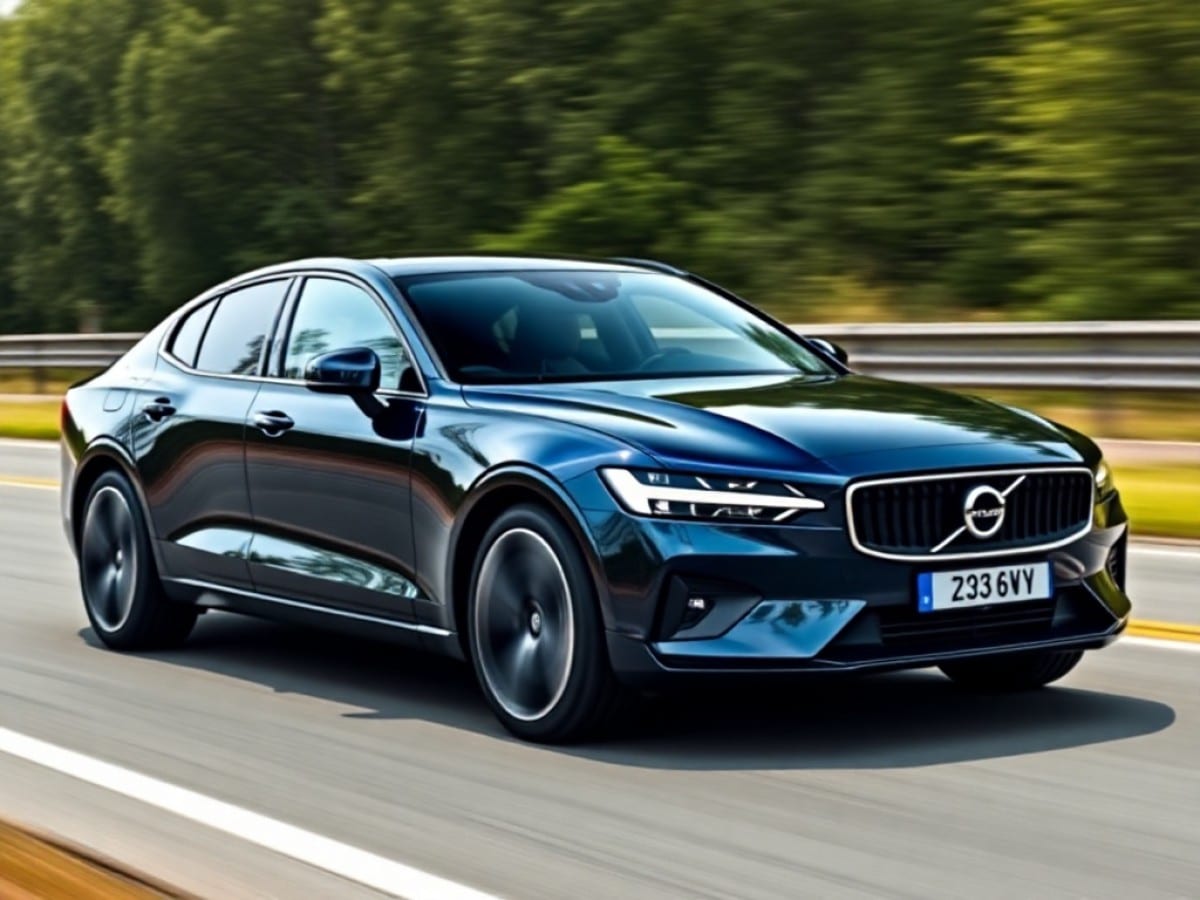
If you were unaware that Polestar was connected to Volvo, a quick glance at this sedan, the Polestar 2, would make it clear that it is indeed a product of the Swedish brand’s universe. Those familiar with Volvo’s modern output will instantly recognize the designers’ hand.
The front lights are similar to those found on the Volvo ES90 or EX90. The grille also closely resembles that of the EX40, especially since this version’s grille is solid for aerodynamic reasons.
The profile is streamlined. The silhouette almost hints at a three-box sedan, but it actually features a practical hatchback for trunk access. The design of the area beyond the rear window reinforces this three-box impression. The non-flush door handles, however, slightly date the model stylistically.
The rear design is particularly clean. It features just two C-shaped lights connected by a light strip on the lower part, while the Polestar logo, the polar star, is centrally located.
In terms of dimensions, this Polestar also opts for modesty. It’s a well-proportioned sedan, especially in terms of length, measuring 4.60 m long, 1.86 m wide, and 1.48 m tall.
Spaciousness: Comfortable for Four
One of Volvo’s strengths is typically spaciousness, and the Polestar 2 follows suit, comfortably accommodating four adults. There is ample legroom and headroom.
It’s important to note it’s best for four people and not five, due to a significant central tunnel in the cabin. This might be a carryover from the CMA multi-energy platform, as a transmission tunnel is theoretically unnecessary in an electric car, especially in a rear-wheel-drive model like this one.
At the front, passengers will also find themselves comfortably seated. The steering wheel and driver’s seat are easily adjustable to ensure a good driving position. It’s even possible to slightly extend the seat length, similar to some BMW sport seats.
However, some less flattering materials became bothersome after several hours of driving. This was particularly true for the hard plastic on the central console, which my knee would sometimes hit during turns.
The trunk provides a storage space of 400 liters under the parcel shelf, including a storage area under the floor (43 liters). One of the most practical features compared to a Tesla Model 3 is the presence of the hatchback, which significantly improves access to the cargo space.
For my mini road trip, I folded down the rear seats, increasing the volume to 1,097 liters, allowing me to easily fit my bike. I had to remove the front wheel because I needed to transport it in my city car later, but it could fit without removing the wheels if only two passengers were in the car (including the driver).
To avoid damaging my bike, I placed my pump in the storage under the floor, which was large enough to accommodate it. The Polestar 2 also features a front trunk, or frunk, with a capacity of 41 liters.
Infotainment: The Benefits of Google
Like Volvo, Polestar trusts Google for its infotainment system, which includes an 11.2-inch touchscreen. Consequently, it incorporates Google Maps and Waze directly on board, which is handy for a road trip.
However, it’s still not possible to operate both simultaneously: one navigation replaces the other. It’s a shame, as I would like to use Maps to create routes with stops and choose the roads I wish to take, which Waze does not allow, while also enjoying the accident, traffic jam, pothole, and speed camera alerts offered by the latter.
Overall, the screen is quite responsive and meets current standards, despite the few years since the launch of the Polestar 2.
On the driver’s side, there is a 12.3-inch digital cluster that allows, thanks to Android Automotive, to display Maps or Waze directly in the instrumentation. This is particularly useful on long trips like this one.
It’s worth noting that the Tesla Model 3 does not offer these features. It isn’t even compatible with Android Auto or Apple CarPlay, unlike the Polestar 2, nor with Google Automotive. This is a significant shortfall in the Tesla.
Finally, it’s important to mention the presence of two front USB-C ports and an induction charger, which is unfortunately not cooled by the air conditioning. This is a drawback, as using wireless Apple CarPlay and induction charging always causes my iPhone to overheat and significantly lose performance.
Route Planner: Let Google Maps Take the Lead
Another significant advantage of Google Automotive is that the route planner is directly managed by Google Maps. Just enter your destination, and the car calculates the route with or without charging stops.
You can program the desired state of charge at your destination and at each stop to optimize the journey. I recommend stopping when the battery reaches about 10% to benefit from maximum charging power.
On my return journey from Montélimar to Nice, I had to stop to recharge mid-way. I started with a half-full battery and needed to return it in the same state. I therefore set the planner to arrive at the destination with 50% battery. A charge was planned in Aix-en-Provence and another near Nice to complete the journey. But upon reaching Aix-en-Provence, I still had over 20% left, so I decided to continue on to charge further along and make just one stop.
However, the planner did not understand this change and insisted on making me turn around to reach the planned charging station on the outskirts of Aix-en-Provence, sometimes even suggesting absurd detours with a theoretically negative battery level to reach this station.
In this instance, it seems to be a Google Maps issue rather than a problem with Polestar, as it does not appear capable of recalculating the charging stops once the route is underway. That’s unfortunate.
Driving Aids: Showing Its Age
The Polestar 2 has been around for a few years now, and it shows in the driving aids. It does feature semi-autonomous driving, but the responses can sometimes lack smoothness.
At the split of the A7 and A9 near Orange, the car jerked the steering wheel, uncertain of which lane to choose. There are also some hesitations depending on the surrounding traffic. But overall, it manages to follow the lines on the highway, stay centered in its lane, and adapt to traffic speeds.
It also includes a blind spot detector, a 360-degree camera for parking maneuvers, and an adaptive cruise control, which can operate independently of the semi-autonomous driving.
Driving Experience: Lacks Distinct Personality
I was eager to test this vehicle. I appreciate Volvos for their style and comfort, but I wish they were a bit more dynamic. This Polestar 2 resembles a Volvo: it has Volvo’s seats, audio system, and displays. At first glance, it’s hard to distinguish it from a Volvo.
And the driving experience is somewhat similar. True, it’s slightly firmer in suspension than a Volvo ES90, which makes it more dynamic in corners and less comfortable in the city, but that’s about it. The power output of 299 horsepower in our test version doesn’t make it particularly thrilling in acceleration, as it takes 6.2 seconds to reach 0 to 100 km/h.
There’s no driving mode to alter the behavior of the suspensions, which I find a bit too stiff for everyday use. The vehicle settings do allow for adjustments in three areas: steering assistance can be firmer or softer, the intensity of the One Pedal mode, and the ESC settings in Sport mode. But there’s no real Sport mode per se.
With 299 horsepower in rear-wheel drive, be cautious if you drive with the ESC in Sport mode on wet surfaces. The Michelin e-Primacy tires on the car are primarily designed for efficiency, not grip: the car can therefore tend to spin or slide out of corners.
But overall, on the first part of my journey from Nice to Montélimar, passing through Gréolières, Castellane, and Digne-les-Bains, I found myself driving a car that was enjoyable to push at a good pace, as evidenced by an average speed of 69 km/h on this very winding 320 km route. In this context, the firmness of the suspensions becomes an advantage, as it helps to limit body roll.
On this part of the winding roads, I would have liked to have paddle shifters on the steering wheel to better manage the intensity of the regenerative braking. You have to go through the screen, so you can’t adjust it on the fly for the corners that come up.
During the return journey on the highway, the car was quiet and pleasant to drive. It’s only in the city that the suspension feels unfortunately a bit too stiff for my taste.
Range, Battery, and Charging
For this test, I had the Polestar 2 Long Range Single Motor, which is the version with the longest range in the lineup, at 659 km on the WLTP cycle.
It features an 82 kWh battery paired with a single motor mounted on the rear axle, delivering 299 horsepower. This power is more than adequate for the car’s nearly two-ton weight (although parking in Paris will be less “powerful” for your wallet).
Polestar claims a WLTP consumption of between 14.8 and 15.8 kWh/100 km depending on the equipment. During my test, I recorded 16.3 kWh/100 km on winding mountain roads with a dynamic pace, 14.3 kWh/100 km in urban and extra-urban cycles, and 16.7 kWh/100 km on the highway while adhering to speed limits, with air conditioning activated (heat pump) and at 30 degrees.
The consumption figures are quite good, even pleasantly surprising for the Polestar 2. Especially since we were three people on board on the return journey, with luggage: a test under real conditions.
For charging, you can set the AC charging power. I realized this when I arrived at my parents’ house and plugged the car into a charger dedicated to a Tesla Model S 85D: the Polestar 2 was limited to less than 30 A. It’s also possible to set a maximum charge level to avoid leaving the battery at 100% for too long.
Finally, the fast charging can reach up to 205 kW. The only fast charge of my road trip was done on a 150 kW charger: I measured just over 30 minutes to go from 10 to 80%, under rather sweltering heat. Polestar claims 28 minutes for this process with the 82 kWh battery; based on my experience, I tend to believe them.
Price, Competition, and Availability
The Polestar 2 starts at 46,800 euros for the Standard Range Single Motor version, equipped with a 70 kWh battery, offering a WLTP range of 554 km. This version does not benefit from the ecological bonus, as it is assembled in China.
My test version, the Long Range Single Motor, is priced at 49,800 euros for a range of 659 km. Comparing it to a Tesla Model 3 Long Range Rear-Wheel Drive, which has a similar spec sheet and can achieve up to 750 km of range, that’s 4,810 euros more for the Polestar for a lower range. The overall efficiency of the Tesla Model 3 makes the difference, with even better consumption than that of the Polestar 2.
Based solely on the spec sheets, the Tesla Model 3 indeed seems more advantageous: it’s cheaper, offers more range, and also benefits from preferential rates on the Supercharger network. At this level, one might almost think it would be irrational to choose the Polestar.
However, the Polestar also has its strengths. If I had to choose between the two, I would go for the Polestar 2 for its hatchback, which makes it easy to load a bike on board, something that’s not possible with the trunk of the Tesla.
Moreover, the Model 3 does not offer either Android Auto or Apple CarPlay. Lastly, the Polestar retains a less extreme minimalist interior, more akin to a “traditional” car. The engineers haven’t eliminated everything: there are still turn signal stalks, which prove to be quite handy, especially if you’ve driven cars where the turn signals are integrated into the steering wheel controls.
Similar Posts
- Discover the Polestar 4 Electric: A Game-Changing Car Missing One Key Feature!
- Google Maps’ New Lane Change Feature: Incredibly Handy With a Small Catch!
- We Tried the Volvo ES90: This Electric Car Makes Long Journeys a Breeze!
- XPeng P7+ Review: This Chinese Electric Car Charges Twice as Fast as a Tesla Model 3!
- Google Maps Update: Never Lose GPS Again with New Power-Saving Mode! Learn How to Activate It.

Maya Singh is a senior editor covering tablets and hybrid devices. Her work explores how these tools reshape digital productivity and learning. She also contributes to feature editorials on emerging tech.