Switching password managers only takes a few minutes if you follow a few safety steps. Below is an overview of what Proton Pass offers and a step-by-step guide to move over to it.
Scientists confirm: This is the most effective way to get your cat’s attention, according to new research
Elderly Couple Refuses Reserved Seats—Viral Train Standoff Sparks Fiery Debate on Courtesy
Why some people are leaving LastPass
LastPass remains one of the most widely used password managers, but several events have dented users’ confidence. In 2022 the company disclosed two separate intrusions that exposed backups of encrypted vaults and some unencrypted customer information — such as names, email addresses and the URLs of saved sites. According to LastPass, user vaults themselves remained protected by each person’s master password, which the company does not store.

In December 2025 the UK data protection authority (ICO) fined LastPass’s British subsidiary £1.2 million, citing inadequate internal security measures. The ICO said it found no proof that vaults had been decrypted, though security researchers later linked several cryptocurrency thefts to data taken during the 2022 incidents.
More recently, in June 2026, LastPass had to inform customers that contact details and support request histories were stolen after a breach at a third-party vendor, Klue — again, without any compromise of LastPass systems or user vaults. LastPass points out that since 2022 it has changed practices and now publishes clean SOC 2 and ISO 27001 audit results for two consecutive years.
Beyond security concerns, there is a practical reason that pushes some people away: since 2021 the free LastPass plan limits users to one device type (desktop or mobile). If you want to synchronize passwords between a computer and a phone, you must upgrade to a paid tier.
Why You Should Never Reheat These Foods in the Microwave – The Hidden Dangers Experts Warn About
I tried the top 5 guard dogs—here’s what makes these breeds the ultimate protectors
What does “European” password manager mean?
A European password manager is offered by a company based in Europe and therefore governed by its local laws — for instance, the GDPR inside the EU or Switzerland’s federal data protection law. The critical difference concerns access by foreign authorities. In the United States, the Cloud Act (2018) allows US authorities to compel American companies to hand over data they hold, even if those data are stored on servers located overseas.
This issue has come up in public forums: when questioned under oath before the French Senate in June 2025, Microsoft France acknowledged it could not categorically guarantee that data belonging to French citizens would never be disclosed to US authorities. The legal framework for transatlantic transfers also remains unsettled; the Data Privacy Framework that currently governs transfers to the US was upheld at first instance in September 2025 but is still the subject of appeals before the Court of Justice of the European Union.
What benefits come from a company based in Europe or Switzerland?
Proton is headquartered in Geneva. Although Switzerland is not an EU member, the European Commission has recognized Swiss data protection as providing an adequate level of protection, which eases data flows between Switzerland and the EU. Proton also publishes a transparency report listing legal requests it receives and how it responds to them.
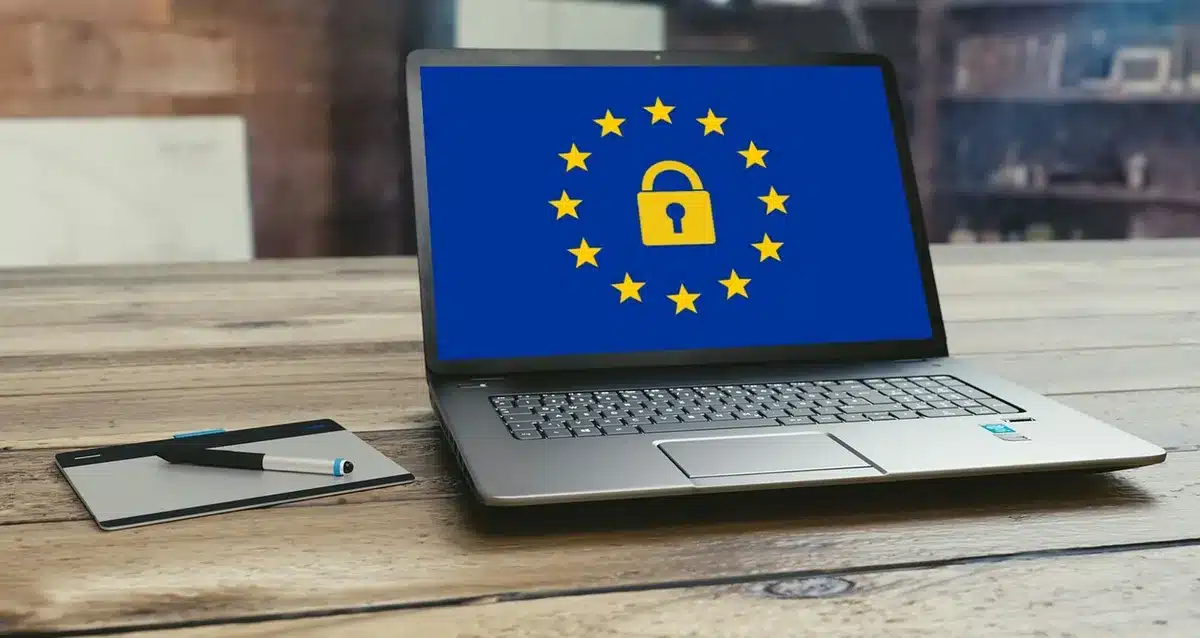
That said, Swiss law is not static: in 2025 the Swiss federal government opened a consultation on revising telecom surveillance rules, potentially extending data retention obligations to services like Proton’s. After pushback, authorities announced in February 2026 an impact assessment and a new consultation period. Proton publicly opposed the draft and has started moving portions of its infrastructure to Germany and Norway, both within the European Economic Area and subject to the GDPR.
Jurisdiction only helps to the extent the company itself cannot access your data. Proton Pass uses end-to-end, zero-knowledge encryption, meaning data are encrypted on the device before being uploaded, and only the user holds the decryption keys. Proton encrypts every field in an entry — including usernames and site addresses — not just the password. Even if served with a court order, the company would only be able to produce unreadable vaults.
Proton also keeps its client applications open source so anyone can inspect how they work. The firm commissions independent security audits and publishes the reports. The most recent audit, carried out by Recurity Labs from January to April 2026, examined all Proton Pass apps and concluded the security posture is “well above average.” Auditors found no remotely exploitable issues and reported one medium-severity vulnerability, which was fixed during the audit. Proton had earlier commissioned an audit from Cure53 in 2023.
Proton Pass vs LastPass: what changes in daily use
For core functionality the two services are comparable: they both create strong passwords, auto-fill forms, manage passkeys and run on desktop, mobile and in-browser. The biggest difference appears in the free tier: Proton Pass lets you store an unlimited number of logins on an unlimited number of devices, without distinguishing between phones and computers.
Generate an email alias for online shopping
When signing up on a merchant site, Proton Pass can create an email alias instead of exposing your real address. Messages sent to the alias are forwarded to your regular inbox, and you can deactivate the alias if the vendor starts sending spam or if the site is breached. The free plan includes 10 aliases; the paid Pass Plus plan makes them unlimited.
Save and auto-fill credentials
The browser extension detects new logins and prompts to save them, then autofills the fields next time. Pass Plus subscribers also get a built-in authenticator that stores two-factor codes and inserts them automatically, plus dark web monitoring that alerts you if credentials appear in a data leak.
Share access securely
Sharing is handled at the vault level: free users can share one vault with up to two people, while Pass Plus subscribers can share with up to ten. Paid users can also send a single credential via a secure link to someone who doesn’t use Proton Pass, avoiding insecure methods like email or chat for password transfer.
Set up emergency access
Since August 2025 Proton offers emergency access: you can designate up to five trusted Proton users who will be able to access your account in the event of death or incapacity. You set a waiting period, and the request is granted automatically unless you explicitly deny it within that window.
What Pass Plus adds
- Unlimited email aliases, with the option to attach additional inboxes,
- A built-in authenticator for 2FA codes,
- The ability to share single credentials via a secure link, even with non-users,
- The ability to attach files to vault entries,
- Dark web monitoring to detect leaked credentials,
- Emergency access for up to five trusted contacts,
- Up to 50 vaults to organize credentials (free tier allows two).
How to move from LastPass to Proton Pass
Migration is quick because Proton Pass can import LastPass data natively. The process involves two main steps:
- Export your LastPass vault as a CSV file from the online vault’s advanced options or from the browser extension,
- Open the Proton Pass extension settings, select LastPass as the import source in the import tab, and upload the CSV file.
Take a few safety precautions: the exported CSV contains all your passwords in plain text, so delete it (including from the trash) immediately after import. It’s wise to keep your LastPass account active for a few days while you verify that notes and credentials transferred correctly before closing it. Enable two-factor authentication on your Proton account, and use the migration as an opportunity to change passwords for your most sensitive services.
Promotional offers sometimes appear for Pass Plus (for example, limited-time discounts are occasionally available).
Why an integrated privacy ecosystem matters more now
Proton Pass is part of a broader Proton ecosystem: a single account also provides access to Proton Mail, Proton Drive, Proton Calendar and Proton VPN via the Proton Unlimited bundle. Mail and storage are encrypted using the same zero-knowledge principles as the password vault, and the VPN undergoes annual independent audits of its no-logs policy. For people who want to reduce reliance on US-based services, consolidating email, files and passwords with one Europe- or Switzerland-based provider can simplify privacy management.
If you want to explore Proton Pass further, you can find more information on Proton’s website.
Similar Posts
- Top 2025 Password Fails: Discover the Worst Passwords Used by the French!
- Received a Strange Email from Instagram? Don’t Worry, Your Account is Safe!
- Android Is Ditching Your Passwords: Here’s What You Need to Know!
- Facebook Launches Anti-Hacking Tech: Learn How to Activate It Now!
- Discover the Most Common Password Hacking Techniques: Protect Your Data Now!

Jordan Park writes in-depth reviews and editorial opinion pieces for Touch Reviews. With a background in UI/UX design, Jordan offers a unique perspective on device usability and user experience across smartphones, tablets, and mobile software.