
Scientists confirm: This is the most effective way to get your cat’s attention, according to new research
Elderly Couple Refuses Reserved Seats—Viral Train Standoff Sparks Fiery Debate on Courtesy
Fifty years of audio expertise. That’s what Sony brings to the table with the WF-1000XM6. The Japanese manufacturer’s mastery of drivers predates the True Wireless era—its MDR-7506 headphones are still used in thousands of recording studios worldwide. This expertise is evident across its hi-fi range: Walkman players with proprietary S-Master DACs, proprietary amplifiers, and patented technologies like DSEE, LDAC, and 360 Reality Audio.
The new QN3e chip for ANC, V2 audio processor, specially designed drivers, 10-band equalizer, eight microphones, and collaboration with four renowned sound engineers. Against competitors like the AirPods Pro 3, Bose QuietComfort Ultra Earbuds, Huawei FreeBuds Pro 4, and audiophile offerings from AKG or Audio-Technica, has Sony succeeded in its challenge? The answer lies in the listening experience.
Sony WF-1000XM6Technical Specifications
| Model | Sony WF-1000XM6 |
|---|---|
| Type | In-ear headphones |
| Passive Noise Reduction | Yes |
| Active Noise Cancellation | Yes |
| Battery Life with ANC Enabled | 7 hours |
| Total Battery Life with Case | 24 hours |
| Product Sheet |
This review is based on earphones lent by Sony.
Sony WF-1000XM6More Rounded Design
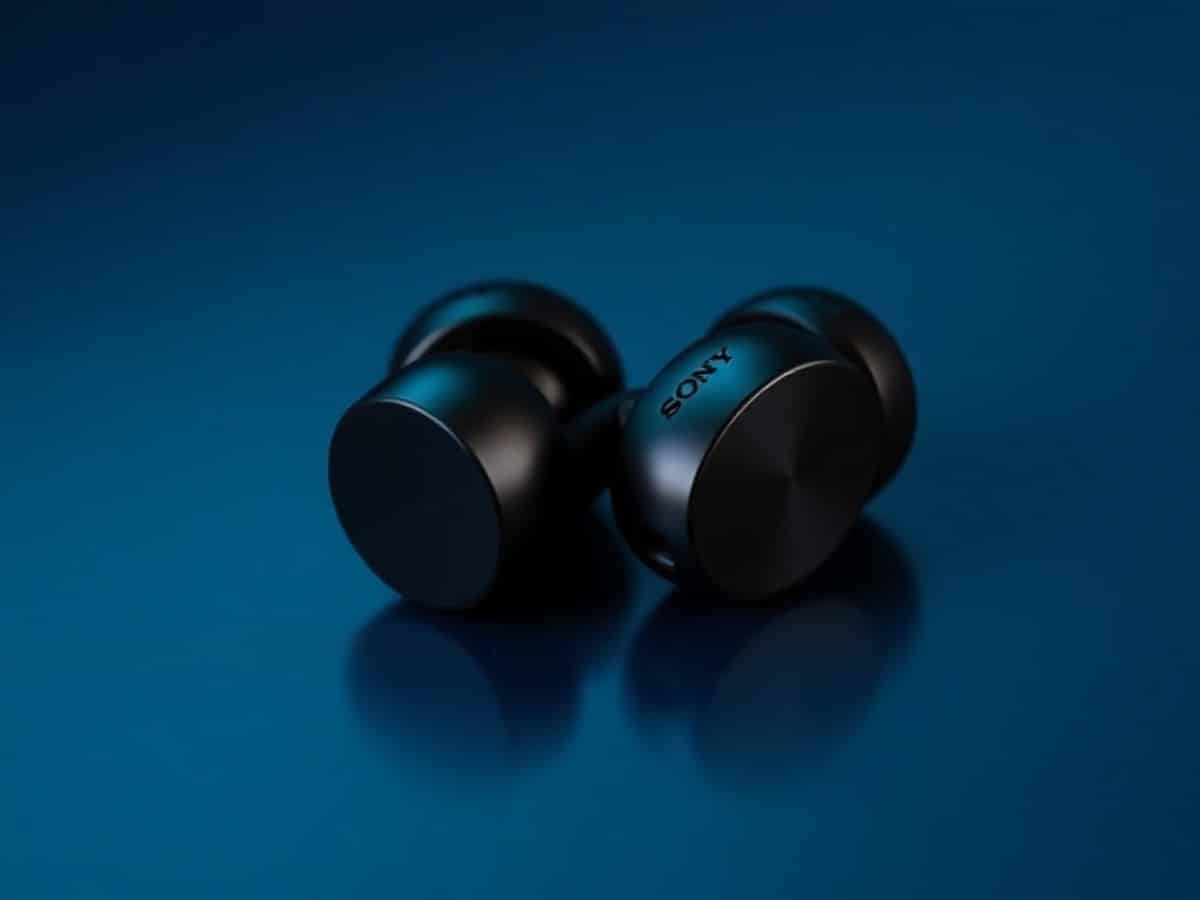
Aesthetically, the WF-1000XM6 differ significantly from their predecessors. Sony has moved away from the angular shapes of the XM5 to adopt a more elliptical, almost pill-like design, 11% more compact according to the brand.
Each earbud weighs about 5 grams. The outer surfaces are matte and slightly granular, a finish that eliminates fingerprints and facilitates handling. The touch area for controls is well integrated, and three external microphones can be seen on each shell.
The in-ear tip features a medium-sized nozzle. Sony provides, in addition to the installed one, three pairs of non-smooth silicone tips with slight shape memory. Despite the relatively generous size of the shells, the fit in the ear is remarkable, even during sports sessions.
Narrower than the XM5’s, the case has an elliptical shape with flattened sides that ensure stability. However, be cautious when it’s in a pocket because unlike the pebble-like earphone cases from Huawei, for example, it significantly marks its different shape.
Magnetic housings firmly hold the earbuds, a front LED indicates charging status, and the rear USB-C port accepts wired charging and also supports wireless charging via induction.
The IPX4 certification protects against splashes and sweat.
The wearing comfort is excellent.
Sony has worked on a new structure that equalizes pressure in the ear canal and limits noise related to movement. As a result, you can walk, run, and turn your head without generating friction noise. The passive isolation is good thanks to the shape-memory tips, and even after several hours of continuous listening, I felt no discomfort.
Sony WF-1000XM6Usage and Application
The Sony Sound Connect app (formerly Headphones Connect) offers a homepage that includes the essentials: battery level of each earbud, active ambient sound control mode, selected equalizer. For everything else, it’s all in the sub-menus, and there’s plenty to explore.
The location function is worth delving into. It uses the smartphone’s geolocation to automatically activate specific settings depending on where you are. For example, you can set up a “Home” profile that turns off ANC and activates a warm equalizer, an “Office” profile with maximum ANC and neutral equalizer, a “Sports” profile with transparency mode and bass boost. Once the zones are defined, everything happens automatically. It’s well thought out and works reliably.
The equalizer is a real evolution.
Sony has expanded from 5 (with the XM5) to 10 adjustable frequency bands (from 31 Hz to 16 kHz), providing additional leeway to tailor the sound to your liking. Several presets are available, but the most interesting feature is obviously the ability to create your own profile and save it.
The app also integrates a “Background Music” function that automatically reduces the volume and softens the tonal signature for less intrusive ambient use.
DSEE Extreme still marginal
This technology, now assisted by AI, is supposed to upsample compressed audio files—essentially converting a 16-bit / 44.1 kHz signal into 24-bit / 96 kHz. On paper, it’s appealing. In listening, let’s be honest: the benefit is imperceptible. You can toggle the feature on and off in the app, and even in direct comparison on Spotify files at standard quality, the difference is extremely subtle, if not non-existent. It’s more of a marketing argument than an audible revolution. That said, the function does not degrade the sound, so it’s best to leave it activated.
360 Reality Audio compatibility still anecdotal
The WF-1000XM6 support 360 Reality Audio, Sony’s proprietary spatialization technology that promises immersive listening by creating a three-dimensional sound field around the listener. On paper, it’s appealing: sound sources are positioned in a virtual 360-degree space, like in a concert hall.
But let’s be clear: the interest remains limited on True Wireless earbuds. First, the content catalogue is limited. Tidal still offers a few albums mixed in 360 Reality Audio, as does Amazon Music HD, but most streaming platforms ignore the format. Then there’s a fundamental technical limit: current Bluetooth codecs transmit only two audio channels. The additional spatial metadata—those that allow Sony’s Wi-Fi-connected soundbars to really deploy the sound field—are missing here. The processing is done only on the earbuds’ side, with the limitations that this implies.
As a result, the rendition remains disappointing, far from what Apple offers with Spatial Audio on the AirPods and iPhones. Apple manages to pass these additional metadata through its closed ecosystem, and the experience is truly convincing. With the XM6, it’s more of a marketing argument than a real added value in listening.
Bluetooth LE and HD Audio
In terms of codecs, the WF-1000XM6 support SBC, AAC, and LDAC—Sony’s high-resolution codec that reaches 990 kbit/s. Bluetooth LE Audio is also included. The multipoint connection allows the earbuds to connect to two devices simultaneously. In practice, the switch happens seamlessly, with no noticeable latency.
The audio latency is very low and barely perceptible in video games, where the sound arrives with a very slight delay relative to the image. In videos, the synchronization is perfect.
Sony WF-1000XM6Effective Active Noise Cancellation
This is probably the area where Sony was most anticipated. With the QN3e chip—successor to the QN2—and eight microphones (two more than the XM5), Sony promises the best ANC ever integrated into in-ear headphones. The claim is ambitious. In practice, the results are very good, but not revolutionary.
The adaptive ANC adjusts the intensity in real-time according to the ambient noise level. The transitions are imperceptible (no pumping effect) and this is probably where the new chip makes an improvement.
However, in terms of intensity, the ANC is somewhat timid and lets through noises that the AirPods Pro 3, the category reference, manage to eliminate more effectively. Human voices, sudden noises, and high-pitched sounds are less well attenuated. Sony’s ANC is still far above the majority of the market, but it no longer dominates as clearly as before.
The Ambient Sound mode capitalizes on Sony’s microphone expertise. External sounds are captured and broadcasted without excessive coloration, without artificial enhancement of the highs. The rendering is natural, close to what one would hear with the naked ear.
Sony WF-1000XM6A Purely Hi-Fi Signature
Here is where the WF-1000XM6 reveal their true nature. Sony has heavily invested in the audio segment, and it’s noticeable from the first few seconds. The signature isn’t designed to impress immediately, but to provide lasting listening comfort and accurate reproduction.
The drivers have been specially developed for these earbuds. Sony talks about new materials, an optimized coil support, and a reworked dome to improve transient response. The manufacturer also claims collaboration with four renowned sound engineers to refine the response curve. This isn’t just empty marketing: upon listening, one can perceive a coherence that betrays true acoustic engineering work.
Response Curve
The response curve reveals a typical hi-fi signature, with a strong emphasis in the upper midrange. It’s a deliberate choice, favoring a more clinical than demonstrative sound.
In the sub-bass (20-60 Hz), the level is present but contained. Sony has opted for a measured approach that lets the rest of the spectrum breathe, without masking. On recordings of double bass or kick drum, one feels the depth, the extension in the bass, without that stuffing effect that tires the ear. But if one seeks that effect, a touch of the equalizer makes the bass more massive.
The bass is slightly recessed in its upper part, making it discreet and non-invasive. There’s also a certain softness that avoids any masking of the midrange. Male voices or the cello retain their body without ever encroaching on the higher frequencies.
It’s in the upper midrange (2-5 kHz) where the most marked signature is found. A significant boost with a peak around 2 kHz provides lots of detail, presence, and texture. Voices, the harmonics of instruments, the attacks of cymbals are fully expressed. This boost is not excessive, but it’s enough to make the sound more organic, more alive. It was a risky bet, as it’s precisely at this frequency that our ear is most irritable. But the Sony WF-1000XM6 are never harsh.
The highs are relatively recessed. The midrange boost partially masks them, making the overall sound less bright, more matte. The 10-band equalizer allows for adjustments if needed.
Listening Impressions
In summary, the sound of the WF-1000XM6 is dry, precise, delicate. It’s not a spectacular signature. It’s a sound that requires some time to adjust to. But once this hurdle is overcome, one discovers remarkable performances.
The sound of the WF-1000XM6 is dry, precise, delicate. It’s not a spectacular signature. It’s a sound that requires some time to adjust to. But once this hurdle is overcome, one discovers remarkable performances.
On Teardrop by Massive Attack, the WF-1000XM6 excel in the restitution of space. The line of synthetic bass is deep, tense, perfectly controlled. Elizabeth Fraser’s voice floats above the mix, ethereal. Around 2:30, when the drums enter decisively, each element remains in its place. It’s this ability to separate plans that impresses.
On So What by Miles Davis, the earbuds reveal their analytical finesse. Paul Chambers’ double bass is meaty, the grain of the wood audible. Miles’ muted trumpet has the right timbre, slightly metallic without being aggressive. Jimmy Cobb’s cymbal playing is reproduced with remarkable precision. On this type of analog recording from the 50s, these earbuds perform wonderfully.
On When the Levee Breaks by Led Zeppelin, the verdict is more mixed. John Bonham’s legendary drums lack a bit of body, of physical power. They are precise, articulated, but missing that massive aspect that makes the track special. Jimmy Page’s saturated guitar is perfectly reproduced. On heavy rock where impact is paramount, these earbuds don’t give everything.
On Digital Love by Daft Punk, the WF-1000XM6 delight. The disco-funk bass line is deep without being overwhelming. The guitar solo around 3:20 is reproduced with astounding clarity. And when everything piles up in the chorus—vocals, synths, drums, strings—nothing saturates, nothing blends. It’s this mastery in complexity that appeals.
Transient Response and Dynamics
The transient response is excellent. It’s heard on the attacks of percussive instruments: snare drum, piano, acoustic guitar. Each note starts with a confounding crispness, without any tail. This gives the impression of liveliness, the sensation that the music breathes.
The dynamic behavior is there. The nuances between pianissimo and forte are well marked. On a classical or jazz recording, it’s a real treat. One hears the breath of the saxophonist, the nuances in the pianist’s play. It’s alive, organic, musical.
A Slightly Distant Sound Stage
The sound stage is beautiful, vast, well organized. The sound planes naturally layer, the depth is there, the width generous without artifice. On a good stereo recording, one clearly perceives the position of each musician, the reverberation of the room.
But the sound tends to unfold slightly in the background. As if the stage were pushed back a few centimeters. The immersion is therefore not the strongest in the segment. One does not feel this sensation of being at the heart of the music. However, for analytical listening, it’s ideal: one has perspective, one embraces the whole.
Sony WF-1000XM6Excellent Call Quality
Sony has integrated a bone conduction microphone system to improve the quality of phone conversations. The principle: to capture the vibrations of the jaw to isolate the user’s voice from surrounding noises, which, combined with traditional microphone capture, delivers very good sound.
The caller hears a natural, intelligible voice, even if it remains slightly processed as is always the case with this type of system. Background noises are effectively filtered out when you are not speaking, and your voice is not degraded.
Wind remains
Similar Posts
- Huge Deal Alert: AirPods Max Drop to €497 from €579! Grab Yours Now!
- Breaking: Sony’s Newest Noise-Cancelling Headphones: Better Than Ever & Coming Soon!
- Sony INZONE H6 Air Review: Ultimate Comfort for Gaming at Any Cost!
- AirPods Max USB-C Sale: Slash €90 Off, Now Only €489!
- New Powerbeats Fit Launch: The Successor to Beats Fit Pro Unveiled!

Maya Singh is a senior editor covering tablets and hybrid devices. Her work explores how these tools reshape digital productivity and learning. She also contributes to feature editorials on emerging tech.