
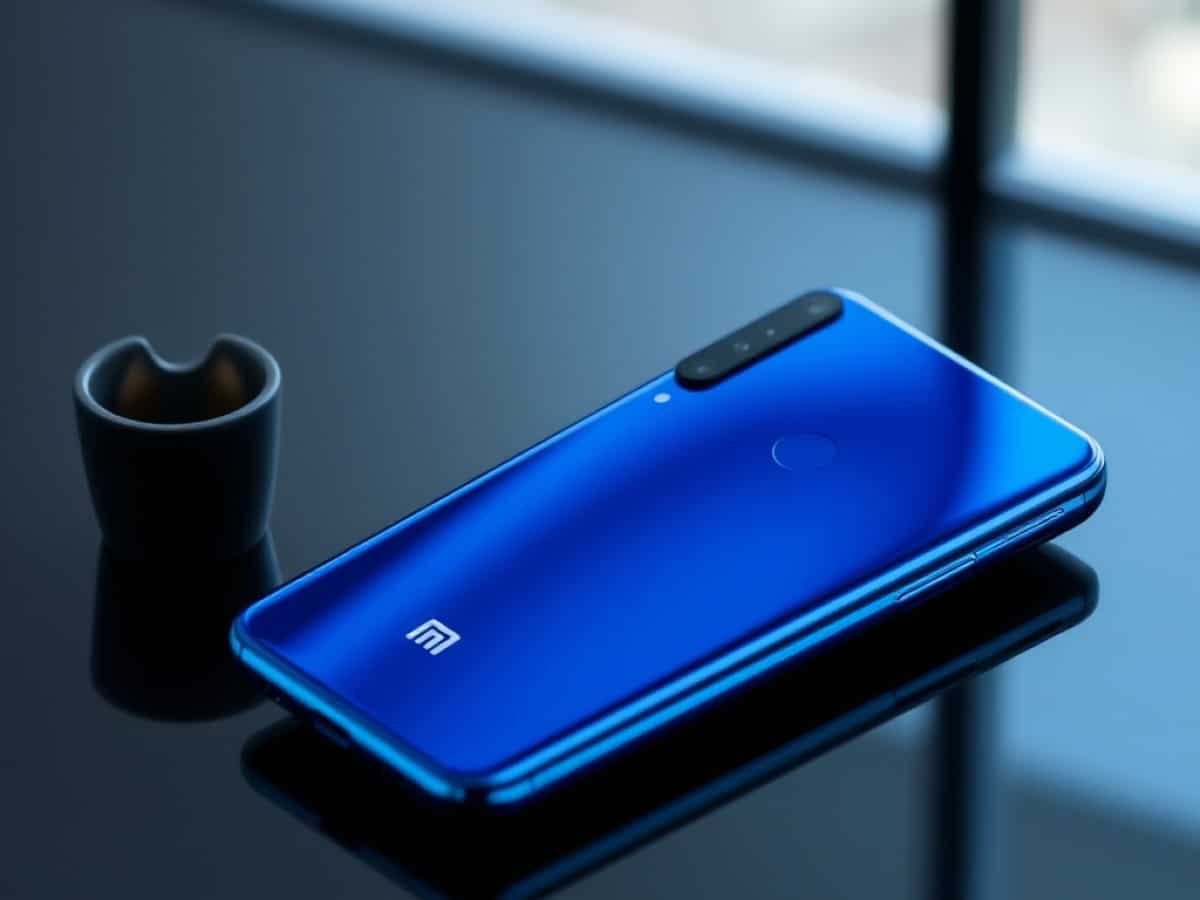
Xiaomi has launched its Redmi Note season with the introduction of the Redmi Note 15 5G. Here’s our detailed review of this affordable 5G smartphone.
Scientists confirm: This is the most effective way to get your cat’s attention, according to new research
Elderly Couple Refuses Reserved Seats—Viral Train Standoff Sparks Fiery Debate on Courtesy
Although it shares a name with last year’s model, the Redmi Note 15 5G marks a strategic shift for Xiaomi. With its latest smartphone lineup, the company aims to focus on what’s most important to consumers. While camera capabilities used to be the top priority, durability and smart purchasing have now taken the lead according to consumer surveys.
This focus resonates with me as it aligns with my own priorities in a smartphone, helping to avoid rampant overconsumption.
Technical Specifications
| Model | Xiaomi Redmi Note 15 5G |
|---|---|
| Dimensions | 75.42 mm x 164 mm x 7.35 mm |
| Screen Size | 6.77 inches |
| Resolution | 2392 x 1080 pixels |
| Pixel Density | 387 ppi |
| Display Technology | AMOLED |
| SoC | Qualcomm Snapdragon 6 Gen 3 |
| GPU | Adreno 710 |
| Internal Storage | 128, 256, 512 GB |
| Rear Camera | Main: 108 MP Secondary: 8 MP |
| Front Camera | 20 MP |
| Wi-Fi | Wi-Fi 5 (ac) |
| Bluetooth | 5.1 |
| 5G | Yes |
| NFC | Yes |
| Fingerprint Sensor | Under the screen |
| Connector Type | USB Type-C |
| Battery Capacity | 5520 mAh |
| Weight | 178 g |
| Colors | Black, Blue, Purple |
| Product Sheet |
Design
The Redmi Note 15 5G introduces a complete redesign. Xiaomi has moved away from flat screens and rectangular camera modules, opting for a modern, centered square module that unifies the visual identity across the range. When placed side by side, it’s easy to confuse it with other models in the lineup.
This could make one believe they are holding a more expensive model, such as the Note 15 Pro+, while in reality, it might just be a Note 15 4G priced at 199 euros.
The front features a slightly larger 6.67-inch curved display, contrasting with the current trend of flat screens. A downside is that curved screens are more expensive to replace.
This device is the thinnest Redmi Note ever at 7.35 mm thick and is also notably light at 178 grams.
The phone features a “dual-curved” design where both the screen and the back curve to meet at the edges, providing a smooth and ergonomic grip.
The rear is made of plastic, which doesn’t feel cheap. It’s less likely to break if dropped, though the screen is protected by Gorilla Glass 7i, which is tough but not the toughest.
The frame is made of an aluminum alloy, and Xiaomi notes that the motherboard has been reinforced to resist bending and shocks.
Moreover, the Redmi Note 15 5G is certified IP65 against water and dust intrusion. It’s not for swimming, but will handle rain fine. It also features “Wet Touch 2.0” technology, allowing the screen to remain responsive and accurate even when wet.
Overall, Xiaomi has significantly upgraded the smartphone’s specs compared to the 2025 model. It features better Gorilla Glass, improved IP rating, a completely redesigned form, and enhanced thinness.
Display
The screen has been enlarged to 6.77 inches. The additional 0.1 inch isn’t much, but the slim, uniformly black bezels enhance the overall look, reminiscent of holding a Galaxy S20.
It offers a Full HD+ resolution (2392 x 1080 pixels) with a 120 Hz refresh rate. This rate isn’t incrementally variable but switches between 60 and 120 Hz depending on the content.
The touch layer’s refresh rate is very high (nearly 4000 Hz), ensuring precision in games and including eye protection certified by TÜV Rheinland to prevent flickering and reduce eye strain.
We tested the screen using a colorimetric probe and CalMAN Ultimate software from Portrait Displays.
The results are mostly impressive. The best color scheme to use is Saturated with a Warm temperature setting. Here, the average DeltaE is only 1.9 in SDR and 5.03 in HDR, both excellent values below the threshold at which human eyes can detect differences.
The color accuracy could be slightly improved with a better temperature setting of 6092K, close to the optimal 6500K. The image has a slight yellow tint.
In terms of color range, it fills 165% of the sRGB space and 110% of the DCI-P3 space.
The maximum brightness is outstanding for its price, with nearly 1000 nits in SDR and a remarkable 3104 nits in HDR. This is a record-setting performance for a budget phone, with only the Poco F7 performing better for an additional 100 euros. Typically, such high values are found in premium segment phones.
Performance
Xiaomi has switched from MediaTek to Qualcomm in 2026, adopting the Snapdragon 6 Gen 3 chip manufactured using a 4 nm process. This is the same SoC found in the Samsung Galaxy A36, which was launched at 400 euros in 2025. Our model pairs this chip with 8 GB of RAM and 256 GB of storage (using the somewhat slow UFS 2.2), though it can be expanded via microSD—a common feature in budget smartphones.
Xiaomi claims a score of 620,000 points on AnTuTu, but our tests show even better performance at nearly 630,000 points.
Overall, our model performs nearly as well as the Galaxy A36 and slightly outperforms the Redmi Note 14 5G. While these results aren’t groundbreaking, they represent a noticeable improvement.
While the benchmark results might cause concern, the interface is smooth and mostly free of slowdowns. Launching a resource-intensive game like Genshin Impact takes a while, but once running, the game maintains around 30 fps regardless of graphical settings. It’s playable, though occasional slowdowns may occur.
Clearly, gaming is not the primary focus of this Redmi. Gamers would be better served by a Poco model.
Regarding CPU temperature management, the phone performs excellently. During an hour-long stress test, the Snapdragon 6 Gen 3 did not falter once, operating at peak capacity continuously. This indicates that Xiaomi has effectively designed its cooling system to dissipate heat without throttling the SoC’s performance. Additionally, the phone’s temperature remains manageable, not exceeding 42°C at the hottest point, so there’s no risk of overheating.
Software
The Redmi Note 15 5G ships with Android 15, overlaid with Xiaomi’s custom HyperOS 2.0 interface.
The good news starts with software support. Emphasizing durability, Xiaomi has enhanced its update policy to offer four years of major updates and six years of security updates. This is a solid commitment, though expecting more from such an affordable smartphone might be unrealistic.
While we couldn’t verify this, Xiaomi promises that the interface will remain fluid for five years.
The user interface itself is attractive, well-organized, and quite similar to those of competitors. There are no extraordinary features to highlight; it’s straightforward and effective.
We won’t delve into AI here since its presence is minimal: Gemini and Surround for search are what we have. Productivity features (text summarization, assisted writing, etc.) are reserved for higher-end models.
However, there are a few AI options available in the camera settings:
- Beautify: enhances colors, use sparingly.
- Erase: not very convincing, tends to be heavy-handed.
- Sky: changes the sky color. There are many options, and the results are quite nice.
- Bokeh: adds background blur in post-production. It’s less effective than the native portrait mode but can be useful in a pinch.
The most frustrating aspect during my testing was the abundance of bloatware and intrusive ads. They are everywhere!
Initially, the phone comes with about ten preinstalled apps, and that’s before any additional game suggestions pop up. But the worst part comes when using Xiaomi’s apps, where ads randomly appear, whether you’re using the theme library or the file manager…
Even when launching games, I encountered ads promoting other games. It’s just too much.
While it’s possible to reduce the number of ads by tweaking some settings, doing so requires digging through the menus, which may not be intuitive for the phone’s target audience.
Camera
The camera setup on the Redmi Note 15 5G hasn’t evolved much; in fact, it’s somewhat pared down.
From three rear sensors, it’s now down to two:
- a 108 MP main sensor with optical stabilization (f/1.7, 1/1.67″, 0.64µm)
- an 8 MP ultra-wide sensor (f/2.2, 1/4.4″, 1.0µm)
Compared to the previous generation, the macro sensor has been removed. There’s still no optical zoom on this model. Instead, Xiaomi relies on the high resolution of the main sensor to perform lossless crops up to 3x, equivalent to 72 mm.
The main sensor also uses its 108 MP to perform 9-in-1 pixel binning, capturing maximum light and outputting 12 MP images.
Wide-Angle
In broad daylight, the 108 MP sensor captures detailed, colorful images that will satisfy most users with flattering color rendition and good sharpness. The dynamic range is particularly impressive, preventing washed-out skies. The real strength of this model is its optical image stabilization (OIS), a rarity at this price point, which is crucial for saving low-light photos from disaster.
As darkness falls, the heavy-handed software processing smooths out textures excessively to hide noise, and the lens shows its limits against urban lighting. However, considering the price of an entry-level smartphone, Xiaomi offers a solid, versatile main sensor that’s well-stabilized. It’s clean, effective, and quintessentially Redmi.
Portrait
The Redmi Note 15 5G handles portraits commendably. The edge detection is generally well-managed, and the software-generated bokeh is soft enough to be convincing. Textures and skin tones are accurately rendered, and details are preserved without appearing overly artificial. It’s nice to have 2x zoom, but 3x would align better with the classic 75 mm portrait focal length.
While AI performs wonders in daylight to preserve skin textures, it gives up at night. Smoothing becomes the only defense against pervasive noise, sacrificing sharpness. But for a device under 300 euros, offering this level of performance is already commendable.
Ultra Wide-Angle
While Xiaomi makes an effort to maintain color consistency with the main sensor, the physical limitations of the 8 MP sensor are evident.
In daylight, it captures pleasant landscapes suitable for quick smartphone sharing, but zooming into the image reveals a collapse in detail, especially at the edges.
At night, the situation worsens: without strong urban lighting, this sensor is practically blind. It’s the typical “poor relative” that mainly serves to tick a box on the spec sheet. At 299 euros, a shift to a 12 MP sensor would have added much-needed versatility.
Zoom
The Redmi Note 15 5G excels at 3x zoom. By leveraging its 108 million pixels, it delivers surprisingly sharp images in daylight, outperforming competitors that rely on conventional digital zooms on smaller sensors. Optical stabilization is the unsung hero here: without it, shots at 5x zoom or in low light would inevitably be blurry.
However, it’s important not to expect too much. Beyond 5x zoom, the absence of a true periscopic lens becomes apparent. Software smoothing becomes noticeable, and at 10x zoom, details blur into an “oil painting” effect. The 20x zoom is included more for spec-sheet appeal than practical use.
Selfie
The selfie camera delivers good detail levels in bright light. Natural portrait enthusiasts will appreciate the accurate skin tones. The wide focal length is a plus, allowing the inclusion of friends or a landscape in the frame.
However, the lack of autofocus and limited electronic stabilization make low-light selfies a challenge. It’s advisable to take multiple shots to ensure a clear one. This is a reasonable compromise for the price, but don’t expect nighttime miracles.
Video
The phone can record up to 4K at 30 fps. However, although the main sensor is equipped with optical stabilization for photos, video stabilization does not seem active (or is ineffective) in 4K. For stable footage without shake, you’ll need to reduce the quality to 1080p.
With the ultra-wide sensor, video recording is limited to 1080p at 30 fps.
Audio
There are no major updates in the audio department. The stereo speakers provide decent output but lack bass and richness. The audio might seem somewhat flat and could have benefited from better tuning. It’s effective and audible, but that’s about it.
The Redmi Note 15 5G supports Dolby Atmos and is certified for Hi-Res Audio.
Network and Communication
As indicated by its name, this smartphone supports 5G. While this was a marketing highlight not long ago, consumer adoption is increasing. In 2025, 5G smartphones accounted for 48% of sales, up from 31% the previous year.
From a durability perspective, investing in a 5G phone makes sense: even if the immediate benefits aren’t clear, knowing that the phone will remain relevant as 4G potentially declines is reassuring. There is a 4G variant available, but it’s primarily intended as an entry-level option for those on tight budgets.
While there’s no eSIM support, the phone does include a hybrid slot that can accommodate either two SIMs or one SIM and a microSD card.
Being a budget model, it features Wi-Fi 5, which is sufficient for streaming but less efficient in crowded networks. For Bluetooth, it uses version 5.1, which is stable but slightly outdated and may consume more power.
Battery
A major innovation this year is the Redmi Note 15 5G’s use of a Silicon-Carbon battery (with about 5% silicon content). This allows Xiaomi to pack a substantial 5520 mAh capacity while keeping the phone’s dimensions manageable. This is 410 mAh more than the Note 14 5G.Similar Posts
- Xiaomi 15T and 15T Pro Launch Date Revealed: Here’s What We Know!
- Xiaomi Redmi Note 15 Pro+ Review: A Convincing Smartphone Challenged by Xiaomi’s Classics
- Xiaomi Redmi Pad 2 Pro Review: Balanced Tablet with Some Flaws
- Xiaomi Redmi Note 15 Pro 5G Review: More Power, Longer Battery Life – Can It Compete with Honor & Samsung?
- Xiaomi Redmi 15 5G Review: Best Battery Life for Just €200!

Maya Singh is a senior editor covering tablets and hybrid devices. Her work explores how these tools reshape digital productivity and learning. She also contributes to feature editorials on emerging tech.