
Scientists confirm: This is the most effective way to get your cat’s attention, according to new research
Elderly Couple Refuses Reserved Seats—Viral Train Standoff Sparks Fiery Debate on Courtesy
The year 2025 has seen smartphone manufacturers unveil a new class of devices: ultra-thin models.
Samsung was the first to introduce this trend with the launch of its Galaxy S25 Edge in May 2025, alongside its siblings the Galaxy S25, S25+, and S25 Ultra. Apple followed suit at the end of September with the release of the iPhone Air.
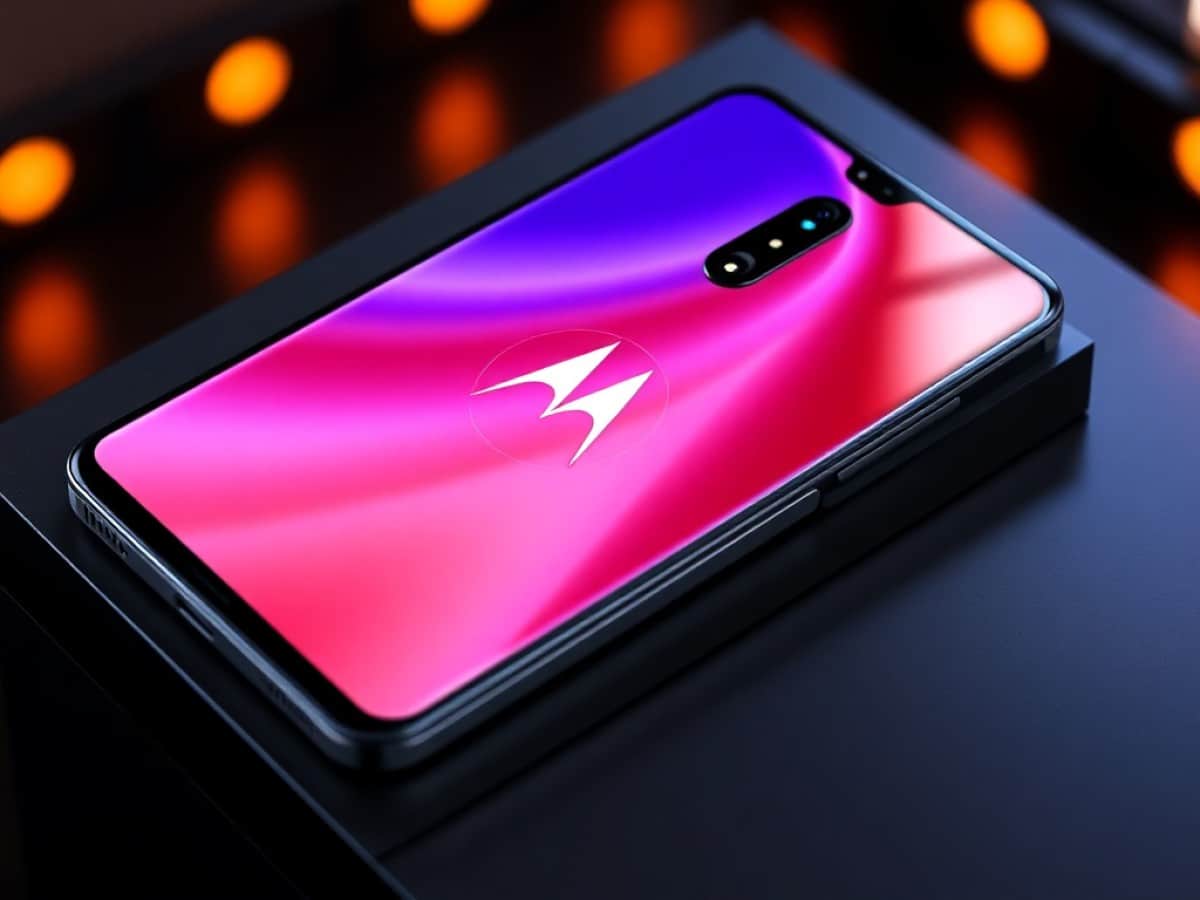
Motorola has joined this trend with the Edge 70. Can this device attract a significant number of users with its ultra-compact form and relatively affordable price compared to its competitors?
It’s uncertain, as several technical compromises have been made to reduce the smartphone’s weight and thickness: limited processor power, battery capacity, and photographic capabilities.
Let’s examine whether the trade-offs made in the Motorola Edge 70’s equipment are too great and if Motorola’s slimming efforts make the smartphone more appealing than its “normal” competitors.
Specifications
| Model | Motorola Edge 70 |
|---|---|
| Dimensions | 74 mm x 159 mm x 5.99 mm |
| Manufacturer Interface | My UX |
| Screen Size | 6.67 inches |
| Resolution | 2712 x 1220 pixels |
| Pixel Density | 446 ppi |
| Technology | AMOLED |
| SoC | Qualcomm Snapdragon 7 Gen 4 |
| Internal Storage | 256, 512 GB |
| Rear Camera | 50 MP main sensor, 50 MP secondary sensor |
| Front Camera | 50 MP |
| Video Recording Resolution | 4K @ 30 fps |
| 5G | Yes |
| NFC | Unknown |
| Connector Type | USB Type-C |
| Battery Capacity | 4800 mAh |
| Weight | 159 g |
| Colors | Green, Gray |
| Product Sheet | Link |
Design
The Motorola Edge 70 shares a similar form factor with the latest offerings from Samsung and Apple. All three smartphones feature a 6.7-inch display, or 6.5 inches if the measurement includes the rounded screen edges.
This explains why these ultra-thin models are roughly similar in size:
- The Motorola Edge 70 is 5.99 mm thick (essentially 6 mm!) and weighs 159 grams.
- The iPhone Air has a thickness of 5.6 mm and weighs 165 grams.
- The Samsung Galaxy S25 Edge is also slim and light, measuring 5.8 mm in thickness and weighing 163 grams.
In comparison, the dimensions of the Motorola Edge 70 are significantly different from a “normal” smartphone, such as the Samsung Galaxy S25 FE, which is 7.4 mm thick and weighs 190 grams. This difference is immediately noticeable when you first handle the Edge 70.
At a glance, and disregarding its slimness, the Edge 70 closely resembles its sibling, the Moto g86, which we have reviewed, featuring the same AI button on the left side. However, upon closer inspection, there are a few differences:
The first difference is in the texture of its rear coating. While the faux leather on the Moto g86 appears somewhat coarse, the texture covering the Edge 70 is much finer, offering a different tactile experience. The back seems to be covered in nylon, which is exceptionally soft and does not retain fingerprints.
Furthermore, while the rear coating of the Moto g86 covers the entire back of the smartphone, the camera block of the Edge 70 is made of aluminum, giving it a different hue. Like the Moto g86, the camera lenses are housed within a square area slightly raised from the rest of the back.
The camera bezels and the AI button are colored, which adds a nice touch.
Unfortunately, the manufacturer made the poor decision to place what looks like a sticker on the back of the smartphone, which is not removable (do not attempt to peel it off).
This small insert indicates the exact Pantone color covering the back. This is a detail that may only interest a tiny fraction of potential buyers.
Ultimately, the Edge 70 stands out with a distinct visual signature that is both youthful and attractive.
The smartphone also benefits from an aluminum frame, which is a sign of durability. Its screen is protected from impacts and scratches by Corning’s Gorilla Glass 7i coating.
Lastly, the Edge 70 also boasts IP68/IP69 certification, indicating that it is completely waterproof (it can even be submerged accidentally) and resistant to strong jets of hot water.
Additionally, the device includes a fingerprint reader at the bottom of the screen and two speakers, which deliver sound of a reasonably good quality, with a fair balance between treble, midrange, and bass.
Display
The OLED panel of the Motorola Edge 70 offers a very standard viewing area with its 6.67-inch diagonal. It displays images in a fairly high resolution: 2712 x 1220 pixels.
The Edge 70 supports a maximum refresh rate of 120 Hz, with three possible settings:
- Intelligent and balanced mode (60 Hz or 120 Hz frequency automatically selected by the operating system depending on the applications used)
- Ultra smooth mode (120 Hz, regardless of the situation)
- Efficiency first mode (60 Hz only)
Moreover, Motorola claims that the screen can display very bright images (4500 nits in HDR peak) and that it is compatible with the HDR10+ standard, ensuring the best possible display quality when watching movies or series on Netflix, Disney+, etc.
In practice, our measurements, conducted using our Calibrite Display Pro HL probe and CalMAN Ultimate software from Portrait Displays, show that the maximum brightness of the screen is set at 475 nits by default, with a peak that can reach 1430 nits when the Automatic Brightness mode is activated. This second value, which is quite satisfactory (although not record-breaking), allows for good readability when using the smartphone outdoors, in full sunlight. We note that the measurement obtained during our test of the Samsung Galaxy S25 FE was slightly higher (1779 nits).
The other results obtained are exciting:
- The average Delta E measured at 3, with the color profile called Bright Colors. Color fidelity is therefore present.
- The average color temperature of 6542 K, indicating that the colorimetry is perfectly neutral.
- The ability to display 98% of the DCI-P3 gamut (and 145% of the BT 709 color space and 66% of the BT 2020).
In short, while not exceptional, the display of the Motorola Edge 70 is of very good quality, capable of enhancing multimedia content. Especially since the screen edges are thin, allowing the user’s attention to focus on the displayed images.
Performance
Probably to avoid excessive overheating due to the very limited space within the Edge 70, Motorola did not equip it with a high-end processor. Indeed, the chosen Qualcomm Snapdragon 7 Gen 4 chip is more suited to mid-range smartphones.
This chip includes 8 cores, one of which is a Cortex A720 core running at 2.8 GHz, four other Cortex A720 cores running at 2.4 GHz, and three additional Cortex A520 cores operating at 1.84 GHz.
Various benchmarks highlight that the performance of the Snapdragon 7 Gen 4 is slightly inferior to that of the Snapdragon 8s Gen 3, found in devices such as the Honor 200 Pro or the OnePlus Nord 5.
And compared to Samsung’s Exynos processor, present in the Galaxy S25 FE, the Snapdragon 7 Gen 4 is twice as slow, both in terms of pure calculations and graphical power. It is also less powerful than the Snapdragon 8 Gen 3 processor (Qualcomm’s high-end chip from 2024, it should be noted), since the latter is slightly more powerful than the Samsung chip.
Finally, it is quite pointless to compare its performance to that of the Snapdragon 8 Elite (let’s not belabor the point further).
Although the chip in the Motorola Edge 70 is less powerful than that of many “traditional” (non-ultrathin) smartphones currently priced around €800, it is perfectly adequate for everyday use, whether for office work or multimedia.
And, if you want to relax by playing a game, the smartphone can provide satisfaction. For example, with Fortnite, the Snapdragon 7 Gen 4 chip allows for extremely smooth animations (up to 120 frames per second), with basic graphic quality, and still very satisfactory (up to 60 frames per second) in Epic graphic mode.
Software
The operating system of the Edge 70, Android 16, is complemented by Motorola’s My UX software overlay.
The combination is complete and pleasant to use, with a minimum of bloatware. The simplicity even extends to forcing the user to use Google Photos to access locally stored images, in the absence of a Gallery app.
On the plus side, the ability to perform gestures to quickly carry out certain operations is retained:
- Quick launch of an application by tapping twice on the back of the smartphone.
- Performing two rapid rotations of the smartphone to take a screenshot.
- Shaking the smartphone twice vertically to activate the flashlight.
Moreover, the Motorola Edge 70 stands out from its sibling with other features that utilize artificial intelligence (Moto AI). The AI button allows quick access to these functions.
Among the functions offered, we can mention Memorize, which allows – somewhat like Nothing’s Essential Space – to keep, in a sort of digital notepad, photos or screenshots, associated with text or a voice note. Then, it is possible to retrieve certain information by making a request, analyzed by the AI.
The problem is that – for now – French is not yet supported. Only English, Spanish, and Portuguese are. Let’s hope that an update will correct this shortcoming very quickly.
We also find the Take Notes function, which allows you to dictate a text that is then transcribed into written notes and summarized.
Additionally, the Image Studio module allows you to generate images from a quickly drawn sketch on the screen or a description entered on the keyboard (and French is supported for this function!). And even if the number of images generated is limited per day, this function proves to be entertaining.
Finally, we can regret the lack of audacity regarding the manufacturer’s update policy. Indeed, only the next three versions of Android should be offered on the Edge 70 (up to Android 19, therefore). Security updates, on the other hand, will be assured for 5 years.
Photography
The Motorola Edge 70 is equipped with two lenses on the back of the smartphone:
- A wide-angle lens (24 mm, f/1.8), coupled with a 50-megapixel sensor, with optical stabilization. It also allows for capturing video sequences in 4K with 30 frames per second.
- An ultra-wide-angle lens (12 mm, f/2.0), with a 50-megapixel sensor as well.
They are complemented by a front lens with a (third) 50-megapixel sensor.
Thus, the Edge 70 does not include a telephoto lens, presumably to offer a device with minimal thickness. This absence is regrettable, at a time when many smartphones, launched around €800 last year or this year, are equipped with a lens capable of performing a 2.5x to 3.5x optical zoom, like the Honor Magic 7 Pro or the Samsung Galaxy S25 FE. In this case, one must settle for the (limited) performance of a digital zoom.
Wide-angle
As can be seen in the few examples below, the wide-angle lens of the Motorola Edge 70 allows for capturing quality photos, benefiting from good sharpness, with plenty of details.
With a 2x digital zoom, as often, the shots remain very good, even when viewed on a large screen.
With a 4x digital zoom, although precision slightly decreases, it is not really noticeable on a small screen, and the photos remain perfectly shareable with loved ones or on social networks.
It is only when a much more powerful zoom, 10x or 20x, is activated that the drop in quality becomes evident.
At night, the Quad Pixel Binning technology used by the wide-angle sensor allows for capturing fairly detailed photos, even when light sources are distant.
One can even use the 2x digital zoom most of the time and still enjoy appreciable quality.
Ultra wide-angle
During the day, unsurprisingly, we find that the quality of the images generated is quite satisfactory, if one does not look too closely at the edges. The colors are accurate, and precision is generally present.
At night, if light sources are present in the scene, the shots can be deceiving (we have seen much worse!).
Selfies
Fortunately, selfies benefit from good precision, with or without Portrait mode (with Bokeh effect), with or without the many face enhancement options (skin smoothing, face slimming, etc.).
Network and Communication
The Motorola Edge 70 is, of course, compatible with 5G. It can handle two nano SIM cards, or one physical card and one eSIM.
However, it is not possible to use a microSD card to easily expand storage capacity.
Similarly, Wi-Fi 7 is not supported. One must settle for Wi-Fi 6E (and Bluetooth 5.4).
Battery
Despite its minimal weight and thickness, the Edge 70 is equipped with a 4800 mAh battery. This is made possible by the use of a battery with a silicon/carbon (Si/C) anode, which allows for a smaller capacity-to-size ratio than a traditional lithium-ion battery (entirely carbon anode).
This is much more than the basic lithium-ion batteries of the Apple iPhone Air (3149 mAh) and Samsung Galaxy S25 Edge (3900 mAh).
The smartphone’s video streaming autonomy is approximately 21 hours and 25 minutes (brightness adjusted to 250 nits, 60 Hz mode). This is a respectable result, though not exceptional, at a time when many smartphones offer autonomy exceeding 25 hours.
Furthermore, the office/multimedia autonomy, measured using the PC Mark app, is set at 9h12 min, with an adaptive refresh rate. This is significantly lower than the results we are used to (between 13h and 15h generally).
And using the efficiency mode does not radically change the situation, as the same autonomy test ran only half an hour longer (9 hours and 36 minutes).
The wired charging of the battery can be done with a maximum power adapter of 68 W.
During our test, using a Xiaomi 90 W charger, the battery level went from 0% to 40% in 30 minutes, then to 77% in one hour.
Fortunately, wireless charging is supported, with a maximum power of 15 W.
Price and Availability
The Motorola Edge 70 is only available in one version, with 12 GB of memory and 512 GB of storage space, and is priced at €799.
However, it is possible to choose from 3 colors: Gadget Grey (model tested), Bronze Green (khaki green), and Lily Pad (greenish gray).
While the smartphone is more affordable than its two direct competitors from Samsung and Apple, its price may raise eyebrows given its equipment, compared to other smartphones sold around €800.
The competition is much fiercer, as exemplified by the Samsung Galaxy S25 FE (€782 with 8 GB of memory and 512 GB of storage), the Honor Magic 7 Pro (€800 with 12 GB / 512
Similar Posts
- Galaxy S25 Edge Design Leaked: Specs & Details Revealed!
- Samsung’s Galaxy S26 to Feature Revolutionary Camera Tech: Expect Major Upgrades!
- Samsung Galaxy S26 Camera Specs Revealed: Leak Gives Us a Sneak Peek!
- Motorola Unveils Edge 70: Direct Challenger to Galaxy S25 Edge and iPhone Air!
- Ultra-Thin Smartphone Craze Continues: Xiaomi Challenges the iPhone Air

Maya Singh is a senior editor covering tablets and hybrid devices. Her work explores how these tools reshape digital productivity and learning. She also contributes to feature editorials on emerging tech.