
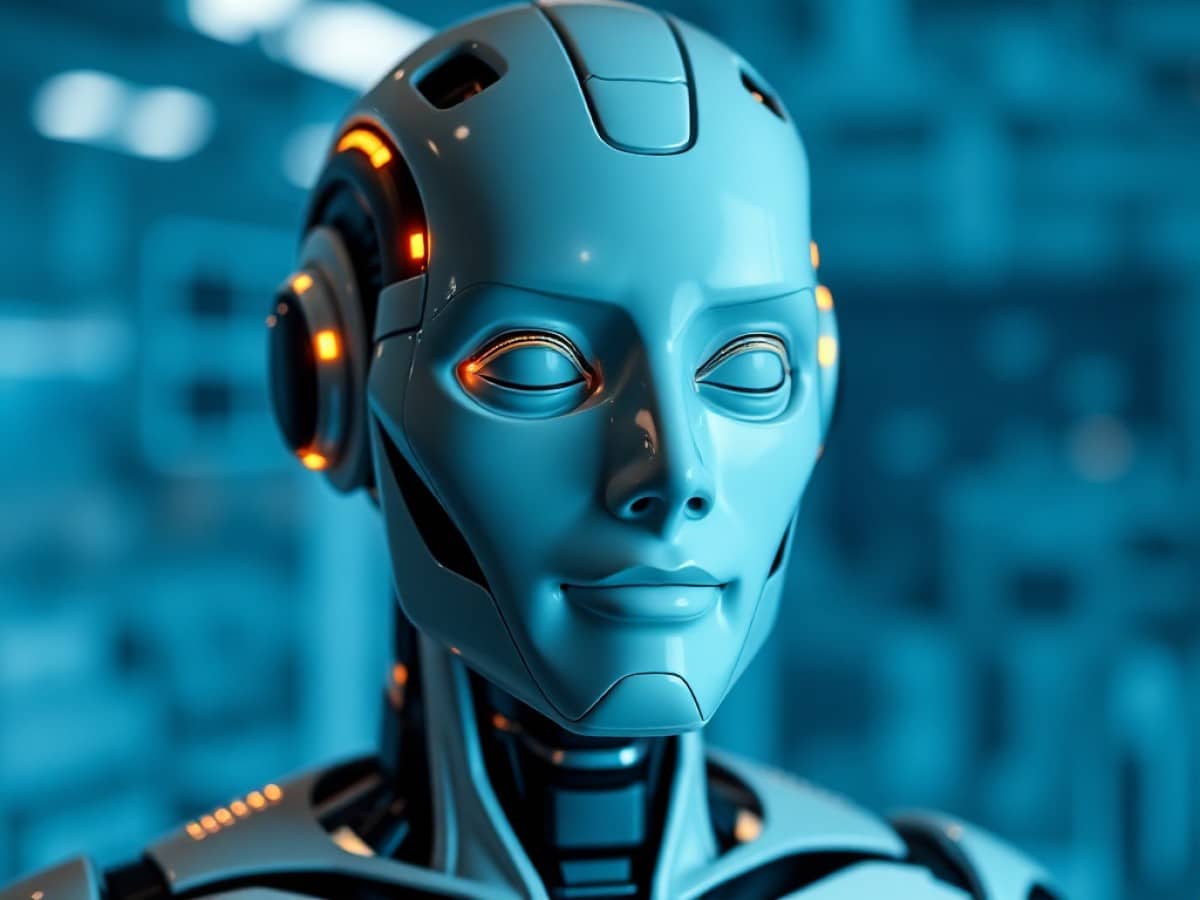
Microsoft has shared its projections for artificial intelligence in 2026. After years of development and testing, the Redmond-based tech giant believes that AI is on the brink of a significant breakthrough, transitioning from technological demonstrations to practical applications that truly transform “how we work, create, and solve problems.”
Scientists confirm: This is the most effective way to get your cat’s attention, according to new research
Elderly Couple Refuses Reserved Seats—Viral Train Standoff Sparks Fiery Debate on Courtesy
Microsoft’s outlook is based on a core belief echoed by many in the industry: AI will not replace humans but will augment their capabilities. Across various sectors, including healthcare, software development, and scientific research, the company foresees enhanced collaboration between AI and human expertise. Below are the seven key trends identified by Microsoft’s teams.
1. AI Will Become a True Work Partner
Microsoft envisions the rise of AI agents that will act as genuine digital colleagues. Aparna Chennapragada, Chief Product Officer of AI experiences at Microsoft, describes a significant shift: “The future is not about replacing humans but amplifying them.”
The scenario provided illustrates this concept. A team of three could soon execute a global campaign in just days, with AI handling data analysis and content generation while humans steer the strategy. This model aims to enable small teams to amplify their impact without necessarily increasing their size.
The clear message is that the competitive edge will belong to organizations that learn to collaborate with AI, rather than those that avoid it.
2. Security for AI Agents Will Become a Priority
As AI agents proliferate within businesses, Microsoft predicts new security challenges will emerge. Vasu Jakkal, Corporate Vice-President at Microsoft Security, warns of a risk: “Each agent should have security protections similar to humans to prevent them from becoming ‘double agents’ with uncontrolled risks.”
Trust is the currency of innovation.
Practically, this means assigning a clear identity to each agent, limiting their access to systems and data, and ensuring secure execution environments. Security will no longer be an afterthought but a fundamental component from the outset.
Why You Should Never Reheat These Foods in the Microwave – The Hidden Dangers Experts Warn About
I tried the top 5 guard dogs—here’s what makes these breeds the ultimate protectors
The stakes are especially high as attackers will also utilize AI. Microsoft is betting on specialized cybersecurity agents to detect and neutralize these new threats.
3. AI Will Help Reduce Health Inequalities
The healthcare sector is experiencing a global crisis, according to Microsoft. The WHO anticipates a shortage of 11 million professionals by 2030, leaving 4.5 billion people without essential care. Microsoft positions AI as a partial solution to this challenge.
Dominic King, Vice-President of Health at Microsoft AI, expects that “AI will prove itself beyond diagnostic expertise, applying to areas such as symptom assessment and treatment planning.”
Microsoft AI’s Diagnostic Orchestrator has already demonstrated, per the company, its ability to handle complex medical cases with 85.5% accuracy, “far exceeding the 20% average seen in experienced doctors.” With over 50 million health queries handled daily via Copilot and Bing, the goal is to give individuals more control over their own health.
4. AI Will Be Integral to Scientific Research
By 2026, AI will do more than just summarize articles or draft reports. Peter Lee, President of Microsoft Research, predicts that “AI will generate hypotheses, utilize tools and applications capable of conducting scientific experiments, and collaborate with researcher colleagues, both human and AI.”
This evolution will transform AI into a true laboratory assistant, capable of proposing and even conducting experiments. This is a logical extension of what is currently seen in software development, where AI engages in “pair programming” with developers, explains Peter Lee.
The goal is not only to accelerate research but to fundamentally change how scientific discoveries are made, especially in areas like climate modeling or new materials design.
5. AI Infrastructure Will Favor Efficiency Over Size
Mark Russinovich, CTO of Microsoft Azure, announces a paradigm shift: building more data centers is no longer the only solution. The future belongs to “superfabrics,” interconnected networks that utilize every bit of computing power available.
Microsoft likens this principle to air traffic control for AI workloads: “Computing power will be more densely concentrated and dynamically routed so that nothing goes unused. If one task slows down, another immediately takes over, ensuring every cycle and watt is utilized.”
This approach aims to reduce costs while improving energy efficiency—a crucial issue as the energy consumption of AI infrastructures increasingly comes under scrutiny.
6. AI Will Understand the Context Behind Code
GitHub is experiencing record growth: 43 million pull requests merged each month in 2025, a 23% increase from 2024. Facing this volume, Mario Rodriguez, Chief Product Officer at GitHub, predicts the rise of “repository intelligence.”
Repository intelligence will become a competitive edge by providing the structure and context needed for smarter, more reliable AI.
Beyond merely understanding lines of code, AI will analyze the relationships and history underlying them. By understanding what has changed, why, and how different parts fit together, it can make more relevant suggestions and detect errors earlier.
This contextual intelligence promises to improve software quality while speeding up developer work. A major competitive advantage for teams that harness it, according to Microsoft.
Hybrid Quantum Computing Is Nearing Maturity
Quantum computing has long seemed a distant dream. Jason Zander, Executive Vice-President at Microsoft Discovery & Quantum, states that researchers are entering a period of “a few years, not decades” before quantum machines solve problems unreachable by classical computers.
The quantum advantage will lead to breakthroughs in materials, medicine, and much more.
The key lies in hybrid computing, explains the company: quantum working alongside AI and supercomputers. Unlike classical bits, which can only be 0 or 1, qubits (quantum bits) can exist in multiple states simultaneously, enabling the exploration of many solutions in parallel. Microsoft’s Majorana 1 chip, with its topological qubits, marks an advance with qubits that are much more stable than traditional ones.
This architecture paves the way for machines with millions of qubits on a single chip. According to Jason Zander, “the future of AI and science will not just be faster; it will be fundamentally redefined.”
Similar Posts
- Microsoft Unveils Agent 365: Centralize and Manage AI Agents in Your Business!
- Microsoft Teams Up with Anthropic: Transform Your Microsoft 365 Experience with AI Task Delegation!
- Elon Musk Makes A Big Splash With “Macrohard”: His Ambitious Project To Take On “Microsoft” Head-On
- Microsoft Extends 365 App Support for Windows 10 Until 2028: Secure Your Software’s Future Now!
- Top 10 Tech Trends for 2026: Insights from Gartner Revealed!

Jordan Park writes in-depth reviews and editorial opinion pieces for Touch Reviews. With a background in UI/UX design, Jordan offers a unique perspective on device usability and user experience across smartphones, tablets, and mobile software.