
Scientists confirm: This is the most effective way to get your cat’s attention, according to new research
Elderly Couple Refuses Reserved Seats—Viral Train Standoff Sparks Fiery Debate on Courtesy
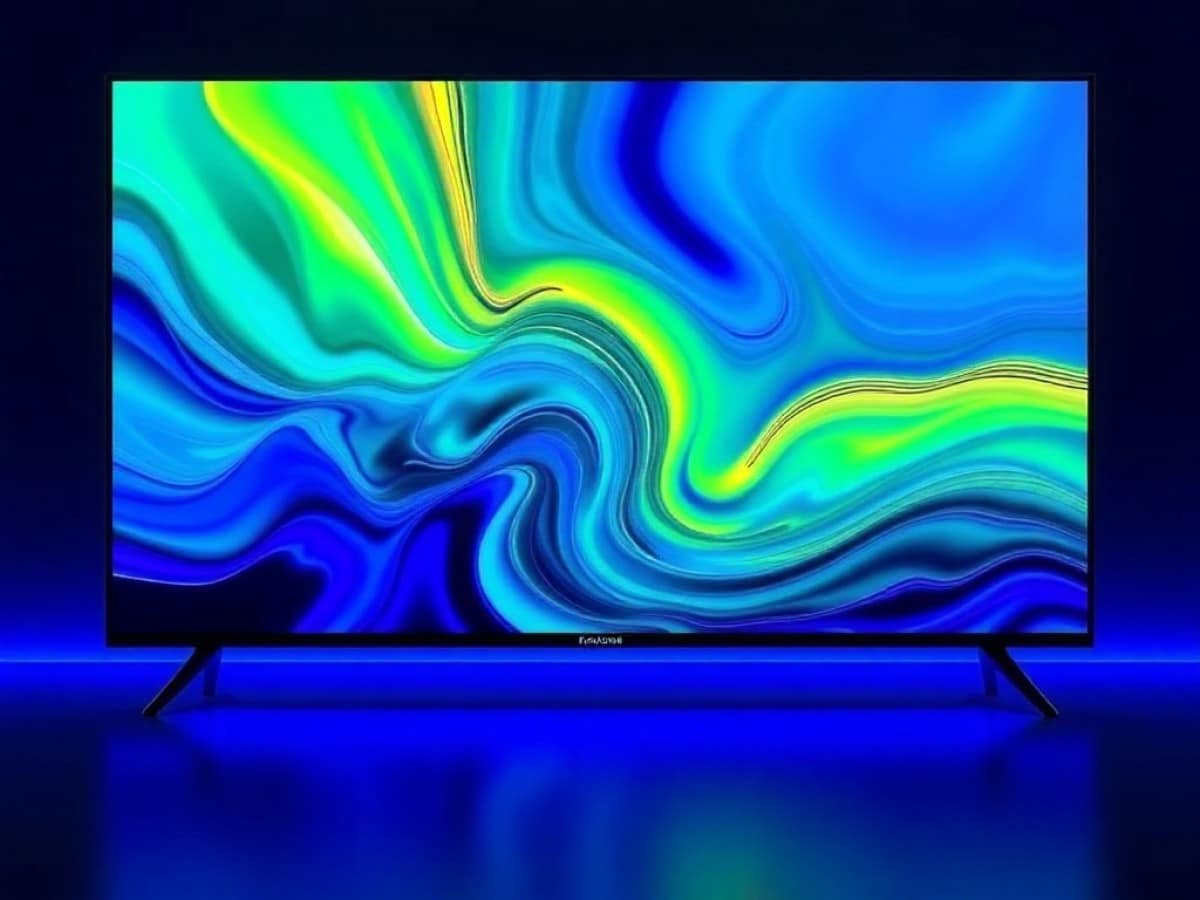
Xiaomi’s S Pro Mini LED range comes in several sizes: 55, 65, and 75 inches. These models introduce QD-Mini LED technology, combining Quantum Dot and Mini LED backlighting, allowing precise light management with up to 704 zones (in the 75-inch model), ensuring high local contrast and better nuance reproduction. This setup promises significant maximum brightness, compatible with Dolby Vision, HDR10+, and HLG, worthy of the current standards of the premium segment.
The native refresh rate reaches 144 Hz, with support for VRR (variable refresh rate), a crucial feature for demanding gamers.
The TV competes with top products from Samsung, TCL, and LG, as well as premium models from Sony Bravia that rely on Mini LED and proprietary image processing. Xiaomi bets on Google TV and the integration of Dolby Atmos for audio optimized by Harman AudioEFX technology, as well as HDMI 2.1 connectivity to compete with rivals.
The brand claims to offer an immersive experience while keeping prices competitive, allowing the TV S Pro to aim for a favorable position among high-end alternatives. Here is our verdict.
Xiaomi TV S Pro Mini LED 55 2026Technical Specifications
| Model | Xiaomi TV S Pro Mini LED 55 2026 |
|---|---|
| Dimensions | 1225 mm x 780 mm x 330 mm |
| Maximum Resolution | 3840 x 2160 pixels |
| Screen Size | 55 inches |
| HDR Compatible | HDR10+, Dolby Vision |
| HDMI Ports | 3 |
| Surround Compatible | Dolby Atmos |
| Number of Speakers | 2 |
| Speaker Power | 30 watts |
| Audio Output | Headphones, Speakers, Optical |
| Operating System (OS) | Google TV |
| Voice Assistant | Google Assistant, Google Gemini |
| Product Page |
Xiaomi TV S Pro Mini LED 55 2026Design, Mostly Plastic with Wide-set Legs
The Xiaomi TV S Pro Mini LED features contemporary lines. It has a plastic chassis with decent finishes and a relatively thick frame (up to 7 cm) that highlights the panel.
The tested version has two legs that attach from underneath. The 55-inch model requires a 110 cm gap with a depth of 32 cm and a 6.5 cm elevation from the base.
There is enough space to place a soundbar in front without any obstruction.
The screen edges are quite thin (8 mm), maximizing the image area and enhancing the immersive experience. The assembly feels robust with good rigidity, even for larger sizes. Xiaomi has worked on managing reflections with a low-reflection panel, though it is not perfect in this regard. Be mindful of strong light sources that could spoil the experience.
At the back, the casing is beveled to give an impression of thinness. Note the small Mini LED label on one side of the device.
Also, at the back, the panel has a trench that allows for cable management. Additionally, several small elements secure the wires and guide them to the center of the TV to organize their exit and limit their visibility when sitting in front of the TV.
Vents for heat dissipation are discreet, and no overheating was noted during long testing sessions, even in intensive HDR mode.
Xiaomi TV S Pro Mini LED 55 2026Connectivity, All Essentials Covered
The Xiaomi TV S Pro Mini LED 2026 offers interesting connectivity, though it’s somewhat minimalist. Three HDMI 2.1 ports ensure compatibility with latest-generation consoles, two of which support 4K 144 Hz signals and eARC to fully enjoy Dolby Atmos sound via a sound bar or home cinema amplifier. The device also has two USB ports, including one 3.0 for multimedia file playback. Wired networking is provided by an Ethernet port, supplemented by dual-band Wi-Fi 6 and Bluetooth 5.2 for wireless devices or headphones.
The classics are included: optical output for Hi-Fi setups, headphone jack for personal listening. The CI+ (PCMCIA) port is there for subscribers to paid channels. DVB-T2 (terrestrial), DVB-C (cable), and HD DVB-S2 (satellite) tuners ensure reception of all packages, with an automatic channel search that proved quick and reliable during our tests. Bluetooth pairing was trouble-free with compatible headphones and other accessories.
The Remote Control
The remote control provided with the TV S Pro Mini LED is slim and light. It fits comfortably in the hand and features a responsive directional pad for navigating the interface. Buttons dedicated to major streaming platforms (Netflix, Prime Video, YouTube, Xiaomi Free TV+) are easily identifiable and provide direct access to respective contents. Also, there’s a star-marked button for a customizable shortcut and a button to launch the viewing of traditional TV channels.
Entirely made of plastic, this remote offers quiet keys with clean, distinct keystrokes. A Google Assistant button allows for voice recognition, with quick and accurate results during tests. Bluetooth pairing enhances the range and allows for controlling the TV from another room. Volume management and playback control are intuitive, even for the less tech-savvy.
Despite its plain design, the remote doesn’t lack features or ergonomics, ensuring hassle-free daily use. Two minor complaints about this accessory: the lack of backlighting (which we always miss a bit) and the placement of the Back button surrounded by buttons for returning to the main menu and accessing settings. Ideally, this button should be positioned at the far left for better ergonomics, as is the case with almost all other remotes.
Xiaomi TV S Pro Mini LED 55 2026Image and Sound, Bright Display and Coherent Audio
The QD-Mini LED technology used here combines Mini LED backlighting for light control and Quantum Dot for color purity.
The 4K UHD (3840 x 2160 pixels) panel delivers a relatively rich image, with deep contrast and a wide color palette. Local dimming zones (up to 704 on the larger model) significantly reduce blooming and enhance black reproduction. HDR content, whether in Dolby Vision or HDR10+, benefits from added punch, and the sufficiently high peak brightness allows for a brilliant display.
The precision of the backlighting is noticeable when watching dark movies or nighttime scenes, with quite subtle gradients even though there’s a noticeable color shift. Indeed, the image presented here is very flattering, too much for our taste, for a true cinema rendering, particularly on SDR content. Adjustments can be made from the TV’s settings.
The image processing effectively manages content via platforms like Netflix, Disney+, or Prime Video; Blu-ray movies reveal very fine details.
The available image modes (Standard, Cinema, Game, Filmmaker) are easily accessible and each brings its benefits, depending on the source used.
Of course, for the best possible rendering, we recommend activating Filmmaker mode, which is closest to what filmmakers intend.
The uniformity of the panel is rather convincing, without any clouding or unwanted dark zones. This is true for video sequences, but when displaying certain menus (for example, under Netflix or Prime Video), we noticed some “flaws” in the image as shown in the photo below.
Be aware also of the viewing angles, which are not extremely wide. The posterization effect is very slight (accentuated below by the camera sensor), meaning that we get coherent gradients.
For HDR programs, the Cinema mode is more interesting although the TV struggles a bit with some contrasted scenes. Remember, this model supports HLG, HDR10+, and Dolby Vision formats.
As with all tested TVs, we conducted measurements with several probes to confirm or deny the color fidelity, evaluate maximum brightness, and other criteria that might be interesting for you to form your own opinion.
Thus, with SDR content, we noted a color fidelity well above the threshold below which the human eye can no longer differentiate between the requested color and the displayed color (3). Thus, in Filmmaker mode, the average Delta E is established at 7.78. The gamma does not follow the reference curve at all, marking the image with zones brighter than they should be and parts of the image slightly plugged, not displaying all the details. The color shifts are very significant, on the tested model with an average color temperature well below what it should be (ideally 7500 K).
With HDR content, it’s better. Indeed, we have good color fidelity (average Delta E at 2.63 therefore below 3) and a maximum brightness (with a 10% patch) at 1335 cd/m², which is quite suitable for this range. For comparison, the Samsung QN70F maxes out at 817 cd/m² under the same conditions.
Moreover, the peak brightness for a 100% white image offers a value of 743 cd/m², which is also higher than the measurement noted on the QN70F from Samsung, for example.
Finally, regarding the color spaces, it’s quite honorable with measurements at 92.5% for rec709, 93.1% for DCI-P3, and 72.61% for BT2020, the most demanding. On this last criterion, the Samsung QN70F performs slightly better.
On the audio side, Xiaomi offers Dolby Atmos with Harman AudioEFX processing. The built-in speakers project a relatively broad, clear sound, especially effective for surround effects in movies and games. However, don’t expect any elevation effect, as the TV does not have speakers directed towards the ceiling. The stereo remains quite well spatialized, with the addition of DTS-HD and Vertical Surround Engine enhancing the rendering, particularly during dialogues or musical sequences.
Even at high volume, no significant distortion was heard, and the overall performance was solid. Unfortunately, the output lacks bass. For a home cinema setup, the optical output and eARC allow for full enjoyment of a Dolby Atmos sound bar or amplifier. Various audio modes are available, tailored to different uses (cinema, voice, music, game).
Xiaomi TV S Pro Mini LED 55 2026Gaming, Smoothness and Fidelity Delivered
The gaming segment is clearly emphasized on this S Pro Mini LED. Indeed, we can count on a maximum refresh rate of 144 Hz, extendable to 288 Hz in Game Boost, ensuring an ultra-smooth experience without tearing or ghosting with VRR. The device supports ALLM (Auto Low Latency Mode) technology, automatically switching the TV to game mode when a console is detected. In terms of colors, we noted a satisfactory average Delta E at 2.75, thus below the threshold of 3 for HDR content.
During sessions on PS5 and Xbox Series X, responsiveness was exemplary, with a very low input lag noticeable (13.2 ms or less than one frame of delay), which is essential for competitive fast FPS games or racing titles. The image remains detailed, color saturation does not oversaturate in HDR Game mode, and local dimming maintains consistent contrasts in dynamic scenes.
Xiaomi TV S Pro Mini LED 55 2026Interface, Google TV Onboard
Like other TVs from the brand, you can count on the Google TV interface at the helm. It proves to be quite fluid, controlled at the tip of the remote.
The menus are clear, without any specific interface as is the case with Sony or Philips models, or even TCL, for example. Navigation between different user profiles, multilingual support, and management of recommendations help provide a coherent and rather pleasant daily experience.
The main streaming apps are pre-installed: Netflix, Prime Video, Disney+, Apple TV+, YouTube, as well as compatibility with Google Cast and Apple AirPlay for wireless broadcasting. The universal search works effectively, indexing all available content.
Navigating within the program guide, the EPG, as well as parental controls are intuitive, with the OS updating regularly to ensure security and stability. Home automation control functions are directly accessible from the main menu.
For customization enthusiasts, settings are numerous and clearly identified, while the installation of third-party apps is achievable without hassle.
Xiaomi TV S Pro Mini LED 55 2026Price and Release Date
The Xiaomi TV S Pro Mini LED 2026 series has been available since September 2025 in three main sizes: 55 inches for 699 euros, 65 inches at 899 euros, and 75 inches for approximately 1099 euros.
Xiaomi TV S Pro Mini LED 55 2026
at the best price
-
Amazon
699 € -
Similar Posts
- TCL 65C7K Review: Is This the New Premium Segment Leader?
- Xiaomi TV A Pro 2026 Review: Will This Television Amaze You?
- Xiaomi Smart Projector L1 Pro Review: Compact Google TV Gadget Impresses!
- Sony Bravia 3 Review: Unbelievable Value for an LED TV – Find Out Why!
- Panasonic 55Z95B Review: Is This the Ultimate Home Cinema TV?

Maya Singh is a senior editor covering tablets and hybrid devices. Her work explores how these tools reshape digital productivity and learning. She also contributes to feature editorials on emerging tech.