
Scientists confirm: This is the most effective way to get your cat’s attention, according to new research
Elderly Couple Refuses Reserved Seats—Viral Train Standoff Sparks Fiery Debate on Courtesy
The year 2026 saw a peculiar race against time in the stabilized pocket cameras market. DJI kicked off in mid-April with its Osmo Pocket 4, an excellent product but with conservative upgrades. Although a “Pro” version was known to be in the works, DJI had not announced an official release date. Insta360, however, decided to step up the pace following persistent leaks and, in doing so, took DJI by surprise. With the release of the Luna Ultra in June, Insta360 was the first to market the very first dual-lens pocket camera – uniquely featuring a detachable screen that doubles as a remote control.
DJI waited until the end of July to unveil its Osmo Pocket 4P. By stacking its two sensors vertically, DJI on paper addresses its main technical shortfall by finally offering a true second lens dedicated to zooming.
I’ve spent the past few weeks traversing the mountains of British Columbia with the Osmo Pocket 4P in hand. After dissecting the base model and evaluating Insta360's excellent alternative, it’s time to see if this Pro version is indeed the ultimate vlog camera, and, importantly, if its price justifies overlooking other options on the market. Let’s dive into the review.
DJI Osmo Pocket 4P Technical Specifications
Why You Should Never Reheat These Foods in the Microwave – The Hidden Dangers Experts Warn About
I tried the top 5 guard dogs—here’s what makes these breeds the ultimate protectors
DJI Osmo Pocket 4P
9/10
Read the review
-
Amazon
599€ -
Boulanger
599€ -
Fnac
599,99 €
All DJI action cams
This review was conducted with a DJI Osmo Pocket 4P provided by DJI.
DJI Osmo Pocket 4P A Predictable Heavier Design
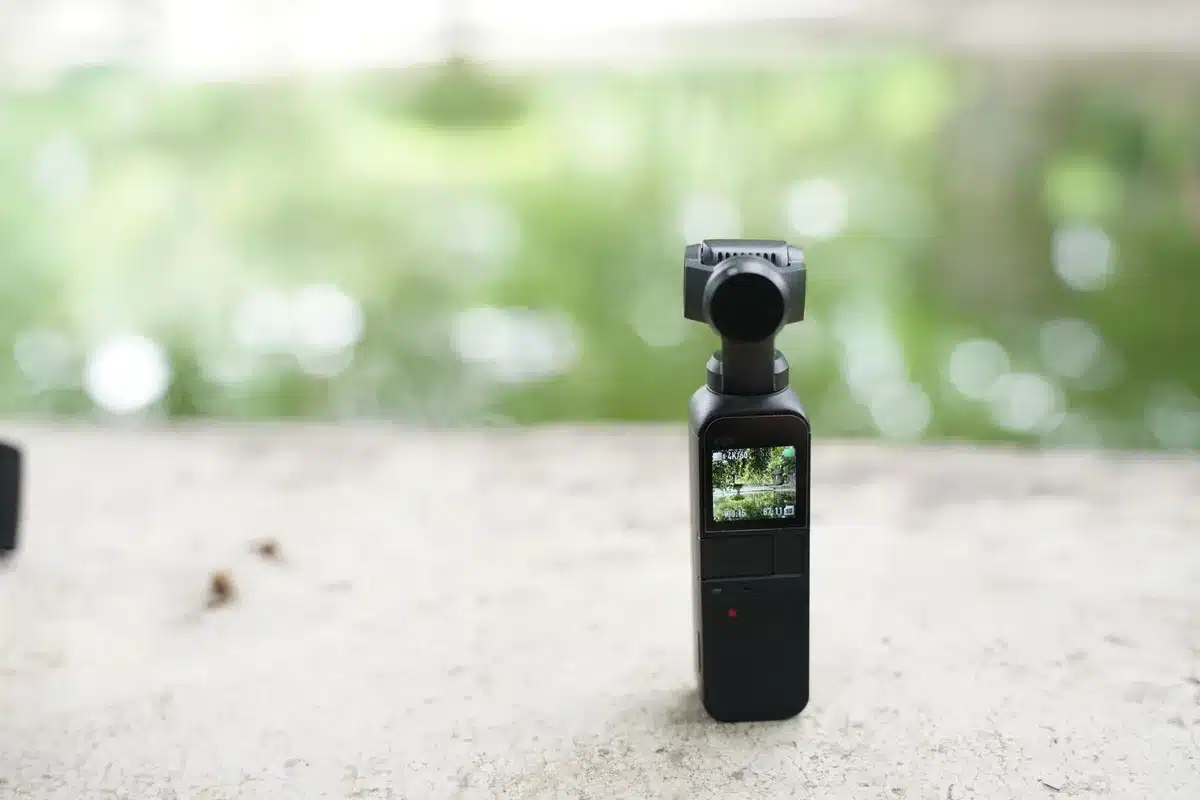
With a dual sensor, the DJI Osmo Pocket 4P is longer and wider. The handle remains almost identical, and it’s only due to the number of sensors that one can differentiate the Osmo Pocket 4P from the Osmo Pocket 4. Here are the dimensions for comparison.
| Model | Dimensions (mm) | Weight (g) |
|---|---|---|
| DJI Osmo Pocket 4 | 144.2 × 44.4 × 33.5 | 190.5 |
| DJI Osmo Pocket 4P | 159.5 × 63.3 × 33.5 | 230 |
| Insta360 Luna Ultra | 169.9 × 52.4 × 38.5 | 233 |
On the scale, the Pocket 4P nearly matches the 233 grams of its direct competitor, the Insta360 Luna Ultra. In hand, the product definitely loses its miniaturized feel. The balance is different due to the heavier lens block.
The Osmo Pocket 4P has the same front as the Osmo Pocket 4. In addition to the beautiful 2-inch rotating screen, the Pocket 4P directly inherits the ergonomic improvements introduced in the spring: there is the multi-directional joystick for controlling the gimbal, the recording button, and the famous physical controls dedicated to zoom and customizable functions, which are revealed once the screen is tilted horizontally.
Unlike Insta360’s radical proposal, DJI’s panel remains firmly attached to the handle and does not detach. This is an area where the Luna Ultra thus maintains a real advantage in terms of modularity. It’s worth noting that in addition to being able to frame your shot and control the camera remotely, its detachable screen includes an integrated microphone.
As with their other product ranges, DJI appears more conservative, more professional, more conventional, where Insta360 indulges in whimsy and targets the general public.
While Insta360 chose to align its two lenses horizontally, DJI opted for a different approach by stacking its two sensors one above the other. This lens block is logically much more massive than that of the base version.
Once turned off, the camera cannot hide its dual module to protect the lenses as usual, making the product even more delicate. Unfortunately, DJI does not seem to have found a solution to protect it during transport—meaning without using a large carry pouch. While the Osmo Pocket 4 offers a small clip to lock the gimbal, and the Insta360 comes with a protective case, the Osmo Pocket 4P is simply exposed.
You can forget about slipping it into a jeans pocket unless you have baggy jeans. For my part, after some hesitation, I ended up slipping the Pocket 4P into my trail vest, upside down to press the sensor module against me and avoid too much movement on descents—it’s nonsensical, I know, but just so you know, after three intense days, nothing broke.
Jokes aside, I was even less comfortable with transporting this Osmo Pocket 4P than with the Osmo Pocket 4. Fortunately, this pro version is designed for professionals, who are certainly a bit more careful than average.
The assessment remains exactly the same regarding the stability of the product placed on a flat surface: without a dedicated tripod, the camera wobbles and is not reassuring—especially with the extra weight of the second sensor.
You will always have to screw on the small extension, or even the tripod, to safely place it on a table or a wall. A classic for this range that is not an action camera and always requires a minimum of caution in use. Be careful with water too, since the gimbal is stabilized by small motors.
DJI Osmo Pocket 4P Software Interface
Unsurprisingly, the interface of this Osmo Pocket 4P exactly replicates the standards of the basic version and previous models, with navigation relying on tactile swipes from the four edges of the screen—to access menus and settings. It remains as responsive as ever, and DJI regulars will find their bearings without having to dig through endless submenus.
The FUJIKINA is coming up on September 4, 5, and 6! Test Fujifilm products and meet guest photographers. Your ticket includes equipment loans, Touch & Try sessions, sensor cleaning, exclusive photowalks, and demo studios accompanied by professionals.
Startup remains a model of its kind. As with the base model (and now the competition), it’s enough to push the rotating screen into the horizontal position with a simple thumb push. The device takes between 2 and 3 seconds to turn on and position its gimbal.
It’s impressively quick, and it’s possible to configure the camera to automatically start recording video as soon as the screen is rotated.
The first startup of the day is always a bit longer, and after several tests between the Osmo Pocket 4, the Osmo Pocket 4P, and the Insta360 Luna Ultra, it’s hard to say which one turns on faster on average.
The Osmo Pocket 4P also retains the generous internal memory introduced on the Osmo Pocket 4, featuring just over 100 GB of native space, in addition to the microSD slot. On this detail, which is not trivial in daily use, DJI maintains a serious lead over Insta360’s Luna Ultra and its 47 GB of internal storage./
Similar Posts
- I Tested the Insta360 Luna Ultra: A Stunning First Try Against DJI, But At What Cost?
- Hands-On Review: DJI Osmo Pocket 4 – Can’t Wait for What’s Next!
- I Tested the Insta360 GO Ultra for 8 Months: Nearly the Perfect Mini-Camera!
- Samsung Galaxy S26 Camera Specs Revealed: Leak Gives Us a Sneak Peek!
- DJI Osmo Mobile 7 Stabilizer on Sale: Get Yours for Just €75!

Maya Singh is a senior editor covering tablets and hybrid devices. Her work explores how these tools reshape digital productivity and learning. She also contributes to feature editorials on emerging tech.