
Scientists confirm: This is the most effective way to get your cat’s attention, according to new research
Elderly Couple Refuses Reserved Seats—Viral Train Standoff Sparks Fiery Debate on Courtesy
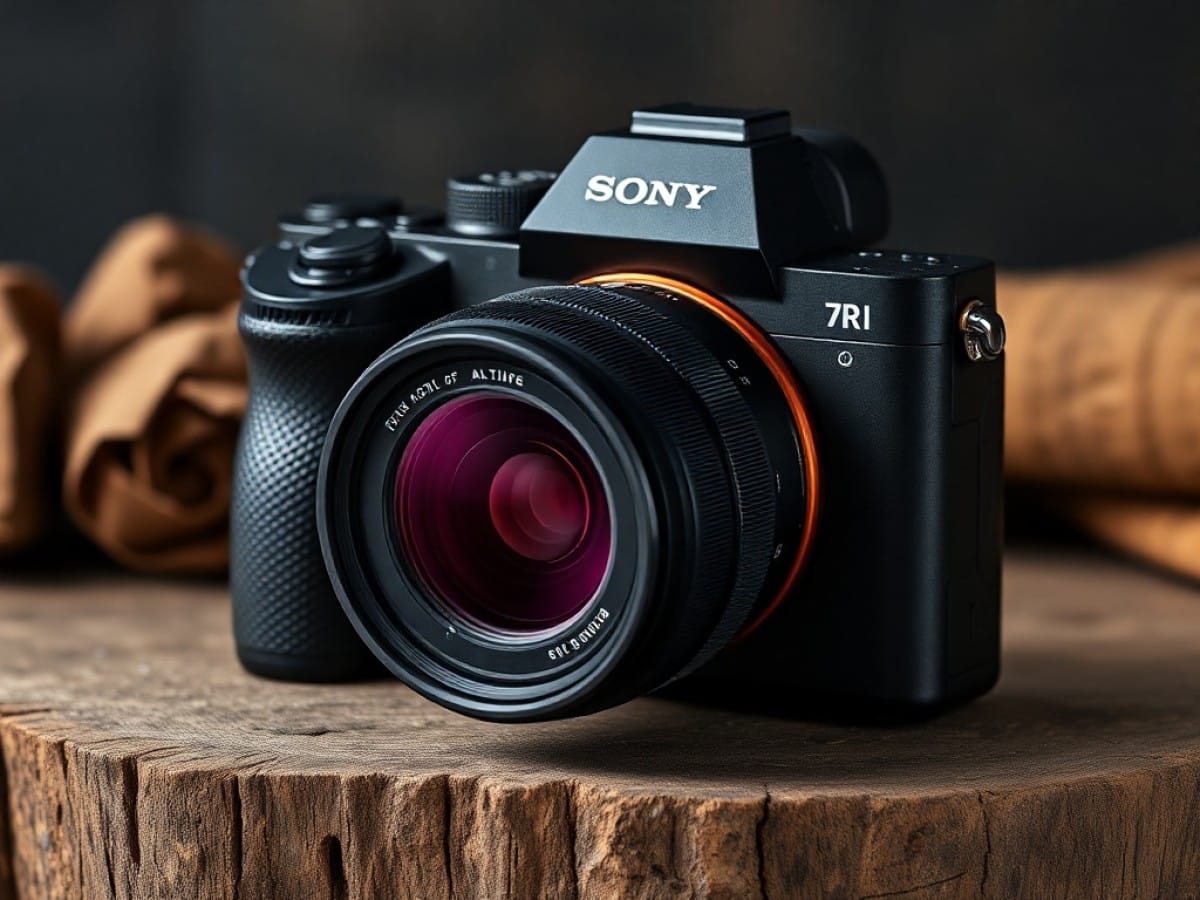
Sony has launched the A7R VI, thirteen years after the debut of the very first A7R, the device that pioneered the high-resolution full-frame hybrid format. The lineage is clear: E-mount, similar philosophy, positioned between the generalist A7 and the top-tier A1 II. Yet, the real change is elsewhere.
Consider the A7R V. Released at the end of 2022, it essentially used the same sensor as the 2019 A7R IV, but with a more modern autofocus system. It was an excellent imaging device but slow: electronic shutter locked at 10 frames per second, severe rolling shutter issues on any moving subject, and RAW burst limited to 12 bits. The A7R VI changes the game. Its stacked sensor, a first for the R series, combines what Sony previously split across two separate models: resolution and responsiveness.
It’s no longer just about resolution. It’s about resolution without compromising on speed.
| A7R VI | A7R V | Canon R5 Mark II | Nikon Z8 | Lumix S1R II | |
|---|---|---|---|---|---|
| Sensor | 66.8 MP stacked | 61 MP BSI | 45 MP stacked | 45.7 MP stacked | 44 MP BSI |
| Max rate (Mech / Elec) | 10 / 30 fps | 10 / 10 fps | 12 / 30 fps | – / 20 fps | 10 / 40 fps |
| IBIS | 8.5 stops | 8 stops | 8 stops | 6 stops | 8 stops |
| Max video | 8K 30p | 8K 24p | 8K 60p (RAW) | 8K 30p (RAW) | 8K 30p (ProRes) |
| EVF | 9.44 MP / 120 Hz | 9.44 MP / 120 Hz | 5.76 MP / 120 Hz | 3.68 MP / 120 Hz | 5.7 MP / 120 Hz |
| Weight (with battery) | 713 g | 723 g | ~746 g | ~910 g | ~795 g |
| Indicative price | 5,099 € | ~3,800 € | ~4,300 € | ~3,000 € | ~3,000 € |
Sony Alpha 7R VI Technical Specifications
| Model | Sony Alpha 7R VI |
|---|---|
| Type of device | Hybrid |
| Sensor format | Full Frame |
| Sensor resolution | 72.6 MP |
| Image stabilizer | Mechanical |
| Maximum video resolution | 8K @ 30 fps |
| AF-S | 30 FPS |
| Articulated screen | Yes |
| Weight | 622 g |
| Product sheet |
This review was conducted with a device lent by Sony.
Sony Alpha 7R VI A Simple and Efficient Design
The A7R VI measures 132.7 x 96.9 x 82.9 mm. It weighs 622 g bare, 713 g with battery and card. That’s ten grams less than the equipped A7R V (723 g). The chassis is made of magnesium alloy, with seals on all openings. Sony does not officially mention weather-sealing, but its resistance to splashes and dust seems to be that of a professional body.
The handling retains the hallmarks of the modern A7 series: pronounced front grip, front and rear dials, AF joystick, customizable C1 to C5 buttons. The grip has been slightly redesigned. Deeper, more substantial than that of the A7R V, it provides better reassurance with heavy lenses. The handling is very secure, and I walked for miles without fearing the camera might slip from my fingers.
The buttons are now backlit, with a dedicated button to activate the lighting. At night, this kind of detail matters.
Two innovations are worth noting. First, a tally light on the front, a useful indicator that the camera is recording, especially for shooting videos. Second, a brand-new battery, the NP-SA100, replaces the NP-FZ100 used since the first Sony A9. The capacity is increased (more on that later), the format is slightly different, and thus compatibility with the old optional VG-C5M2 vertical grip is not guaranteed.
The connectivity options are generous. Two USB-C ports, one USB 3.2 Gen 2 at 10 Gbit/s and one USB 2.0. Also included are a full-size Type A HDMI port, two separate 3.5 mm jacks for microphone and headphones, and a flash sync port. The dual card slot accommodates a CFexpress Type A and a SD UHS-II card. This dual format remains a good compromise between speed and accessibility, even though the price of CFexpress Type A cards remains significant.
Cooling is based on a sigma-shaped graphite chamber, entirely passive. Sony promises 120 minutes of 8K recording. An ambitious promise that will need verification over time and in hot conditions.
The menu system carries over the interface from recent Sony bodies, with color-coded tabs and a more logical organization than before. The customization is very extensive. It takes time to master all the layers of settings. This is typical of Sony devices, and that hasn’t changed.
Sony Alpha 7R VI A Delightful Viewfinder
The OLED viewfinder retains its 9.44 million dots and 120 Hz refresh rate, a level that remains the market standard. The panel itself is a real upgrade: DCI-P3 color gamut, 10-bit display, and luminance up to three times higher than that of the A7R V. As soon as you look through it, the immersion is spectacular, with a magnification of 0.90x that allows you to scrutinize the image details. Simply put, the viewfinder makes you want to shoot immediately.
It’s a shame that an EVF of this quality isn’t found on more devices, because 9.44 MP makes a big difference.
The screen keeps the multi-axis articulating panel introduced on the A7R V. It tilts up and down, pivots for portrait framing, and flips to face the photographer for selfies or vlogging. This remains one of the best solutions on the market.
Sony Alpha 7R VI A New Sensor, Naturally
Here’s where everything changes. The 61 MP BSI-CMOS sensor of the A7R V was not stacked. Its readout took about 100 milliseconds in electronic shutter mode, distorting any moving subject. The 66.8 MP Exmor RS stacked sensor of the A7R VI is read infinitely faster, and as we’ll see later in the video section, the rolling shutter is almost nonexistent.
The announced dynamic range has increased to 16 stops, up from 15 stops on the A7R V. This is the most significant gap between two generations for some time, and it is evident in the files: shadows can be lifted by two to three additional stops in RAW without noticeable color shifts. Highlights remain tolerant as long as the exposure hasn’t been massively botched.
This new sensor is of course stabilized, with motion compensation that can reach 8.5 stops at the center compared to 8 stops with the IBIS of the A7R V.
Sony also introduces a dynamic HDR mode inspired by Panasonic’s DR Boost. The two output channels of the sensor are combined to double the available dynamic range. The downside is clear: reduced rates and doubled readout time. It’s a tool for studio or controlled landscape work, not an all-terrain mode.
The ISO range extends from 100 to 32,000, expandable from 50 to 102,400. In practice, ISO 6,400 yields very clean images. At ISO 12,800, noise takes the form of a fine grain, which does not destroy details. You can push up to ISO 25,600, accepting a noticeable loss of sharpness, but never disastrous. The images below are from RAWs processed with Lightroom, with no chromatic noise reduction applied.
Improved RAW Compression
Sony has introduced a more efficient compression method for RAW files, with the Lossless Compressed HQ mode. Files shrink from 80 to 90 MB for a typical compressed RAW to 40 to 50 MB in HQ.
The Composite RAW is also a new feature of the Sony A7R VI, which captures a series of RAW images (usually between 4 and 16 shots, depending on the setting chosen) with a very slight shift of the sensor between each take. These raw files are then assembled in Sony’s Imaging Edge Desktop software on your computer.
The idea is simple: combine multiple exposures of the same subject to obtain a single RAW file (what Sony calls a “Composite RAW“) that benefits from two major improvements:
- A drastic reduction in noise: by overlaying several nearly identical shots, the software averages them out, eliminating random noise. The result: much cleaner files, even at very high sensitivities, without loss of detail.
- An extended dynamic range: the sensor shift also allows more information to be captured in the shadows and highlights, somewhat like HDR. The composite file can thus achieve a dynamic range even wider than what the sensor can produce in a single exposure.
In practical terms, this is a shooting mode designed for the studio, composed landscapes, or art reproduction: anything that doesn’t move and where image quality is paramount.
Significantly Increased Photo Rate
This is the most significant technical point of this generation. The A7R VI is the first camera to offer 30 fps in 14-bit RAW on a sensor of this resolution. Note, however, that this rate is only available with compatible Sony lenses.
Here are the performance specs depending on the chosen shutter and recording format.
| Shutter | Max rate | RAW depth | Indicative buffer (Lossless / HQ) |
|---|---|---|---|
| Mechanical | 10 fps | 14 bits | ~130 images / ~220 images |
| Electronic | 30 fps | 14 bits | ~70 images / ~75 images |
| Pre-capture (electronic) | Up to 30 fps | 14 bits | 15 images before triggering (Lossless) |
For context: the A7R V maxed out at 10 fps in 12 bits with the electronic shutter. Here, we triple the rate while switching to 14 bits, and without blackout (interruption of the image) in the viewfinder. The buffer in lossless compressed RAW allows about 2.3 seconds of full-speed burst in electronic mode, which is sufficient for most action scenes. The pre-capture can continuously record as soon as the shutter button is half-pressed, preventing you from missing the start of a movement.
The Best Autofocus on the Market Has Improved Further
The hybrid AF system features 759 phase detection points covering 94% of the sensor, up from 693 points and 86% on the A7R V. AF/AE calculations reach 60 per second. Only the Sony A1 II does better with 120 per second, and even then only with certain compatible Sony lenses. In practice, the difference is not noticeable in most situations: at 30 fps, that’s two calculations per image, and it would take an extremely fast and erratic subject to make that insufficient.
The AI-powered subject recognition covers humans (body, face, eye, pose), animals, birds, insects, vehicles, and aircraft. An automatic detection option lets the camera analyze the scene and choose the subject type on its own.
The low-light AF goes down to -6 EV under standard operation, and up to -11 EV with the Bright Monitoring function activated.
The Bright Monitoring function is a focusing aid mode that Sony has introduced on some recent bodies. Essentially, when you activate it, the camera artificially increases the sensor gain for a few seconds, which significantly brightens the image displayed in the viewfinder or on the screen.
The trick is that this increase in brightness is temporary and only applies to the viewfinder, not the final photo. The camera does not keep this exposure for the shot. But, during this time, the autofocus system sees the scene as if it were much brighter than it actually is, which allows it to lock onto the subject in almost complete darkness. Once focus is achieved, the image returns to its normal darkness and you can shoot as usual.
Thanks to this mode, the A7R VI can go down to -11 EV, where the A1 II and most other professional bodies stop much earlier. The AF then behaves as if the scene were more than 30
Similar Posts
- OM System OM-3 Review: Micro Four Thirds Still Packs a Punch!
- Hasselblad X2D II 100C Review: Elevate Your Photography Game to Grand Dimensions!
- Nikon Z5 II Review: New Budget-Friendly Full Frame Camera Sets the Standard!
- Canon PowerShot V1 Review: Bold Compact Camera with Unique Video-Focused Sensor
- Canon’s Breakthrough: The EOS R6 V Review – A Game-Changer for Videographers

Maya Singh is a senior editor covering tablets and hybrid devices. Her work explores how these tools reshape digital productivity and learning. She also contributes to feature editorials on emerging tech.