
Scientists confirm: This is the most effective way to get your cat’s attention, according to new research
Elderly Couple Refuses Reserved Seats—Viral Train Standoff Sparks Fiery Debate on Courtesy
Secretlab has made a name for itself with its gaming chairs, known for their high backs and sometimes flashy designs. I purchased a Titan Evo a few years ago and have also tested the Titan Evo NanoGen.
However, the Atlas tells a different story. It’s the first chair the brand markets as “ergonomically designed for work,” and this is evident right from the unboxing: a slimmer profile, neutral colors, and a subtle logo.
I spent several weeks with the beige fabric model, the new “Dune” color, to see if this new direction is a solid one. Spoiler alert: the chair is comfortable, and the adjustments are some of the smartest I’ve encountered in a chair. Yet, the Atlas misses a feature that’s surprising for a product labeled ‘pro’. More on that later.
Secretlab AtlasTechnical Specifications
| Features | Details |
|---|---|
| Model | Secretlab Atlas |
| Ranges | Standard / Premium (Composite NanoFoam) |
| Coverings | SoftWeave Plus fabric, NEO hybrid leather (standard), NanoGen hybrid leather (premium) |
| Foam | Cold-cure foam (standard), Composite NanoFoam (premium) |
| Backrest | RE-CURVE, integrated lumbar support (non-adjustable) |
| Headrest | Magnetic, memory foam |
| Tilt | Synchronous, 4 lockable angles: 100°, 107°, 113°, 120° |
| Tilt resistance | 4 levels according to weight (<60, 60-70, 70-80, >80 kg) |
| Sizes | R (up to 178 cm, <100 kg), L (178-195 cm, <120 kg) |
| Colors | Several neutral shades, including the new “Dune” beige |
| Ergonomic validation | US Ergonomics (average pressure < 80 mmHg, manufacturer data) |
| Assembly | About 30 minutes |
| Price | €499 (R) / €719 (L) |
Why You Should Never Reheat These Foods in the Microwave – The Hidden Dangers Experts Warn About
I tried the top 5 guard dogs—here’s what makes these breeds the ultimate protectors
Secretlab AtlasSetup: 30 minutes, easier than expected
Assembly took me about thirty minutes, alone and unhurried. It’s the same routine as other products from the brand: pre-sorted screws, supplied tool, and clear instructions. It’s straightforward, though attaching the backrest to the base is the most physically demanding part.
What surprised me was that setting up the Atlas was easier than the gaming versions from Secretlab. Its slimmer and lighter design is likely the reason: less foam to maneuver, more manageable parts. For comparison, the Titan Evo NanoGen I tested last year took about 30 to 45 minutes, depending on how careful you were. The Atlas takes less than 30 minutes, just a few screws to fit. But everything is provided.
Once assembled, the unit looks and feels solid. The joints are clean, no parts move, and the finish, matching the color of the model, including the base, cylinder, and wheels on the premium range, results in a visually cohesive object.
Secretlab AtlasDesign and Ergonomics: A Chair That Alternates
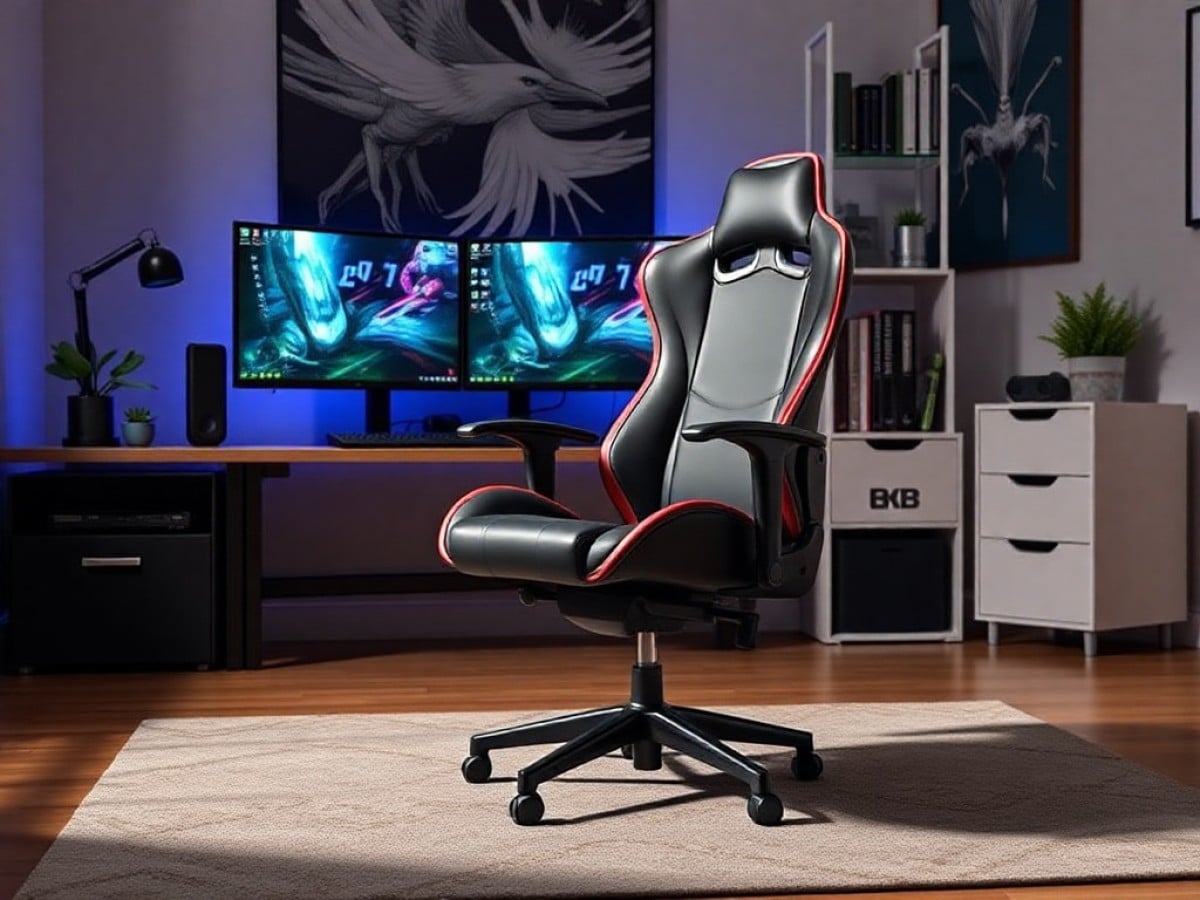
Visually, the Atlas retains hallmarks of a Secretlab but adds refinement.
The backrest remains high but is slimmer, the shades are subdued, and the SoftWeave Plus fabric in beige is, as I must reiterate, genuinely beautiful: even texture, pleasant to the touch. Placed in a corner, it could be mistaken for a high-end office chair. If you wanted a Secretlab without the flair, you’re in the right place.
Upon first sitting, the seat doesn’t give way under me. The Atlas is built on a hybrid spring + foam structure, designed to adjust through micro-movements to one’s body shape. In practice, the support is firm, and I’ll give you fair warning right now: this is not a chair you sink into with a sigh of relief.
If you’re looking for a plush, enveloping cushion, this isn’t for you.
After several lengthy sessions, I appreciate its design: no hammock effect, no pressure points heating up under the thighs after two hours, and weight distributed evenly. It’s firmness working for you, not against.
Secretlab backs its design with independent tests conducted by US Ergonomics. According to these reports, the average pressure remains below the 80 mmHg threshold, beyond which blood circulation begins to suffer.
I don’t have a pressure sensor at home to verify these numbers, so I take them as they are, manufacturer data validated by a third-party lab. They are encouraging, but time will tell. My experience, however, does not contradict them: zero numbness after full days of sitting. It’s not a scientific measure, but it’s a lower back that doesn’t cry for mercy in the evening, and that’s worth something.
Where so many office chairs stop in the middle of the back and leave my neck hanging, the RE-CURVE backrest extends up to the head and follows the S-curve of the spine. I feel support along the entire length of my back, and the upper part curves slightly forward to follow the natural head position when I sit upright. The magnetic memory foam headrest completes the picture and can be repositioned in a second, without fuss. Here, the Atlas significantly outperforms the average office chair. It’s not magic: it’s held with a magnet.
Let’s talk about what’s missing: lumbar adjustment. And here’s where I have a major issue. The lumbar support in the Atlas is built into the backrest, but it’s not adjustable. There’s no knob, no system to adjust the firmness or depth at the small of the back.
The Titan Evo, under the same roof, offers an L-ADAPT lumbar that’s adjustable in four directions. Secretlab’s gamble is to have you trust your back to a pre-set curve. In my case, it fits perfectly, lucky me. But someone with a more pronounced back curve, or simply used to adjusting their lumbar support precisely, will find no flexibility here. It’s a design choice, and I find it hard to fully endorse.
There are two modes: a focus mode and a relax mode. The idea that holds the Atlas up is alternation. The tilt mechanism is synchronous: for every 2° inclination of the backrest, the seat follows by 1°. The angle between hips and torso opens up, tension on the lower back decreases, and since the seat remains relatively horizontal, I can keep my feet flat even when leaning back.
Practically, I lock the backrest when I need to focus, and unlock it to enjoy a slight sway during breaks. It’s precisely the logic of working in cycles—25 minutes of focus, 5 minutes of rest—and the chair embodies this without me having to think about it.
You can lock the tilt at four exact angles (100°, 107°, 113°, and 120°) and adjust the tilt resistance across four levels depending on your weight. A small detail that made me smile: a little window integrated into the knob displays the selected level. No more blindly fiddling to find your setting, which might seem trivial until you’ve experienced it on other chairs. I note, however, that the Atlas maxes out at 120°, an “active” recline. If your weekend plans include sprawling naps, you might want to look at the Titan Evo and its 165°.
And here’s the point that excited me the most. The levers don’t detach, don’t unscrew, don’t end up lost under the desk: everything is integrated into the chair. The knobs are within easy reach, the locking is clear, and a safety mechanism prevents the backrest from snapping forward when unlocked. I found each adjustment in seconds, without needing to reopen the manual. After years of guessing which lever does what on various seats, this level of clarity almost relaxes me as much as the seat itself.
However, the seat base is positioned lower than on a gaming chair, and this helps me keep my feet firmly on the ground, a real plus for stability. It’s also adjustable in depth, moving back and forth to maintain a few inches between the edge of the seat and the back of the knees. The idea: a neutral alignment of the hips and spine.
These adjustments cover the essentials, but the Atlas remains a “close-fitting” chair. It comes in only two sizes, R and L, whereas the Titan Evo is available in S and XL. Larger body types will definitely find it less comfortable, and I prefer to be upfront about that.
Ultimately, there’s an idea that I find accurate, “The best posture is your next posture.” And it’s true, remaining fixed in the supposedly ideal position eventually tires the tissues; it’s the regular changes in posture that provide relief. The synchronous tilt and free rocking precisely serve this purpose. I much prefer this logic to yet another spiel on “ergonomic backrests,” and it’s this that most justifies the chair’s existence in my view.
Secretlab AtlasPrice and Availability
The standard range starts at €499 for the NEO hybrid leather, with the SoftWeave fabric ranging from €519 to €539 depending on size. The premium range, which includes the most advanced proprietary materials (NanoGen or premium SoftWeave), is priced between €699 and €719.
Secretlab Atlas
at the best price
-
Amazon
€306,74 -
Secretlab
€499 -
AliExpress Marketplace
€809,60 -
Cdiscount Marketplace
€999
Each time, the size L demands €20 more than the R. The model I experienced, the Dune fabric, thus costs €499 in R and €719 in L. And here, a pleasant surprise: the Atlas does not position itself at the top of the catalog. Its entry-level even undercuts the regular Titan Evo (€549 in Europe), and its premium version remains well below the Titan Evo NanoGen (€799 in Regular, €849 in XL).
Surprisingly, the Atlas does not aim for the top of the catalog. Its entry-level is priced around the regular Titan Evo (€549 in Europe), and even its premium version stays below the Titan Evo NanoGen (€799 in Regular, €849 in XL). For a new, more subdued, and better-finished chair, I find the pricing quite clever.
The alternative is the Secretlab Titan Evo NanoGen. If your needs extend beyond mere seated work, the Titan Evo NanoGen remains the most versatile choice in the range.
Also, check out our guide to the best chairs.
Similar Posts
- After 4 Years with Secretlab, Here’s Our Review of the New Titan Evo NanoGen Chair!
- We Tried the Percko Ergonomic Chair: Comfort Delivers, But Luck Wasn’t On Our Side!
- Unbreakable 4K Security Camera: In-Depth Review of the Reolink Atlas PT Ultra
- Secretlab Magnus Evo Review: A Desk That Truly Hides Your Cables!
- Logitech G512 X 98 Review: The Hybrid Keyboard We Didn’t Need

Maya Singh is a senior editor covering tablets and hybrid devices. Her work explores how these tools reshape digital productivity and learning. She also contributes to feature editorials on emerging tech.