
Scientists confirm: This is the most effective way to get your cat’s attention, according to new research
Elderly Couple Refuses Reserved Seats—Viral Train Standoff Sparks Fiery Debate on Courtesy
In just half a year, Redmagic has upgraded its Redmagic 11 Pro to the Redmagic 11S Pro.
This pattern has become a hallmark of the brand: one model in the fall, an “S” model in the spring, and so on. On paper, the 11S Pro ticks all the boxes for a gaming smartphone, boasting an enhanced Snapdragon 8 Elite Gen 5 chip, visible liquid cooling through a transparent back, a 7,500 mAh battery, capacitive triggers, and a notch-less screen thanks to an under-display camera.
The issue is that all these features were already present six months ago. The 11S Pro is so similar to its predecessor that you’d need a magnifying glass to spot any differences, right down to the millimeter.
Technical Specifications
| Specifications | Redmagic 11S Pro |
|---|---|
| Display | 6.85″ OLED BOE, 1216 × 2688 (1.5K), 144 Hz, 1,800 nits peak brightness |
| SoC | Snapdragon 8 Elite Gen 5 “Leading Version” (up to 4.74 GHz) |
| RAM | 12 or 16 GB LPDDR5X Ultra |
| Storage | 256 or 512 GB UFS 4.1 (no microSD) |
| Main Camera | 50 MP (OmniVision OV50E, 1/1.55″, f/1.9, OIS) |
| Ultra Wide-Angle | 50 MP (OV50D, 1/2.88″, f/2.0) |
| Macro | 2 MP |
| Front Camera | 16 MP under-display |
| Battery | 7,500 mAh (silicon-carbon) |
| Charging | 80 W wired + 80 W wireless, reverse charging |
| Cooling | AquaCore: 24,000 RPM fan + fluorinated liquid + 13,116 mm² vapor chamber + RedCore R4 chip |
| OS | Redmagic OS 11.5 (based on Android 16) |
| Dimensions / Weight | 163.82 × 76.54 × 8.9 mm / 230 g |
| Water Resistance | IPX8 (water, not dust) |
| Miscellaneous | 3.5 mm jack, USB-C 3.2 Gen 2, dual SIM, NFC, 3D ultrasonic fingerprint reader |
Before diving into the details, two things stand out in these specs. First, the component level is uncompromising: Qualcomm’s fastest chip in its most advanced form, LPDDR5X Ultra, UFS 4.1 storage, a high-quality BOE panel, and an oversized battery. Redmagic spares no expense in terms of hardware, and each spec reflects a commitment to “going all out.”
Secondly, what’s missing also tells a lot about the brand’s identity. There’s no telephoto lens (instead, there’s a practically unnecessary 2 MP macro sensor), an IPX8 rating that protects against water but not dust due to the fan vents, and a design that is anything but lightweight at 230 g and 8.9 mm thickness.
The unit for this review was provided by Redmagic.
Why You Should Never Reheat These Foods in the Microwave – The Hidden Dangers Experts Warn About
I tried the top 5 guard dogs—here’s what makes these breeds the ultimate protectors
Ergonomics, Design, and Cooling System
If you’ve held the 11 Pro, you’re essentially holding the same device. The dimensions are identical down to the tenth of a millimeter; it features a transparent back, a circulating liquid cooling ring that looks like a mini lava lamp, an RGB logo, and a red switch that activates gaming mode.
Redmagic embraces continuity: things haven’t changed, but the consistency from generation to generation makes sense. The main aesthetic upgrade is a slightly more streamlined back with fewer patterns, and now the 256 GB version also sports visible liquid.
In use, it’s a substantial device. Heavy, thick, and wide, let’s be honest, the 11S Pro isn’t the phone you slip into a skinny jean pocket.
The right side is loaded with physical buttons: power, volume, the famous red switch, and notably two capacitive triggers that can be mapped on a per-game basis.
For FPS or MOBA games in landscape mode, these are a real plus, and the advertised 520 Hz responsiveness is there. However, each trigger is just a single touch zone. Asus, with its (sadly discontinued) ROG Phones, allowed splitting the zone into two or adding gestures. Redmagic could have done the same, as the triggers are large enough for this feature.
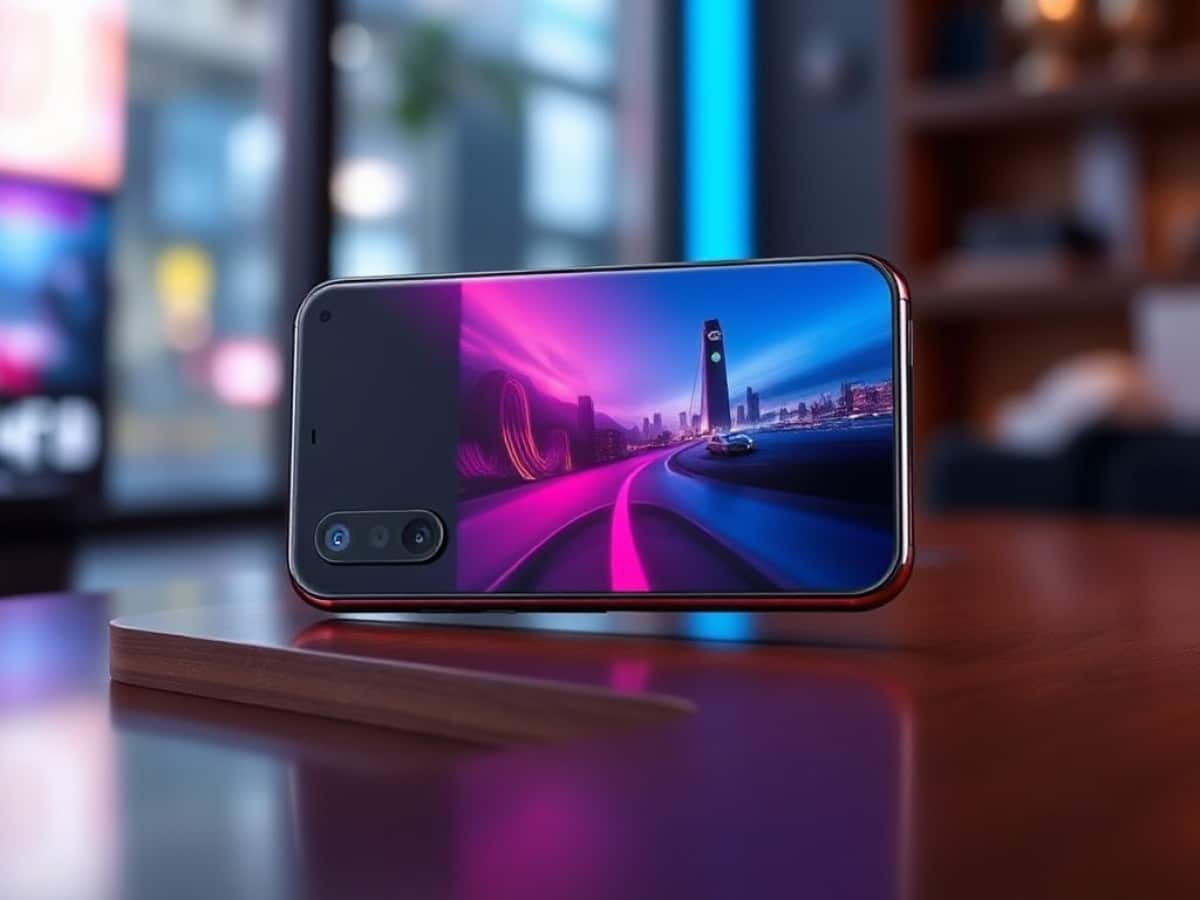
Another nice touch: the complete absence of a camera bump. The back is perfectly flat, allowing the phone to lay stable on a table without wobbling—a comfort feature that few smartphones still offer. An unexpected bonus: this flatness makes it easier to attach an external cooler right next to the SoC, close to the heat source. However, the glass back scratches easily, precisely because it makes contact over its entire surface. And while the matte frame doesn’t show marks, the back is a fingerprint magnet.
Now, let’s get to the heart of the marketing…or rather, the technical aspect: the AquaCore. Redmagic is the only brand to circulate actual fluorinated liquid in a mass-market smartphone, propelled by a piezoelectric micropump, coupled with a fan spinning at 24,000 RPM, and a 13,116 mm² vapor chamber. On the 11S Pro, the heat exchange surface has increased, the “double-sided elevated structure” supposedly improves heat transfer by 50%, and the fan has enhanced durability. It’s spectacular, it’s unprecedented, and it makes for a superb techno-fetish object to behold.
However, what does it really bring to the table? After numerous tests with and without active cooling, my sense is that the bulk of the thermal work is done by the passive components, mainly the large vapor chamber, rather than the fluorinated liquid, which likely plays a more significant role in managing the battery’s temperature than the SoC’s. The fan primarily helps to expel heat to the exterior. In short, the visual “wow” effect is real; the measurable impact, however, is harder to pinpoint. It doesn’t detract from the overall effectiveness of the system, but it does put the marketing claims into perspective.
Performance
Here is where the Redmagic 11S Pro really shines. It features a Snapdragon 8 Elite Gen 5 chip in its “Leading Version,” with Prime cores boosted to 4.74 GHz compared to 4.61 GHz for the standard version of the chip, and 4.6 GHz for the 11 Pro. On paper, this is the main selling point of the “S” model. In reality, the frequency difference is so minute that it’s imperceptible in actual use.
A note on benchmarks: The scores mentioned in this review (Geekbench, 3DMark) should be considered as rough estimates, not absolute truths. The incident last April with the 11 Pro being downgraded by UL Solutions for circumventing 3DMark’s security limits to inflate its scores is a reminder that a manufacturer can detect a benchmarking app and adjust the phone’s behavior accordingly, with boosted frequencies, full cooling, and an unrestricted thermal profile that you won’t experience in actual gameplay.
That’s exactly why more weight is given to our gaming sessions and stress tests than to mere leaderboard standings. Treat these numbers as a reference point, never a guarantee.
In terms of raw numbers, the phone leads the pack. In Geekbench 6, it scores about 3,720 points in single-core and 11,618 in multi-core, matching the Galaxy S26 Ultra and closely trailing the iPhone 17 Pro Max, which it even surpasses in multi-core performance. In 3DMark, it’s even more clear-cut: around 8,236 points in Wild Life Extreme, ahead of the S26 Ultra and far beyond the iPhone 17 Pro Max. Except for iPads with Apple’s M chips, the 11S Pro is among the fastest mobile devices available today.
But the real strength of the 11S Pro isn’t just peak performance—it’s sustainability. Where most thermally constrained smartphones drop performance after a few minutes, this one maintains its frequencies longer thanks to its cooling system.
The true value of a gaming phone lies in sustaining performance throughout an entire session, not just during a quick benchmark. During a 20-minute GPU stress test, the 11S Pro performs slightly better than the 11 Pro, though it’s hard to say whether this improvement is due to the enhanced cooling rather than just updated drivers or the typical variability of such tests.
Compared to the Redmagic 11 Pro, the difference in gaming is negligible. Games like Destiny Rising and The Division Resurgence run at full settings on both devices, with smooth framerates and high detail. Despite my best efforts, I couldn’t feel any real gains with the controller in hand. If you already own the 11 Pro, don’t even think about it: this model isn’t meant for you.
The true leap should be measured against last year’s 10S Pro, which we also reviewed. Here, Redmagic claims improvements of +19% for the CPU, +24% for the GPU, and +39% for the NPU, and the benchmarks confirm a significant difference. This is the natural upgrade target: if you’re coming from a previous generation model, the jump is noticeable. Between two “11” versions, it’s minimal.
A subtle but real improvement: the RAM has been upgraded from LPDDR5T in the 11 Pro to LPDDR5X Ultra. Both are high-end variants, superior to the standard LPDDR5X found in traditional flagships, and once again, the practical impact is more about technical detail than actual user experience.
Regarding heat, it’s important to be realistic: Redmagic’s phones run hot. Pushed to its limits, the 11S Pro can get quite warm. The cooling system doesn’t eliminate heat; it spreads it out and keeps it below the threshold for throttling longer. In everyday use, you won’t push it that far, but in prolonged intensive sessions, you’ll feel it in your hand.
The Energy Cube overlay offers four profiles: Eco, Balanced (default), Rise, and a hidden Diablo mode in a separate menu. Diablo maxes out the frequencies for insane performance, at the cost of significant heat and power consumption. Redmagic recommends using it only occasionally, ideally with an external cooler connected and “separate charging” activated to power the SoC directly without overheating the battery. This is precisely the kind of feature designed by people who truly understand their audience.
In the end, the conclusion on performance is paradoxical. Yes, the 11S Pro is as fast, if not faster, than any other phone on the market, especially over time. But no, it hardly advances beyond its predecessor. This brings us back to the central question of this review: what’s the point of the “S” this year, especially at its new, higher price point?
Display
The display remains a strong point, and it hasn’t changed since the 11 Pro; it’s essentially the same panel we’ve seen since the Redmagic 10 Pro at the end of 2024. We’re looking at a 6.85-inch BOE OLED with a resolution of 1216 × 2688 (1.5K) and a refresh rate capped at 144 Hz.
This 144 Hz is above the market average (120 Hz) but below the fastest displays—some Motorola devices reach 165 Hz. In practice, few games truly exceed 120 Hz, so the argument is more about marketing than a decisive factor. What matters is that the overall fluidity of the system and compatible games is impeccable.
Redmagic’s big philosophy is a full-screen display, free of any notches or punch holes. The selfie camera is hidden under the panel (BOE X10 technology), virtually invisible in everyday use. For gaming and video, it’s a real pleasure: no small dot disrupts the image. We’ll see later that this choice comes at a cost in terms of selfie quality, but for the phone’s primary use, it’s appropriate.
In terms of brightness, Redmagic claims a peak of 1,800 nits. Our colleagues at PhoneArena measured about 1,900 nits over 20% APL and around 1,500–1,590 nits in full white screen, excellent figures that are sufficient to remain legible in bright sunlight, even if they don’t quite reach the peaks of a Galaxy S26 Ultra. The display also knows how to increase its brightness automatically in strong light, which avoids struggles outdoors.
For visual comfort, Redmagic highlights a 2,592 Hz PWM coupled with DC dimming, all certified by SGS and TÜV Rheinland for low blue light. For those sensitive to flickering, this is reassuring, and flicker control has improved compared to previous generations.
The only real novelty in the panel compared to the 11 Pro is Magic Touch 4.0, which promises 10% more touch precision, supported by a Synaptics 3910v chip and compatibility with wet fingers. Honestly? I didn’t feel the difference. This is the type of gain that might speak to a competitive player with sharp reflexes, but it remains imperceptible to most people.
A small detail I noticed on my unit: color calibration can vary slightly from one device to another, with a slightly cool bias. Nothing dramatic, especially since the color temperature settings in the options allow you to adjust it to your taste in two minutes.
Lastly, the fingerprint sensor: here, it’s a 3D ultrasonic model, quick and reliable, which almost never failed me. The difference is clear compared to the 11 Air and its optical sensor, which is slower and more finicky. Facial recognition is also included, handy for unlocking but unusable for validating payments. In short, on the display front, the 11S Pro offers a great canvas for gaming—simply, there’s almost nothing new.
Photography
When it comes to photography, I’ll be straightforward: there’s absolutely nothing new to report. The 11S Pro uses exactly the same setup as the Redmagic 11 Pro, with a main 50 MP sensor with OIS, a 50 MP ultra-wide angle, a completely superfluous 2 MP macro sensor as the third eye, and the famous 16 MP under-display front camera, great for gaming but poor for selfies.
Same sensors, same somewhat heavy processing, same results: decent daytime performance with the main camera, quickly limited as soon as you zoom or switch to the ultra-wide angle, and no telephoto lens. Rather than rewriting everything identically, I refer you directly to our complete test of the 11 Pro, which details precisely what this photo part is worth: it’s rigorously the same device, and it was already not its strong point. We’re left with decent emergency photography for social media, nothing more, which, at this price point, is starting to be noticeable.
Operating System
The 11S Pro runs on Redmagic OS 11.5, based on Android 16. And this is one of the areas where opinions vary the most among reviewers. Personally, I find the interface functional and smooth, without real frills, fairly close to stock Android in its logic, with Redmagic’s own options (cooling, fan, RGB) well integrated into the system settings. Others criticize it for a cluttered interface and uninspired icons compared to Google’s clean Android. The truth lies somewhere in between: it’s not the most beautiful overlay, but it gets the job done.
Where it stings a bit more is the bloatware. Depending on the units, you’ll find pre-installed apps like Facebook, Booking.com, TikTok, AliExpress, Instagram, and a few mediocre games. It’s nothing insurmountable, but on a phone at this price, it’s always unpleasant. Good news, however: Redmagic has cleaned up some of the previous versions’ blemishes, such as
Similar Posts
- RedMagic 11 Air Unveiled: Divine Price Set to Unleash Your Gaming Demon
- Redmagic 10s Pro Review: Discover the Most Powerful Smartphone on the Market!
- Top Gaming Tablet Alert: 9-Inch OLED Android Outshines iPad Mini
- Revolutionary Chip in Your Next Samsung Prevents Burns: Say Goodbye to Overheating!
- iPhone 18 Pro Rumor: Could It Feature a Massive Vapor Chamber?

Maya Singh is a senior editor covering tablets and hybrid devices. Her work explores how these tools reshape digital productivity and learning. She also contributes to feature editorials on emerging tech.