
Scientists confirm: This is the most effective way to get your cat’s attention, according to new research
Elderly Couple Refuses Reserved Seats—Viral Train Standoff Sparks Fiery Debate on Courtesy
For several years, Samsung’s Q930 series has held a unique position. Less ambitious and notably less expensive than the imposing Q990s, yet far more comprehensive than entry-level models, it often represents the ideal balance for those looking to enjoy a true home cinema experience without transforming their living room into a dedicated cinema room with ten speakers.
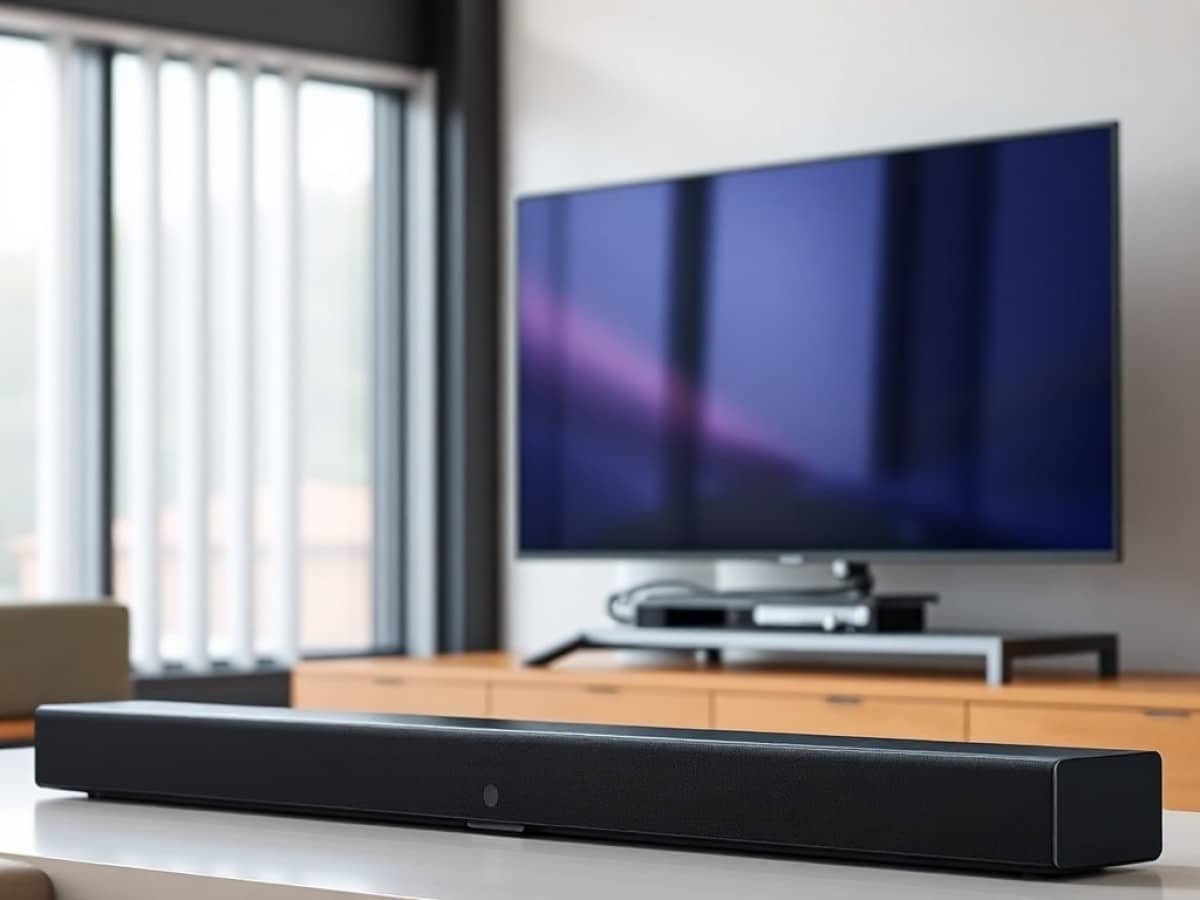
At first glance, this new HW-Q930H looks almost identical to the previous generation. The formula was already successful, featuring a main bar, two wireless surround speakers, and a wireless subwoofer, making up a Dolby Atmos and DTS system in a 9.1.4 channel configuration. This means 9 horizontal channels and 4 vertical channels.
Rather than overhauling the design, the manufacturer has opted for a series of targeted improvements. The HW-Q930H introduces the new Samsung Sound app, lighter than SmartThings, further enhances integration with Samsung TVs through the latest Q-Symphony updates, and now supports Eclipsa Audio, a new spatial audio format developed in collaboration with Google to compete with Dolby Atmos. Samsung also emphasizes its AI-assisted processing, especially for dialogue enhancement, a critical aspect of any soundbar.
Does this gentle evolution suffice to keep the Q930H at the top of its category? This review aims to find out.
Samsung HW-Q930HTechnical Specifications
| Model | Samsung HW-Q930H |
|---|---|
| Dimensions | 11.11 cm x 12 cm x 6.04 cm |
| Spatial Audio | Dolby Atmos |
| Number of HDMI Ports | 2 |
| HDMI e-ARC | Yes |
| Wifi | Yes |
| Subwoofer | External |
| Rear Speakers | External |
| Product Sheet |
This review was conducted with a soundbar provided by Samsung.
Samsung HW-Q930HA Design That’s as Minimalist as It Is Industrial
No aesthetic revolution to report this year. Samsung almost exactly replicates its angular design, made up of straight lines and sharp edges. An almost industrial style, which doesn’t particularly strive to charm with its originality, but at least has the virtue of simplicity. The goal seems to be to offer the most neutral and discreet bar possible.
Perhaps one might miss the flair seen in competitors like the Sonos Arc Ultra or Bose Lifestyle Ultra. However, a soundbar that visually disappears is not a bad thing. On this point, Samsung perfectly fulfills its mission.
The same goes for the surround speakers. Here too, Samsung does not alter a tried and tested formula. The two modules adopt exactly the same stylistic language as the main bar and feature a uniform finish. These are indeed the same speakers as the previous generation.
The real innovation introduced last year, and fortunately retained here, concerns the subwoofer.
It is now the second generation of the Q930 to adopt this particularly compact, yet ultra-performant format (more on that later).
Samsung HW-Q930HConnectivity: Covering the Essentials
In terms of connectivity, Samsung sticks to the essentials. The HW-Q930H features an HDMI output compatible with eARC to connect to the TV, as well as a single HDMI input for an external source, like a UHD Blu-ray player or a gaming console. This input supports video streams up to 4K at 120 frames per second, allowing gamers to connect a modern console directly without losing advanced gaming features of their TV.
An optical digital input is also available, always useful for connecting an older TV or certain audio sources.
Wireless connectivity, however, is particularly comprehensive with Wi-Fi, Bluetooth, AirPlay 2, Chromecast, Spotify Connect, Tidal Connect, and Roon Audio compatibility (for Hi-Res Audio home music servers).
The essentials are indeed present, but one might regret the absence of a second HDMI input. This compromise notably distinguishes the Q930H from the more ambitious Q990H and might constrain users who have multiple external sources.
Samsung HW-Q930HInternal Design: An Architecture That Remains Ambitious
The audio system relies on a 9.1.4 channel configuration, with no fewer than 17 speakers distributed between the main bar, the two surround speakers, and the subwoofer.
The bar contains most of the transducers, some dedicated to low frequencies and others (tweeters) to the finest sounds. It includes the left, center, and right frontal channels, responsible for reproducing most sound effects as well as dialogues. Samsung also planned several side speakers intended to broaden the sound stage and enhance surround effects in combination with the rear speakers.
In addition, there are speakers directed towards the ceiling, tasked with reproducing the four height channels of Dolby Atmos.
The load is closed, without a device to boost the very low frequencies (bass-reflex, passive radiator…), with their reproduction delegated to the subwoofer. In essence, the bar operates over a reduced frequency range to be more effective.
The surround speakers are not limited to a mere rear presence. Each houses both a frontal speaker and a vertical speaker dedicated to Atmos effects. Thus, we are far from entry-level surround systems.
The subwoofer combines an active speaker of about 16.5 cm with a large passive radiator of 20 cm. Unlike a conventional speaker, this second transducer is not connected to the amplification: it simply moves under the action of the main speaker, vibrating lower in frequency.
This setup extends the bass response while reducing air turbulence and port noise. Moreover, the large passive radiator increases the emissive surface, and the subwoofer performs very well without necessarily being placed in a corner of the room.
In practice, the benefits are immediately noticeable. And in certain action movies or video games, yes, it hits quite hard.
Samsung HW-Q930HApp, Settings, and Embedded Technologies
Until now, users of Samsung soundbars primarily had to use the SmartThings app to configure and control their systems.
The main innovation of this generation is precisely in this area, with the new Samsung Sound app.
Simpler and exclusively dedicated to audio products, this app does not require a user account to operate.
An Installation Simplified to the Extreme
Once the bar, subwoofer, and surround speakers are connected to the power, the app immediately detects the system and proposes its integration into the home Wi-Fi network. The pairing with the subwoofer and rear speakers then takes place automatically, without the need for any intervention.
From the main screen, the user can directly modify the volume, select the source, or choose between the different sound modes offered by Samsung. These include Standard, Surround, Game Pro, and AI Adaptive Sound modes. Thanks to dynamic processing, the latter automatically adjusts the output based on the content being played and generally manages to offer an excellent compromise between immersion and intelligibility.
Samsung also incorporates a seven-band graphic equalizer.
The app also provides access to several advanced functions. Notably, you can activate or deactivate SpaceFit Sound Pro, the automatic calibration technology tasked with analyzing the room’s acoustics to optimize sound reproduction. As often with this type of treatment, the effects remain relatively subtle, but the algorithm generally contributes to better integrating the subwoofer for a more uniform sound stage.
Samsung also offers a feature called “Sound Height.” This function aims to place dialogues at screen level, using the vertical drivers of the bar.
The Pro Active Voice Amplifier (AVA Pro) is another interesting novelty. The bar continuously analyzes ambient noise in order to automatically enhance the intelligibility of dialogues when an external noise interferes with listening.
However, not everything is perfect, as some advanced functions present in the old version are missing, such as the ability to use exclusively the surround speakers for discreet nighttime listening or the option to virtually reposition the rear speakers at the front of the room. Pending an update, you must therefore use both applications to access this specific setting.
Furthermore, the Q-Symphony technology allows for the simultaneous operation of both the TV’s speakers and those of the bar to further broaden the sound stage.
For streaming, Samsung has left nothing out. The Q930H is compatible with AirPlay 2, built-in Chromecast, Spotify Connect, Tidal Connect, and the Roon ecosystem. A particularly comprehensive connectivity that almost always avoids having to pull out your smartphone to launch audio content.
Samsung HW-Q930HAudio: A Spectacular System Powered by a Muscular Subwoofer
Upon listening, the Samsung HW-Q930H continues the legacy of previous generations. It features a sound signature immediately identifiable, designed primarily for home cinema: a generous bass, a very broad sound stage, and a controlled reproduction, without exuberance.
Samsung has managed to pull off a small feat with the subwoofer. Despite its small volume, it delivers remarkably deep and solid bass. Our measurements indeed highlight a significant reinforcement in the 40 Hz zone, which translates acoustically into particularly physical basses. Given the size of the device, it’s a miracle.
Moreover, these basses remain perceptible even at low listening levels. In practice, it is therefore not necessary to increase the volume to enjoy a broad and robust reproduction.
Another pleasant surprise, this subwoofer is relatively insensitive to its placement in the room.
A Perfectible but Generally Well-Controlled Sound Signature
The main bar is not an absolute model of neutrality.
The measured response curve reveals some colorations, but the tonal balance is ultra-homogeneous. We observe a slight dip around 400 Hz, which also deprives certain voices, particularly male ones, of some of their fundamentals.
With the default settings, dialogues can sometimes lack thickness.
The situation significantly improves by activating the Pro Active Voice Amplifier or by slightly increasing the level of the central channel from the app. Once these adjustments are made, voices gain presence and intelligibility becomes excellent, even on particularly busy soundtracks.
Samsung also seems to have deliberately accentuated the area around 2 kHz. This choice brings a sense of detail appreciated and contributes to the overall clarity of the sound message. In return, some hardness may appear at high volumes on certain contents.
Conversely, the very high frequencies appear more subdued. The reproduction sometimes lacks a bit of brilliance and airiness, especially in musical listening. Fortunately, the integrated equalizer allows quite easily to correct this behavior according to one’s preferences.
However, one point deserves to be highlighted: even at very high levels, the tonal coherence remains remarkably preserved. The subwoofer maintains its ability to support the bar without ever disconnecting, and the overall balance varies little.
And there is clearly no lack of power reserve. I measured a maximum level close to 95 dB at one meter. In other words, the HW-Q930H has enough resources to sound a 30 m² living room without difficulty. Or, let’s be honest, to quarrel with the entire neighborhood if you were tempted to push the volume a bit too much.
A Spectacular Sound Stage
The other great strength of the HW-Q930H lies in its ability to create a particularly broad sound stage.
The reproduction extends well beyond the physical limits of the bar. The lateral effects develop far beyond the TV, quickly giving the impression of using a much larger system.
The verticality is also one of the ensemble’s strong points. Even in stereo and without the rear speakers being solicited, the ceiling-directed speakers manage to create a surprisingly high sound image.
It should be noted, however, that the rear surround speakers remain silent when playing stereo content in Standard mode. To enjoy playback on all channels, it is appropriate to activate the Surround or AI Adaptive Sound modes.
And it is precisely in this area that Samsung proves particularly convincing.
Thanks to the numerous settings offered in the app (level of the central channel, rear channels, or vertical channels), it is very easy to adapt the reproduction to one’s tastes and the configuration of one’s room.
Even old mono contents can thus benefit from a surprisingly credible spatialization. During the viewing of High Noon, an absolute classic of the Western genre released in 1952, the AI Adaptive Sound mode manages to sensibly open the sound stage without betraying the spirit of the work. Dialogues remain solidly anchored to the screen while the music gains in breadth.
The spectacle naturally changes dimension with modern multichannel soundtracks.
In The Revenant, the reproduction of natural atmospheres immediately impresses. The rustling of the wind in the trees, the crackling of branches, or the sounds of animals literally envelop the viewer. The sound stage then gains a true three-dimensional dimension.
In Mad Max: Fury Road, the bar shows off its power. The engines, explosions, and impacts benefit from considerable energy, while the subwoofer demonstrates all its capabilities. Some scenes are simply exhilarating.
Dolby Atmos soundtracks are obviously the HW-Q930H’s favorite playground. In Dune: Part Two, the immersion is impressive. The vertical effects related to the ships or sandstorms provide a real sensation of height, reinforced by the surround speakers that also shoot upwards.
While it does not reach the precision of an installation composed of ceiling-embedded speakers, the illusion remains sufficiently convincing to transform the viewing experience.
Dialogues and Nighttime Listening: Samsung Pays Attention to Details
By default, dialogues can slightly lack presence, especially on stereo content.
Activating the Pro Active Voice Amplifier then significantly improves matters. For multichannel soundtracks (5.1 and above) it can sometimes be excessive. A good compromise is to activate it and possibly lower the level of the central channel a bit (the adjustment does not impact stereo tracks).
Once these adjustments are made, the reproduction of voices becomes exemplary and intelligibility poses no problem, even during the most loaded action scenes.
Samsung finally offers a particularly effective dynamic compression function for nighttime listening.
Sharp HT-SBW320 Review: Extreme Slimness at the Cost of Immersion
Samsung Q995F Review: Experience 11.1.4 Channel Immersion and Musical Excellence!
Bose Lifestyle Ultra Review: Experience the Power of Immersive Dolby Atmos Sound!
Marshall Heston 120 Review: Iconic Style Meets Immersive Sound in This Soundbar!
TCL Z100 Review: Simple, Modular Home Cinema Speakers Offer True Immersion

Maya Singh is a senior editor covering tablets and hybrid devices. Her work explores how these tools reshape digital productivity and learning. She also contributes to feature editorials on emerging tech.
Maya Singh is a senior editor covering tablets and hybrid devices. Her work explores how these tools reshape digital productivity and learning. She also contributes to feature editorials on emerging tech.