
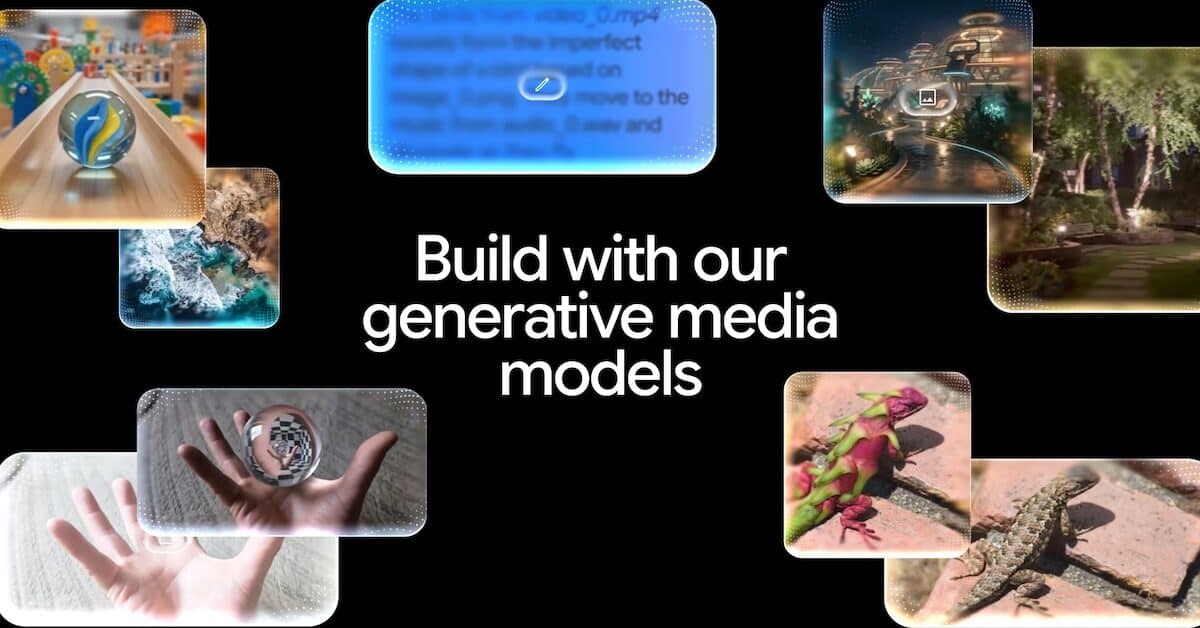
Google has expanded its Nano Banana lineup with a new, faster, and more cost-effective version while also broadening the rollout of its video generation model.
Scientists confirm: This is the most effective way to get your cat’s attention, according to new research
Elderly Couple Refuses Reserved Seats—Viral Train Standoff Sparks Fiery Debate on Courtesy
In a blog post on Tuesday, June 30, 2026, Google introduced Nano Banana 2 Lite, an update to its image generation model launched last February. This new variant is described as significantly quicker and more economical than previous versions. Concurrently, the company has made Gemini Omni Flash available to developers. This high-quality, cost-effective multimodal model for video generation and editing was first revealed in May during its annual conference.
Nano Banana 2 Lite: Engineered for Speed and High Volume
Available on Google AI Studio since Tuesday, Nano Banana Lite 2 is tailored for “rapid ideation and high-frequency development pipelines where speed and cost are prioritized over maximum quality,” the company explains in its release. Developers who are still using the original Nano Banana are encouraged to switch to this new model, which outperforms the former in every aspect. Nano Banana 2 Lite excels in low latency and cost-effectiveness: it generates images from text in just 4 seconds, “a key feature for interactive prototyping and quick visual drafting,” and charges $0.034 per 1,000 images. The company supports its claims with benchmarks showing that the model reliably produces results that are true to the prompts, with consistent characters and clear text rendering.
Choosing the Right Nano Banana Model for Your Needs
Why You Should Never Reheat These Foods in the Microwave – The Hidden Dangers Experts Warn About
I tried the top 5 guard dogs—here’s what makes these breeds the ultimate protectors
- Nano Banana 2 Lite: optimized for workflows requiring very low latency and high volume.
- Nano Banana 2: a “general-purpose and versatile” model that balances quality and speed.
- Nano Banana Pro: designed “for complex and professional use cases”, offering more control and capable of deeper analysis.
- Nano Banana: an “historical model” that Google recommends replacing with Nano Banana 2 Lite.
Nano Banana 2 Lite is not limited to Google AI Studio. It is also deployed across various company services, including the Gemini app, NotebookLM, Google Photos, and Google Ads.
This acceleration comes as Google continues to trail behind OpenAI in the realm of image generation. According to June rankings from the Text-to-Image Arena by Artificial Analysis, GPT Image 2 and GPT Image 1.5 exhibit superior performance compared to both Nano Banana 2 and Nano Banana Pro.
Gemini Omni Flash: Opening Up Conversational Video Editing for Developers
Unveiled at the Google I/O conference last May, Gemini Omni Flash merges “Gemini’s multimodal reasoning with video generation and editing capabilities,” Google recounts. Already available to subscribers of Google AI Plus, Pro, and Ultra, it is now also accessible in a public preview through the Gemini API and Google AI Studio.
The model boasts several features:
- Conversational video editing: it allows users to refine and alter videos created by Gemini Omni Flash with successive instructions.
- Multimodal referencing: the model can “combine inputs like images, text, and video” to create coherent scenes.
- Deep real-world knowledge: according to Google, Gemini Omni Flash leverages Gemini’s knowledge in areas like history or biology to create “convincing videos.”
Priced at $0.10 per second of generation, a rate “identical to that of Veo 3.1 Fast,” Google details, Gemini Omni Flash, however, faces several limitations: for now, videos are capped at ten seconds, audio file import and “scene extension” are not yet supported by the API, and imports of reference sequences longer than 3 seconds are also not well handled by the model at this stage. “Character consistency still has some limitations during scene changes or pan movements, but we are working to improve it,” Google adds.
Similar Posts
- Revolutionize Your Instructions: Discover Google Gemini’s Innovative Drawing Feature!
- Gemini 3.1 Flash-Lite Unveiled: Google’s Fast, Budget-Friendly Model for Developers
- Google Chooses Gemini 3 Flash as Default Model: What You Need to Know!
- AI Image Generators: Top 10 Powerhouses of November 2025!
- Google Unveils Gemini 2.5 Flash Image: Transform Your Photos with AI Magic!

Jordan Park writes in-depth reviews and editorial opinion pieces for Touch Reviews. With a background in UI/UX design, Jordan offers a unique perspective on device usability and user experience across smartphones, tablets, and mobile software.