
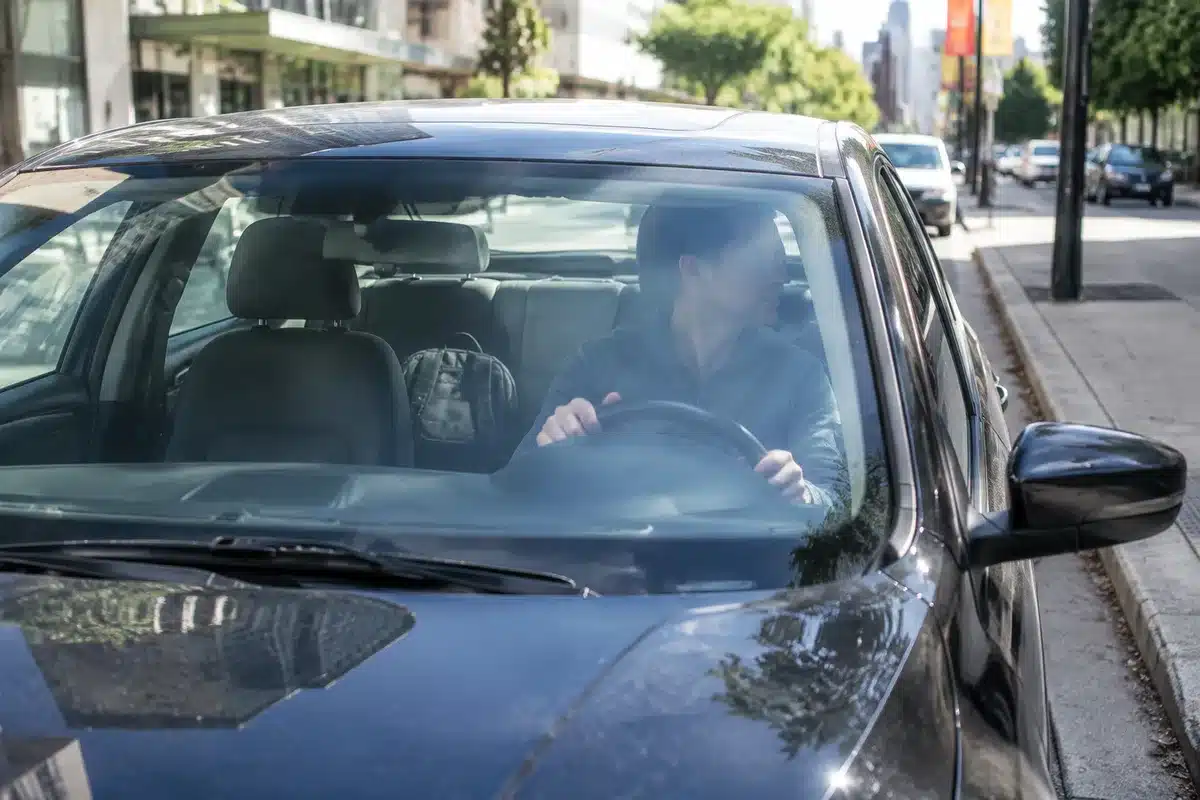
Whenever someone requests a ride on DiDi , a suite of artificial intelligence models evaluates trip-related data to flag possible dangers even before the passenger gets into the vehicle. The system can identify sudden changes in speed, deviations from the planned route and prolonged stops, and it triggers safety protocols when it detects uncommon behavior.
Scientists confirm: This is the most effective way to get your cat’s attention, according to new research
Elderly Couple Refuses Reserved Seats—Viral Train Standoff Sparks Fiery Debate on Courtesy
This capability is part of the safety package DiDi unveiled Thursday in Mexico City, where it announced an update to its Live Support tool in collaboration with Axon 911, enabling the platform to share trip information with authorities to streamline their response during potential emergencies.
The new feature means that when DiDi’s security team determines a situation warrants police involvement, authorities can open a link to consult trip details such as the vehicle’s real-time location, its speed, the license plate and other identifying information about the unit.
According to the company, this integration is meant to shorten the time between spotting an anomaly and the police response.
Pablo Lamuraglia, DiDi’s global head of Security, said during the presentation that the aim is to tie drivers, passengers, platform personnel and law enforcement into a single prevention-and-response system. The company also reported that 99.99% of its trips proceed without incident, based on its internal records.
How does DiDi identify a risky ride?
The safety architecture at DiDi relies on four distinct artificial intelligence models, each with a separate role. Every model inspects specific pieces of information to detect behaviors that could pose a danger to drivers or passengers.
One of them, named Hércules, acts as an initial line of defense. It reviews account usage patterns and trip data and, when it spots unusual activity, can prompt additional identity checks.
Another model, Clío, analyzes the areas and times of trips. Its job is to detect journeys that diverge from normal mobility patterns.
A third model introduced at the presentation, called Themis, focuses on biometric verification to prevent people who have restrictions on the platform from creating new accounts or using different identities.
Why You Should Never Reheat These Foods in the Microwave – The Hidden Dangers Experts Warn About
I tried the top 5 guard dogs—here’s what makes these breeds the ultimate protectors
Finally, Pitia brings a gender-aware dimension to ride assignment. This model evaluates factors such as time of day, location and drivers’ track records to prioritize assigning certain vehicles to female passengers in specific situations.
These four models are part of an infrastructure that, DiDi says, monitors 100% of trips; in other words, automated systems analyze every journey and generate alerts when they detect an anomaly. In those circumstances, a specialized human team reviews the information and decides whether to contact the passenger, the driver or the authorities.
They also emphasized that beyond automated monitoring, DiDi offers more than 40 safety features that can be used at different stages of a trip.
From 3 billion trips, 17,000 triggered specialized monitoring
DiDi reported that, out of the 3 billion trips it records in Mexico, roughly 17,000 activated its Live Support function — about 0.00057% of the total.

Of those 17,000 cases, 7% were classified as a possible incident, while 3% required police assistance.
That translates to approximately 1,190 situations flagged as potentially risky and around 510 cases that needed law enforcement support.
The company clarified that its security team managed the remaining cases without involving the police.
Police will be able to check the vehicle’s location in real time
The Live Support update adds a connection to Axon 911 through its Responder Connect module, allowing all the data needed to handle an emergency to be displayed in a single interface.
At the presentation, Igor Zupo from DiDi’s Global Security team explained that the system supplies vehicle location updates every second, along with driver, passenger and unit details.
The tool also includes discreet contact options and coordination features for police dispatch. Looking ahead, DiDi plans to add live video from inside vehicles, although it did not provide a timeline for when that would be available.
The company currently integrates with emergency centers C4, C5 and C7 across 19 states and maintains cooperation agreements with the Mexico City Secretariat of Citizen Security and the federal Secretariat of Security and Citizen Protection.
During the event, José Ángel Sánchez Santos, general director of Police Investigation for the city’s Secretariat of Security, noted that these tools can assist authorities in three key areas: prevention, response and investigation.
He also stressed the importance of merging technological information with existing security systems, such as the C5 tools and the Mi Policía app, which enables citizens to request police assistance based on their location.
Similar Posts
- Europe Accuses Snapchat: Deliberately Endangering Children’s Safety
- TikTok’s Strategic Shift Amid Tensions: A Bold Move to Secure Its Future in the US
- Galaxy S26 to Feature Privacy Screen Tech: Say Goodbye to Prying Eyes!
- Google’s AI can now help you find the cheapest airline tickets, and this is how to use it !
- Overwhelmed by Unread Messages? WhatsApp’s AI Now Summarizes Them for You!

Lucas Monroe tracks the latest trends in mobile and 5G innovation. His work spans hardware analysis, telecom breakthroughs, and ecosystem development in next-gen connectivity.