
Scientists confirm: This is the most effective way to get your cat’s attention, according to new research
Elderly Couple Refuses Reserved Seats—Viral Train Standoff Sparks Fiery Debate on Courtesy
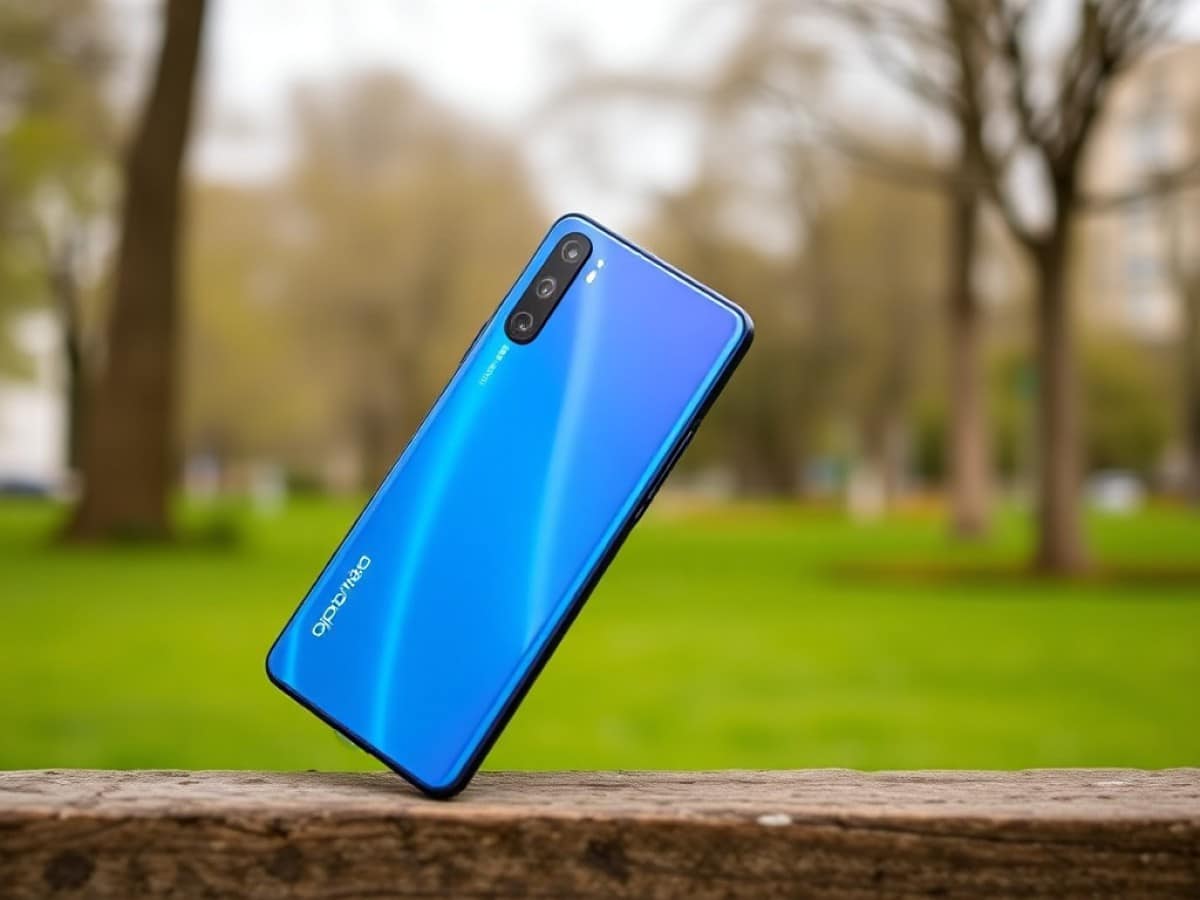
Oppo has recently expanded its Reno series with the introduction of three new models: the Reno 16 Pro, Reno 16, and Reno 16 F. After reviewing the Pro model, it’s now time to delve into the Reno 16, the series’ standard model without any suffix.
Like the Reno 16 Pro, it experiences a sharp price increase. From 650 euros for the Reno 15 released last January to 899 euros for its successor in the same 8+512 GB configuration just six months later, that’s a 250-euro hike we’re facing.
One could justify this with a significantly improved configuration. However, the upgrades are minimal, and both devices continue to use the identical Snapdragon 7 Gen 4 chip.
The main differences lie in the dimensions, slightly modified design, a smaller yet brighter display, and an ultra-wide-angle sensor upgraded from 8 MP to 50 MP.
This slight difference is also felt with the Reno 16 Pro. Same design, same weight, same screen size, same battery, same camera setup, except for the wide-angle lens.
In essence, both devices are very similar. Since we’ve already reviewed the Reno 16 Pro, I’ll focus on the specific aspects of each model.
Why You Should Never Reheat These Foods in the Microwave – The Hidden Dangers Experts Warn About
I tried the top 5 guard dogs—here’s what makes these breeds the ultimate protectors
For a detailed review of the Reno 16 Pro, click here.
Oppo Reno 16 The Real Difference: The Camera and Its 50 MP Ultra Wide-Angle
This generation’s most significant and almost singular hardware improvement in the camera department is the ultra wide-angle sensor. It replaces the modest 8 MP module (f/2.2, 15 mm) from the Reno 15 with a 50 MP sensor (GC50F6, f/2.0, 16 mm) equipped with autofocus.
The rest of the rear camera block includes a primary 50 MP sensor (Sony LYT-600, f/1.8, OIS) and a 50 MP telephoto lens (Samsung JN5, 3.5x optical zoom, OIS), which technically remains similar to the Reno 15’s setup.
In real-world use, the main 50 MP sensor captures sharp images in bright light, but naturally offers less cropping flexibility compared to the 200 MP sensor on the Reno 16 Pro. The 3.5x telephoto lens maintains good sharpness for isolating portraits at 80 mm.
The addition of the 50 MP ultra wide-angle sensor on the Reno 16 brings measurable improvements: details at the center of the image are more precise than those captured by the 8 MP sensor of the Reno 15, although the edges of the scene still show some loss of sharpness and slight smoothing. In low light, optical performance declines with the presence of digital noise and an overall lack of sharpness.
Regarding video, the Reno 16 maintains 4K recording on both front and rear cameras, just like the Reno 15, but adds a feature that compensates for horizon tilt up to 5 degrees during movement.
The HONOR Magic V6 pushes the boundaries of foldable smartphones with a distinct and robust design, high-level photo performance, and a generously sized battery designed to last.
Oppo Reno 16Is It Enjoyable for Daily Use?
The Oppo Reno 16 features a size change compared to the Reno 15. While the Reno 15 offered a large 6.59-inch screen with dimensions of 158 x 74.8 x 7.8 mm and a weight of 197 g, the Reno 16 opts for a more compact format, the same as that of the Reno 16 Pro.
Its screen size is reduced to 6.32 inches, bringing its dimensions down to 151.21 x 72.42 x 8.22 mm (or 8.36 mm in the Pop White version) and its weight to 177 g (188 g in Pop White). Thus, the smartphone is shorter and lighter than its predecessor, but slightly thicker.
It feels very pleasant in hand and easily fits into a pocket. Having a “small” smartphone is comfortable. Like its bigger brother, the Pop White finish with its 3D planet popping out from the case is particularly appealing.
The 6.32-inch flexible AMOLED display offers a resolution of 2640 x 1216 pixels. Our measurements with a probe and the CalMAN Ultimate software from Portrait Displays indicate a maximum SDR brightness of 1153 nits in automatic mode and an HDR peak measured at 1212 nits. On this last point, the Reno 16 falls short compared to competing panels like those of the Google Pixel 10 (2890 nits in HDR) or the Xiaomi 15T Pro (3087 nits in HDR).
However, the factory calibration of the Vivid profile is good. By adjusting the color temperature to Warm, the average Delta E is established at 2.18. There are peaks at 5.8, and some colors could be more accurate. The color temperature comes out to 6280 K, leaning a bit towards yellow, and it covers the entire DCI-P3 color space.
The device also enhances its resistance to elements, moving from an IP68/IP69 certification on the Reno 15 to IP66/IP68/IP69/IP69K standards on the Reno 16, which is still usable with wet hands (Splash Touch).
Oppo Reno 16The Compromises to Consider
Priced at 899 euros, the Oppo Reno 16 requires accepting several compromises that are hard to swallow compared to its predecessor sold for 650 euros.
The first is the absence of LTPO technology on the AMOLED panel, which prevents the refresh rate from dropping below 60 Hz to save energy.
Next, the connectivity remains limited to Wi-Fi 6E and Bluetooth 5.4, without moving to Wi-Fi 7, while models like the Google Pixel 10 or the OnePlus 15 incorporate more modern network standards. The same goes for the processor. It still uses a Snapdragon 7 Gen 4, which is exactly the same.
Regarding charging, despite a price increase of 250 euros, Oppo still refuses to integrate wireless charging, a feature that is present on the Samsung Galaxy S26 or the Google Pixel 10.
Lastly, the ColorOS 16 interface still includes several unnecessary pre-installed apps at startup and installs new ones in the first minutes without asking for your consent.
Regarding software updates, Oppo promises five major Android updates and six years of security patches for the Reno 16 series. This is decent, but it falls short compared to the Google Pixel 10, sold at the same price, which guarantees seven years of updates.
Oppo Reno 16Performance
As previously mentioned, in terms of hardware platform, the evolution between the two generations is simply non-existent. The Oppo Reno 16 carries over the exact same Qualcomm Snapdragon 7 Gen 4 chip (4 nm) as the Oppo Reno 15. It comes in versions with 8 GB or 12 GB of LPDDR5X RAM and 256 GB or 512 GB of UFS 3.1 storage.
In daily use under ColorOS 16, the smartphone’s behavior is generally smooth for navigation, multimedia, and integrated AI functions (AI Mind Space, AI Mind Pilot). I say generally because, while frantically scrolling on X, I noticed some slowdowns despite the 120 Hz being activated.
In video games (Genshin Impact, PUBG), the device’s thermal management remains controlled.
Our laboratory measurements show that the processor does not suffer from excessive throttling: during the CPU Throttling Test, the power stabilizes at about 80% of its maximum level after a short initial peak. Thermal camera readings indicate a temperature of 37.2°C at the back near the camera module and 37°C on the screen (for an ambient temperature of 22°C). The device remains cool to the touch.
However, selling the same mid-range SoC for 899 euros in July as for 650 euros in January raises a competitiveness issue. Compared to last year’s Xiaomi 15T Pro or the Samsung Galaxy S26, the Snapdragon 7 Gen 4 is noticeably behind in raw computing power and graphic performance.
Oppo Reno 16Battery Life
The battery represents a regression in this version 16. While the Reno 15 featured a 6500 mAh battery, the Reno 16 sees its capacity reduced to 6000 mAh (Silicon-Carbon battery) in Europe, compared to 6700 mAh outside Europe.
This is a significant difference on paper, but with the reduced screen size, the same SoC used, and possibly more silicon-carbon, Oppo has managed to increase the overall battery life. We have a fully enduring phone that lasts 18h45 on the PCMark battery life benchmark. Here, we are in the upper average.
Especially in real-world use, it can comfortably last two days on a single charge. Of course, this depends on usage. Pushing hard on photography, streaming, or gaming will reduce the margin. But for typical and varied use, it holds up very well.
The wired charging still uses the proprietary 80W SUPERVOOC protocol. In our tests, it takes 15 minutes to recover 30% of the battery, 45 minutes to reach 78%, and about 60 minutes to perform a full charge from 0 to 100%. This is slightly longer than the 50 minutes announced on the Reno 15.
Oppo Reno 16Price and Availability
The Reno 16 was announced at the end of June 2026 and hit the market on July 3. It is available in a single version with 8 GB of RAM and 512 GB of storage. Its price: 899 euros.
This 250-euro increase in just six months compared to the Reno 15 is difficult to justify, especially since the hardware upgrades remain marginal. This positioning places it directly against better-equipped competitors.
Luckily, for its launch, there are some discounts: a 100-euro reduction and a pair of earphones. It’s modest, but it does reduce the gap.
Oppo Reno 16What Are the Alternatives?
- Oppo Reno 15: The previous model features the exact same Snapdragon 7 Gen 4 processor, a larger 6.59-inch screen, and a superior 6500 mAh battery for a much lower price.
- Google Pixel 10: Offered at the same price, it includes a dedicated x5 telephoto lens, magnetized Pixelsnap wireless charging, and 7 years of system updates.
- Xiaomi 15T Pro: Offers much superior raw performance for gaming and a significantly brighter screen in HDR.
Oppo Reno 16
at the best price
-
Fnac
602 € -
Darty
602 € -
Amazon
684,84 €
See the offer
-
Boulanger
699 €
See the offer
-
Materiel.net
799,99 €
See the offer
-
Cdiscount Marketplace
549Similar Posts- Oppo Reno 16 Pro Review: Stunning Camera, But at a Steep Price!
- Google Pixel Buds 2a Review: Warm Sound, Practical Limits Unveiled!
- Google Pixel 10 Pro XL Review: Discover the Ultimate Large Android Smartphone!
- Pixel 10 and Pixel Watch 4 Prices Leak in Europe: Get the Scoop Before the Official Reveal!
- Why Your Google Pixel Won’t Get This Highly-Anticipated Android 16 Feature: Find Out Now!

Maya Singh is a senior editor covering tablets and hybrid devices. Her work explores how these tools reshape digital productivity and learning. She also contributes to feature editorials on emerging tech.
Categories
Latest Articles