
Scientists confirm: This is the most effective way to get your cat’s attention, according to new research
Elderly Couple Refuses Reserved Seats—Viral Train Standoff Sparks Fiery Debate on Courtesy
Last year, Xiaomi highlighted two key features for its gaming smartphone, the Poco X7 Pro: a fast processor and a large battery for maximum gaming endurance. We were quite impressed then.
This year, its successor, the Poco X8 Pro, not only enhances these features but also retains some of the weaknesses of its predecessor, such as basic camera capabilities. Does this place it among the best smartphones on the market?
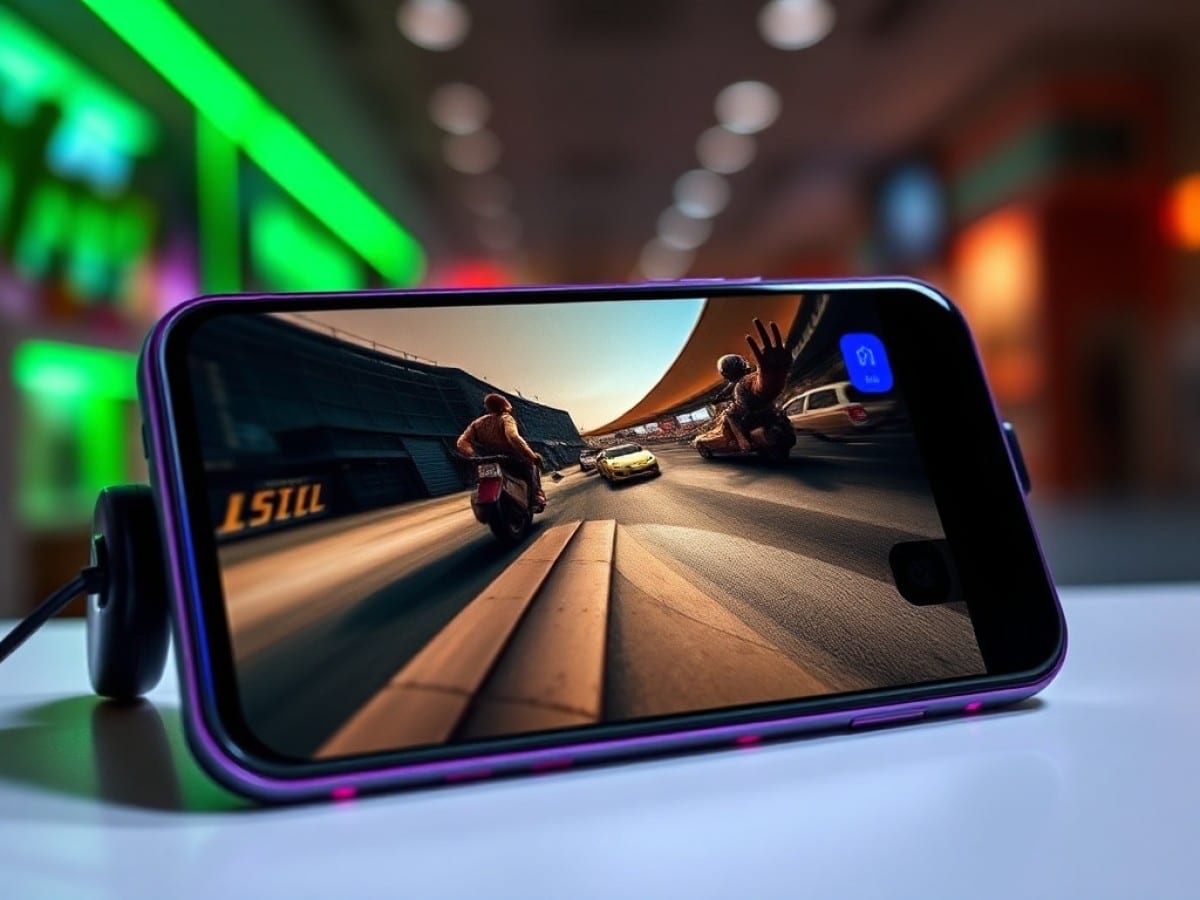
The design also evolves, notably including a seemingly superfluous yet essential feature for any device branded as “gamer”: the RGB backlighting!
With these enhancements, does the Xiaomi Poco X8 Pro overshadow the Poco X7 Pro, and will it secure Xiaomi’s status as a gaming model offering the best performance/price ratio? Let’s find out.
Xiaomi Poco X8 ProSpecifications
| Model | Xiaomi Poco X8 Pro |
|---|---|
| Dimensions | 75.19 mm x 157.53 mm x 8.38 mm |
| Manufacturer Interface | HyperOS |
| Screen Size | 6.59 inches |
| Resolution | 2756 x 1268 pixels |
| Pixel Density | 460 ppi |
| Technology | AMOLED |
| SoC | Mediatek Dimensity 8500-Ultra |
| Graphics Chip | Mali-G720 MC8 |
| Internal Storage | 256, 512 GB |
| Camera (Rear) |
Sensor 1: 50 MP Sensor 2: 8 MP |
| Front Camera | 20 MP |
| Wi-Fi | Wi-Fi 6E |
| Bluetooth | 6.0 |
| 5G | Yes |
| NFC | Yes |
| Fingerprint Sensor | Under the screen |
| Connector Type | USB Type-C |
| Battery Capacity | 6500 mAh |
| Weight | 201.47 g |
| Colors | Black, White, Green |
| Product Sheet |
Xiaomi Poco X8 ProDesign
At first glance, the Xiaomi Poco X8 Pro doesn’t really look like a gamer smartphone, with its somewhat minimalistic design. And the red trim on its power button doesn’t really set it apart from its competitors.
Recall that the back of the previous model displayed two zones with slightly different shades.
The manufacturer even offered a black and yellow version, which featured a faux leather covering. This gave it a distinctive “wasp” or “sports car” style.
Now, the back of the Poco X8 Pro features a more understated, unified color scheme: white, black, or blue/green. Unfortunately, the matte surface tends to retain fingerprints quite well.
The camera module appears identical to that of its predecessor, with two stacked lenses and a flash placed next to them.
However, the novelty is that one can activate a feature called “Backlight Effect” in the settings. This is where gamers’ eyes light up, as they can see that the two lenses are surrounded by LEDs, which – like the keys on a gamer PC keyboard – can blink or display one of eight possible hues, depending on various events (incoming calls, notifications, music, etc.).
This feature can even react to gunshots in PUBG Mobile or Call Of Duty.
It seems that Xiaomi has adapted, in its own way, the Glyphs from British manufacturer Nothing, which can be found on the recent Nothing Phone (4a), for example.
The size of the smartphone has slightly decreased. Now, its screen has a diagonal of 6.59 inches, compared to 6.67 inches for the Poco X7 Pro. Thus, the Poco X8 Pro measures 15.7 x 7.5 cm, with a thickness of 8.4 mm and a weight of 201 grams.
Like last year’s version, it features IP68 compatibility (ensuring complete water and dust resistance) and a Corning Gorilla Glass 7i coating, which protects the OLED panel from shocks and scratches. The frame reinforcing the smartphone is also made of metal.
Finally, the smartphone has relatively thin screen borders and flat edges, just like both faces.
Xiaomi Poco X8 ProScreen
As mentioned earlier, the diagonal of the screen has shrunk with the new year, but the Poco X8 Pro doesn’t offer much new in terms of display.
Indeed, the basic technical characteristics of the screen remain unchanged from the Poco X7 Pro.
The resolution is essentially the same (with a few pixels difference). Specifically, it is 2756 x 1268 pixels. Additionally, the maximum refresh rate remains at 120 Hz (which is more than sufficient for excellent gaming conditions).
However, the panel has apparently been enhanced to offer a higher brightness than that of the Poco X7 Pro.
The maximum brightness announced is 2000 nits (in Automatic Brightness mode), with an HDR peak at 3500 nits (compared to 1400 / 3200 nits for the Poco X7 Pro).
In practice, the difference between last year’s panel and the new one is much more significant.
The first measurements we took, using our probe and the CalMAN Ultimate software from Portrait Displays, show a base brightness of 600 nits (an average value). However, if we activate the Adaptive Brightness option, it can rise to about 2000 nits in SDR, and 3345 nits in HDR (the Poco X7 Pro peaked at 1053 / 1349 nits).
This represents a huge improvement over the screen of the Poco X7 Pro.
And it’s a good thing, as it allows for images to be perfectly readable in bright sunlight. Moreover, it ensures optimal display quality when watching streaming videos from services that deliver content in Dolby Vision or HDR10+ (the screen of the Poco X8 Pro is compatible with both HDR standards).
The other measurements, which concern colorimetry, are not all as good. Thus, color fidelity is not perfect, as the average Delta E is 3.88 (it would be preferable if it were under 3). This is true for both the Original Pro Color display profile and the one called Vivid.
Furthermore, the color gamut coverage of the OLED panel is not extraordinary: only 69% of the DCI-P3 gamut can be displayed. This is low at a time when all manufacturers announce coverage of 100%.
On the positive side, the colorimetry is perfectly neutral. Indeed, the average color temperature was measured at 6560 K (recall that the optimal value sought is 6500 K).
Xiaomi Poco X8 ProPerformance
To satisfy gamers, Xiaomi renews its trust in Mediatek. The manufacturer has therefore replaced the Dimensity 8400 chip of the Poco X7 Pro with the brand-new Dimensity 8500 Ultra. On the agenda: boosted operating frequencies and a new GPU.
The Dimensity 8500 Ultra incorporates a core clocked at 3.4 GHz, three others at 3.2 GHz, while the last four have a frequency of 2.2 GHz.
The processor is assisted by 8 GB of memory and 512 GB of storage space (8 GB / 256 GB and 12 GB / 512 GB are other memory/storage combinations available).
Supported by benchmarks, the Dimensity 8500 Ultra proves to be significantly the most powerful at present, among smartphones sold around 400 euros.
Its Antutu v10 score of 1.63 million proves it. This result is very slightly higher than that obtained by the Dimensity 8400 Ultra, which is completely normal. The Dimensity 8500 Ultra also performs better than the Snapdragon 8s Gen 3, which can be found for example in the OnePlus Nord 5 (1.48 million).
However, the Snapdragon 8s Gen 4 does slightly better: 1.71 million on the Xiaomi Poco F7 and 1.96 million on the Nothing Phone (3).
As for the GPU, the Mali-G720 MC8 in this case, the scores observed with the various tests of the 3D Mark benchmark are positive, as they are between 11% and 20% faster than those of the Mali-G720 MC7 of the Dimensity 8400 Ultra.
In short, the Dimensity 8500 Ultra proves to be very effective when it comes to running games like Fortnite or Genshin Impact. These offer very smooth animations (60 frames per second), even when the most advanced graphic level is selected.
Xiaomi Poco X8 ProSoftware
The Xiaomi Poco X8 Pro runs on Android 16, enriched with the HyperOS 3 overlay. This provides a particularly complete software environment, which the manufacturer has accustomed us to since last year.
Thus, one has a quite complete range of AI functions for writing assistance and analysis of voice recordings. One can also have fun creating dynamic wallpapers.
These bring your photos to life, thanks to AI, which generates a small animation, making the clouds in the sky move or making your child’s or pet’s head move. And it must be said that the results obtained, with animals, are particularly impressive.
And, when it comes to photo editing, the AI functions that are increasingly found in all manufacturers are present: Image Extension, Sky Modification, Bokeh Effect, Object Clipping, Erase, Beautify AI, etc.
It is also possible to run applications in a window and split the screen in two, in order to monitor two applications simultaneously.
As for updates, you get 4 years for Android and 6 years for security updates. As is often the case with Xiaomi’s budget-friendly models, there are many bloatware apps that one will hurry to uninstall (Temu, OneDrive, Booking.com, etc., and a slew of small games).
Xiaomi Poco X8 ProPhotography
For photography, the Poco X8 Pro uses the same lenses as the Poco X7 Pro:
- a 50-megapixel wide-angle lens.
- an 8-megapixel ultra-wide-angle lens.
- a 20-megapixel selfie sensor.
Photography is clearly not a priority for Xiaomi, at least not with this model, which provides just the basics. Fortunately, what it does, it does well.
Wide-angle
Indeed, the wide-angle lens, and the Sony IMX882 sensor to which it is connected (which has an optical stabilization system), does a good job when ambient lighting conditions are favorable.
The images are precise (their default definition is 4096 x 3072 pixels), with good sharpness and realistic colors.
At night, one enjoys good quality, as the sensor manages to capture light well. But as last year, some areas that are too dark remain underexposed, and smoothing is noticeable when you zoom in.
Portrait
In Portrait mode, with the rear lens, two focal lengths are offered: 26 mm or 35 mm. In both cases, the photos produced are of good quality.
Ultra Wide-angle
Despite a slightly lower definition (3264 x 2448 pixels), the photos taken in ultra wide-angle mode are of quite good quality overall.
At night, unusually, it is possible to obtain decent photos as long as one is content to view them on a small screen. However, be careful with direct lights, as they quickly degrade the final quality.
Zoom
In the absence of a telephoto lens, one can only rely on a digital zoom to get closer to the subject without moving.
And since Xiaomi is probably aware of the limitations of this type of zoom, the camera interface only offers a minimal magnification factor, 2x.
In this case, the captured images are of good quality, with satisfactory sharpness and still clearly visible details.
If there is no other choice, it is possible to use a higher digital zoom, between 5x and 10x. In this case, one obtains photos that can be deceptive, if and only if one views them on a smartphone screen. However
Similar Posts
- Xiaomi 15T and 15T Pro Launch Date Revealed: Here’s What We Know!
- Xiaomi 15T Review: High-End Smartphone Overshadowed by Poco Contender
- Xiaomi Redmi Note 15 Pro+ Review: A Convincing Smartphone Challenged by Xiaomi’s Classics
- 200MP Sensor & Giant Battery: Is the Realme 16 Pro the New Mid-Range King?
- Oppo Reno 16 Pro Review: Stunning Camera, But at a Steep Price!

Maya Singh is a senior editor covering tablets and hybrid devices. Her work explores how these tools reshape digital productivity and learning. She also contributes to feature editorials on emerging tech.