

Scientists confirm: This is the most effective way to get your cat’s attention, according to new research
Elderly Couple Refuses Reserved Seats—Viral Train Standoff Sparks Fiery Debate on Courtesy
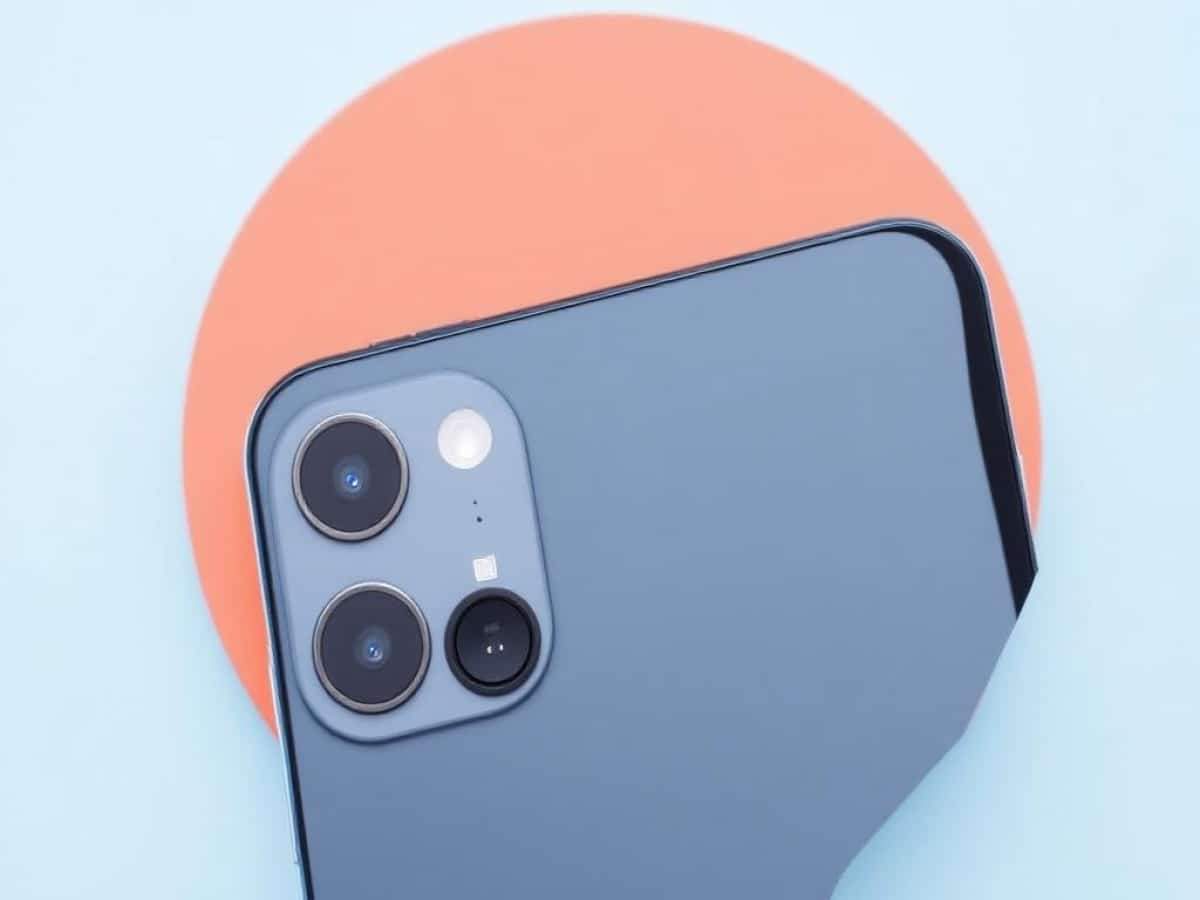
What are the effects of heavy use on a high-end smartphone after two years? We conducted a test with Apple’s iPhone 15 Pro Max to find out. Performance, heat management, slowdowns, battery life, battery wear, and interface smoothness are all covered in our detailed review and observations.
Since September 2023, an iPhone 15 Pro Max has been a constant companion in my pocket, alongside various other models undergoing testing. We originally reviewed this device in September 2023, awarding it a high score of 4.5 out of 5. Despite a few minor flaws and a steep price tag, we rated it as an outstanding smartphone.
Also read – Review of Pixel 10 Pro and Pixel 10 Pro XL: AI-powered, excellent in photography, they have it all
Why You Should Never Reheat These Foods in the Microwave – The Hidden Dangers Experts Warn About
I tried the top 5 guard dogs—here’s what makes these breeds the ultimate protectors
When we first reviewed the iPhone 15 Pro Max, it was in peak condition. The A17 Pro was Apple’s top mobile processor at the time. iOS was at version 17 and finely tuned. The battery was brand new, and the casing and screen had only endured a couple of weeks of a tech journalist’s daily life. Little did it know what was to come.
Our reviews capture a smartphone’s features at the time of its release, not after years of usage. However, in France, the average smartphone replacement cycle is about 36 months, according to some studies, including one by ARCEP published in March 2025. Tech enthusiasts might switch phones every 24 months, while the more frugal users might stretch their investment to 48 months, assuming the device lasts that long. What are the effects of time on a high-end smartphone like the iPhone 15 Pro Max? Is it advisable to purchase a smartphone released two years ago? These questions prompted this article.
The iPhone 15 Pro Max’s Design Ages Gracefully
Starting with an overview, we won’t revisit every component but will focus on the changes brought on by time. Even without a protective case, the mineral glass on the back remains unscathed with no visible scratches. Thankfully, the phone has never been dropped on a harsh surface like asphalt. However, dust does accumulate around the camera modules, a challenging area to clean daily. The metal ring around the lenses remains undamaged.
The titanium edges hold up very well; time has polished this material, making it even smoother and more pleasant to the touch. The tactile experience remains distinctly different from aluminum, although they look quite similar. We notice some slight wear on the rounded edges near the glass panels, but nothing significant. The physical buttons remain responsive. The USB-C port is still perfectly aligned, although some smartphones may show slight misalignments.
The front features the first-generation Ceramic Shield glass, which, despite some micro-scratches that could have been avoided with a screen protector, has not cracked. The display has endured without damage, and we’ve encountered none of the rare issues sometimes mentioned on platforms like Reddit. Overall, we have a visually clean and sturdy smartphone that could easily last several more years—a definite plus.
Time Affects the iPhone 15 Pro Max’s Battery Life and Heating
Under the hood, let’s recall some specs: the iPhone 15 Pro Max features an A17 Pro processor, manufactured using a 3 nm process, with six cores reaching up to 3.78 GHz, and a six-core proprietary GPU. It houses 8 GB of RAM and a lithium-ion battery of 4422 mAh. This battery supports PowerDelivery 2.0 and MagSafe charging, with Apple claiming a 50% charge in just 30 minutes.
The performance of the iPhone 15 Pro Max has remained relatively stable over two years. We conducted a few benchmarks, and it’s clear that the new scores are comparable to the initial ones, despite successive iOS updates (we’ve moved from iOS 17 to iOS 26). There are even slight improvements in the GPU area. Thus, the iPhone 15 Pro Max does not experience the slowdowns that some other iPhones have after updates.
However, heating continues to be an issue during intense use and even during charging sessions. Surprisingly, some chargers cause the phone to heat up more than others, and it’s not necessarily related to the power delivered. The external temperature of the phone can rise to over 45°C near the screen (and even closer to 50°C at the back). The heat is concentrated around the SoC. As noted in 2023, titanium is a poorer thermal conductor than aluminum, which explains the structural changes made in the iPhone 17 Pro Max.
Our iPhone 15 Pro Max has seen daily, intensive use. Communication, social media, streaming of series and music, photo and video capture, and of course, gaming. Initially, the battery life was excellent: two full days, with a charge on the night of the second to third day. Over time, however, this has dropped to just over a day. The maximum battery capacity has fallen to 87% after 472 charge cycles over approximately 740 days of use—that’s a cycle every 36 hours.
This reduction in battery life is due to the number of charge cycles, but not solely: the quality of charging also plays a role. During these two years, we did not activate the battery’s charge limit (set between 80% to 95%), but we did use smart charging, which helps to avoid overcharging during overnight charge cycles. This likely helped reduce battery wear, but setting a charge limit at 90% would probably have prevented it altogether.
Software-wise, the iPhone 15 Pro Max is eligible for the iOS 26 update. Note that the iPhone 15 Pro Max is the oldest model compatible with Apple Intelligence. It is supposed to deliver the same experience as more recent iPhones. And for the most part, it does, except for a few exceptions. For instance, image generation with Playground is faster with newer models than with the iPhone 15 Pro Max.
Is the iPhone 15 Pro Max Still a Competent Camera Phone?
In two years, Apple’s strategy in photography hasn’t changed much. The ultra-wide-angle lens moved to 48 megapixels in 2024. And this year, it’s the telephoto lens’s turn to go high-definition. The main sensor, the most useful of the three, has remained largely the same. It’s a direct legacy from the iPhone 14 Pro Max. And, surprisingly, in 2025, Apple has only made slight modifications (a slightly larger aperture, a slightly bigger sensor). Theoretically, the iPhone 15 Pro Max remains quite relevant.
In practice, the iPhone 15 Pro Max continues to be a very capable camera phone, although we regret that it hasn’t received some of the hardware improvements granted to its successors. The main sensor is still relevant. The contrasts are good, and the HDR brings out many details even in overexposed or underexposed areas. At night, the results are consistent, even with the automatic night mode activated. The portrait mode remains excellent, with good edge detection and natural textures.
The secondary sensors are not left behind, with good color consistency. The ultra-wide-angle lens remains a bit dark. The digital zoom of the telephoto lens isn’t very deep, but it’s sufficient for getting closer to a detail while ensuring an acceptable result. True, the smoothing affects the final outcome, counterbalancing the very noticeable graininess with a 25x ratio. But it remains usable.
Should You Buy an iPhone 15 Pro Max in 2025, and at What Price?
Two years after its release, the iPhone 15 Pro Max remains a recommendable smartphone. Because it’s well-built. Because it has the necessary platform to deliver the full “Apple” experience. Because it remains relevant in photography. In 2025, it’s still as good, if not better, than some premium smartphones launched just a few months ago.
Of course, buying an iPhone 15 Pro Max today means you won’t get the latest features, and software support is shortened by two years. But Apple is known for its long update periods, so this isn’t a major concern. The real question is what price to pay. New, the phone remains quite expensive in 2025: over 1200 euros, even for the 256 GB version. Refurbished and in “very good condition,” the smartphone is sold for well under 1000 euros. That definitely makes it worth considering.
-
Rakuten750€
-
certideal.com774.99€
-
Asgoodasnew FR779€
-
Pixmania FR852€
-
Darty
- Fast Charging: Minimal Impact on Smartphone Battery Health, Study Shows
- Ultra-Thin Smartphone Craze Continues: Xiaomi Challenges the iPhone Air
- iPhone 17 to Supercharge Battery Life and Charging Speed: Anticipated Changes Revealed!
- Tim Cook Promises Extended Battery Life for the New iPhone Air: Details Inside
- Revolutionary Qi2.2 Batteries Debut: Charge Faster at 25W!
Categories
Latest Articles