
Scientists confirm: This is the most effective way to get your cat’s attention, according to new research
Elderly Couple Refuses Reserved Seats—Viral Train Standoff Sparks Fiery Debate on Courtesy
At Sennheiser, innovation isn’t just a catchphrase. It’s a German tradition, a mindset. The brand has become synonymous with audiophile quality and precision engineering because it has continuously adapted to market changes without compromising its identity. This ability to embrace wireless technology and master digital music sets Sennheiser apart from other hi-fi legends that might have struggled to keep up. From its very first Momentum model, the brand has excelled in active noise cancellation in Bluetooth headphones, a full decade before ultra-premium became the standard.
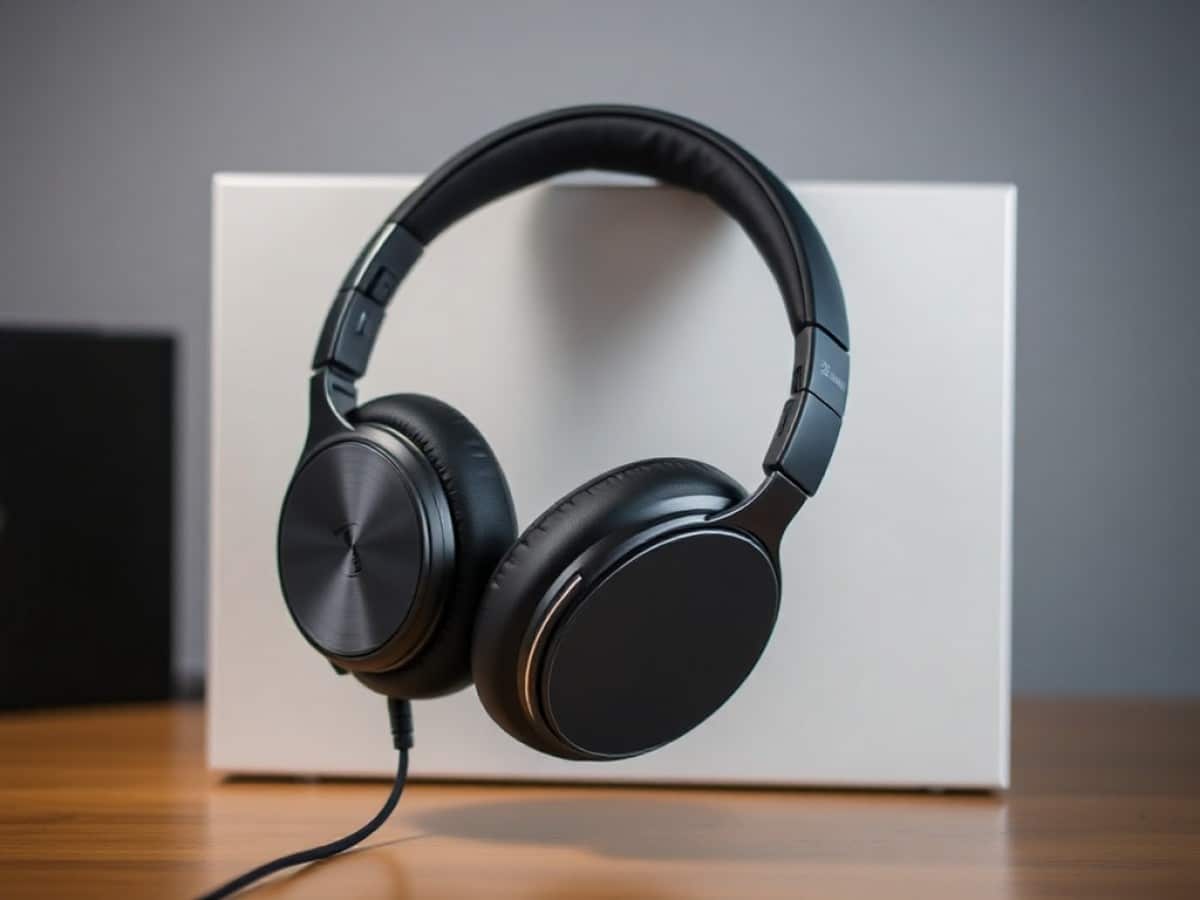
The HDB630 embodies this technological maturity. In a saturated market of “premium” headphones, where many mimic the form but few the substance, Sennheiser takes a bold approach: it combines the sound signature of its legendary audiophile models—HD650, HD560—with the refinements of wireless technology, without significant compromises in comfort, battery life, functionality, or ergonomics.
As a result, the HDB630 not only makes a strong impact, but it also undoubtedly marks Sennheiser’s best Bluetooth headphones ever designed… and possibly the best on the market currently, irrespective of brand or category.
The Tiny Dongle That Makes a Big Difference
Sennheiser understands that quality in Bluetooth doesn’t stop at marketing promises. Often, the claim of “lossless” transmission hides compromises (codecs, error management, audio packet reordering) that affect dynamics, timbre, and precision. But any good engineer knows that great sound starts with a healthy digital signal chain.
Therefore, Sennheiser includes a BTD 700 USB-C dongle with the HDB630, a high-performance tiny Bluetooth transmitter. This dongle, supporting aptX Adaptive, ensures optimized and stable transmission, bypassing the sound output of the used smartphone. Whether it’s on a budget Android, a PC without HD codec, or the latest iPhone, the sound delivered by the HDB630 remains consistently impressive, fully revealing the headset’s potential. This is often overlooked… until you experience it: the difference is clear, both in clarity and dynamics.
Sennheiser HDB 630Technical Specifications
Why You Should Never Reheat These Foods in the Microwave – The Hidden Dangers Experts Warn About
I tried the top 5 guard dogs—here’s what makes these breeds the ultimate protectors
Sennheiser HDB 630
-
Fnac
€499 -
Darty
€499 -
Son-Vidéo.com
€499
See the offer
The best headphones
All Sennheiser headphones
This review was conducted with a headset provided by Sennheiser.
Sennheiser HDB 630A Seriously Designed Headset from Every Angle
The HDB630 immediately impresses with its understated, matte, and sleek design, free from any exaggeration. It’s quintessentially Sennheiser—neutral, even clinical. The Momentum lineage is evident. The build, mainly high-quality plastic, features a discreet metal headband, sturdy hinges, and generously padded circumaural ear pads. The touch and feel are premium.
At 311 grams, the headset quickly becomes unnoticeable on the head, except when used during physical activities where it then inevitably suffers from some inertia. The distribution across the headband, the choice of memory foam padding, and a well-adjusted clamping force make prolonged wear comfortable even for lengthy sessions: no noticeable pressure points or clamping effect.
As for controls, it’s all touch-based, with a large area on each earcup and a single power and Bluetooth pairing button.
A wired connection is also offered, either via USB-C (convenient for charging and lossless HD audio) and a mini-jack input—this last one is not passive; it digitizes the signal to take advantage of the active sound signature developed by the manufacturer.
The package includes a hard case, a USB-C cable, a mini-jack cable, an airplane adapter, and the famous BTD 700 dongle.
Sennheiser HDB 630Extensive Customization, Clear Ergonomics
A modern headset must-have, the Smart Control Plus app from Sennheiser serves as a true control center. It’s clearly one of the best apps available, packed with features but designed to make even the smallest setting accessible. It’s a model of ergonomics.
Sennheiser Smart Control
My Sound: The Heart of Audio Customization
The main screen “My Sound” centralizes all sound settings in one place. Here you’ll find three major functions:
- Parametric Equalizer: This allows for extremely precise customization of the sound spectrum. Entering this menu reveals a clear graphical interface with frequency bands and a range of adjustment from +12 dB to -12 dB. Each point can be set with a central frequency (F), a gain (G), and a quality factor (Q) that defines the width of the affected band.
This precision enables audiophiles to finely adjust the headset’s response to their tastes or perhaps to correct the acoustic peculiarities of certain recordings. You can create new custom presets, save them, and switch between them instantly.
- Graphic Equalizer: For those who prefer a more visual and intuitive approach, the graphic equalizer offers sliders by frequency band. Currently set to “Neutral” in the captures, it provides a quick alternative to the parametric EQ.
- Bass Boost: A dedicated switch allows for the activation of a bass frequency boost in one move. This is handy for enhancing certain music genres (electro, hip-hop, modern pop) without having to adjust the finer settings.
- Podcast Mode: This function optimizes the rendering of spoken content. The intelligibility of voices is significantly enhanced.
Touch and Gesture Controls: Everything Under Control
Apart from the power button, all controls on the Sennheiser HDB630 are touch-based. The app provides an explanatory screen on the various possible commands, from volume management to active noise cancellation.
Sound Zones: An Interesting Idea
One of the most innovative features of the HDB630 is the “sound zones” system. You can create geolocated profiles that activate automatically depending on where you are.
In practice, this means you can:
- Create an “Office” zone with maximum ANC and a neutral EQ preset
- Set a “Home” zone with transparency mode and a bass boost, for example
- Configure a “Gym” zone with a dynamic EQ and activated bass amplification.
When you enter a registered zone—with your smartphone, of course—the headset automatically applies the associated settings. The “EQ Preset” option allows you to link a specific equalization profile to each zone. This smart automation avoids manually juggling settings according to different contexts—a real added value for mobile users.
Tutorials and Firmware Updates
The app also includes a tutorial section with clear animations to master each gesture, each function. This is particularly welcome for a headset as feature-rich as this one. Firmware updates are also managed from the app, ensuring the product’s longevity and evolution over time.
HD Bluetooth Codecs and Auracast
In terms of Bluetooth, Sennheiser seems to have thought of everything, supporting classic (SBC, AAC) and HD codecs, aptX-HD, and LDAC. Auracast is even supported. During my tests, the connection remained perfectly stable in all circumstances, even through thin partitions. This is also the case when using the USB-C dongle.
Sennheiser HDB 630Active Noise Cancellation: Top Notch Without “Suction”
The noise cancellation offered by the HDB630 sets the bar at the level of the best headphones like Bose QuietComfort Ultra Headphones 2nd Generation or Sony WH-1000XM6.
The ANC is adaptive and self-regulates in real-time according to the environment. Rush hour on the tram? The headset eliminates the rumbling without drowning out the music. Shared office or open space? Conversations become a vague murmur. But most importantly, the sound signature is never altered when switching to maximum ANC.
The transparency mode, too, is near perfect. Thanks to Sennheiser’s historic expertise in microphones, it accurately transcribes voices, external sounds, and even small environmental details with clarity and realism.
Sennheiser HDB 630The Deep Dive into Audiophile Territory
Before discussing the sound, it’s important to recall what makes Sennheiser unique in the global audio landscape. For over eight decades, the German brand has been designing and manufacturing its own transducers—those tiny speakers that convert electrical signals into sound waves. While most Bluetooth headphone manufacturers source their drivers from Asian subcontractors, Sennheiser controls the entire chain, from membrane design to magnet winding.
The transducers in the HDB630 are “homemade,” specifically developed for this model at Sennheiser’s Irish factory. They are 42 mm diameter composite membrane models.
Sound Signature and Frequency Response
Let’s not keep you waiting any longer, the sound is excellent. The Sennheiser HDB630 clearly stands out as the Bluetooth reference on the market. It builds a wide, well-ventilated soundscape, its sound signature reveals a slightly warm neutrality in the bass, a never overpowering lower midrange, full and expressive mids, and crisply detailed highs without excessive brightness. In my opinion, it’s simply perfect.
The response curve, measured both in USB and Bluetooth modes, is distinguished by its linearity in the bass (no dips, no bulging), a slight prominence in the midrange (around 1 kHz), then a rising plateau up to the high end of the spectrum, with remarkable finesse on cymbals and voices. The sub-bass is present, with depth but never excessive muddiness. The upper bass and lower midrange form a solid foundation for each listening session, while the treble extends high without ever being aggressive.
If we look closer, we see a slightly enhanced presence in the midrange area, a slight depression approaching the dreaded 2 kHz that often bothers the ear (but not here), a very measured presence peak around 4 kHz that adds an organic feel to the sound, then a clear push in the extreme high end,
Similar Posts
- Logitech G321 LightSpeed Review: Top Performance Without Breaking the Bank!
- Breaking: Sony’s Newest Noise-Cancelling Headphones: Better Than Ever & Coming Soon!
- HyperX Cloud Jet Dual Wireless Review: Affordable Gaming Headset Impresses!
- Spotify Lossless is finally here… but this improvement hides a real problem for subscribers
- Razer BlackShark V3 Pro Review: The Ultimate Esport Headset Unveiled!

Maya Singh is a senior editor covering tablets and hybrid devices. Her work explores how these tools reshape digital productivity and learning. She also contributes to feature editorials on emerging tech.