

Scientists confirm: This is the most effective way to get your cat’s attention, according to new research
Elderly Couple Refuses Reserved Seats—Viral Train Standoff Sparks Fiery Debate on Courtesy
The MSI Versa 300 Wireless 8K is a lightweight (66 g) wireless gaming mouse with a symmetrical chassis, which it inherits from the Versa 300 Wireless unveiled two years earlier. Representing a step-up in range from the latter, the 8K version includes a PixArt PAW3395 optical sensor, a maximum polling rate of 8,000 Hz wirelessly, and three connection modes.
Additionally, MSI promises a significantly improved battery life, which can now reach up to 196 hours (in Bluetooth mode without lighting) and features Omron switches rated for 60 million clicks. These features mark a significant evolution from the original model. It closely resembles the Versa 300 Elite Wireless in terms of specifications but adds the 8,000 Hz polling rate and simplifies the RGB lighting a bit.
Another major selling point is its price, as it is offered at a recommended price of 60 euros, far below the prices of the most popular models on the market in 2026. It thus presents an excellent option for those seeking an affordable gaming mouse.
Technical Specifications
| Model | MSI Versa 300 Wireless 8K |
|---|---|
| Connection | 2.4 GHz, Bluetooth, USB 2.0 |
| Max Sensitivity | 26000 DPI |
| Max Polling Rate | 8000 Hz |
| Number of Programmable Buttons | 6 buttons |
| Weight | 66 g |
| Product Sheet |

Subtle Changes Under the Hood
Apart from being slightly heavier (6 g more), the Versa 300 Wireless 8K is virtually identical to the entry-level Versa 300 Wireless. This technical choice by MSI logically helps to limit costs and allocate more budget to significantly enhance the performance of the 8K model.
With a symmetric design primarily suited for right-handed users, it maintains a modest appearance. Reminiscent of Logitech’s G Pro X in shape and size, the Versa 300 Wireless 8K fits well in the hand and adapts comfortably to various grip styles. However, its very basic plastic coating feels slightly cheap and somewhat rough. The “diamond” relief on the sides improves grip but doesn’t completely eliminate the feel of raw plastic. In terms of RGB lighting, only the rear shell discreetly displays the brand logo.
The coating of the scroll wheel remains unchanged and mimics the shape of the side reliefs. The notches are still not very pronounced, but the minimal noise it produces is appreciated, especially since its central click is well-defined and effective in daily use. The introduction of Omron switches for the other buttons enhances the overall experience by ensuring firmer, more pleasant, and audible clicks. In addition to the two main buttons, the Versa 300 Wireless 8K has two well-positioned buttons on the left side, and a final button set back from the wheel.
Flipping the mouse over reveals no surprises, as everything is in its place, just as on the Versa 300 Wireless. The glide is facilitated by two pads positioned at the front and back, complemented by a circle surrounding the centrally located optical sensor. Next to it, the connection mode switch is still present, as is a compartment for storing the USB dongle for the 2.4 GHz connection.
8,000 Hz and Improved Battery Life
The Versa 300 Wireless 8K remains triply connected, capable of functioning both wirelessly and wired. For wireless, there are two options: Bluetooth, which is more economical and suitable for office work, and 2.4 GHz via the dedicated dongle. An important new feature is the ability to enjoy a polling rate of 8,000 Hz, a trend in recent years. The wireless connection proved stable and uninterrupted throughout our testing.
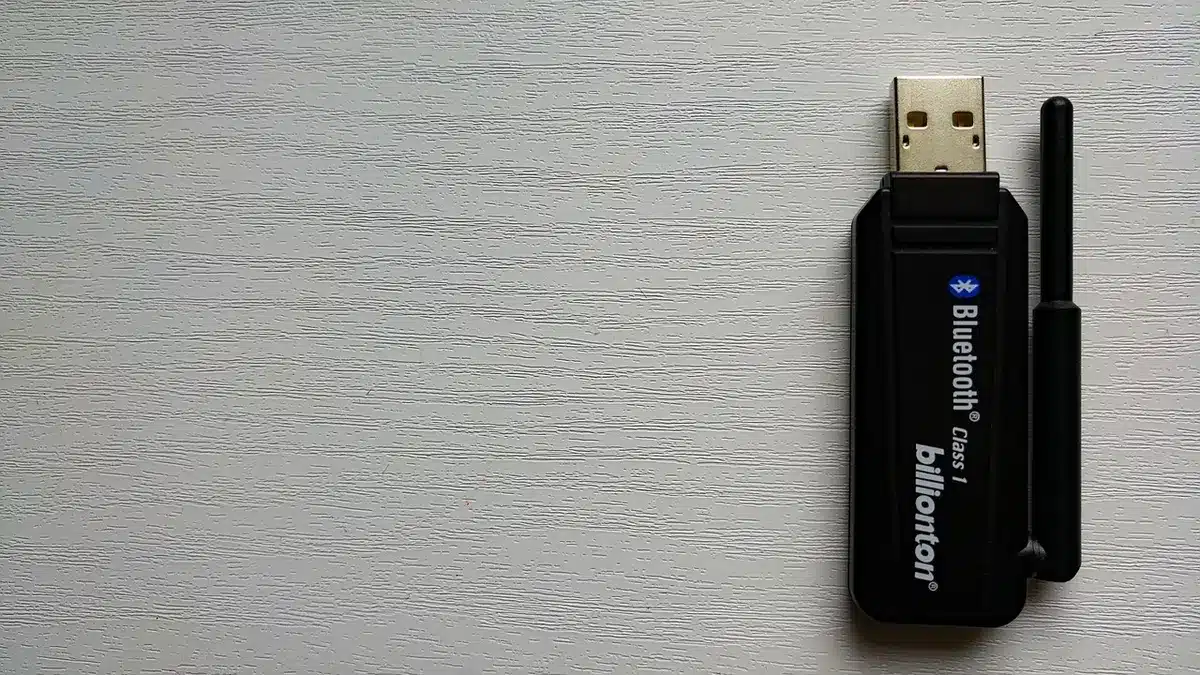
Beyond this improved polling rate, the 8K model significantly enhances its battery life compared to the original version. MSI promises up to 196 hours away from a power outlet in Bluetooth mode without RGB lighting. In our testing, with default settings (2.4 GHz, 1,000 Hz), the Versa 300 Wireless 8K lasted more than a week and a half, with daily use of 5 to 8 hours.
Designed for Competition
The main distinction of the Versa 300 Wireless 8K from the first Versa 300 Wireless lies in its sensor. Here, it uses a PixArt PAW3395, a well-regarded sensor in higher-end gaming mice. This optical sensor can reach up to 26,000 DPI, has a tracking speed of 650 IPS, and can handle accelerations up to 50 g. These features make the Versa 300 Wireless 8K suitable for competitive gaming.
During our testing, the mouse effortlessly handled the most abrupt accelerations while maintaining excellent control during the micro-adjustments necessary in the most demanding titles. From supporting a World Event in Guild Wars 2, to the final rounds of a game of Warzone, through to building an optimized assembly line in Satisfactory, the Versa 300 Wireless 8K was up to the task!
Similar Posts
- Discover the Corsair Sabre v2 Pro Ultralight Wireless Review: Featherlight Precision
- Ultimate Gaming Experience: I Tested the SKILLKORP Ambi One Ergonomic Ambidextrous Mouse!
- Razer DeathAdder V4 Pro Review: Is It The Best Mouse Ever?
- Corsair Scimitar Elite Wireless SE Review: Unleash MMO Gaming Superiority!
- Razer Basilisk Mobile Review: Top Choice for Mobile Gamers!

Maya Singh is a senior editor covering tablets and hybrid devices. Her work explores how these tools reshape digital productivity and learning. She also contributes to feature editorials on emerging tech.