
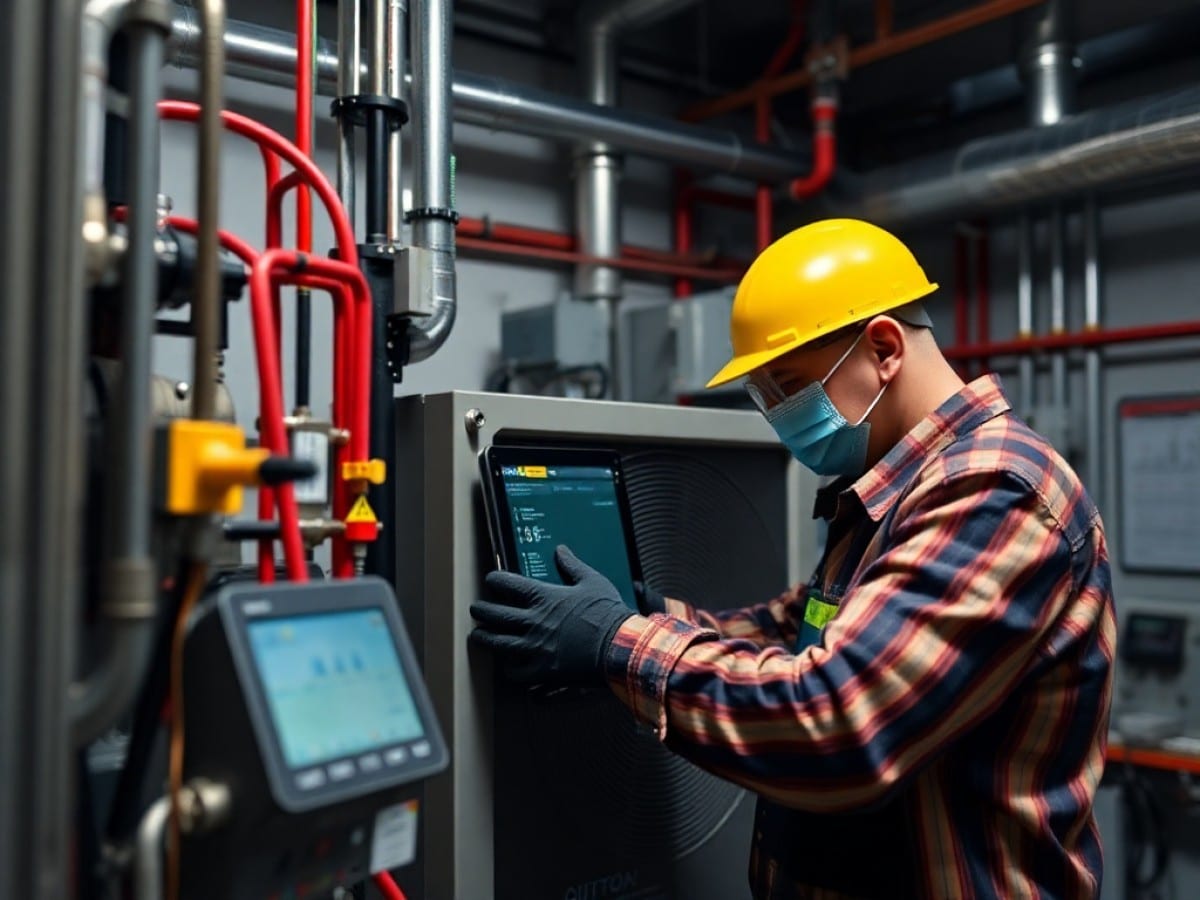
Computerized Maintenance Management Systems (CMMS) are becoming increasingly specialized. In the HVAC (heating, ventilation, and air conditioning) industry, these systems integrate field operations, smart devices, and energy data within a single tool.
Scientists confirm: This is the most effective way to get your cat’s attention, according to new research
Elderly Couple Refuses Reserved Seats—Viral Train Standoff Sparks Fiery Debate on Courtesy
Computerized Maintenance Management Systems (CMMS) are embracing the industry-specific movement that is sweeping through professional software. While the market was once dominated by generalist suites capable of scheduling maintenance across various sectors, there is now a growing emergence of tools specifically designed for particular fields. The HVAC industry provides a telling example at the intersection of demanding technical professions and increasingly stringent regulatory requirements.
Where Generalist Tools End
A generalist CMMS can schedule maintenance rounds, centralize service reports, and maintain a history of equipment. These functions cover the basics of maintenance across all sectors, explaining why horizontal suites are still widespread. However, they fall short when it comes to the specific needs of a profession.
In HVAC, these specific needs are plentiful. Maintenance contracts often hinge on performance-based commitments rather than mere obligations to act. Monitoring energy consumption of systems has become a standalone client expectation. Additionally, regulatory deadlines impose a schedule that generalist tools cannot model.
This demand has evolved in recent years. Clients no longer just want their systems to work; they demand quantifiable proof of maintenance and energy efficiency. A shared spreadsheet and a generalist suite quickly hit their limits when faced with these traceability requirements.
This gap fuels software specialization. A developer proficient in a specific field can create features that a generalist suite would never incorporate, simply because there isn’t a broad enough market to make such features financially viable. Twimm, a SaaS-based CMMS, exemplifies this approach: designed for technical professions (HVAC, electrical, plumbing, multi-technique), it goes beyond scheduling to connect field operations, contracts, and consumption data within a single tool.
Learn more about Twimm
From Field to Data
Specialization is first measured in the field, where team productivity is vital. It is also where data collection that later feeds into management begins. Two components interact here: the digitalization of operations and the automatic capture of measurements.
The Digitalization of the Field
The initial benefit is the elimination of paper. Mobile applications replace handwritten service forms and eliminate the need to re-enter data from the field to the office. From his smartphone, a technician can access an equipment’s maintenance history, maintenance procedures, and previous interventions, facilitating immediate action upon site arrival.
Synchronization works both ways. A schedule changed in the office instantly updates on the technician’s mobile device. Conversely, a report completed on site, including photos, is immediately sent back to the office, allowing for prompt verification of information and billing approval. Twimm operates on this principle, as a web and mobile app (Android and iOS), automatically scheduling preventive and corrective interventions based on defined equipment and procedures.
The schedule thus becomes a management tool rather than just a calendar. Technician assignments consider their qualifications and geographic areas, and calculating travel times reduces unnecessary travel, maximizing time spent on interventions. In cases of urgent repairs, the nearest or most qualified technician receives the request, which is added to their route without the need for manual reorganization.
IoT as an Extension
Field digitalization paves the way for a second level: automatic data collection. Connected sensors and building management systems (BMS) provide readings without human intervention. Temperature, CO2 levels, humidity, and usage rates are just some of the indicators that continuously report the actual condition of installations.
The value lies not in the measurement itself but in what it enables. An interoperable CMMS aggregates these data streams and correlates them with maintenance history. Twimm boasts an open API that can connect the tool to a BMS, an ERP, or accounting software. Data is no longer scattered across multiple systems but is usable in one place. Without this integration, sensors would merely generate numbers that go unanalyzed.
When Software Shifts to Management
Once data is centralized, the software’s role shifts. It no longer just organizes interventions; it assists in making decisions. Two applications illustrate this transition, one related to energy and the other to profitability.
Energy monitoring initially meets a regulatory requirement. The tertiary decree mandates that tertiary buildings over 1,000 m² reduce their final energy consumption by 40% by 2030, then by 50% by 2040, and 60% by 2050. Each year, consumptions must be reported on the OPERAT platform of the Ademe. For a maintenance company, continuously monitoring these consumptions and identifying deviations directly affects the commitments made to its clients.
The Tertiary Decree Timeline
- 40% reduction in final energy consumption by 2030
- 50% by 2040
- 60% by 2050, compared to a reference year after 2010
- Annual declaration of consumptions on the OPERAT platform of the Ademe
In both scenarios, the software generates data that the company can present to its clients. Manual readings or automatic updates via sensors lead to the same outcome: demonstrating, with figures, the tangible impact of maintenance actions on energy bills and equipment lifespan. This proof becomes a commercial argument as well as a compliance obligation.
Contractual management extends this logic. Depending on the type of maintenance contract, the software compares actual expenses to planned budgets, flags contracts running at a loss, and identifies the most costly equipment to maintain. The manager gains insight at the level of each commitment, where a global overview would obscure discrepancies. Alerts on the most energy-consuming equipment even allow for recommending replacements rather than enduring repeated repairs.
This trend is also affecting other technical sectors, from construction to industrial equipment management, where specialized software is gradually replacing generalist suites and spreadsheets. It remains to be seen how far this specialization will go and whether vertical developers will maintain the interoperability that is currently a major part of their appeal.
Discover Twimm
Similar Posts
- Maintenance Mastery: Switching From Reactive to Proactive Practices
- Industrial Maintenance Revolution: How Data and AI Turn Costs into Savings
- Smart Climate Control: Connect & Remote-Manage Your Heat Pump to Save Money! Complete Guide & Review
- Synology NVR DVA1622 Review: AI-Boosted NAS for Top-Notch Video Security!
- Business Management: 5 Key Reasons to Use an Expense Tool

Jordan Park writes in-depth reviews and editorial opinion pieces for Touch Reviews. With a background in UI/UX design, Jordan offers a unique perspective on device usability and user experience across smartphones, tablets, and mobile software.